Appliances · Buying Guide
Best Carbon Steel Wok Choices for Your Electric Stove
Finding a reliable wok for your electric stove means choosing a pan with a flat bottom to maintain steady contact with smooth glass or coil burners. Unlike traditional round-bottom designs meant for open flames, electric cooktops depend on direct surface heat transfer for effective stir-frying, searing, and everyday sautéing tasks in a busy home kitchen environment.
Carbon steel woks bridge this gap by offering responsive thermal conductivity alongside a sturdy flat base built specifically for modern kitchen ranges and other heat sources. We examine several notable options to help you determine which model fits your specific cooking habits, maintenance routine, and kitchen setup without relying on generic manufacturer hype.
As an Amazon Associate, StacyLaughs earns from qualifying purchases.
Buying guide
Flat Bottom Design for Electric Contact
Choosing a wok for an electric stove starts with examining the base shape. Traditional round-bottom pans wobble on smooth glass or electric coil burners, failing to absorb enough heat for proper cooking. A flat-bottom carbon steel wok resolves this by resting flush against the heating element, ensuring direct thermal transfer for efficient stir-frying and searing.
When evaluating flat bases, look for a diameter that matches your primary burner size. A base that is too small limits heat absorption, while an oversized base may heat unevenly at the outer edges. Ensuring proper surface contact maximizes the cooking performance of your electric cooktop without requiring specialized flame rings or adapters.
Material Selection and Heat Responsiveness
Carbon steel remains the premier material choice for woks used on electric ranges in modern home kitchens. It offers the lightweight handling of traditional cookware combined with the rapid thermal response needed to adjust cooking temperatures instantly. Unlike heavy cast iron, carbon steel heats up quickly and cools down just as fast when you alter burner settings.
This thermal responsiveness gives you precise control over delicate ingredients that might otherwise burn on slow-heating electric coils. The metal adapts seamlessly to fluctuating power levels, making it easier to manage high-heat searing and gentle simmering in the same cooking session without lengthy preheating delays or accidental scorching risks.
Seasoning and Natural Non-Stick Surfaces
Most carbon steel woks require proper seasoning to build a natural non-stick patina over time through regular cooking sessions and oil applications. Some models arrive pre-treated with high-heat nitrogen or factory oil layers, providing a better initial food release surface right out of the box. However, maintaining this protective finish requires ongoing attention after every cleaning session.
Avoid abrasive metal scrubbers that strip away this hard-earned seasoned layer during routine post-meal cleanup tasks. Building and preserving a healthy oil patina prevents food from sticking and protects the raw steel against environmental corrosion in your cabinet. Embracing this simple maintenance routine ensures your pan performs reliably across years of daily meal preparation.
Handle Configuration and Storage Space
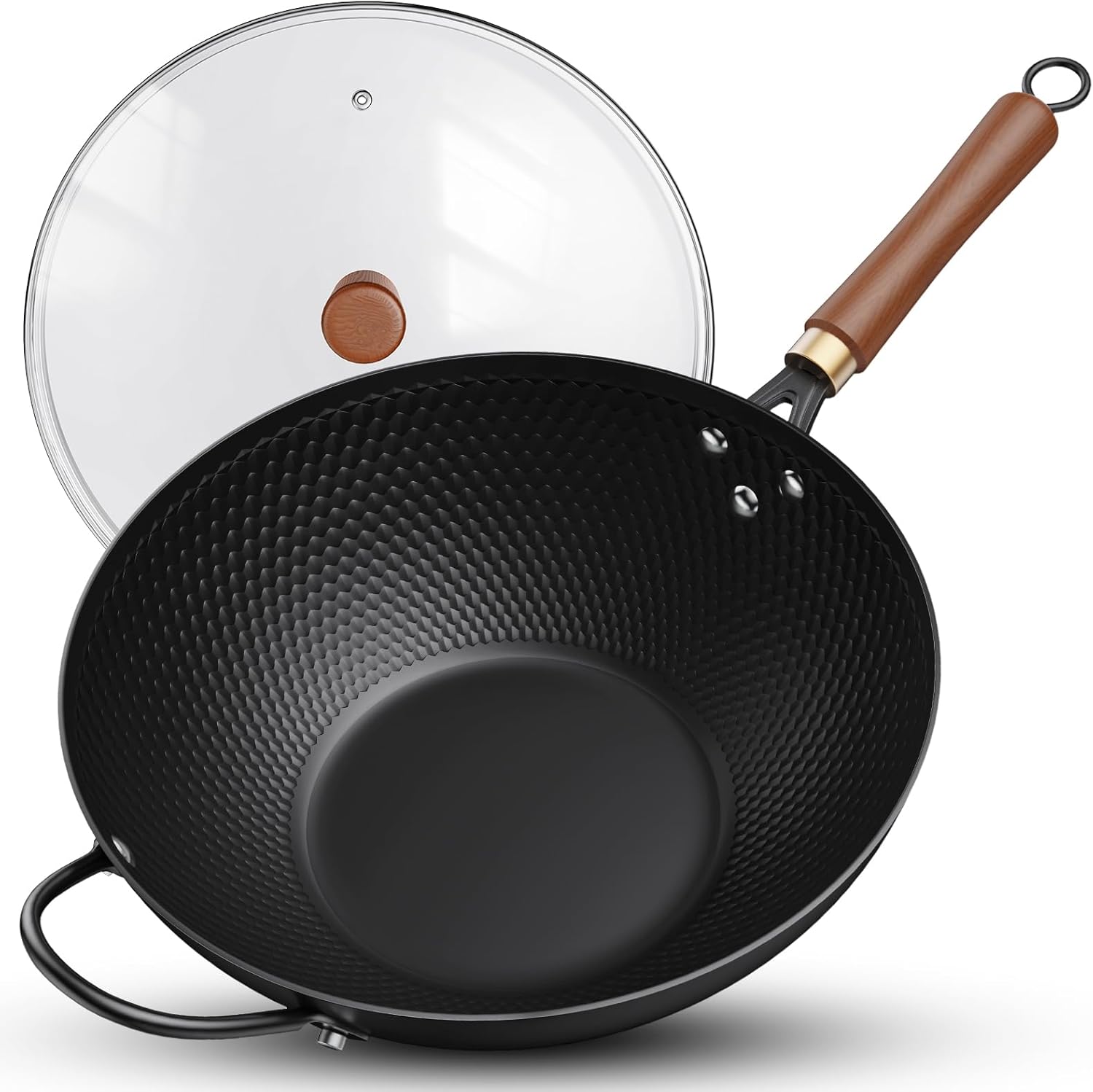
Handle design heavily impacts both cooking comfort and cabinet storage convenience in a busy home kitchen environment. Traditional long wooden handles provide excellent leverage for tossing ingredients, but they can make storage difficult in compact cupboards or tight spaces. Some modern models feature detachable handles or dual helper handles that simplify oven placement and overall kitchen organization.
Dual-handle configurations offer balanced lifting for heavy, family-sized meals, while sturdy riveted construction ensures long-term structural durability under high heat conditions. Consider your kitchen storage capacity and stovetop layout carefully when selecting handle styles to ensure comfortable daily usage without experiencing awkward reach or maneuvering issues during active cooking sessions.
Lids and Accessories for Versatile Cooking
While a basic wok is primarily designed for high-heat stir-frying, selecting a model that includes or accommodates a fitted lid greatly expands your overall culinary capabilities. Lids trap essential moisture, steam, and heat, enabling you to braise, steam, or simmer various complex dishes effectively on a standard electric range cooktop.
Clear glass covers offer the added benefit of visual monitoring without letting heat escape during delicate cooking phases, whereas fitted wooden or metal lids maintain traditional cooking aesthetics. Bundled accessories like protective silicone spatulas and specialized cleaning brushes further enhance overall value, ensuring you have the right tools to protect your carbon steel pan surface from accidental scratches.
Care and Maintenance Guidelines
Proper care is absolutely essential for keeping a carbon steel wok in top functional condition over many years of home cooking use. These pans require gentle hand washing with warm water rather than automated dishwasher cycles, which can rapidly strip seasoning and induce severe rust. Drying the metal completely after every wash prevents unwanted surface oxidation.
Applying a thin layer of cooking oil after cleaning keeps the seasoned cooking surface well protected between daily meal preparations and storage. Adhering strictly to manufacturer guidelines regarding maximum temperature limits and avoiding empty dry heating on electric coils protects both your cookware and your glass cooktop from permanent thermal damage over time.
Frequently asked questions
Can I use a carbon steel wok on a glass-top electric stove?
Yes, carbon steel woks with flat bottoms work very well on glass-top electric stoves. The flat base ensures stable contact with the glass surface, allowing efficient heat transfer for stir-frying and searing. However, you must avoid sliding the pan aggressively across the glass to prevent scratching, and always lift the wok when repositioning it on the burner. Additionally, never heat an empty pan on the cooktop, as high, dry heat can warp the metal and potentially damage smooth glass surfaces over time.
Do I need to season a carbon steel wok before using it?
While many modern carbon steel woks arrive pre-seasoned at high temperatures with nitrogen or factory oil treatments to provide an initial non-stick surface, traditional oil seasoning is still required over time. Regular seasoning helps build and maintain a durable natural oil patina that improves food release and prevents rusting. Even with pre-seasoned models, applying a thin coat of oil after hand washing and drying is recommended to sustain the protective coating through ongoing kitchen use.
Can I put my carbon steel wok in the dishwasher?
No, carbon steel woks are strictly designed for hand washing only and should never be placed in a dishwasher. Automated dishwasher cycles expose the metal to harsh detergents and prolonged moisture that rapidly strip away the seasoned non-stick coating and cause severe rust. To clean your wok properly, wash it by hand using warm water and a soft sponge, dry it thoroughly right away, and apply a light layer of oil to protect the steel surface.
Why is dry heating forbidden on electric stoves?
Heating an empty carbon steel wok on an electric stove is strictly forbidden because rapid, unbuffered high heat can warp the metal, ruin the pan structure, and potentially damage electric coil or induction cooktops lacking overheat protection. Carbon steel responds very quickly to temperature changes, and without food or oil to absorb the thermal energy, the metal overheats rapidly. Always ensure oil or ingredients are present in the pan before turning on your stove burner.
Are glass lids better than solid lids for wok cooking?
Glass lids offer a distinct advantage by allowing you to monitor simmering, steaming, or braising food visually without lifting the cover and releasing heat and moisture. This helps maintain stable internal cooking temperatures. However, solid metal or wooden lids offer traditional aesthetics and exceptional durability. Choosing between them depends on whether you prefer watching your food cook through clear glass or rely on traditional covered methods for recipes like braised meats and steamed vegetables.