Appliances · Buying Guide
Best Wok for Glass Top Stove Choices for Home Cooks
Finding a reliable wok for a glass top stove requires a flat base that maintains steady contact with smooth glass surfaces. Traditional round-bottom woks rock or fail to heat evenly on electric cooktops, making flat-bottom designs essential for modern kitchens. Whether you prefer traditional carbon steel or coated aluminum, selecting the right pan ensures reliable heat distribution and stable tossing during high-heat stir-frying.
Glass cooktops demand cookware that rests flat to prevent scratching or uneven heating zones. Manufacturers design specific flat-bottom woks with materials like carbon steel and aluminum alloy to bridge traditional cooking styles with smooth-surface ranges. This selection highlights several options compatible with glass, ceramic, and induction stoves, detailing their physical attributes, handles, and included accessories to help you find a suitable match for your daily cooking routine.
As an Amazon Associate, StacyLaughs earns from qualifying purchases.
Buying guide
Flat Bottom Stability on Glass Tops
When selecting a wok for a glass top stove, prioritizing a flat bottom base is essential for safety and performance. Glass cooktops require continuous, level contact to heat cookware evenly. Round-bottom woks will wobble and fail to warm correctly on smooth surfaces. A dedicated flat base rests securely against the glass, preventing rocking and ensuring uniform heat transfer across the cooking surface.
Choosing a model engineered with a flat bottom eliminates the need for stabilizing rings that can scratch delicate glass cooktops. Manufacturers design these flat bases using compatible metals like carbon steel or stainless steel bonded aluminum. Reviewing the base dimensions helps ensure your chosen pan covers the burner element properly for efficient daily meal preparation.
Material Selection and Heat Response
Material composition dictates how a wok responds to temperature adjustments during cooking. Carbon steel offers rapid heat conduction, making it a popular choice for high-heat stir-frying and searing. It adapts quickly when you need to lower or raise burner temperatures. Aluminum woks with nonstick coatings also heat efficiently and provide lightweight handling for home cooks.
Evaluating your cooking style helps determine the ideal material choice. Traditional carbon steel builds a natural nonstick patina over time through seasoning, requiring oil maintenance after each use. Coated aluminum options offer immediate food release without seasoning steps, though they typically operate at lower maximum temperatures and require gentle nonmetal utensils to protect the finish.
Capacity and Sizing Considerations
Wok capacities and diameters vary significantly, impacting how much food you can prepare in a single batch. Models ranging from twelve to fourteen inches across provide ample space to toss ingredients without overcrowding. Smaller capacities around four quarts suit modest households, while larger volumes exceeding five quarts accommodate family-sized meals.
Matching the wok diameter to your glass stove burner size ensures optimal energy transfer and prevents uneven cooking. A pan that is vastly larger than the heating element will develop hot and cold spots along its outer edges. Consider your typical meal batch sizes, household member count, and available cabinet storage space when selecting between a compact twelve-inch pan and an extra-large fourteen-inch carbon steel wok.
Handle Design and Ergonomic Control
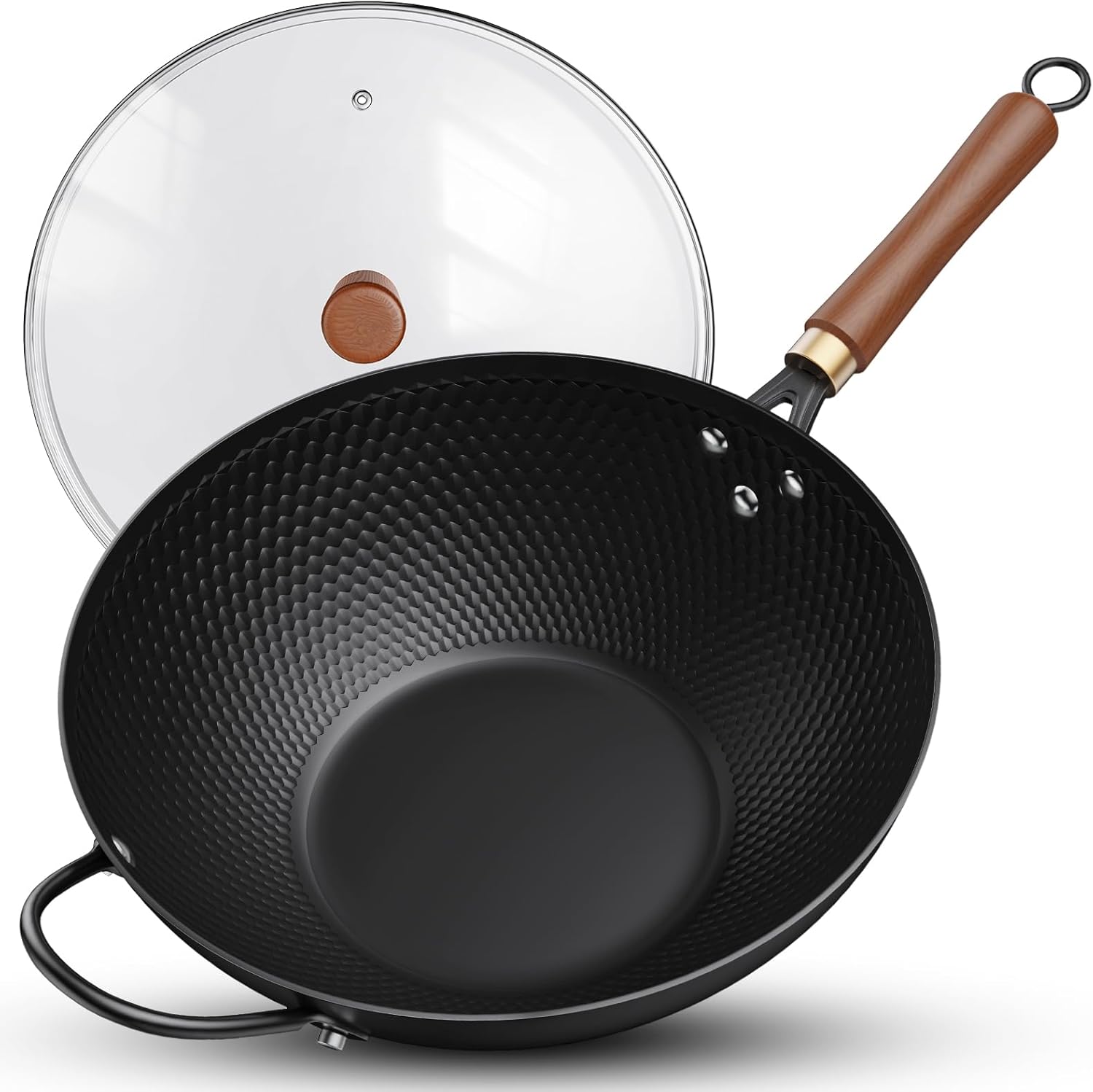
Handling a heavy wok safely requires secure, well-designed handles that stay cool during high-heat cooking sessions. Many carbon steel woks feature traditional wooden main handles paired with a metal helper handle opposite the grip. This dual-handle configuration gives you leverage when transferring a loaded pan from the stove to a countertop surface.
Riveted wooden handles provide strong structural attachment points while resisting heat transfer to your hands during extended cooking sessions. When evaluating handles, check whether the design offers a comfortable, secure grip for your hand size. A dependable grip prevents accidental slipping, especially when lifting heavy pans filled with food off smooth glass cooktops where cooktop safety is paramount.
Maintenance and Cleaning Requirements
Proper cleaning routines maintain the lifespan and cooking performance of your wok. Carbon steel variants require hand washing with warm water and thorough drying to prevent rust, followed by an application of cooking oil. They cannot go into the dishwasher, as harsh automated detergents strip away seasoning layers and promote corrosion on exposed metal surfaces.
Nonstick coated aluminum woks also demand hand washing with soft sponges to protect their granite or chemical-free finishes from scratching. Avoiding abrasive scrubbers and metal utensils preserves the protective coating over years of daily use. Understanding these maintenance obligations upfront ensures you select a wok that aligns with your preferred kitchen cleanup habits.
Included Lids and Accessories
Selecting a wok that includes a matching lid expands your cooking flexibility significantly beyond traditional stir-frying methods. Clear glass lids allow you to monitor simmering, steaming, and braising tasks without lifting the cover and releasing valuable heat. Some product packages also bundle wooden or silicone utensils tailored to protect delicate nonstick surfaces from accidental scratches during active cooking.
Reviewing included accessories helps determine overall value and immediate usability out of the box. While carbon steel woks often focus on bare metal performance, lid-included bundles save you from searching for a separate cover. Ensure the lid features a heat-resistant handle and fits securely over the rim to trap steam effectively during meal preparation.
Frequently asked questions
Can I use a traditional round-bottom wok on a glass top stove?
Traditional round-bottom woks are incompatible with glass top stoves because they lack a flat base to make proper contact with the heating surface. Without a flat bottom, the pan will wobble dangerously, create unstable weight distribution, and fail to absorb heat efficiently. Glass cooktops require flat-bottom cookware to prevent scratching the glass and to ensure uniform thermal transfer. If you want to cook on a glass range, always choose a flat-bottom carbon steel or aluminum wok designed specifically for smooth-surface cooktops.
How do I season a carbon steel wok for a glass cooktop?
Seasoning a carbon steel wok involves applying a very thin layer of high-smoke-point cooking oil across the clean, dry interior and exterior surfaces. Heat the pan on your stove until the oil begins to smoke, then wipe away excess oil with a paper towel and let it cool completely. Repeat this process multiple times until a dark, natural nonstick patina develops. Proper seasoning protects the metal from rust and creates a smooth cooking surface that improves with continued use over time.
Are nonstick woks safe to use on high heat?
Most nonstick coated woks are designed for moderate cooking temperatures rather than extreme high-heat searing. Exceeding the manufacturer recommended temperature limit can degrade the nonstick coating and release unwanted fumes. If you plan to cook at very high temperatures, carbon steel woks without synthetic nonstick coatings offer superior heat tolerance and durability. Always check the specific maximum temperature rating provided in the manufacturer instructions before exposing your wok to intense burner heat on a glass cooktop.
Can I put my carbon steel wok in the dishwasher?
You should never put a carbon steel or coated wok in the dishwasher. Dishwasher detergents are too abrasive, and the prolonged moisture exposure inside automated dishwashers will quickly cause carbon steel to rust and pit. Furthermore, harsh dishwasher cycles strip away the essential seasoned oil layer that provides natural nonstick performance. Always wash your wok by hand using warm water, dry it thoroughly with a towel, and apply a light coat of oil to maintain the metal.
What size wok works best for a standard glass cooktop?
A twelve to thirteen-inch wok typically offers the best balance for standard glass cooktops, providing ample cooking volume while matching typical burner heating elements. Larger fourteen-inch woks work well if you frequently cook family-sized portions, but their wider bases may extend far beyond smaller burner rings, causing uneven edge heating. Consider your household size and measure your largest burner element to select a wok diameter that heats uniformly across its flat base without excessive heat loss.