Appliances · Buying Guide
Best Wok for Induction Cooktop Choices to Upgrade Your Kitchen
Finding the right wok for induction cooktop use requires understanding how different materials handle rapid heat transfer. Carbon steel and stainless steel models offer flat bases that make direct contact with magnetic burners, ensuring your dinners cook evenly without hot spots.
Whether you prefer a traditional pre-seasoned surface that builds character over time or a multi-ply clad construction designed for rapid heating, knowing your cooking style helps narrow down the choices. Let us explore several popular options available today.
As an Amazon Associate, StacyLaughs earns from qualifying purchases.
Buying guide
Material Selection for Induction Cooktops
Choosing the correct material for your induction wok dictates how efficiently thermal energy transfers from magnetic burners into your ingredients. Carbon steel remains a popular favorite for its rapid temperature response and its unique ability to develop a natural nonstick patina over time. Stainless steel alternatives provide robust corrosion resistance, chemical-free cooking surfaces, and straightforward cleanup routines that save you valuable time.
Carefully weighing these material traits against your daily kitchen habits ensures lasting satisfaction. Carbon steel requires diligent manual washing and occasional oiling to stay completely rust-free. Multi-ply stainless steel builds handle heavy scrubbing easily but often add extra weight during active tossing motions.
Base Design and Induction Compatibility
A flat bottom is essential for induction cooktops because magnetic burners require direct physical contact to generate heat effectively. Woks with rounded bottoms will fail to heat properly on flat glass induction surfaces. Ensuring your chosen pan features a wide, stable flat base guarantees steady energy transfer and prevents wobbling while you stir-fry.
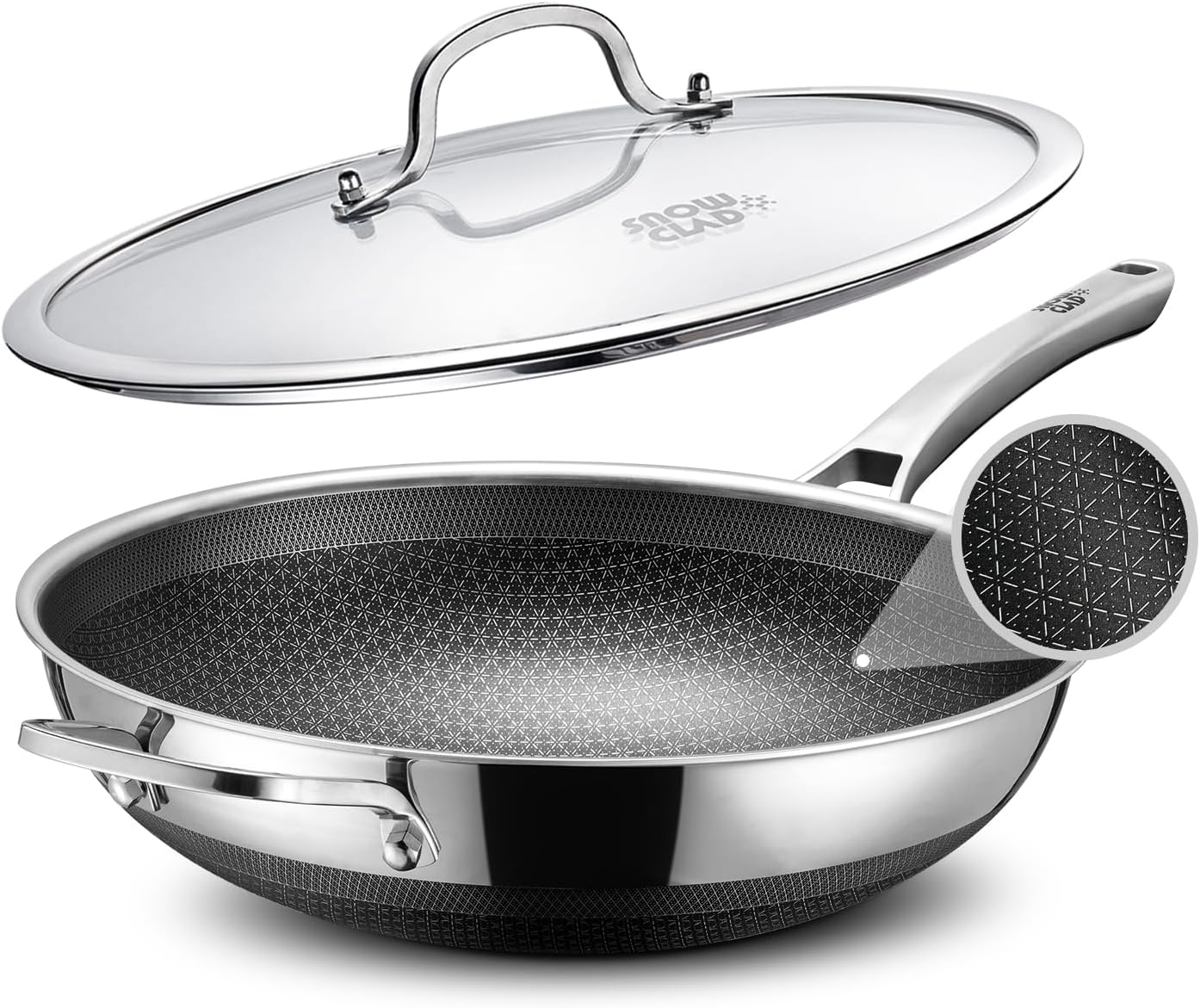
Manufacturers often engineer textured or embossed bases to maximize the contact area and speed up overall heating times. Checking the diameter of the flat base against your specific burner size prevents energy loss and ensures even cooking across the entire pan floor.
Seasoning and Maintenance Requirements
Carbon steel woks require proper seasoning to build a smooth, natural nonstick surface that prevents food from sticking during high-heat cooking. Many models arrive pre-seasoned using advanced thermal treatments, but you must continue applying thin layers of cooking oil over time. Avoid harsh detergents or soaking these pans to preserve their protective seasoning layer.
Stainless steel woks bypass the need for traditional seasoning upkeep, allowing you to wash them with soap and water or place them in the dishwasher. Understanding these maintenance differences helps you select cookware that aligns with your preferred kitchen routine.
Size and Capacity Considerations
Selecting the correct wok size depends heavily on your household size and typical meal portions. A thirteen-inch wok provides ample space for feeding families of three to five people while still allowing comfortable tossing room. Smaller capacities work well for quick single-portion meals but can restrict vegetable volume.
Larger diameters require more storage space in your cabinets and demand stronger arm strength to lift when filled with heavy ingredients. Matching the pan dimensions to your storage setup prevents kitchen clutter.
Handle Design and Ergonomics
The handle configuration dictates how comfortably you can maneuver a heavy wok filled with food. Ergonomic wooden or stainless steel handles provide secure grips during intense cooking sessions. Long handles keep your hands safely away from high heat sources while offering leverage for tossing ingredients across the flat base.
Some models feature detachable handles that simplify storage and allow the pan to transition directly into oven environments. Evaluate whether you need oven capability before choosing your ideal handle style.
Lids and Included Accessories
Lids are valuable additions when your cooking routine involves braising, steaming, or locking in moisture for simmered dishes. Tempered glass lids let you monitor food progress without lifting the cover and releasing heat. Some wok packages also include helpful accessories like wooden spatulas, silicone turners, or cleaning brushes.
Bundled extras add immediate utility and protect your pan surfaces from scratching during daily meal preparation. Reviewing included items ensures you get maximum value from your cookware purchase.
Frequently asked questions
Can I use a carbon steel wok on an induction cooktop?
Yes, you can successfully use a carbon steel wok on an induction cooktop as long as the pan features a flat bottom. Induction burners rely on a magnetic field to heat cookware directly, and carbon steel is inherently magnetic. However, because induction burners heat up extremely fast, you must avoid heating an empty carbon steel wok to prevent warping or damaging both the pan and your cooktop surface. Always add a small amount of cooking oil before turning on the burner.
Do stainless steel woks require seasoning like carbon steel?
No, stainless steel woks do not require traditional seasoning. Stainless steel features a passive chromium oxide layer that resists corrosion naturally without needing oil polymerisation. While carbon steel builds a nonstick patina through repeated seasoning and use, stainless steel relies on textured physical barriers or chemical-free nonstick coatings to reduce food adhesion. This makes stainless steel a much lower-maintenance choice for home cooks who prefer washing pans with soap and water or tossing them directly into the dishwasher.
Why is my wok sticking during stir-frying?
Food sticking usually happens when the pan is not heated properly before adding ingredients or when insufficient cooking oil is used. For carbon steel woks, sticking often indicates that the seasoning layer is still developing or needs re-application. To minimize sticking, heat your wok thoroughly over medium-high heat before introducing oil, and let a thin shimmering layer coat the surface before adding food. Using raised pattern stainless steel woks also helps reduce surface contact to prevent bonding.
Can I put my induction wok in the dishwasher?
Dishwasher compatibility depends entirely on the specific material of your chosen wok. Stainless steel woks that feature certified dishwasher-safe construction can be cleaned in an automatic dishwasher without structural damage. Conversely, carbon steel woks must always be washed by hand with warm water and dried immediately. Putting a carbon steel wok into a dishwasher will strip away its protective seasoning layer and cause rust to form rapidly across the metal surface.
How do I prevent my induction cooktop from scratching?
Protecting your induction cooktop involves lifting the wok rather than sliding it across the smooth glass surface when you are tossing ingredients or moving the pan. Heavy metal woks can leave scuffs if dragged across ceramic glass. Additionally, ensuring the flat bottom of your wok is clean and free of burnt food debris or grit prevents scratching. Using silicone or wooden spatulas inside the pan also protects the cooking surface from unnecessary wear and tear.