Appliances · Buying Guide
Best Wok Pan With Lid Options for Every Stovetop Style
Finding the right wok pan with lid can completely transform your home cooking routine, whether you love high-heat stir-frying, simmering rich sauces, or steaming fresh vegetables for family dinners. Modern woks combine traditional curved shapes with updated materials like carbon steel, stainless steel, and hard-anodized aluminum to suit various kitchen setups, personal cooking preferences, and household stovetops.
Because different cooktops and cooking styles demand specific performance features, evaluating material construction, handle design, and lid inclusion helps match a pan to your exact daily routine. Examining these distinct cooking tools clarifies which option fits your culinary preferences without guesswork, ensuring you make an informed decision for your kitchen.
As an Amazon Associate, StacyLaughs earns from qualifying purchases.
Buying guide
Choosing the Right Wok Material
Selecting the ideal material for your kitchen depends entirely on your cooking habits and maintenance preferences. Carbon steel offers traditional responsiveness, heating up rapidly and developing a natural nonstick patina over time with proper seasoning. Stainless steel models provide exceptional durability and metal utensil safety, while aluminum and ceramic options deliver lightweight handling and effortless food release.
Evaluate how much time you are willing to spend on ongoing maintenance before making a final purchasing choice. Traditional metal surfaces often require careful hand washing and routine oiling, whereas modern coated alternatives significantly simplify cleanup routines. Matching your lifestyle to the appropriate material ensures long-term satisfaction without unexpected maintenance frustrations.
Understanding Stovetop Compatibility
Modern wok pans are designed to work across a wide variety of kitchen heat sources, including gas ranges, electric coils, and ceramic cooktops. If you use induction, verifying that the wok features a flat, magnetic base is essential for proper heat transfer. Flat-bottomed designs maintain stable surface contact, allowing efficient cooking performance regardless of whether you use an open flame or a smooth glass cooktop.
Always check the manufacturer specifications regarding your specific cooktop type before purchasing a new pan. Some materials adapt instantly to rapid temperature shifts, while others rely on thick bonded bases for heat distribution. Ensuring full compatibility prevents uneven heating issues and protects both your stove surface and your new cookware investment during daily meal preparation tasks.
Evaluating Capacity and Cooking Volume
Wok capacities vary significantly, typically ranging from compact three-quart models up to spacious options exceeding five quarts. Smaller sizes work exceptionally well for individuals or couples preparing quick weekday meals, whereas larger capacities accommodate family-sized portions, deep frying, and elaborate stir-fry recipes. Consider the typical volume of food you prepare to avoid overcrowding the cooking surface during active culinary sessions.
Depth and wall curvature also influence how comfortably you can toss ingredients without spilling hot liquids or oil over the edges. Deepened designs with higher walls provide extra security when simmering soups or braising vegetables. Balancing overall capacity with your typical household meal size ensures you select a wok that meets your daily cooking demands efficiently.
Lid Inclusion and Monitoring Features
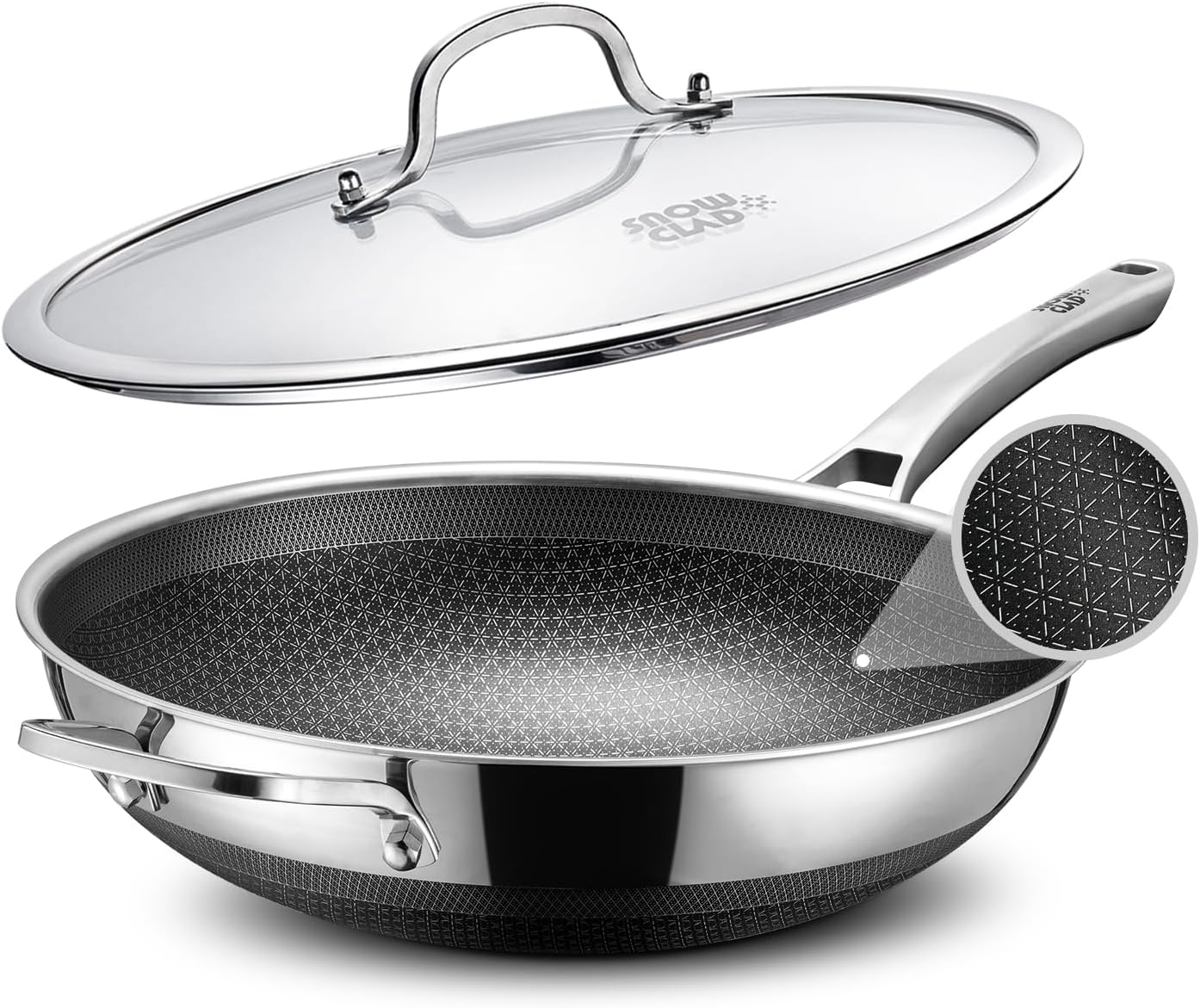
Many modern woks include matching lids, which greatly expand the pan utility beyond basic stir-frying into braising, steaming, and simmering. Transparent glass lids allow you to monitor your food progress clearly without lifting the cover and releasing heat or moisture. This visibility helps maintain consistent cooking temperatures while letting you watch the simmering process closely.
Review whether the lid handles remain cool to the touch or if they require protective mitts during high-temperature cooking tasks. Additionally, note any maximum temperature limits specified for glass components if you plan to transfer the wok pan directly into a heated oven or broiler environment. Selecting a well-designed lid enhances overall cooking safety and everyday recipe versatility.
Handle Ergonomics and Maneuverability
Maneuvering a heavy wok filled with food requires comfortable and secure handle designs. Look for ergonomic main handles paired with helper handles that distribute weight evenly when lifting or moving the pan from burner to countertop. Materials like wood, bakelite, or stainless steel offer distinct grip textures and thermal resistance during extended cooking sessions.
Double-riveted connections provide extra structural stability, reducing the risk of handle loosening over years of frequent lifting and tossing. If you prefer lightweight handling, aluminum or thin carbon steel frames reduce arm fatigue compared to heavier cast iron alternatives. Prioritizing comfortable grips transforms routine meal preparation into a safer and more enjoyable experience.
Care and Maintenance Requirements
Proper cleaning and maintenance routines dictate the long-term performance and appearance of your wok pan. While some modern stainless steel and coated aluminum models tolerate automatic dishwasher cycles, traditional carbon steel and ceramic surfaces require gentle hand washing with warm water. Following manufacturer cleaning guidelines prevents premature wear and preserves the protective cooking surface layers.
Applying a thin layer of cooking oil after hand washing carbon steel woks helps protect the bare metal against moisture and corrosion over time. Regular seasoning routines further enhance natural nonstick properties, ensuring smooth food release with every single use. Committing to appropriate upkeep safeguards your cookware investment for countless future meals and consistent kitchen performance.
Frequently asked questions
Can I use a metal spatula on a nonstick wok pan?
Using metal utensils depends entirely on the specific surface construction of your chosen wok pan. Traditional carbon steel and certain reinforced stainless steel hybrid surfaces are engineered to withstand metal tools without damage. However, standard ceramic, traditional PTFE, and coated aluminum surfaces generally require silicone, nylon, or wooden utensils to prevent scratching or peeling the nonstick layer. Always check the manufacturer guidelines for your exact model before introducing metal tools into your cooking routine to protect the surface integrity.
Are carbon steel woks difficult to season and maintain?
Carbon steel woks require initial seasoning and ongoing maintenance to develop and preserve their natural nonstick surface performance. After cleaning your wok by hand with warm water, you must dry it thoroughly and apply a thin layer of cooking oil to prevent rust formation. While this requires a bit more effort than automatic dishwasher-safe pans, the process becomes second nature over time. Proper oiling and regular use actually improve the nonstick quality, making food release smoother with each cooking session.
Can flat-bottomed woks be used on induction cooktops?
Most modern flat-bottomed wok pans with magnetic stainless steel bases, carbon steel bodies, or induction-compatible aluminum constructions work seamlessly on smooth surface induction cooktops. The flat base ensures stable and continuous physical contact with the burner element for efficient heat transfer. However, traditional round-bottom woks lack the necessary flat surface area for induction burners unless paired with a special ring stand. Always verify that your chosen wok specifies induction compatibility before purchasing for an induction range.
Why is a glass lid beneficial for a wok pan?
A clear glass lid allows you to monitor your food preparation progress closely without needing to lift the cover during active cooking. This visibility helps retain essential heat, steam, and moisture inside the pan, which is particularly useful when braising vegetables, steaming dumplings, or simmering rich sauces. Being able to watch your meal sizzle and cook ensures precise temperature control while preventing messy oil splatters across your stovetop and surrounding kitchen counters.
Do all wok pans require hand washing?
Cleaning requirements vary widely depending on the materials used in each specific wok pan. While select stainless steel and hard-anodized models offer dishwasher-safe construction for effortless cleanup, many carbon steel, ceramic, and specialized coated woks explicitly mandate hand washing. Putting delicate ceramic or seasoned carbon steel pans into an automatic dishwasher can strip protective coatings or cause rust. Always review the product care instructions provided by the manufacturer to determine the safest cleaning method for your cookware.