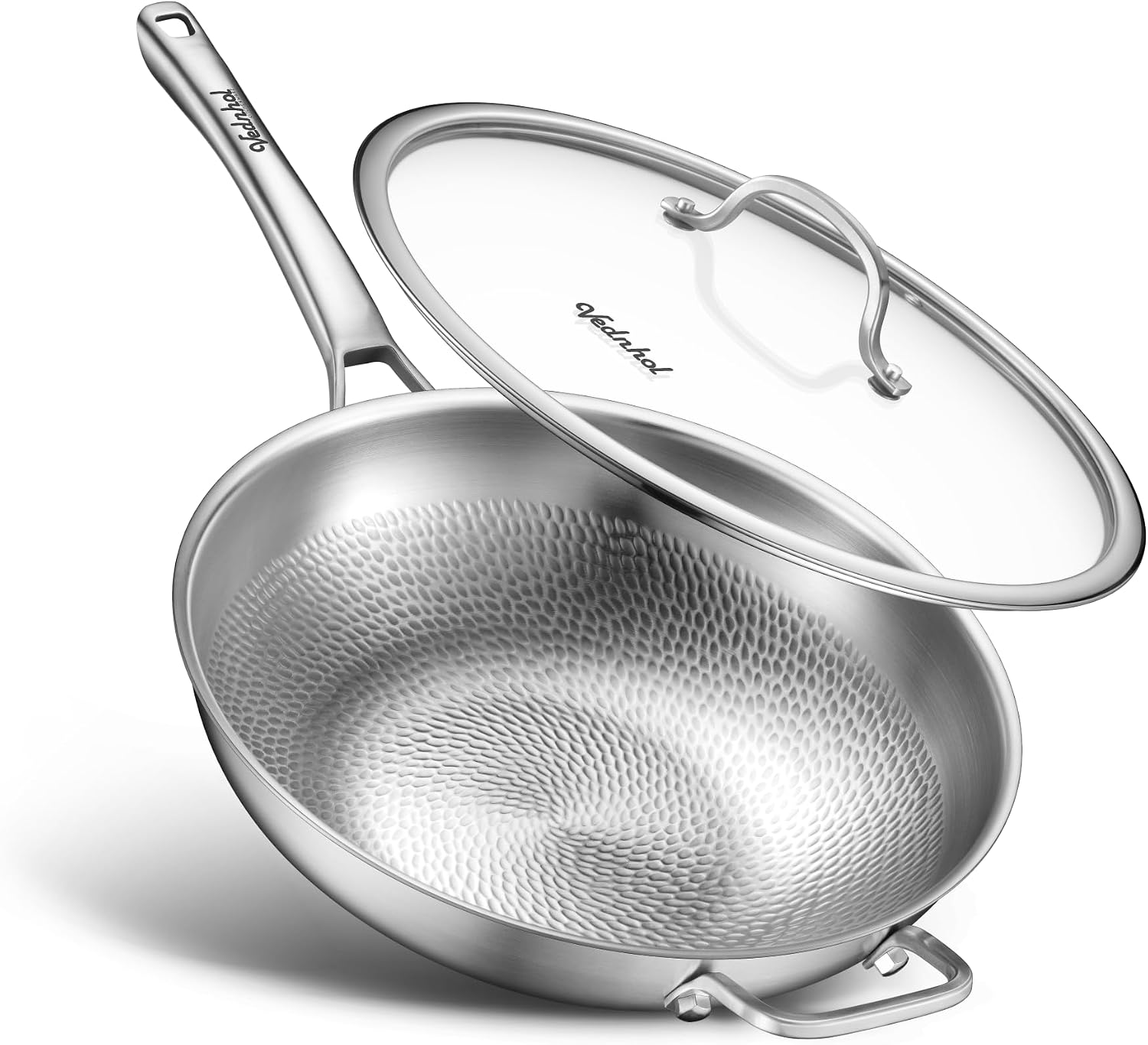
Appliances · Buying Guide
Best Wok to Buy: Top Carbon Steel and Stainless Steel Pans Compared
Finding the right cookware for high-heat stir-frying, braising, and everyday meal preparation depends heavily on matching your stovetop capabilities with the preferred pan material. Whether you favor traditional carbon steel, multi-layer titanium, or modern nonstick aluminum, each option brings distinct heat distribution properties and maintenance routines to your kitchen counter and cooking space.
Evaluating these cooking vessels requires looking closely at capacity, lid inclusion, handle construction, and cleaning requirements. This overview examines five distinct wok options based entirely on their stated manufacturer specifications, helping you select a pan that fits your daily cooking habits without relying on guesswork or promotional advertising claims.
As an Amazon Associate, StacyLaughs earns from qualifying purchases.
Buying guide
Material Selection for Heat Retention
Choosing the right material dictates how well your wok retains heat and responds to temperature adjustments. Carbon steel options heat quickly and develop natural nonstick properties over time through seasoning.
Stainless steel and titanium variants offer corrosion resistance and dishwasher compatibility, while aluminum models provide lightweight handling for daily tasks.
Stovetop Compatibility and Base Design
Flat-bottom woks sit securely on modern glass, electric, and induction cooktops without requiring specialized support rings. Magnetic stainless steel bases ensure proper induction contact.
Curved sidewalls paired with flat bases allow proper tossing motion while maintaining stable contact across traditional gas burners and electric coil stovetops.
Capacity and Dimension Considerations
Pan capacity directly affects how many portions you can prepare at once. Options range from four-quart models suited for small families to larger 5.8-quart configurations.
Evaluating diameter sizes helps ensure the pan fits comfortably on your specific burner grates and inside designated kitchen storage cabinets without overcrowding.
Handle Design and Ergonomics
Ergonomic handles provide secure control when tossing ingredients or lifting heavy loads. Materials like beech wood and bakelite stay cool during stovetop use.
Stainless steel and titanium handles offer durability and oven-safe capabilities, though users should verify temperature limits before transferring pans into heated ovens.
Lid Inclusion and Monitoring
Many woks include tempered glass lids that trap heat, moisture, and cooking aromas during braising and steaming tasks. Transparent glass panels let cooks monitor progress.
Lid inclusion eliminates the need to purchase separate covers while helping retain steam when preparing complex multi-ingredient dishes or simmering sauces.
Maintenance and Cleaning Routines
Cleaning requirements vary significantly between pan types. Carbon steel models require hand washing and prompt drying followed by oil applications to prevent rust formation.
Titanium and stainless steel variants often permit dishwasher cleaning, while nonstick granite coatings clean easily with mild soap and soft sponges.
Frequently asked questions
Can I use a carbon steel wok on an induction cooktop?
Many carbon steel woks feature flat-bottom designs that work effectively on smooth surface induction cooktops as well as gas and electric ranges. Flat bases ensure continuous contact with magnetic burners, allowing even heat transfer across the cooking surface. You should always verify the manufacturer specifications for your chosen model to confirm stovetop compatibility before cooking, especially when transitioning between traditional gas rings and modern glass induction cooktops.
Do carbon steel woks require special seasoning before first use?
Carbon steel woks frequently arrive pre-seasoned at high temperatures using advanced treatments to provide an initial non-stick start right out of the box. However, like traditional cookware of this type, they still require ongoing oil seasoning over time to build up an optimal natural nonstick layer. Proper cleaning, drying, and periodic oil applications after use help maintain the protective surface and prevent rust formation across the metal.
What is the benefit of a glass lid on a wok?
A tempered glass lid allows you to monitor your cooking progress effortlessly without lifting the cover and releasing accumulated heat and moisture. This feature proves especially useful when braising, steaming, or simmering dishes that require consistent internal temperatures. Lids also help trap aromas and prevent oil splattering on your stovetop, keeping your cooking area cleaner while you prepare stir-fries, soups, and other family meals.
Are stainless steel woks dishwasher safe?
Certain stainless steel and titanium wok models feature dishwasher-safe construction, allowing for convenient cleanup after preparing messy meals. In contrast, traditional carbon steel woks explicitly require hand washing with warm water and immediate drying to protect the metal from corrosion. Always review the product care instructions provided by the manufacturer before placing any cookware into a dishwasher to ensure long-term durability and surface integrity.
How do aluminum woks compare to iron or steel woks in weight?
Aluminum woks featuring die-cast construction typically weigh significantly less than traditional iron or heavy carbon steel pans. This lighter weight makes one-handed tossing and stirring much easier, reducing arm fatigue during extended cooking sessions. While aluminum options offer fast and even heating across reinforced bases, users should consider whether they prefer the lightweight nature of aluminum or the heavy-duty thermal mass of steel.