Appliances · Buying Guide
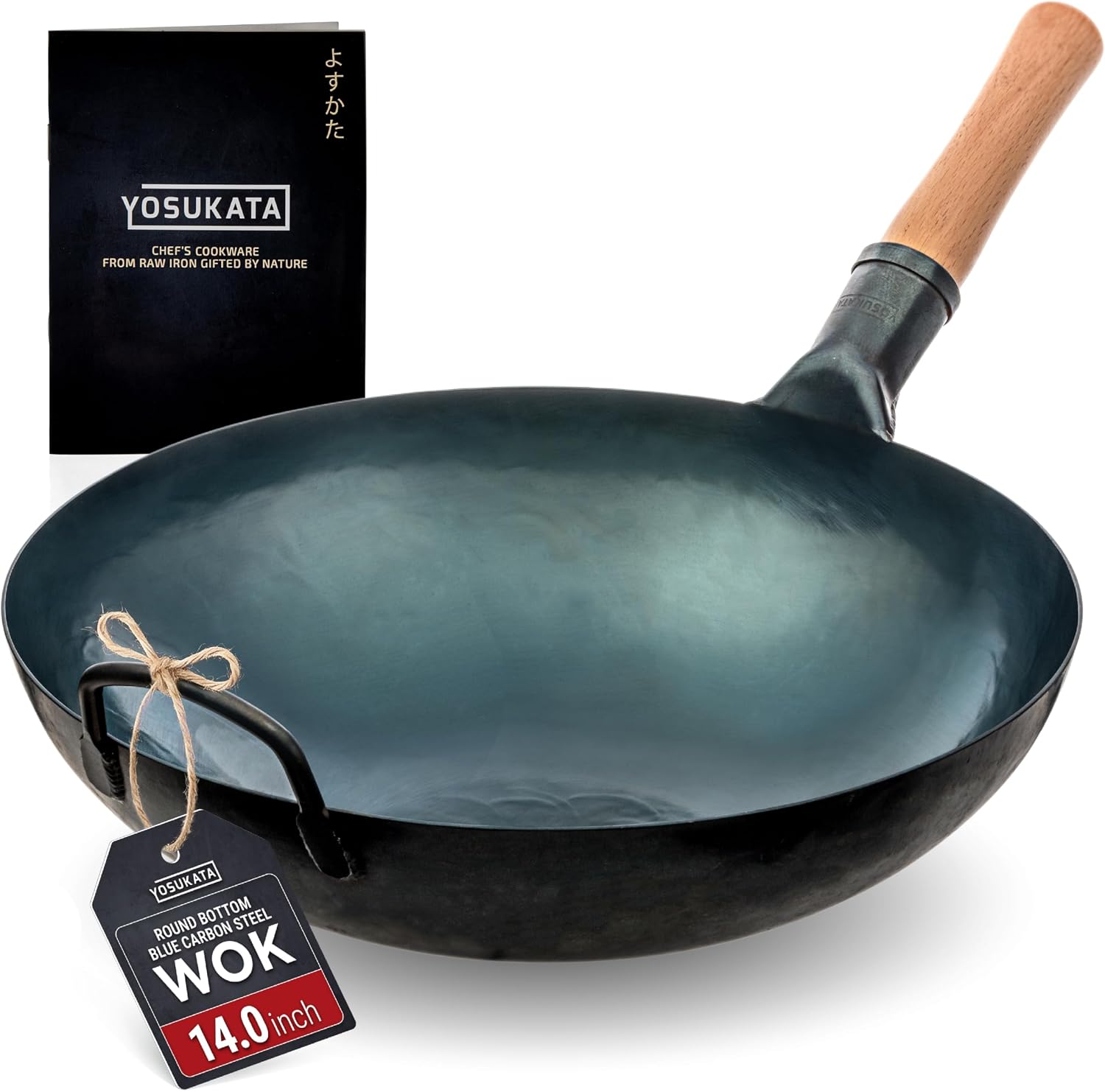
Best Yosukata Blue Carbon Steel Wok Options for Authentic Stir Fry

Finding the right cookware to recreate authentic restaurant-style Asian dishes at home often leads home cooks directly to carbon steel. These pans heat up quickly, respond immediately to temperature adjustments, and develop a natural non-stick surface over time with proper oil seasoning. Selecting the correct model depends heavily on your kitchen stovetop type, preferred pan size, and whether you need a flat or round bottom design for high-heat cooking.
The lineup of carbon steel woks offers distinct configurations ranging from traditional round-bottom models built for gas burners to versatile flat-bottom options compatible with electric, glass, and induction cooktops. Each pan arrives pre-seasoned to simplify your initial setup, though ongoing maintenance remains essential for long-term performance. Reviewing the specific dimensions, weight, and stove compatibility helps ensure you select a reliable cooking tool tailored to your everyday culinary routines.
As an Amazon Associate, StacyLaughs earns from qualifying purchases.
Buying guide
Understanding Carbon Steel Materials
Carbon steel represents an ideal middle ground between lightweight aluminum and heavy cast iron cookware. It responds rapidly to temperature changes, allowing home cooks to adjust burner heat instantly while preparing delicate stir-fry ingredients.
The durable metal composition withstands exceptionally high cooking temperatures without warping easily. Choosing a carbon steel wok ensures long-lasting kitchen utility for searing, steaming, and braising traditional Asian dishes.
Selecting Between Flat and Round Bottoms
Stovetop compatibility dictates whether a flat-bottom or round-bottom wok suits your kitchen setup. Flat-bottom woks sit securely on electric, ceramic, induction, and gas burners alike without requiring specialized support rings or hardware.
Round-bottom woks replicate traditional restaurant cooking styles by concentrating heat precisely in the center. However, they require gas burners or open-fire setups to remain stable and functional during cooking sessions.
Evaluating Size and Capacity Needs
Wok dimensions directly impact how much food you can prepare in a single batch. Smaller 11.8-inch models fit easily into compact cabinets and suit single-portion meals or minimal storage spaces.
Larger 13.5-inch and 14-inch options provide expansive cooking surfaces and generous capacities for family meals. Consider your typical meal volume and available storage before settling on a specific pan diameter.
Managing Pre-Seasoned Surfaces
Factory pre-seasoning allows you to begin cooking shortly after unboxing your new carbon steel pan. This initial high-temperature treatment creates a chemical-free alternative to synthetic non-stick coatings found in standard pans.
Building upon this factory layer requires regular oil seasoning over time. Applying thin layers of oil after cleaning enhances the natural non-stick qualities and prevents moisture from causing rust.
Handle Design and Ergonomics
Comfortable handles are essential when working with heavy metal cookware filled with ingredients. Ergonomic wooden handles offer a secure, non-sliding grip that stays cool during extended stovetop cooking sessions.
A sturdy handle attachment ensures safe maneuvering when lifting, tilting, or carrying the pan from the burner to the serving table. Check handle construction to ensure a secure and balanced feel.
Proper Maintenance and Care Routines
Carbon steel cookware demands specific cleaning routines to maintain its structural integrity and surface seasoning. Hand washing with warm water is required, as automatic dishwashers strip away essential oils and promote rusting.
Thoroughly drying the pan immediately after washing and applying a light coat of cooking oil protects the steel. Following these simple maintenance steps ensures your wok remains reliable for years.
Frequently asked questions
Can I use a round-bottom carbon steel wok on an electric or induction cooktop?
Traditional round-bottom woks are designed specifically for gas stovetops and open-fire setups because their curved base cannot rest flat against smooth electric or induction glass surfaces. Attempting to use a round-bottom wok on a flat electric burner results in poor contact, uneven heating, and potential instability. If your kitchen features electric or induction appliances, selecting a flat-bottom carbon steel wok ensures proper surface contact and safe, efficient cooking performance every time you prepare a meal.
Do these carbon steel woks come ready to cook right out of the box?
Yes, these woks arrive pre-seasoned at high temperatures using advanced manufacturing techniques, eliminating the need for an intensive initial burn-in process before your first meal. You can simply rinse the pan with warm water to remove any transit dust and start cooking immediately. However, like traditional authentic woks, continuing to season the metal with oil after subsequent uses helps build a stronger natural non-stick surface and improves overall cooking performance over time.
How should I clean and maintain my carbon steel wok after cooking?
Proper maintenance requires hand washing the wok using warm water without harsh abrasive soaps that can strip away the seasoned layer. Never place your carbon steel wok in an automatic dishwasher, as prolonged exposure to water and harsh detergents causes rapid rusting. After washing, dry the pan completely with a towel or low heat on the stovetop, then rub a very thin layer of cooking oil across the interior surface before storing it in a dry location.
Are there any synthetic non-stick coatings on these woks?
These carbon steel woks contain zero synthetic coatings, Teflon, or PTFE chemicals, offering a 100 percent non-toxic and natural cooking surface. Instead of artificial chemicals, the non-stick properties rely entirely on the factory pre-seasoning and the continuous accumulation of polymerized cooking oils applied by the user over time. This traditional construction method allows you to cook at high temperatures without worrying about artificial compounds peeling or releasing fumes during intensive stir-frying sessions.
What is the difference between blue carbon steel and black carbon steel?
The primary difference lies in the initial thermal treatment and surface finish applied during manufacturing. Blue carbon steel undergoes a specialized oxidation process at high temperatures that imparts a distinctive blue hue while offering enhanced resistance to corrosion right out of the box. Black carbon steel features a dark, durable finish achieved through high-heat pre-seasoning. Both materials deliver exceptional heat distribution, rapid temperature response, and require similar oil seasoning routines for optimal long-term non-stick performance.