Appliances · Buying Guide
Best 2 Burner Induction Cooktop Choices for Versatile Kitchen Cooking
Finding the right 2 burner induction cooktop can completely transform how you handle daily meal preparation in compact kitchens, RVs, or busy family homes. These modern kitchen appliances use magnetic fields to heat your cookware directly rather than warming the surrounding air, delivering remarkably fast and efficient performance without relying on open flames.
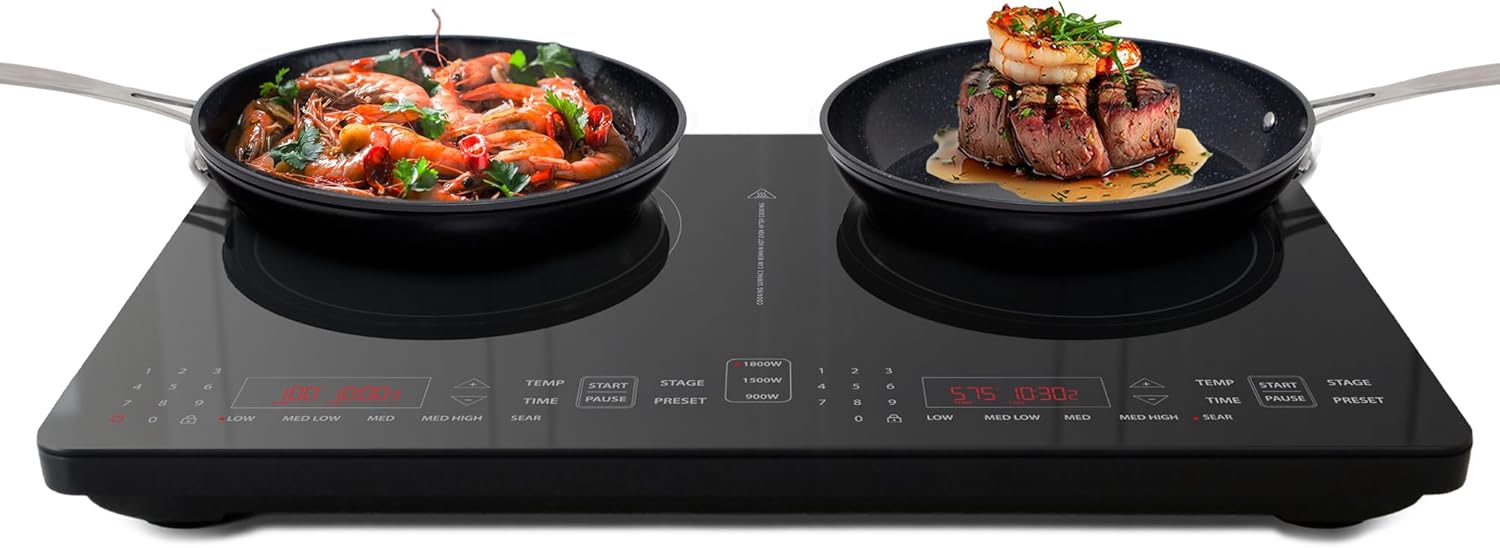
Whether you need precise temperature adjustments for delicate sauces, independent dual heating zones for multitasking, or built-in designs that integrate seamlessly into your counter space, a double induction burner offers exceptional flexibility. Reviewing the specific features, power ratings, and physical dimensions of available models helps you select the ideal cooking partner for your specific kitchen routines and spatial requirements.
As an Amazon Associate, StacyLaughs earns from qualifying purchases.
Buying guide
Understanding Power Capacity and Voltage Requirements
When selecting a 2 burner induction cooktop, evaluating electrical specifications is crucial for matching the appliance to your home wiring. Most standard models operate on 110 to 120 volts, making them compatible with ordinary kitchen outlets. However, total wattage ratings vary significantly between units, ranging from standard 1800-watt configurations to high-output 4000-watt systems.
Units that share a total pool of wattage will dynamically distribute power when both burners run simultaneously, preventing circuit overloads while balancing heat output. High-wattage models deliver faster boiling times but require careful attention to your kitchen electrical capacity. Checking these specifications ensures your new cooktop operates reliably without tripping household circuit breakers during heavy meal preparation.
Evaluating Dimensional Footprint and Installation Styles
Kitchen layout dictates whether a portable countertop unit or a built-in installation is the right choice for your cooking space. Countertop models offer exceptional flexibility, allowing you to move the appliance between indoor kitchens, outdoor patios, or recreational vehicles as needed. Built-in versions integrate directly into your countertop for a streamlined, permanent appearance.
Always measure your available surface area and depth before purchasing, as dual-burner footprints vary widely in width and depth dimensions. Ensuring proper clearance around the appliance prevents overcrowding and accommodates your preferred cookware sizes comfortably. Factoring in spatial limits helps you select a cooktop that fits your kitchen design without causing daily operational clutter.
Cookware Compatibility and Material Requirements
Induction cooking relies entirely on magnetic energy transfer, meaning your existing pots and pans must feature compatible magnetic bases to function properly. Materials like cast iron, enameled iron, and magnetic stainless steel work exceptionally well on induction surfaces. Non-magnetic aluminum, copper, or glass cookware will not generate heat unless they incorporate a bonded magnetic bottom plate.
Manufacturers often recommend a simple magnet test to verify pan compatibility before use. Many modern cooktops also feature built-in cookware detection sensors that display error codes if incompatible items are placed on active heating zones. Checking your current cookware inventory beforehand saves you from unexpected replacement expenses after purchasing your new double burner appliance.
Temperature Control Precision and Preset Options
Precise heat management separates basic hot plates from advanced induction cooktops, giving you better control over delicate recipes and complex meals. Look for models offering multiple power levels or specific temperature modes that let you dial in exact degrees for simmering chocolate or searing steaks. Preset options simplify routine cooking tasks by providing instant access to frequently used heating configurations.
Touch panels and digital LCD screens enhance control visibility, allowing you to monitor cooking zones independently without confusion. Advanced precision keys or incremental adjustments help maintain steady temperatures without scorching sensitive ingredients during long cooking cycles. Matching control features to your cooking style ensures you can easily execute both rapid boiling and slow braising techniques.
Safety Features and Built-In Protection Mechanisms
Safety is an essential consideration when operating high-heat kitchen appliances, particularly in busy households with children or pets. Modern induction cooktops do not use open flames, and heating occurs exclusively within the cookware, keeping the surrounding glass surface relatively safe. Built-in safety locks prevent accidental touch activations, while automatic shut-off mechanisms trigger immediately when cookware is removed from the burner.
Overload protection, residual heat warnings, and low-voltage monitoring systems further safeguard the appliance during extended cooking sessions. Internal cooling fans help dissipate heat effectively, protecting internal electronic components from damage over years of frequent use. Reviewing these built-in safety assurances provides greater peace of mind while preparing daily family meals in residential or recreational settings.
Cleaning and Surface Maintenance Guidelines
Maintaining a clean cooking surface preserves the appearance and functionality of your glass or ceramic cooktop over time. Smooth ceramic glass panels resist stubborn food buildup and typically require only a quick wipe with a damp towel after cooling down. Avoiding abrasive pads or harsh chemical cleaners prevents surface scratching and protects integrated touch controls.
Removable accessories like non-stick griddle pans offer additional convenience, with dishwasher-safe coatings that eliminate baked-on frying residue. Following manufacturer cleaning recommendations ensures your appliance stays in top working condition while maintaining a polished, attractive finish in your kitchen. Proper daily maintenance routines contribute significantly to the long-term durability of your dual burner investment.
Frequently asked questions
Do all pots and pans work with a 2 burner induction cooktop?
No, induction cooktops require cookware with magnetic bottoms to generate heat properly. Materials like cast iron, enameled iron, and magnetic stainless steel are fully compatible with induction surfaces. Non-magnetic materials such as aluminum, copper, or ordinary glass will not heat up unless they feature a bonded magnetic base plate. You can easily test your existing cookware by checking if a household magnet sticks firmly to the bottom surface of the pot or pan.
Can I run both burners at maximum power simultaneously on an 1800W model?
Most 1800-watt portable double induction cooktops share their total power pool between both heating zones to stay within standard electrical limits. When operating both burners at the same time, the appliance dynamically splits the available wattage rather than delivering full maximum power to each side independently. This intelligent power sharing lets you boil water on one zone while maintaining a gentle simmer on the other without tripping your household circuit breakers.
How should I clean the glass surface of my induction cooktop?
Cleaning an induction cooktop is straightforward because the glass surface stays relatively cool compared to traditional electric or gas stoves, preventing food from burning directly onto the glass. After the cooktop cools down completely, simply wipe the smooth ceramic surface with a damp cloth or sponge. For stubborn residue, manufacturers recommend using appropriate non-abrasive cleaning tools and wiping dry to maintain the polished finish and protect sensitive touch panel controls.
Are 2 burner induction cooktops safe to use in RVs and tiny homes?
Yes, many 2 burner induction cooktops are excellent choices for recreational vehicles, tiny homes, and dormitories because they provide dual-zone cooking capacity in a compact, portable footprint. They operate on standard 110-volt or 120-volt electrical outlets commonly found in North American homes and RVs. Built-in safety features like child locks, automatic pan detection, and overheat protection make them dependable options for alternative living spaces where open flames are impractical or prohibited.
What do error codes like E0 mean on an induction cooktop?
Error codes on an induction cooktop serve as diagnostic indicators to alert you to specific operating conditions or compatibility issues. For example, an E0 code typically indicates that no cookware is detected on the active burner zone or that the placed cookware material is non-magnetic and incompatible with induction cooking. Other error codes may signal voltage fluctuations, sensor issues, or thermal protection triggers, helping you troubleshoot and resolve the issue quickly.