Appliances · Buying Guide
Best 3 Pot Slow Cooker Options for Easy Party Hosting
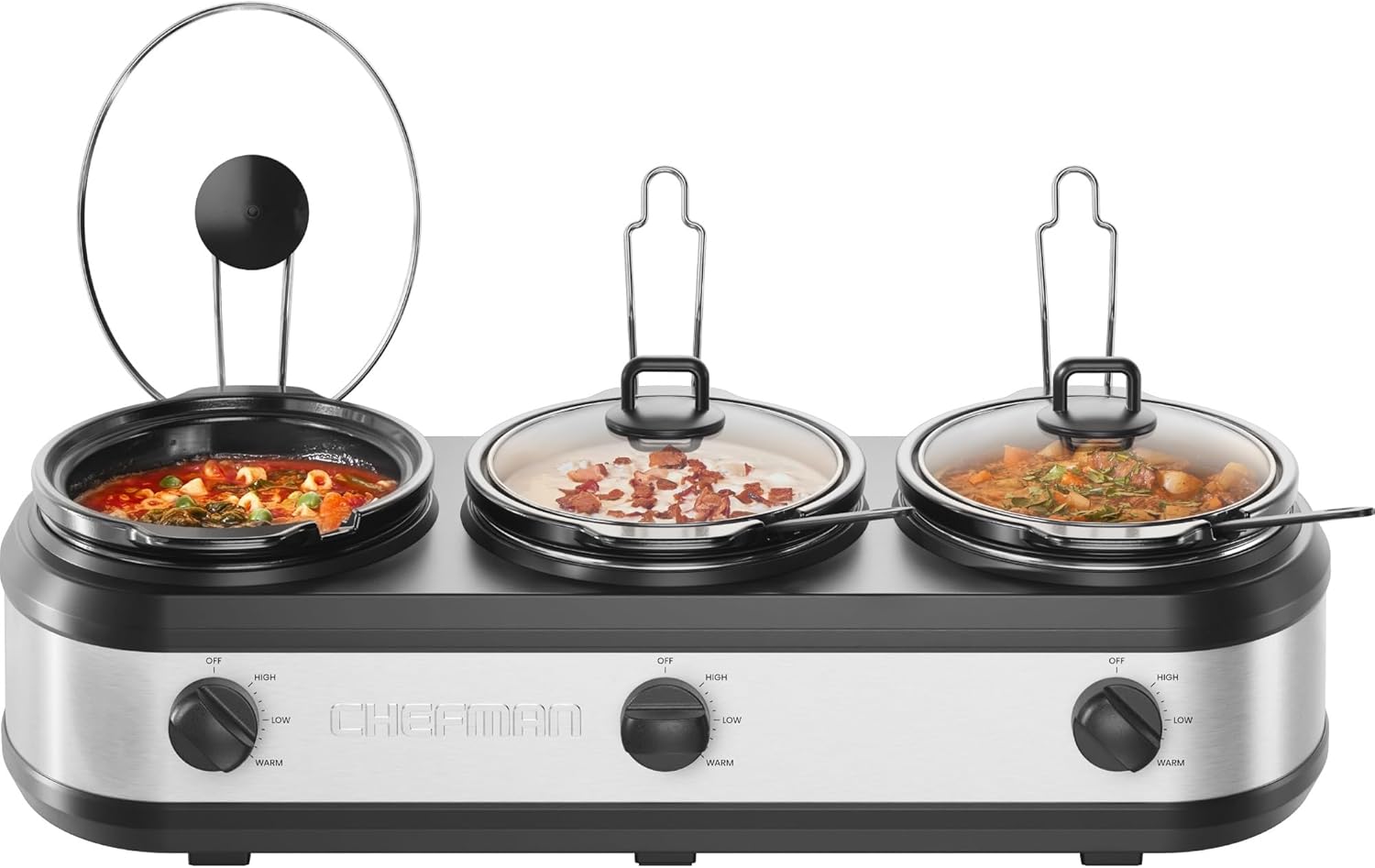
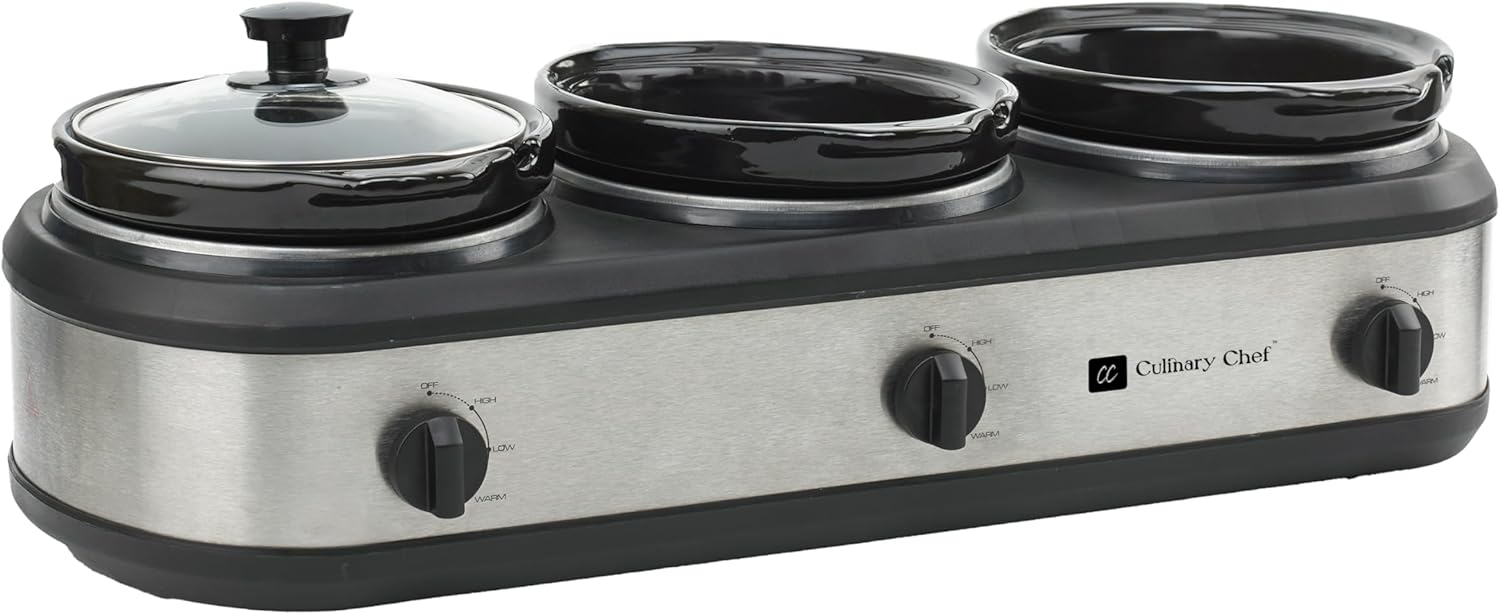
Cooking multiple dishes for a gathering requires efficient equipment that keeps food warm without cluttering counter space. A multi-pot slow cooker brings together three independent ceramic or stoneware inserts inside a single unified base. This layout lets you prepare separate recipes, from savory meats to warm desserts, utilizing individual temperature controls for each independent compartment.
Choosing the right multi-crock appliance depends heavily on batch size, available kitchen counter dimensions, and whether you need portable locking features. Models range from compact 4.5-quart configurations to larger 7.5-quart setups designed for big family events and holiday buffets. Reviewing individual specifications helps match your everyday hosting habits with the correct capacity and heating layout.
As an Amazon Associate, StacyLaughs earns from qualifying purchases.
Buying guide
Total Capacity and Pot Sizing
Selecting the correct capacity depends entirely on your typical guest count and menu complexity. Multi-pot cookers typically offer either compact 1.5-quart inserts or larger 2.5-quart crocks per section. Smaller capacities work wonderfully for warm dips, sauces, and side dishes during intimate gatherings. Larger total capacities accommodate full meals, making them ideal for holiday dinners.
Matching vessel volume to your actual cooking habits prevents wasted energy and overcrowded ingredients. If you mostly host casual game nights with finger foods, smaller pots provide adequate volume without excess bulk. Conversely, family-focused hosts benefit from maximum capacity options that handle substantial side dishes. Always evaluate your standard menu plans before committing to a specific multi-crock size.
Independent Temperature Controls
Independent heat controls are essential when preparing different recipes that require varied cooking times and serving temperatures. Models featuring separate dials for each pot let you braise meats on high while keeping delicate sauces warm. This flexibility transforms your countertop into a versatile cooking station rather than a basic warming tray.
Look for individual low, high, and warm settings across all compartments to maximize recipe versatility. Without independent controls, you cannot safely manage simultaneous cooking tasks like simmering stews alongside gentle warming. Reviewing the control layout ensures you can execute complex menus without compromising food safety or taste during long holiday events.
Counter Space and Dimensions
Triple slow cookers have wide footprints due to arranging three separate heating zones side by side. Measuring your available kitchen counter space before purchasing prevents unpleasant surprises during meal preparation. Wider models spanning over twenty-five inches require deep surfaces and careful clearance planning around upper cabinets.
Compact kitchens benefit from streamlined layouts or slightly smaller pot volumes that reduce overall appliance width. Consider where you will store the unit between uses, as multi-crock bases require substantial cabinet or pantry clearance. Proper dimension planning ensures your new appliance integrates smoothly into your existing kitchen workflow without blocking walkways.
Material and Cleanup Convenience
Choosing between ceramic and stoneware inserts impacts both heating performance and overall lifting weight. Ceramic nonstick surfaces release cooked foods easily and clean up rapidly after heavy meals. Stoneware pots provide traditional thermal retention but add noticeable weight to the appliance base when moving it around.
Removable dishwasher-safe parts significantly reduce the labor involved in post-party cleanup chores. Check whether lids, pots, and serving spoons can go directly into your dishwasher to save valuable time. Smooth stainless-steel exterior bases that wipe clean with a damp towel also minimize long-term maintenance effort.
Lid Rests and Transport Features
Serving food from a buffet line becomes significantly easier when the appliance includes dedicated lid holders or rests. These integrated features keep glass covers upright, preventing condensation from dripping onto your clean counters. Lid rests eliminate the common dilemma of finding a safe, clean spot for hot, wet pot covers.
If you frequently take your slow cooker to outside events, look for secure locking handles on the lids. Transport features help prevent accidental liquid sloshing during car trips, protecting your vehicle interior. Evaluating these convenience features ensures your appliance suits both home entertaining and travel requirements.
Energy Efficiency and Wattage
Multi-pot slow cookers generally consume less electricity than traditional full-sized kitchen ovens when maintaining warm food over long periods. However, total wattage varies across models depending on heating element power and crock size. Reviewing electrical specifications helps ensure your kitchen outlets can handle the appliance load safely.
Energy-efficient designs let you run multiple warming zones simultaneously without causing dramatic spikes in utility consumption during parties. Lower wattage units work well for keeping pre-cooked items warm, while higher wattage models heat raw ingredients faster. Balancing power requirements with your cooking style guarantees reliable performance during busy gatherings.
Frequently asked questions
Can I cook raw meat in all three pots simultaneously?
Most triple slow cookers feature individual low and high settings designed for cooking raw ingredients across all compartments. However, you must verify that your specific model's pots are rated for full cooking rather than just warming functions. Some compact warming units are primarily intended to hold pre-cooked food at safe serving temperatures. Always consult the manufacturer instructions to confirm whether all individual inserts support raw meat preparation before starting your multi-dish holiday recipes and family dinners.
How do I clean removable ceramic or stoneware pots?
Cleaning removable pots is straightforward because most modern multi-crock designs feature dishwasher-safe ceramic or stoneware inserts. You can simply lift the cooled pots out of the stainless steel base and place them directly on the top rack of your dishwasher. For stubborn food residue, soaking the pots in warm soapy water before washing helps loosen stuck particles safely. Always allow the ceramic or stoneware inserts to cool completely before washing to prevent thermal shock and potential cracking.
Are triple slow cookers safe to use for food transport?
Transporting a triple slow cooker requires careful attention to lid design and physical stability features. Certain models include specialized locking lid handles and rubberized non-slip feet specifically engineered to prevent accidental spills and sliding during car travel. If your chosen appliance lacks secure locking handles, you should transport the individual pots separately in sealed containers to avoid messy leaks. Always ensure the base and glass lids are completely secured before moving any heavy appliance to an outside party.
What is the difference between 1.5-quart and 2.5-quart pots?
The primary difference lies in the total food volume each individual compartment can hold during cooking and serving. Smaller 1.5-quart pots work exceptionally well for warm dips, melted cheese, gravies, and side dishes intended for intimate family gatherings. In contrast, larger 2.5-quart pots provide substantially more room, allowing you to prepare generous portions of stews, chili, and main entrees for big crowds. Selecting the right size depends entirely on your typical guest count and menu requirements.
Can I run only one pot while leaving the others empty?
Operating only one pot while leaving the remaining heating slots empty depends on the specific manufacturer guidelines for your appliance. Many multi-crock slow cookers allow independent temperature control, meaning you can turn on a single dial while keeping other zones switched off. However, you should never heat an empty ceramic or stoneware pot inside the active heating base, as thermal stress can damage the insert. Always check the manufacturer manual regarding partial load operation before use.