Appliances · Buying Guide
Best 30 Cup Rice Cooker Options for Large Families and Catering Events
Finding the right cooking appliance for large gatherings or commercial spaces requires focusing on high-capacity options. A 30 cup rice cooker provides the volume needed to prepare substantial quantities of grains without constant monitoring. These large-scale cookers handle various rice types effortlessly, ensuring consistent textures for every meal service.
Exploring available models helps identify devices featuring automatic warming functions and durable construction materials. Whether supplying food service operations or feeding large families, selecting an appropriate unit ensures consistent preparation. Reviewing specific power ratings, included accessories, and physical dimensions guides the final purchasing decision.
As an Amazon Associate, StacyLaughs earns from qualifying purchases.
Buying guide
Capacity and Batch Volume
Selecting the correct capacity is essential when choosing a large-scale rice cooker for your kitchen or establishment. Models rated for thirty cups uncooked yield up to sixty cups of cooked grains per single batch. This massive output serves large families, community gatherings, or bustling restaurant dining rooms with remarkable ease. Matching volume prevents kitchen bottlenecks.
Evaluating your daily guest count helps determine whether a high-capacity commercial unit is necessary or if a smaller family-oriented model suffices. Ensuring your equipment matches your volume prevents food waste while keeping up with heavy service demands seamlessly throughout the day. Consider peak hours before purchasing.
Power Ratings and Electrical Needs
Power ratings significantly influence how quickly appliances heat up and manage large volumes of water and grain. Units ranging from one thousand to sixteen50 watts deliver rapid cooking cycles suited for commercial environments. Understanding your kitchen electrical circuit capacity ensures these high-wattage cookers operate safely without overloading wall outlets during peak prep times.
Lower wattage models might require extended cooking durations but often integrate smoothly into standard residential electrical setups. Reviewing power consumption specifications prevents unexpected circuit tripping in busy kitchens. Always verify local outlet limitations before installing heavy-duty culinary equipment in shared spaces.
Materials and Cleaning Requirements
Exterior and interior materials dictate both the durability of the appliance and the required maintenance routine after use. Stainless steel bodies resist heavy daily wear in commercial settings, while non-stick inner pots prevent cooked grains from adhering to the bottom. Evaluating whether parts allow dishwasher cleaning or demand hand washing influences daily cleanup efficiency.
Following manufacturer care instructions preserves non-stick coatings and extends the working lifespan of heating elements. Some models feature detachable lids and silicone pads that simplify debris removal between batches. Choosing units with straightforward cleaning requirements saves valuable labor hours at the end of each shift.
Automatic Warming and Temperature Control
Automatic warming functions eliminate the need for constant monitoring by shifting to a low-heat state once cooking concludes. This feature keeps grains at ideal serving temperatures for hours without burning or drying out. Commercial models often extend this warming window to accommodate variable dining times in restaurant environments.
Understanding how long a cooker maintains safe serving temperatures helps coordinate meal service schedules effectively. Some units transition automatically after a brief cooking period, protecting food quality throughout extended holding times. Reliable temperature management remains crucial for professional catering operations.
Included Accessories and Utensils
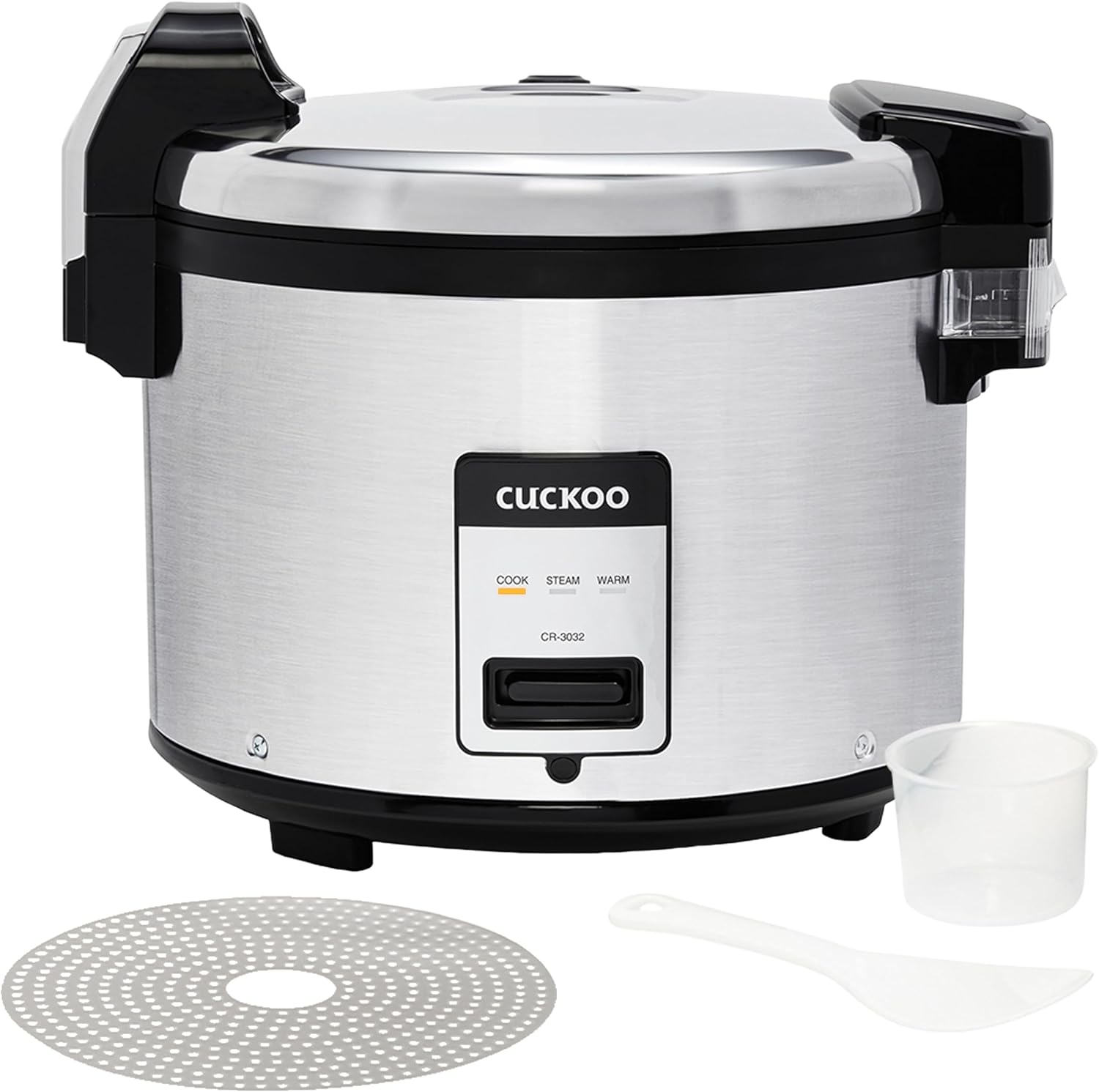
Included accessories enhance the overall value and immediate usability of a newly purchased rice appliance. Standard additions often feature measuring cups designed for exact water ratios, serving paddles, and specialized rice sieves. Certain commercial models also provide cooking silicone pads to protect inner pot bases.
Having the correct utensils prevents scratching on sensitive non-stick inner pot surfaces during daily serving routines. Assessing bundled extras ensures you have the necessary tools right out of the box without requiring separate accessory purchases. Practical additions streamline food preparation tasks.
Safety Certifications and Build Quality
Safety certifications provide formal verification that an appliance complies with established commercial health and electrical standards. Certifications such as cETL and NSF indicate that a cooker meets rigorous testing requirements for professional food service facilities. Prioritizing certified units ensures regulatory compliance in public dining establishments.
Build quality attributes like anti-slip feet, cool-touch exteriors, and sturdy carrying handles contribute to safe kitchen operation. Evaluating structural durability protects staff from accidental burns and equipment failures during intense service shifts. Sturdy construction supports long-term reliability.
Frequently asked questions
How many cooked portions does a 30-cup uncooked rice cooker yield?
A rice cooker with a thirty-cup uncooked capacity typically yields up to sixty cups of cooked rice per batch, because grains roughly double in volume during the cooking process. This substantial output makes these large-capacity appliances ideal for feeding large crowds, catering large events, or supplying busy restaurant dining rooms with a continuous grain supply. Evaluating your specific serving requirements ensures you select a model capable of meeting peak demand without needing multiple consecutive cooking cycles.
Do all 30 cup rice cookers feature dishwasher-safe removable parts?
No, cleaning requirements vary significantly across different models on the market. While certain residential units feature dishwasher-safe components for effortless cleanup, many commercial-grade rice cookers specifically mandate hand washing for their inner pots and lids to preserve material integrity. Always review the manufacturer care instructions provided for your specific model before placing any components into an automated dishwasher to avoid damaging the protective finishes or specialized non-stick coatings.
What is the purpose of the automatic keep-warm feature?
The automatic keep-warm feature transitions the appliance from a high-heat cooking cycle to a low-temperature holding state once the grain absorption process completes. This prevents the rice from overcooking, burning, or drying out, allowing the food to remain at an ideal serving temperature for extended periods. In commercial food service settings, this function ensures that fresh, warm grains are readily available for customers throughout a multi-hour dining or catering service window.
Are commercial rice cookers suitable for home kitchen use?
Commercial-grade rice cookers can be used in busy home kitchens if you regularly cook massive quantities of grains for large families or frequent gatherings. However, their high wattage requirements, large physical dimensions, and heavy-duty stainless steel builds require dedicated counter space and careful attention to residential electrical circuit capacities. Home cooks who only prepare small family meals will generally find standard-capacity residential models more manageable and appropriately sized.
What accessories are typically included with these large rice cookers?
Most large-capacity rice cookers include a durable non-stick inner pot and a specialized measuring cup to ensure precise water-to-grain ratios. Many models also bundle a serving paddle or scoop for safe food extraction without scratching the interior coating. Commercial variants frequently include specialized items such as cooking silicone pads, detachable stainless steel lids, or rice sieves designed to streamline preparation, serving, and cleanup tasks during active kitchen shifts.