Appliances · Buying Guide
Best 36 Induction Cooktop Options for Modern Kitchen Spaces

Upgrading a kitchen workspace often involves choosing built-in appliances that carefully balance raw heating power, advanced safety features, and sleek countertop integration. Selecting a spacious 36-inch induction cooktop provides generous surface room equipped with multiple independent heating elements, designed to accommodate large meal preparations and busy family gatherings effortlessly without crowding your cookware.
These high-capacity 240V hardwired electrical units rely exclusively on compatible magnetic cookware to generate direct heat within the pan base, offering efficient energy usage and precise temperature adjustments across multiple power levels. Professional installation is frequently recommended to ensure everything operates safely. Exploring available models helps determine which appliance aligns seamlessly with specific spatial countertop requirements, home electrical wiring limits, and everyday household cooking habits.
As an Amazon Associate, StacyLaughs earns from qualifying purchases.
Buying guide
Electrical Requirements and Voltage Specs
Selecting a 36-inch induction cooktop requires careful evaluation of your home electrical infrastructure before making a final purchase decision. Most high-capacity models operate on 240V circuits and demand professional hardwired installation rather than a standard wall plug connection. Reviewing your existing circuit breaker rating and home wire gauge prevents unexpected electrical overloads and ensures long-term operational safety across all burners.
High-wattage appliances drawing between 9200 and 11400 watts require dedicated breaker lines and expert electrician assistance to guarantee proper integration. Confirming these electrical specifications beforehand saves valuable time and ensures your kitchen setup strictly follows manufacturer guidelines for reliable, heavy-duty daily performance during large meal preparations.
Countertop Dimensions and Cutout Sizing
Proper spatial planning is essential when integrating a large 36-inch cooktop into existing kitchen cabinetry and countertop surfaces. Built-in and drop-in models require exact cutout dimensions to ensure a flush, secure physical fit without gaps. Measuring the available countertop space accurately prevents alignment issues during installation and maintains a neat, clean visual appearance across the entire kitchen workspace.
Reviewing the depth, width, and height specifications provided by the manufacturer helps avoid costly stone-cutting modifications. Ensuring adequate clearance underneath the countertop for proper ventilation and electrical wiring routing is equally important for maintaining optimal appliance performance and longevity over years of heavy daily cooking use.
Cookware Compatibility and Magnetic Bases
Induction cooking technology depends entirely on specialized electromagnetic fields to generate heat directly within compatible pots and pans. Because standard non-magnetic aluminum or glass cookware will not function on these surfaces, verifying your existing kitchen pots is a crucial step before upgrading. Magnetic materials such as cast iron and specialized stainless steel are required for proper energy transfer.
Smart pan detection features built into many modern cooktops automatically verify cookware compatibility before activating the heating elements. If an incompatible pan is placed on a zone, the system will adjust or shut off power, minimizing energy waste and preventing accidental damage while preparing everyday household meals for family members.
Zone Flexibility and Bridge Functionality
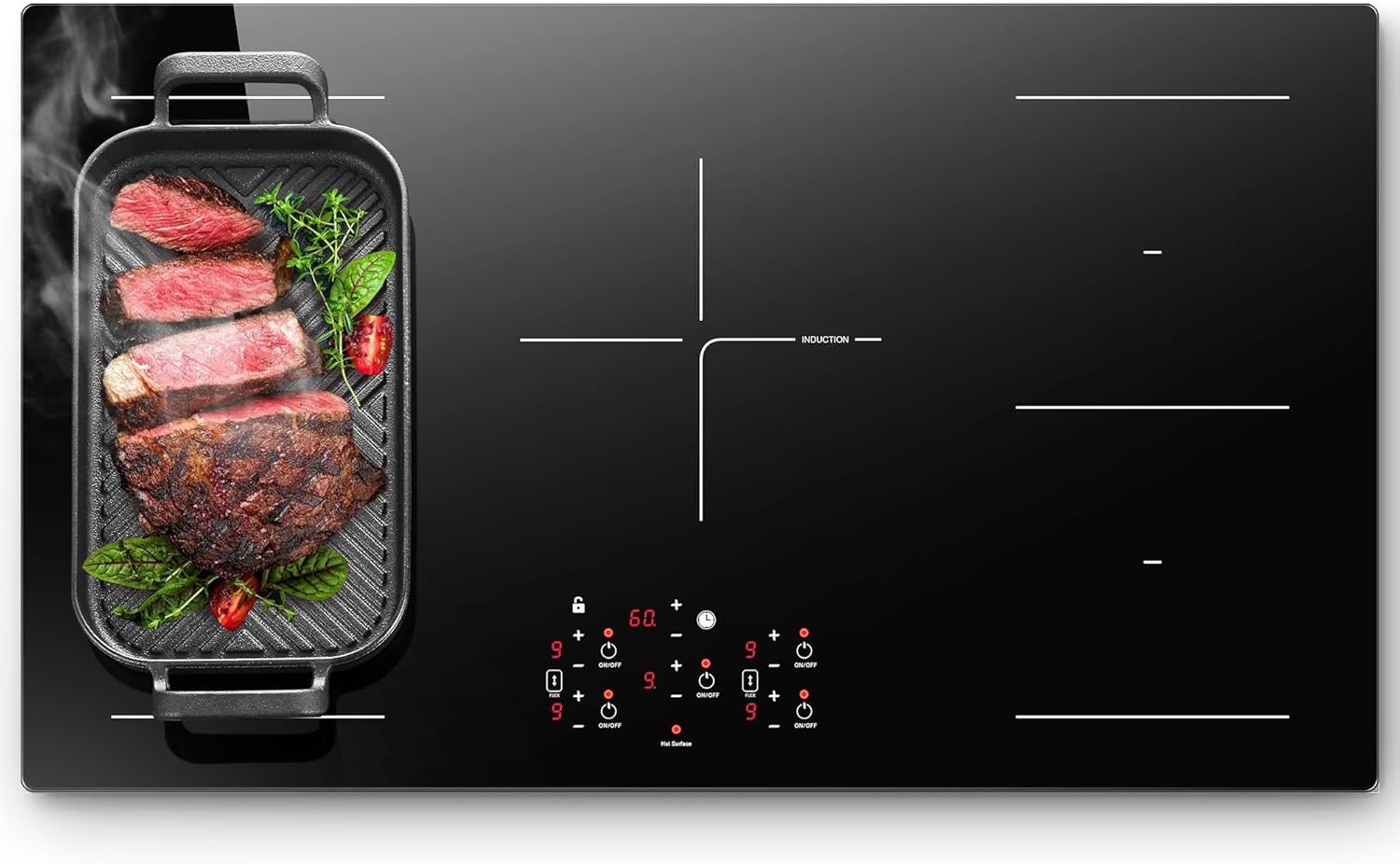
Preparing meals for large gatherings often requires accommodating oversized cookware, griddles, and long roasting pans that standard burners cannot handle properly. Cooktops featuring bridge zone designs allow you to combine two independent cooking elements into one continuous heating surface. This flexibility ensures even heat distribution across large pans without troublesome cold spots forming during use.
Dual heating coils within these bridge zones maintain consistent temperatures while moving food items across the expanded surface area. Evaluating whether you frequently use specialty oversized cookware helps determine if investing in a model with bridge functionality will genuinely benefit your daily cooking routine and family meal preparation tasks.
Safety Features and Child Protection
Kitchen safety is paramount, particularly in active households with young children or fast-paced multitasking cooking environments. Modern induction cooktops incorporate robust protective suites featuring child safety locks, automatic shut-off mechanisms, and clear residual heat indicators. These visual indicators explicitly signal when glass ceramic surfaces remain hot after cooking has finished, preventing accidental burns.
Overheat protection and spill-proof functions add essential layers of security by monitoring internal operational temperatures and fluid interference on the touch control panel. Choosing a model equipped with these comprehensive safety safeguards provides daily peace of mind, ensuring the appliance manages unexpected situations autonomously while you focus on preparing family meals.
Control Interfaces and Heating Precision
The method used to adjust heat settings significantly impacts your overall daily cooking experience and recipe success. Digital touch panels, glide-touch sliders, and multiple power levels offer precise control ranging from delicate simmers to rapid water boiling. Responsive touch controls make adjusting temperatures across multiple independent burners straightforward, intuitive, and efficient during busy meal preparation sessions.
Advanced models also provide convenient preset modes for melting, keeping warm, and simmering, effectively removing guesswork from routine kitchen tasks. Assessing your personal preference for granular slider adjustments versus standard incremental power levels helps ensure you select a cooktop interface that perfectly matches your preferred cooking style and habits.
Frequently asked questions
What type of electrical supply do 36-inch induction cooktops require?
Most 36-inch induction cooktops require a 240V or 220-240V electrical supply and must be hardwired directly into your home wiring system rather than plugged into a standard wall outlet. Because these appliances draw high wattage—ranging from 9200W to over 11000W—it is critical to verify your home circuit breaker rating and wire gauge before purchasing. Professional installation by a licensed electrician is strongly recommended to ensure safety, prevent electrical overloads, and comply with manufacturer guidelines.
Can I use my existing cookware on an induction cooktop?
You can use existing cookware only if it features a magnetic base. Induction technology relies on magnetic fields to generate heat directly inside the pan, meaning standard aluminum, copper, or glass pots will not work unless they have an induction-compatible steel base. Common compatible materials include cast iron and magnetic stainless steel. Many cooktops feature smart pan detection to verify compatibility automatically, shutting off heat if an unsupported pan is placed on a cooking zone.
What is a bridge zone and why is it useful?
A bridge zone is a specialized design feature that allows you to combine two independent cooking elements into one large, continuous heating surface. This functionality is particularly useful when preparing meals using oversized cookware, long griddles, or rectangular roasting pans that exceed the size of a standard round burner. Dual heating coils ensure heat spreads evenly across the entire bridged area, preventing cold spots and making it much easier to cook large family meals.
How do preset modes like melt and simmer work?
Preset modes provide automated temperature control for specific culinary tasks, such as melting butter, keeping soups warm, or maintaining a steady simmer. Instead of manually adjusting power levels and constantly monitoring your pots to prevent burning, you simply press a dedicated button on the touch control panel. The cooktop holds the precise, steady temperature required for the task, offering a stress-free cooking experience that reduces the risk of scorched food during busy kitchen sessions.
Are glass ceramic induction surfaces difficult to clean?
Glass ceramic and textured glass surfaces are generally designed for straightforward maintenance, featuring smooth or scratch-resistant finishes that wipe clean easily after use. Because induction technology heats the pan directly rather than the surrounding glass surface, spilled food is less likely to bake onto the cooktop and burn. However, specific finishes, such as matte textured glass, may require careful attention to cleaning instructions to maintain their distinctive appearance over time without damaging the surface.