Appliances · Buying Guide
Best All-Clad Induction Cookware Sets for Everyday Kitchens
Selecting appropriate cookware for an induction cooktop involves matching your daily routine with compatible magnetic base materials. All-Clad manufactures several distinct collections designed to function reliably across induction surfaces, electric coils, and gas burners. Understanding these options ensures you find cookware that heats evenly and fits your exact meal preparation habits without unnecessary complications during cooking sessions.
From hard-anodized aluminum sets featuring reliable nonstick coatings to multi-ply stainless steel heirloom collections built for professional searing, each line offers specific design traits. Reviewing the core construction, handle styling, piece counts, and cleaning guidelines helps clarify practical suitability for home kitchens of varying sizes and diverse cooking demands and household needs.
As an Amazon Associate, StacyLaughs earns from qualifying purchases.
Buying guide
Core Material Composition
Choosing between hard-anodized aluminum and multi-ply stainless steel significantly shapes your daily cooking experience on an induction cooktop. Hard-anodized sets feature reinforced metal bases designed to interact smoothly with magnetic induction burners while distributing heat evenly across the entire cooking surface. This construction provides reliable performance for everyday tasks like sautéing vegetables, browning meats, and frying eggs without creating annoying hot spots during meal preparation.
Stainless steel alternatives utilize bonded metal layers, such as tri-ply or five-ply construction, integrating a responsive aluminum or steel core directly into the walls. This robust design promotes rapid thermal responsiveness and exceptional high heat tolerance, making each material option suitable for distinct cooking preferences. Understanding these underlying material differences helps you select cookware that matches your preferred stove techniques.
Surface Coatings and Food Release
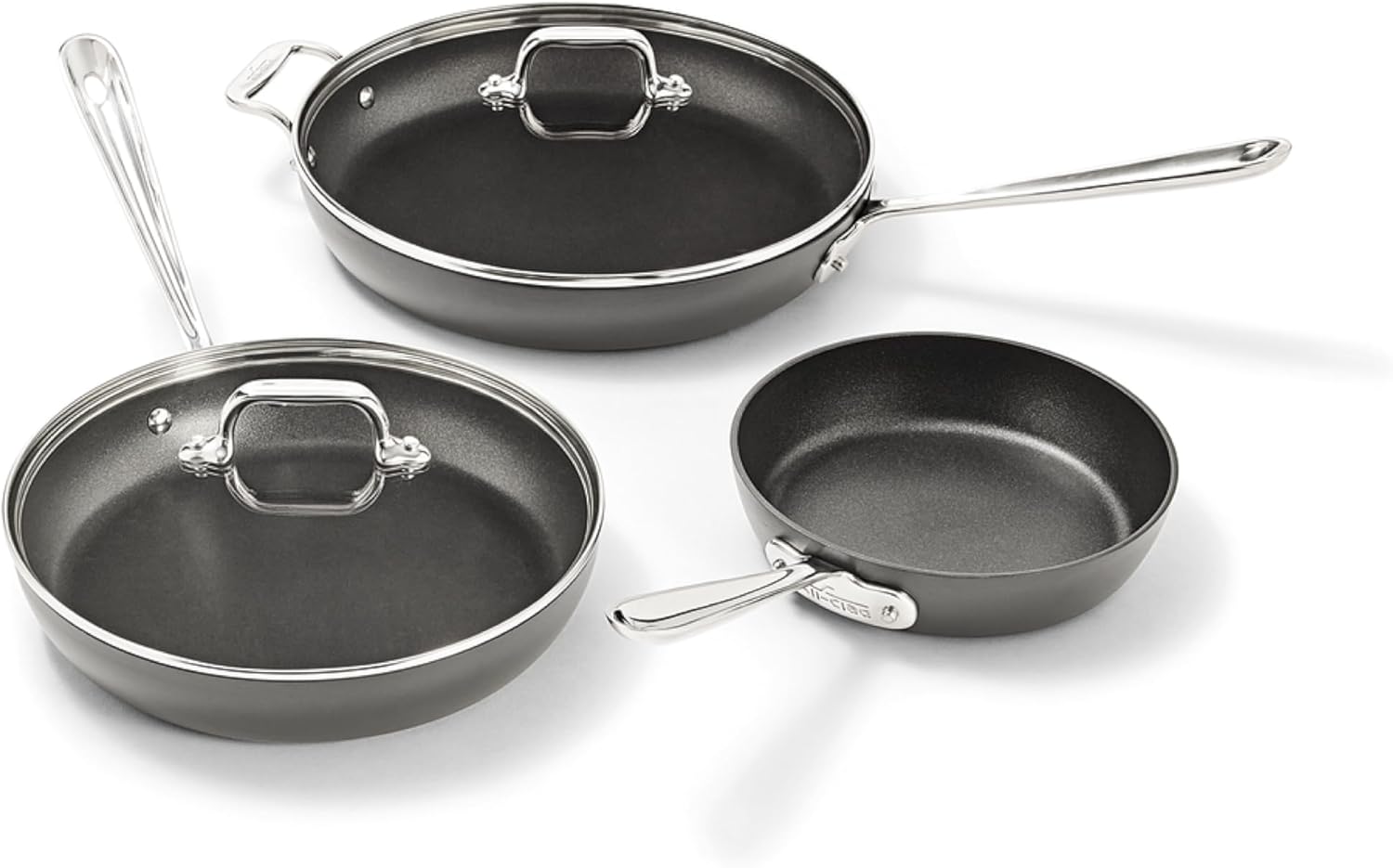
Nonstick surface coatings offer effortless food release, allowing you to cook delicate items like eggs, fish, and pancakes with minimal oil or butter. These PTFE-coated hard-anodized options simplify everyday cleanup routines significantly because food particles slide off the smooth interior without sticking stubbornly to the pan base. Maintenance involves gentle washing with a sponge and non-metal utensils to protect the coating over years of regular use.
Conversely, uncoated stainless steel surfaces provide superior searing capabilities and develop rich fond for flavorful pan sauces. While stainless steel requires proper preheating and added cooking fats to prevent food adhesion, it withstands metal utensils and higher heat levels much better than delicate nonstick layers. Weighing these surface traits ensures your cookware matches your preferred recipes and cleaning habits.
Set Configurations and Piece Counts
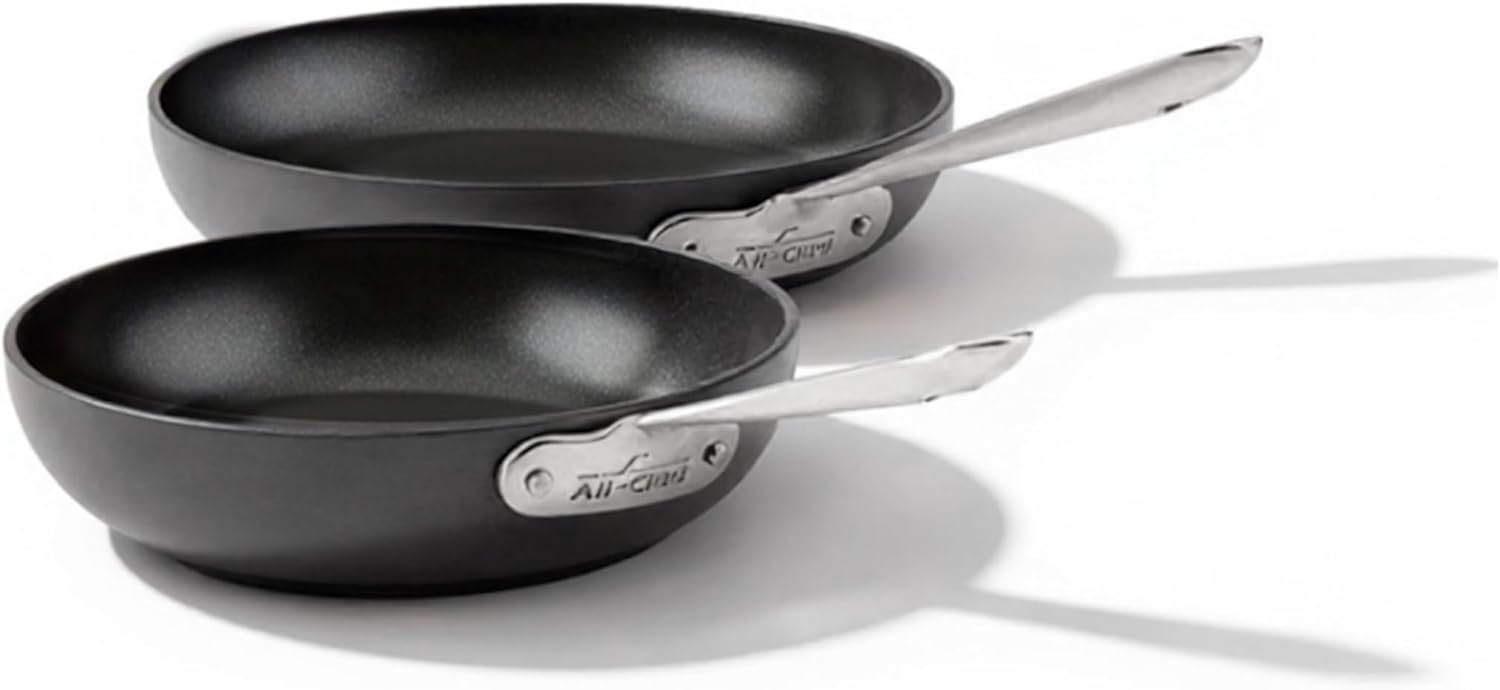
Evaluating the exact number and variety of pieces included in a cookware collection prevents cabinet clutter while ensuring you have the right vessels for your favorite recipes. Smaller sets focusing primarily on fry pans suit quick breakfast tasks and single-person meals, providing specialized flat surfaces without imposing excessive storage demands in compact kitchen spaces.
Larger ten-piece bundles incorporate multiple fry pans, saucepans, sauté pans, and large stockpots, covering everything from boiling pasta to simmering hearty soups for families. Assessing your typical meal sizes, menu variety, and kitchen storage limits helps determine whether a compact fry pan collection or a comprehensive multi-piece kitchen suite best satisfies your daily cooking requirements.
Handle Design and Ergonomics
Handle design plays a vital role in safe and comfortable cookware handling, especially when lifting heavy pots filled with hot liquids across the kitchen floor. Contoured stainless steel handles provide a secure, ergonomic grip, while sturdy double-riveted construction attaches the handle firmly to the pan body for reliable long-term structural stability during frequent cooking sessions.
Specific stainless steel lines feature classic handle angles inspired by professional chefs, supporting a comfortable underhand grip for enhanced balance and precise control during rapid stirring tasks. Inspecting how a handle is shaped ensures confident maneuvering from hot induction stovetop burners directly to high-temperature oven interiors without hand fatigue.
Temperature Tolerances and Oven Safety
Modern cookware often transitions seamlessly from induction stovetop burners to the interior oven, allowing you to finish complex recipes like roasted meats or baked casseroles in a single vessel. Hard-anodized nonstick pans typically withstand oven heat up to five hundred degrees Fahrenheit, though their accompanying tempered glass lids usually feature a lower three hundred fifty degree safety limit.
Uncoated multi-ply stainless steel sets frequently offer even higher temperature thresholds, supporting intensive oven and broiler cooking use up to six hundred degrees Fahrenheit without any structural degradation. Reviewing these specific maximum heat ratings prevents accidental warping or thermal damage to glass lids and metal handles during high-heat baking tasks.
Maintenance and Cleaning Guidelines
Proper maintenance preserves the visual appearance and cooking performance of your induction-ready cookware over years of regular daily kitchen use. While certain hard-anodized nonstick collections claim dishwasher safety, manufacturer cleaning guidelines recommend washing by hand with mild soap, a soft sponge, and non-metal utensils to protect the delicate PTFE nonstick coating from premature surface wear over time.
Stainless steel collections frequently require manual hand washing to maintain their polished or brushed exterior metal finishes and prevent surface dulling caused by harsh automated dishwasher detergents. Following these recommended care instructions faithfully extends the overall lifespan of your pots and pans across all residential stovetop heating surfaces.
Frequently asked questions
Are all All-Clad cookware sets compatible with induction cooktops?
Yes, the specific All-Clad collections featured here, including both the HA1 nonstick series and the D3 and D5 stainless steel lines, are fully compatible with induction cooktops as well as electric and gas ranges. Induction cooking relies on magnetic fields to heat the pan directly, which requires a magnetic metal base. All-Clad engineers these particular sets with optimized stainless-steel bases or bonded metal layers that interact correctly with induction burners. Always verify individual product specifications if you are considering older or alternative collections outside of these specific lines.
Can I put my All-Clad nonstick pans in the dishwasher?
While manufacturer specifications for certain hard-anodized nonstick sets note that they are dishwasher safe, All-Clad explicitly recommends hand washing to preserve the longevity of the nonstick surface. Automated dishwashers use harsh detergents and high-pressure water jets that can degrade the PTFE coating over time, diminishing its food release performance. To maintain your nonstick pans properly, wash them gently using warm soapy water, a non-abrasive sponge, and wooden, nylon, or silicone utensils rather than relying on automatic dishwasher cycles.
What utensils should I use with All-Clad HA1 nonstick cookware?
When cooking with All-Clad HA1 nonstick pans, you should use utensils made from silicone, nylon, or wood. Metal utensils such as spatulas, whisks, and forks can scratch, gouge, or wear down the delicate PTFE nonstick coating, leading to premature loss of food release performance. Sticking to non-scratch kitchen tools protects the hard-anodized surface and ensures your pans remain smooth and easy to clean. If you prefer using metal turners and whisks, consider uncoated stainless steel sets like the D3 or D5 collections instead.
What is the maximum oven-safe temperature for All-Clad stainless steel sets?
The All-Clad D3 and D5 stainless steel cookware sets are engineered to withstand oven and broiler temperatures up to six hundred degrees Fahrenheit. This high temperature tolerance allows you to start dishes on your induction stovetop and transfer the pans directly into a hot oven for roasting, browning, or finishing casseroles. Because these stainless steel sets lack glass lids or synthetic nonstick coatings, they handle intense oven heat safely. Always check component limits if your specific set includes specialized lids or non-metal parts.
Why do All-Clad stainless steel pans require hand washing?
All-Clad stainless steel collections, including the D3 and D5 stainless lines, require hand washing to maintain their polished or brushed exterior metal finishes. Automated dishwashers utilize harsh chemical detergents and intense water pressure that can dull the exterior metal, cause discoloration, or stain the bonded layers over extended periods. Hand washing with mild dish soap and a sponge preserves the appearance and structural integrity of the cookware. Following these maintenance guidelines ensures your heirloom stainless steel pieces remain attractive.