Appliances · Buying Guide
Best bosch 36 induction cooktop alternatives for modern kitchens
Upgrading a kitchen workspace often starts with selecting a reliable cooktop that balances fast heating with straightforward daily controls. Large 36-inch configurations provide ample room for multiple pots, letting busy households prepare family meals without overcrowding the surface. Modern electric and induction options rely on magnetic energy to warm cookware directly, reducing wasted ambient heat while keeping the surrounding countertop cooler during intensive cooking sessions.
Exploring alternative 36-inch induction cooktops requires evaluating power ratings, electrical requirements like hardwired 240V connections, and surface layouts featuring bridge zones or flexible elements. Whether you need rapid boiling capabilities for pasta or gentle warming presets for delicate sauces, understanding these core specifications ensures a seamless integration into your kitchen layout and cabinetry dimensions.
As an Amazon Associate, StacyLaughs earns from qualifying purchases.
Buying guide
Electrical Requirements and Hardwired Installation
Evaluating the electrical capacity of your kitchen is an essential first step before purchasing a large 36-inch induction cooktop. Most units require a dedicated 220V to 240V power supply and professional hardwired installation rather than a standard plug-in cord. Reviewing your home wire gauge and circuit breaker rating prevents unexpected electrical hazards or tripped breakers during high-heat cooking sessions.
Consulting a licensed electrician ensures that your kitchen circuitry matches the specific wattage demands of your chosen appliance. Ignoring these technical electrical prerequisites can lead to frustrating installation delays or safety compliance issues. Proper planning guarantees safe, reliable operation when running multiple high-power burners simultaneously across your new cooktop surface.
Surface Materials and Glass Durability
The cooktop surface material directly influences daily maintenance routines and long-term durability in busy kitchen environments. Glass-ceramic and crystal glass surfaces offer smooth profiles that resist scratches and withstand high cooking temperatures without structural compromise. Selecting a quality ceramic top ensures that accidental spills do not permanently damage the cooking zone, keeping cleanup straightforward.
Some models incorporate matte textured finishes designed to minimize visible fingerprints and reduce light glare under bright kitchen lights. While glossy finishes provide a classic reflective aesthetic, textured alternatives help maintain a cleaner appearance between routine wiping sessions. Assessing how surface textures handle everyday wear helps you choose a design matching your aesthetic preferences.
Power Ratings and Booster Zones
Power output determines how quickly your cookware heats up, boils water, and executes high-temperature searing techniques. Higher wattage capacities, ranging from 7200W to over 10800W across multiple elements, provide rapid thermal response times for demanding meal preparation. Booster functions temporarily elevate power on individual zones to cut down waiting times during busy cooking routines.
Carefully managing total power distribution is important when operating several high-wattage burners at the same time. Many units automatically regulate power sharing to protect home electrical circuits from exceeding safe operational limits. Balancing your need for rapid boiling against circuit limitations ensures consistent performance without unexpected power scaling issues during heavy meal preparation.
Flexible Heating Zones and Bridge Elements
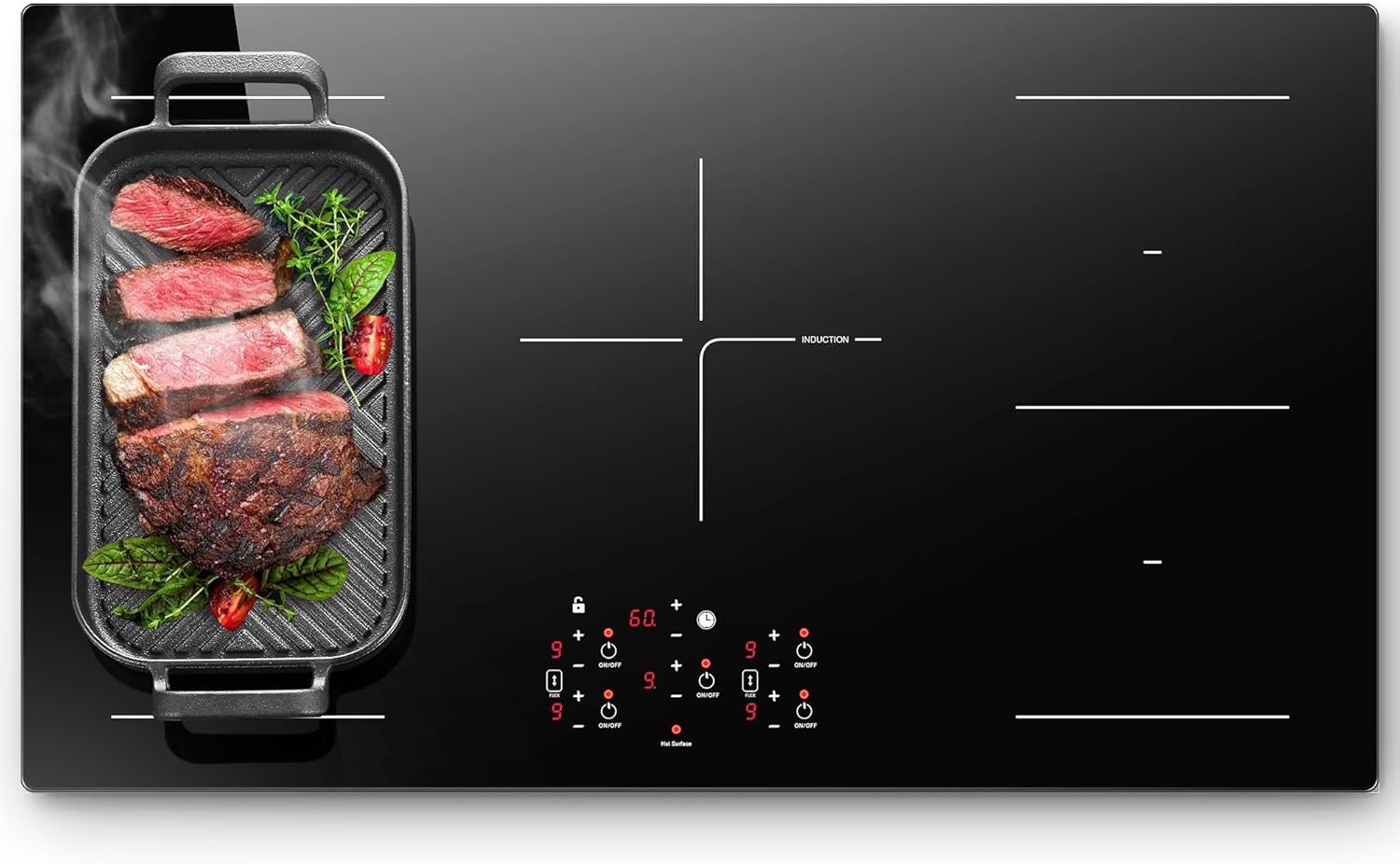
Flexible cooking zones and bridge elements expand your culinary capabilities by linking two independent burners into a single continuous heating area. This feature accommodates oversized cookware, long griddles, and rectangular roasting pans that would otherwise heat unevenly on standard round burners. Dual heating coils within bridge configurations distribute thermal energy evenly across the entire base of large pans.
Utilizing bridge zones simplifies preparing large family meals or hosting dinner parties by letting you cook with specialized pots. When shopping for a wide cooktop, verify how easily the bridge function activates and whether dual sensors maintain consistent temperatures. This flexibility transforms a standard cooktop into a versatile workstation for varied cookware shapes.
Control Interfaces and Precision Settings
The control interface dictates how easily you can adjust temperatures, set timers, and navigate through operational modes during cooking. Digital touch panels and smooth sliding selectors offer responsive alternatives to traditional mechanical knobs, letting you change heat levels with a simple finger swipe. Multiple power levels, often ranging across nine distinct increments, provide fine-tuned control over simmering and frying tasks.
Independent zone timers further enhance multitasking precision by allowing you to program individual cooking durations for every burner. This automation prevents food from burning and eliminates the need for constant manual monitoring. Evaluating control responsiveness ensures you can make rapid adjustments when juggling multiple complex recipes simultaneously.
Safety Features and Built-In Protections
Comprehensive safety features are vital when installing high-power induction appliances in busy household environments. Child locks prevent accidental activation by curious youngsters, while residual heat indicators alert users to warm surfaces long after cooking elements turn off. Overheat protection systems automatically cut power if temperatures exceed safe thresholds, protecting both the appliance and your kitchen cabinetry.
Smart pan detection adds another layer of security by verifying that compatible magnetic cookware is present before activating heat. If a pan is removed, the system pauses or shuts down the element to conserve energy and prevent bare surface heating. Prioritizing these safety mechanisms ensures a secure cooking experience for every household member.
Frequently asked questions
What kind of cookware works on these induction cooktops?
Induction cooktops require magnetic cookware to function properly because they rely on electromagnetic fields to generate heat directly within the pot or pan. Suitable materials include cast iron and magnetic stainless steel. You can easily test your existing pots by placing a magnet against the bottom; if it clings firmly, the cookware is induction-compatible. Non-magnetic materials like aluminum, copper, or standard glass will not heat up unless they feature a bonded magnetic base designed specifically for induction appliances.
Can I install a 36-inch induction cooktop myself?
Most 36-inch induction cooktops require a dedicated 220V to 240V electrical supply and professional hardwired installation rather than plugging into a standard wall outlet. Because of the high wattage requirements and complex wiring demands, hiring a licensed electrician is strongly recommended to ensure compliance with local electrical codes. Attempting a DIY installation without proper electrical training can result in tripped circuit breakers, damaged wiring, or voided product guidelines, making professional setup the safest choice.
What is a bridge zone and how does it help?
A bridge zone links two separate cooking elements on the left or right side of the cooktop into a single continuous heating area. This feature is especially useful when you are cooking with oversized pans, long griddles, or rectangular roasting dishes that exceed the size of a standard round burner. By combining heating coils, the cooktop distributes thermal energy evenly across the entire base of the large cookware, preventing hot spots and ensuring uniform cooking results.
How do I clean and maintain the glass-ceramic surface?
Maintaining a glass-ceramic cooktop surface involves wiping down spills regularly with a damp cloth after the surface has cooled completely. Because induction surfaces do not get as hot as traditional radiant stoves, food is less likely to bake onto the glass, making daily cleanup easier. For routine care, avoid abrasive scouring pads or harsh chemical cleaners that can scratch the smooth finish, and instead use recommended cleaning solutions designed specifically for ceramic cooktops.
Why does total power limit when multiple burners are used?
When multiple burners operate simultaneously, many induction cooktops regulate total power distribution to protect your home electrical circuit from exceeding its maximum safe amperage capacity. Even though individual zones feature high booster ratings for rapid heating, the internal power management system dynamically shares available wattage across active elements. This protective measure prevents circuit overloads and tripped breakers, ensuring your kitchen electrical infrastructure remains safe during heavy meal preparation sessions.