Appliances · Buying Guide
Best Budget Meat Grinder Options for Home Kitchen Food Preparation
Finding the right meat grinder for home cooking involves looking at power sources, attachment options, and physical dimensions that comfortably fit your kitchen setup. Whether you prefer a hand-operated manual machine with a secure table clamp or a high-powered electric motor designed for rapid processing, understanding core specifications helps narrow down choices effectively.
Different models offer varying capabilities, ranging from basic meat mincing to specialized sausage stuffing and vegetable processing. Reviewing included plates, cutting blades, and durable build materials ensures you select a unit tailored to specific meal preparation routines without dealing with unnecessary complications or mismatched features.
As an Amazon Associate, StacyLaughs earns from qualifying purchases.
Buying guide
Power Source and Motor Capacity
Choosing between an electric motor and a manual hand crank depends entirely on your intended volume and frequency of meat processing tasks. Electric models apply powerful motors measured in high wattage to process large batches of beef, pork, and venison quickly with minimal physical effort from the user during busy cooking sessions and meal preparations.
Manual grinders rely on physical cranking and feature secure steel table clamps to remain completely steady during operation. They suit smaller batches and provide tactile control over the grinding speed without requiring an electrical outlet nearby, making them a traditional and reliable choice for home kitchens with diverse daily cooking needs and limited counter space.
Grinding Plates and Cutting Blades
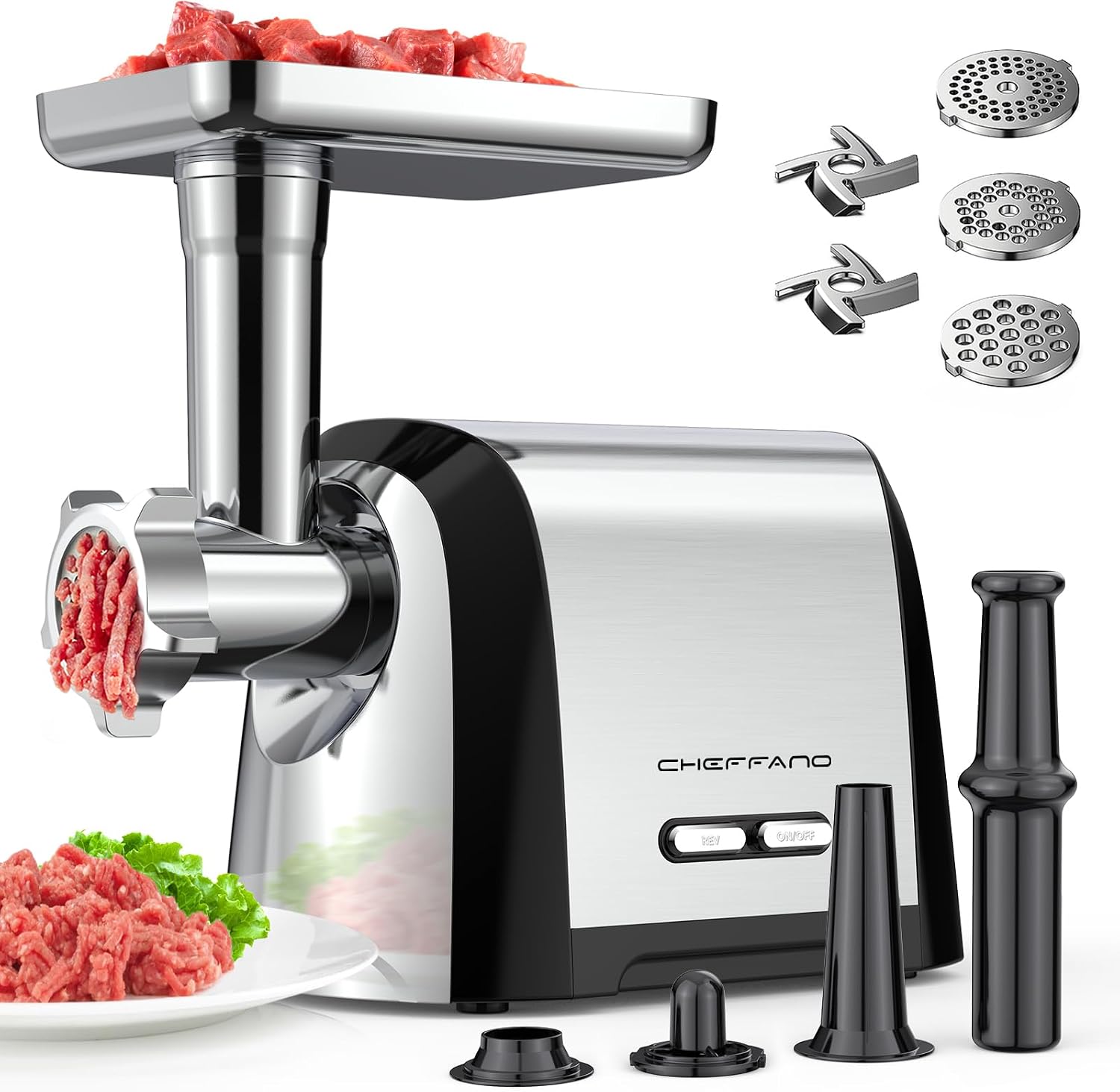
The selection of grinding plates and cutting blades directly determines the texture and coarseness of your final minced meat products. Most quality units provide multiple plate sizes ranging from fine apertures to coarse openings, allowing you to customize ground beef, pork, or poultry for hamburgers, meatballs, or traditional recipes.
Stainless steel blades work in tandem with these plates to cut meat cleanly rather than mashing the fibers. Reviewing how many plates and blades come included with a machine helps ensure you have the right components for different culinary tasks without needing separate aftermarket purchases.
Included Attachments for Versatility
Modern meat grinders frequently offer multi-functional capabilities through specialized attachments that expand their utility beyond basic mincing. Sausage stuffer tubes in varying diameters let you make homemade breakfast links, bratwurst, or spicy chorizo directly in your own kitchen using fresh ingredients.
Additional attachments such as kubbe kits and vegetable cutting components allow users to process low-moisture vegetables like mushrooms and peppers. Checking the included accessories helps confirm whether a single appliance can manage your desired variety of meat dishes and side food preparations.
Cleaning and Maintenance Requirements
Proper cleanup and maintenance are essential steps for keeping meat processing equipment hygienic and preventing premature wear or oxidation. Many machines feature fully detachable components that let you disassemble the feeding tube, cutting blade, and grinding plates quickly after finishing your food preparation tasks.
Manufacturer guidelines often specify whether individual parts are safe for automatic dishwashers or require careful hand washing with warm water. Promptly drying stainless steel and aluminum components with a soft cloth helps prevent water spots, rust, and hidden residue buildup over time.
Physical Dimensions and Storage Space
Evaluating the physical dimensions and overall weight of a meat grinder ensures it fits comfortably on your kitchen countertops and inside your cabinets. Electric models vary in footprint depending on motor size and built-in accessory storage compartments, while manual clamp models offer smaller, more portable profiles.
Considering available storage space helps you select an appliance that remains accessible when needed without cluttering small kitchen areas. Reviewing height, length, and width specifications prevents unexpected storage issues after purchase.
Safety Features and Operation Controls
Operating a meat grinder safely requires attention to design elements like locking knobs, food pushers, and automatic protection mechanisms. Electric units often feature reverse buttons to clear clogs safely and thermal overload protection that shuts the motor off if overheating occurs during extended processing periods.
Manual grinders rely on sturdy table clamps to secure the heavy cast iron body firmly to tabletops, eliminating wobbling or sliding hazards. Checking these safety provisions helps ensure secure, stable operation during every use.
Frequently asked questions
Can I grind vegetables using a meat grinder?
Many meat grinders are fully capable of processing low-moisture vegetables alongside various types of meat. Models typically include different cutting plates and specialized attachments that allow you to handle everyday ingredients like mushrooms, peppers, and onions smoothly. However, you should always check the specific manufacturer guidelines for each machine to ensure proper usage and prevent potential clogging or damaging the internal cutting components during your everyday food preparation tasks.
Are all meat grinder parts dishwasher safe?
Not all parts are guaranteed to be dishwasher safe across different meat grinder models. While many stainless steel cutting blades and grinding plates tolerate automatic dishwashers, several manufacturers explicitly state that aluminum parts, food pushers, and specialized housing components must be hand washed to prevent oxidation, discoloration, or structural damage. Always review the cleaning instructions provided in the product documentation before placing any component into an automatic dishwasher.
How do I prevent my meat grinder from clogging during use?
Preventing clogs involves cutting meat into appropriately sized pieces that match the caliber feed opening and using the included food pusher rather than fingers. Many electric grinders also feature a reverse button or auto-reverse system designed to clear jammed ingredients safely without taking the entire machine apart. Feeding meat at a steady, moderate pace rather than overloading the chute helps maintain smooth operation throughout your batch processing sessions.
What is the difference between manual and electric meat grinders?
Manual meat grinders rely on physical hand cranking and secure table clamps to operate without electricity, making them portable and traditional choices well-suited for smaller batches. Electric meat grinders feature high-wattage motorized systems that process bulk quantities of meat rapidly with minimal physical exertion, often including digital controls, presets, and multiple speed settings for enhanced convenience during large food preparation tasks.
How should I store my meat grinder after cleaning?
After thorough cleaning, all metal components and attachments should be dried completely with a soft cloth to eliminate moisture, water spots, and potential rust or corrosion. Some electric models feature built-in storage compartments that keep grinding plates, blades, and tubes neatly organized inside the main unit. Storing the appliance in a dry cabinet protects the parts and ensures everything remains ready for your next cooking session.