Appliances · Buying Guide

Best Canning Pressure Cookers for Reliable Home Food Preservation

Preserving seasonal harvests and managing bulk food batches safely requires dependable equipment designed for high-capacity canning. Stovetop and electric models offer distinct approaches to processing low-acid foods according to established preserving methods. Choosing the right unit depends directly on your available stovetop type, batch size requirements, and preference for manual or automated pressure regulation during use.

This review explores five distinct canning pressure cookers and canners, highlighting their unique capacities, metal compositions, and included starter accessories. Evaluating these physical designs helps you match specific cooker characteristics to your kitchen layout, batch goals, and storage space limitations without relying on guesswork or unverified performance claims.

As an Amazon Associate, StacyLaughs earns from qualifying purchases.

T-fal 22-Quart Aluminum Pressure Canner
#1 Best Overall

T-fal 22-Quart Aluminum Pressure Canner

This 22-quart aluminum pressure canner handles large batches of seasonal produce, meats, and seafood. It features a secure locking lid, beginner-friendly steam release valve, easy-to-read gauge, and sturdy handles for safe transport. Two included racks allow stacking multiple jars per batch. Compatible with gas and electric coil cooktops, it provides a practical manual approach to home food preservation and water bath canning.

Best for Stovetop bulk vegetable canning

Durable aluminum constructionLarge 22-quart capacityIncludes two racksSecure locking lidGas and electric compatible
View on Amazon →

What stands out

  • Provides a large 22-quart capacity holding multiple jars at once for efficient seasonal preserving tasks.
  • Includes two canning racks to safely stack jars and a step-by-step guide for beginners.
  • Features sturdy handles and a secure locking lid designed for safe, comfortable handling during use.

What to consider

  • Requires traditional gas or electric coil cooktops, creating a fit trade-off for modern kitchens equipped exclusively with flat glass induction surfaces.
  • Operates manually without digital automation, requiring close personal attention to monitor the pressure gauge and steam release valve during cycles.
Key specifications
Capacity
22 quarts
Item Dimensions D x W x H
19.33"D x 15.39"W x 16.26"H
Material
Aluminum
Special Features
Electric Stovetop Compatible, Gas Stovetop Compatible
Warranty Description
1 year limited warranty
Operation Mode
Manual

The practical verdict

This 22-quart aluminum unit suits home cooks who process large quantities of vegetables, meats, and fruits using traditional gas or electric coil stoves. Avoid it if your kitchen relies on induction cooktops or if you prefer automated digital temperature controls. The main practical trade-off involves balancing the generous multi-jar capacity against the requirement for manual gauge monitoring and stovetop compatibility constraints.

#2
24 Quart Pressure Canner with Gauge and Starter Kit
Induction-Ready Bulk Canner

24 Quart Pressure Canner with Gauge and Starter Kit

Best for Multi-surface bulk food preservation

Built from heavy-duty aluminum, this extra-large 24-quart pressure canner features a flat induction-compatible bottom and a built-in pressure gauge operating at 14.5 PSI. It includes a complete 9-piece canning supplies starter kit with tools like a jar lifter, canning funnel, and bubble remover. Designed for serious home food preservation, it heats quickly and evenly while accommodating multiple jars per batch across gas, electric, and induction cooktops.

What stands out

  • Features an extra-large 24-quart capacity designed for serious home canning and bulk food preservation during peak seasons.
  • Includes a comprehensive 9-piece starter kit with essential tools like a jar lifter and canning funnel.
  • Offers a flat induction-compatible bottom that works efficiently across gas, electric, and induction cooktop surfaces.

What to consider

  • Operates at a standard 14.5 PSI, requiring a separately purchased regulator if your specific recipes call for lower pressure settings.
  • Heavy-duty aluminum construction provides durability but adds physical weight that requires careful handling when the pot is fully loaded.
Key specifications
Capacity
24 quarts
Item Dimensions D x W x H
13.4"D x 13.4"W x 11.4"H
Material
Aluminum
Special Features
pressure canner with gauge, with canning supplies starter kit
Warranty Description
1 Year Manufacturer
Operation Mode
Manual

The practical verdict

Best for experienced or novice canners seeking an extra-large capacity unit that functions smoothly on modern induction cooktops alongside gas and electric ranges. Avoid this model if you require adjustable internal pressure right out of the box without purchasing separate regulators. The primary practical trade-off is managing the heavier aluminum body and preset 14.5 PSI operation against the convenience of the included 9-piece tool starter kit.

#3
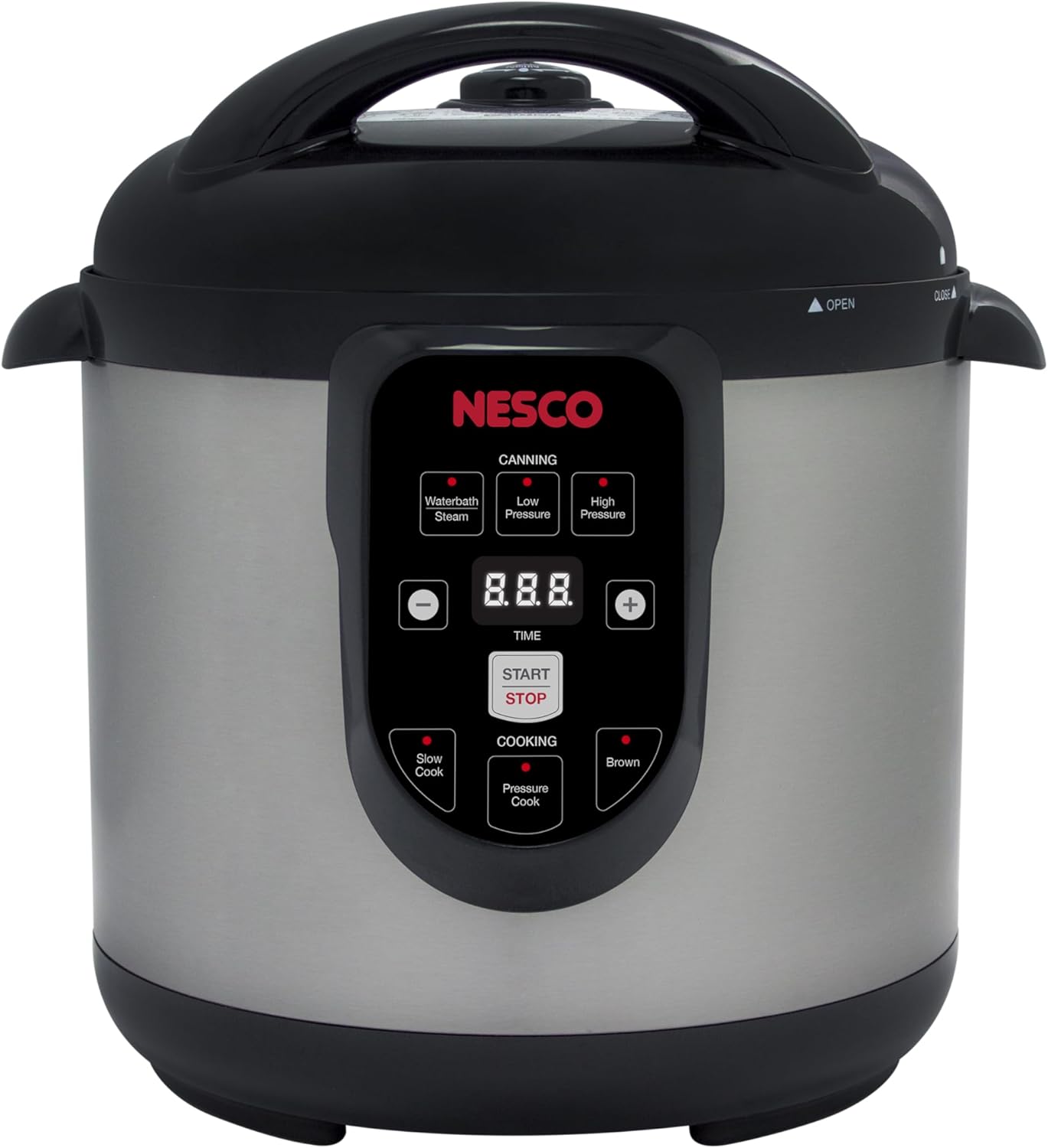
NESCO NPC-9 Smart Electric Pressure Canner and Cooker
Programmable Electric Canner

NESCO NPC-9 Smart Electric Pressure Canner and Cooker

Best for Automated countertop pressure processing

The NESCO NPC-9 is a 9.5-quart electric pressure canner and multi-cooker featuring automated pressure and temperature controls. It offers programmable cooking modes for pressure cooking, slow cooking, steaming, and water bath processing. A digital display, safety lock lid, and automatic float valve simplify operation. The removable nonstick inner pot and included canning and steam racks accommodate multiple jars while reducing cleanup effort for everyday meals and preservation tasks.

What stands out

  • Automates pressure and temperature regulation digitally, eliminating the guesswork associated with traditional stovetop canner monitoring.
  • Provides multi-function cooking modes including slow cook, steam, and water bath for diverse meal preparation.
  • Features a removable 9.5-quart nonstick inner pot that simplifies cleanup after processing jars or cooking family dinners.

What to consider

  • Offers a smaller 9.5-quart capacity, limiting the number of jars you can process simultaneously compared to larger 24-quart stovetop models.
  • Relies on electrical power and digital programming, making it unsuitable for off-grid use or traditional stovetop-only cooking routines.
Key specifications
Capacity
9 quarts
Item Dimensions D x W x H
14.17"D x 15.27"W x 16.53"H
Material
Stainless steel
Wattage
1000 watts
Special Features
Programmable
Warranty Description
1 YEAR

The practical verdict

Ideal for home cooks who want automated digital controls and multi-function cooking modes without managing stovetop heat levels. Avoid it if you need to process very large batch sizes in a single run. The main practical trade-off is the smaller 9.5-quart inner pot capacity weighed against the convenience of automated temperature regulation and built-in safety valves.

#4
12-Quart Stainless Steel Pressure Cooker and Canner
Stainless Steel Multi-Cooker

12-Quart Stainless Steel Pressure Cooker and Canner

Best for Fast daily meal prep

Constructed from 304 stainless steel, this 12-quart pressure cooker features a 3-layer encapsulated base compatible with induction, gas, and electric cooktops. It includes a 3-level pressure adjustment from 10 to 15 PSI, a one-hand locking mechanism, and a tempered glass lid with a steamer basket for 3-in-1 versatility. The design cooks up to 70 percent faster while maintaining safety valves and a lid window for monitoring food.

What stands out

  • Crafted from premium 18/8 stainless steel with a 3-layer encapsulated base for excellent durability and even heat distribution.
  • Provides 3-level pressure adjustment ranging from 10 to 15 PSI to accommodate different delicate or hearty meals.
  • Includes a tempered glass lid and steamer basket, converting the unit into a classic pot or steamer instantly.

What to consider

  • Features a 12-quart capacity, which provides less batch room for extensive seasonal preserving compared to dedicated 24-quart models.
  • Mechanical knob controller requires manual adjustment between pressure settings rather than automated digital timing cycles for complex recipes.
Key specifications
Capacity
12 quarts
Item Dimensions D x W x H
11"D x 11"W x 9.2"H
Material
Stainless steel
Special Features
Electric Stovetop Compatible, Gas Stovetop Compatible, Induction Compatible Base
Operation Mode
Manual
Controller Type
Mechanical knob

The practical verdict

Best for users seeking a durable 18/8 stainless steel cooker that handles fast daily meal preparation, steaming, and adjustable pressure cooking. Avoid this model if your primary goal is large-scale seasonal batch canning with numerous jars at once. The practical trade-off centers on the smaller 12-quart size and manual mechanical knob adjustments versus the robust stainless steel construction and multi-purpose steaming capabilities.

#5
Kilogorge 24-Quart Pressure Canner with Gauge and Supplies
High-Capacity Stovetop Kit

Kilogorge 24-Quart Pressure Canner with Gauge and Supplies

Best for Large-scale seasonal canning

This 24-quart aluminum alloy pressure canner operates at a default 14.5 PSI and features an easy-to-read pressure gauge, safety locking lid, and dual relief valves. The composite bottom is compatible with gas, electric, flat top, and induction cooktops. It comes with a 7-piece canning supplies set including a magnetic lid lifter, lifting tongs, wide mouth funnel, stirrer, jar wrench, and canning tongs to simplify batch processing tasks.

What stands out

  • Offers an extra-large 24-quart capacity to process large quantities of seasonal produce and meats in one batch.
  • Includes a composite bottom compatible with gas, electric, flat top, and induction cooking surfaces.
  • Supplies a 7-piece canning accessory set including lifting tongs, a wide mouth funnel, and a jar wrench.

What to consider

  • Operates at a fixed 14.5 PSI default pressure, requiring a separate dedicated regulator purchase if 10 PSI is needed.
  • Large 24-quart physical dimensions demand substantial storage space in kitchen cabinets when the unit is not actively in use.
Key specifications
Capacity
24 quarts
Item Dimensions D x W x H
13.7"D x 19.6"W x 15.7"H
Material
Aluminum
Special Features
Suitable for both induction cookers and gas stoves
Control Method
Push Button
Operation Mode
Manual

The practical verdict

Ideal for households or small businesses tackling high-volume seasonal food preservation across multiple cooktop types, including induction. Avoid if you have limited kitchen storage space for bulky equipment or require adjustable pressure settings without purchasing extra parts. The primary practical trade-off involves storing the large 24-quart aluminum body and managing the fixed 14.5 PSI default operation against the value of the included 7-piece tool set.

Buying guide

Capacity and Batch Size Considerations

Choosing the correct capacity is essential when selecting a pressure canner for your kitchen. Models range from compact 9-quart electric units to large 24-quart stovetop cookers. If you preserve large harvests of vegetables or meats during peak seasons, an extra-large capacity allows you to process multiple jars simultaneously. Smaller capacities work well for limited counter space or modest meal portions.

Consider your typical batch size and storage availability before purchasing. Bulky 24-quart units require dedicated cabinet space, whereas smaller electric or 12-quart cookers store more easily. Matching the internal volume to your preservation goals ensures you save time during busy harvest periods without struggling with equipment that exceeds your physical storage limits.

Cooktop Compatibility and Base Design

Cooktop compatibility determines whether a pressure canner will function safely and efficiently on your specific kitchen range. Traditional aluminum canners frequently require gas or electric coil stoves, whereas modern designs feature composite or encapsulated flat bottoms suitable for smooth-top and induction cooktops. Reviewing your stove type before buying prevents operational mismatches and ensures proper heating performance.

If your kitchen relies on an induction cooktop, verify that the selected model explicitly supports magnetic burners in its specifications. Different metal compositions interact uniquely with heating elements. Selecting a cooker with a matching base guarantees efficient heat transfer and consistent pressure accumulation during demanding food preservation tasks without unexpected delays.

Material Composition and Structural Durability

Material choice impacts heating speed, weight, and long-term durability. Heavy-duty aluminum provides excellent thermal conductivity for fast, even heat distribution while remaining relatively lightweight for handling. Stainless steel options offer exceptional resistance to wear, corrosion, and everyday kitchen impacts, often featuring multi-layer encapsulated bases for stable performance across various heating elements.

Evaluating metal construction helps you balance lifting comfort against structural longevity. Aluminum models heat quickly during heavy canning sessions but may require careful maintenance over time. Stainless steel provides a sturdy, polished finish that withstands frequent use and heavy cleaning routines. Your preference for metal type influences how the cooker performs during repeated thermal cycles.

Pressure Regulation Systems and Gauges

Pressure regulation mechanisms vary significantly between manual stovetop canners and automated electric models. Stovetop units typically rely on mechanical pressure gauges and weighted regulators set to standard levels like 14.5 PSI, requiring periodic visual monitoring by the user. Electric canners automate temperature and pressure management digitally, reducing active user intervention during long processing cycles.

Understanding these control differences helps match a cooker to your operational comfort level. If you prefer traditional oversight, an analog gauge provides clear visual feedback. If you want to minimize guesswork, programmable digital interfaces handle timing and pressure regulation automatically. Choosing the right control system ensures consistent confidence throughout every food preservation batch.

Safety Features and Locking Lids

Safety mechanisms are critical components of any pressure cooker or canner operating under high internal stress. Look for secure locking lids that physically prevent opening while internal steam pressure remains elevated. Additional safety valves, automatic float valves, and pressure release vents provide necessary functional backups to prevent user error and manage excess steam safely during active cooking or canning cycles.

Evaluating these protective elements ensures essential peace of mind when processing hot jars of food. Reliable locking pins and robust valve designs protect against accidental lid removal while the vessel is pressurized. Prioritizing models with comprehensive safety features safeguards both the operator and the surrounding kitchen environment throughout demanding food preservation tasks.

Included Accessories and Starter Tool Kits

Included accessories add immediate practical value and everyday convenience for home canners. Many pressure canners come equipped with stacking racks, jar lifters, wide-mouth funnels, magnetic lid lifters, and bubble removers. These bundled tool sets eliminate the need to purchase separate equipment before starting your very first food preservation batch.

Reviewing accessory bundles helps beginners establish a complete operational workflow right away. Having dedicated canning tongs, jar wrenches, and funnels makes handling hot glass jars significantly safer and more efficient. Evaluating what comes bundled in the package ensures you receive practical tools that directly support your canning journey from the start.

Frequently asked questions

Can I use a pressure canner on an induction cooktop?

Yes, certain pressure canners feature induction-compatible flat composite bottoms designed to work seamlessly on magnetic cooktop surfaces. However, traditional aluminum models with unreinforced bases frequently require gas or electric coil stoves instead. Always check the manufacturer specifications carefully to confirm whether a specific canner supports induction heating before making your purchase, as mismatched cooktops will fail to heat efficiently or build the necessary pressure required for safe food preservation and canning tasks.

What is the difference between pressure canning and water bath canning?

Pressure canning uses high heat and elevated pressure to process low-acid foods like meats, seafood, poultry, and vegetables safely, reaching temperatures above boiling point to destroy harmful spores. Water bath canning submerges jars in boiling water at standard atmospheric pressure, which is suitable only for high-acid foods such as fruits, jams, pickles, and tomatoes. Many versatile canners support both methods, allowing users to switch processing techniques depending on the specific recipe requirements and acidity levels of their ingredients.

Do I need special tools to start home canning?

While you can theoretically begin canning with basic kitchen utensils, specialized tools significantly improve safety and efficiency when handling hot glass jars. Many pressure canners include starter kits containing jar lifters, canning funnels, magnetic lid lifters, bubble removers, and jar wrenches. These items help you pack jars neatly, remove trapped air pockets securely, and transfer hot containers in and out of boiling water or pressurized steam without burning your hands or dropping fragile glassware.

How do I choose between stovetop and electric pressure canners?

Choosing between stovetop and electric models depends primarily on your cooking setup and preference for automated controls. Stovetop canners offer larger capacities and operate manually on gas, electric, or induction ranges, requiring you to monitor gauges and adjust burner heat. Electric canners provide built-in digital displays, automated temperature regulation, and programmable cooking modes for smaller batch sizes without tying up your stove. Your decision should reflect available counter space, batch volume needs, and oversight comfort.

Why is 14.5 PSI important for pressure canning?

A standard operating pressure of 14.5 PSI meets common USDA pressure canning requirements for processing low-acid foods at typical elevations. This specific pressure ensures internal temperatures reach levels high enough to destroy dangerous bacteria effectively. Some recipes or specific elevations may require lower pressures like 10 PSI, which certain canners accommodate through adjustable weight regulators or optional replacement parts. Verifying your unit's operating pressure ensures compliance with established home food preservation safety standards.

Final thoughts

Selecting the right canning pressure cooker or canner transforms how you preserve seasonal harvests and prepare bulk meals at home. Whether you prefer the high-capacity flexibility of large aluminum stovetop models or the automated digital convenience of countertop electric units, matching the appliance to your cooktop and batch goals ensures lasting satisfaction.

Evaluating materials, included starter tool kits, and safety mechanisms helps you invest in equipment that meets your everyday cooking needs. By considering these practical factors carefully, you can establish a reliable home food preservation routine tailored to your kitchen space and culinary preferences.