Appliances · Buying Guide
Best Childrens Ice Cream Maker Options for Hands-On Kitchen Science and Treats
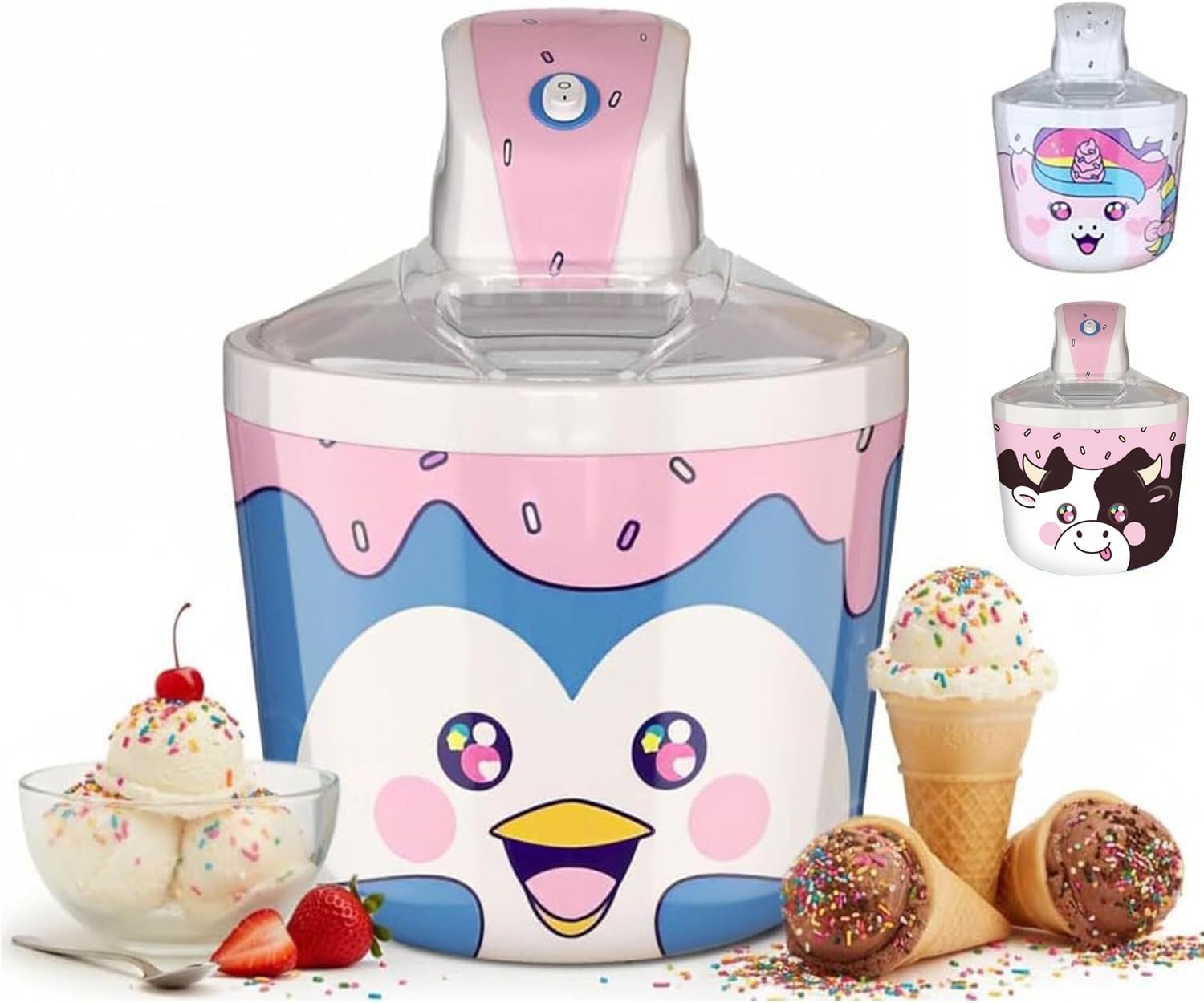
Choosing a childrens ice cream maker brings together sweet treats and hands-on kitchen activities. Whether focusing on educational science experiments or quick countertop churning, these kits offer engaging ways to make homemade desserts. Families can explore different mechanisms, from manual shaking kits to automated electric machines designed for small batches.
Finding the right device depends on whether the goal is teaching chemistry concepts or simply enjoying a fast frozen snack together. Some options rely on physical shaking and mixing to demonstrate ice crystal formation, while others use electric motors for effortless soft serve. Reviewing specific capacities, materials, and included accessories helps match a product to your household preferences.
As an Amazon Associate, StacyLaughs earns from qualifying purchases.
Buying guide
Understanding Power Sources
When shopping for a childrens ice cream maker, evaluating power sources is a vital first step. Electric models use motorized paddles to churn ingredients automatically, making them convenient for quick family dessert nights. These machines remove the physical effort of manual mixing, letting the appliance handle the continuous rotation while you relax or prepare other meal components.
On the other hand, manual science kits rely entirely on physical shaking, mixing, and manual freezing methods. These manual options serve educational goals by demonstrating chemistry and physics principles directly to children. Selecting between automated electric units and manual kits depends on whether your priority is effortless dessert production or hands-on STEM learning experiences during family playtime activities.
Evaluating Capacity and Batch Sizes
Capacity dictates how many servings a single batch can produce. Electric countertop units often yield larger quantities, such as one point two quarts, which comfortably accommodates several bowls of dessert. These larger capacities suit family gatherings or households with multiple children who want to share a single freshly churned batch of soft serve without waiting for secondary rounds.
Conversely, compact mug bundles and individual science kits typically produce smaller half-pint portions or single servings. While smaller batches limit large-scale sharing, they prevent excess leftovers and fit neatly into smaller freezers. Assessing your household size and typical serving needs helps determine whether a high-capacity machine or a compact personal maker fits your routine.
Assessing Pre-Freezing Requirements
Many modern ice cream makers require advance preparation through pre-freezing internal bowls or mugs. Electric machines and mug bundles often mandate placing their double-insulated vessels in the freezer for twenty-four to forty-eight hours prior to use. This chilling step ensures the container absorbs enough cold energy to freeze liquid ingredients during the short twenty-minute churning cycle.
If your household enjoys spontaneous dessert nights, managing a pre-frozen bowl requires advance planning and consistent freezer space. Science kits that use ice and salt mixtures bypass internal bowl freezing but demand a supply of loose ice cubes for every session. Weighing freezer availability against ice management helps clarify which operational style suits your kitchen habits.
Material Durability and Construction
Construction materials influence both product longevity and daily maintenance. Kits designed for children frequently incorporate food-grade plastics, silicone ingredient bags, and aluminum cans built to withstand frequent handling. Selecting durable components ensures the tools survive repeated science experiments, classroom settings, or enthusiastic playdates without showing premature wear or structural damage over time.
Electric appliances combine plastic housings with metal freezer bowls and dishwasher-safe mixing paddles. Checking whether parts are detachable or dishwasher safe simplifies cleanup after sticky dessert ingredients are processed. Prioritizing robust materials guarantees that your chosen device remains a reliable fixture for family cooking projects across multiple seasons of use.
Educational Value Versus Convenience
The intended purpose of the device heavily influences your purchasing decision. Educational science kits integrate visual recipe guides, lab notebooks, and STEM concepts to teach children about ice crystal formation, air incorporation, and stabilizers. These options turn kitchen time into an interactive learning lesson that encourages curiosity and fine motor skill development.
Conversely, convenience-focused appliances prioritize rapid dessert creation with minimal educational overhead. If your main goal is providing quick soft serve for movie nights without a science lesson, an automated countertop machine delivers streamlined results. Matching product features to your educational or culinary goals ensures high satisfaction with the final purchase.
Storage Footprint and Accessories
Kitchen storage space is an essential consideration for bulky appliances and multi-piece kits. Compact mug bundles feature nested designs where all accessories store directly inside the mugs to save valuable cabinet room. Electric countertop models require a dedicated footprint on your counter or shelf due to their motor bases and specialized bowl dimensions.
Accessory inclusions also vary widely across different product types. Comprehensive science kits provide measuring tools, whisks, scoops, bowls, aprons, and chef hats for complete roleplay engagement. Reviewing the included accessories and storage requirements prevents clutter and ensures you have all necessary tools ready for your first dessert-making session.
Frequently asked questions
Do electric ice cream makers require pre-freezing the bowl?
Yes, most electric countertop ice cream makers require you to place the double-insulated freezer bowl in the freezer for twenty-four hours before churning. This process ensures the bowl walls retain enough cold energy to freeze your liquid ingredients during the twenty-minute cycle. Without proper pre-freezing, the machine cannot solidify the mixture into soft serve or ice cream. Always check the specific manufacturer guidelines regarding freezing times to guarantee successful dessert preparation every single time you use the appliance.
How do science-based ice cream kits freeze desserts without electricity?
Science-based ice cream kits typically rely on an endothermic reaction driven by a combination of ice and salt packed around a metal inner can. When salt contacts ice, it lowers the freezing point, forcing the ice to melt and absorb heat rapidly from the surrounding ingredients inside the can. As children shake or stir the mixture, the rapid cooling causes ice crystals to form, turning liquid cream into a delicious frozen treat while demonstrating fundamental physics and chemistry principles.
Are the parts on kids ice cream makers dishwasher safe?
Cleaning requirements vary significantly depending on the specific model and brand design. Certain electric appliances feature removable, dishwasher-safe mixing paddles and wipe-down exterior bases for convenient maintenance after dessert night. However, many science kits and specialty mugs specify hand washing for delicate silicone bags, clear jars, and measuring tools to preserve their structural integrity. Always review the product care instructions provided by the manufacturer before placing any components into an automated dishwasher system.
What age range is best suited for ice cream science kits?
Most children's ice cream science kits are specifically tailored for kids between ages five and twelve. At this developmental stage, children can actively participate in measuring ingredients, whisking, shaking, and following illustrated visual recipe cards independently or with minimal adult guidance. Some kits extend their recommended range up to age fourteen, offering more detailed lab notebooks and chemistry concepts that appeal to older children and early teenagers interested in food science experiments.
Can you make dairy-free options in these machines?
Yes, you can easily prepare non-dairy frozen treats, sorbets, and vegan nice cream using these makers. Whether you are using a compact electric countertop unit or a manual science kit, the churning and freezing mechanisms work effectively with alternative bases like oat milk, coconut milk, or fruit purees. This flexibility allows households with dietary restrictions or lactose sensitivities to enjoy custom frozen desserts tailored to their specific nutritional preferences and flavor requirements.