Appliances · Buying Guide
Best Commercial Ice Cream Maker Options for Shops and Home Kitchens
Choosing the right commercial ice cream maker depends heavily on your daily volume, available counter space, and whether you need continuous soft serve or batch-frozen gelato. High-capacity commercial machines handle bustling storefronts and food trucks with rapid freezing motors, while compact compressor units bring scratch-made desserts directly to residential kitchens without overnight bowl freezing.
Understanding your production goals ensures you select a model capable of meeting peak customer demand or satisfying spontaneous sweet tooth cravings. From multi-flavor soft serve systems equipped with digital control panels to upright countertop compressors featuring adjustable hardness settings, matching equipment specifications to your venue layout prevents operational bottlenecks and guarantees reliable daily dessert preparation.
As an Amazon Associate, StacyLaughs earns from qualifying purchases.
Buying guide
Evaluating Production Capacity and Output Volume
Assessing your daily dessert volume is essential when selecting an ice cream machine. Commercial operations requiring hundreds of hourly portions need high-output continuous systems delivering dozens of quarts per hour. Conversely, residential users only require compact bowls holding one to two quarts per batch for family dessert nights.
Matching equipment capacity to your actual service demands prevents operational bottlenecks. Buying an oversized industrial floor unit for occasional kitchen use wastes electricity and valuable floor space, while a small home compressor cannot keep up with busy cafe rushes during peak afternoon hours.
Compressor Systems Versus Pre-Freezing Bowls
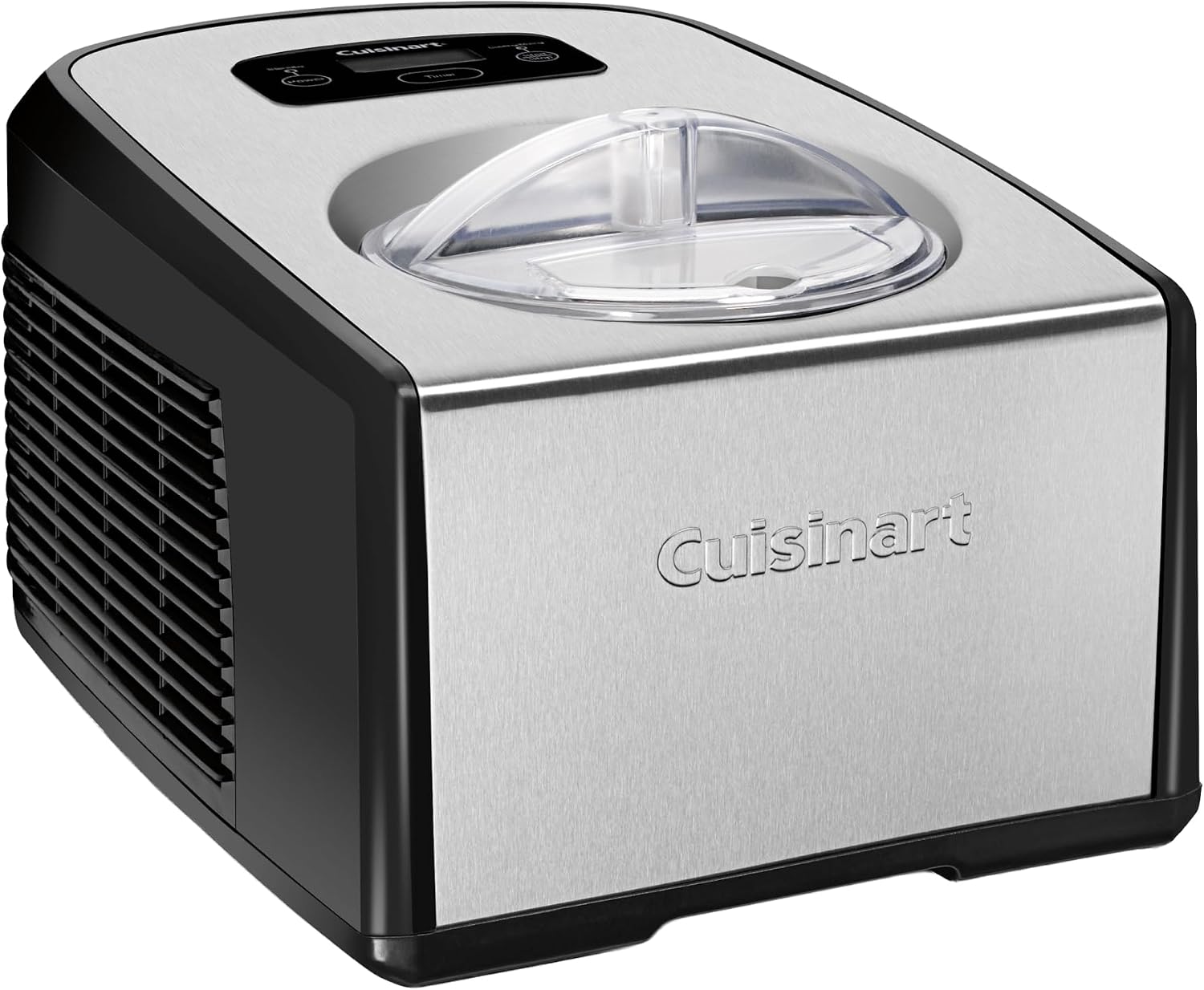
Self-contained compressor systems revolutionize dessert preparation by chilling ingredients directly during the churning process. This technology eliminates the tedious requirement of storing mixing bowls in a deep freezer overnight. You can start making dessert immediately whenever inspiration strikes.
Furthermore, built-in compressors allow you to churn back-to-back batches in the same afternoon without waiting hours for a frozen bowl to rechill. While these machines add overall appliance weight, the convenience of on-demand freezing outweighs the bulk for frequent dessert makers.
Countertop Footprint and Spatial Constraints
Evaluating available kitchen or shop space ensures your chosen ice cream maker fits comfortably without disrupting workflow. Compact upright models utilize vertical height to maximize bowl capacity while minimizing horizontal counter space, making them ideal for crowded kitchens.
Larger commercial dispensers and heavy floor-standing units require dedicated placement planning, sturdy supportive surfaces, and adequate clearance around ventilation panels. Always measure your available counter depth, width, and overhead cabinet clearance before purchasing heavy-duty equipment.
Control Panels and Hardness Settings
Modern ice cream makers offer sophisticated control panels ranging from intuitive touch screens to programmable digital timers. Advanced automatic hardness settings allow the machine to monitor dessert consistency accurately, ensuring optimal textures for gelato, sorbet, frozen yogurt, or classic ice cream.
Clear LED displays and audible countdown alerts simplify operation for both commercial staff and home cooks alike. Selecting a model with straightforward controls minimizes learning curves and guarantees consistent results across every single dessert batch you prepare.
Material Construction and Hygiene Maintenance
Selecting appliances built from food-grade stainless steel ensures long-lasting durability, corrosion resistance, and simplified sanitation. Commercial machines utilize robust stainless components to withstand rigorous daily cleaning cycles required by health standards, protecting your investment over years of continuous use.
In home environments, smooth removable bowls and BPA-free churn paddles make hand washing or routine rinsing much faster. Prioritizing smooth interior surfaces prevents sticky residue buildup and keeps your dessert-making equipment hygienic and ready for action.
Specialized Paddles and Flavor Variety
Different frozen desserts require distinct churning actions to achieve their characteristic mouthfeel. Dedicated ice cream paddles incorporate air to create light, fluffy scoops, while specialized gelato paddles keep the mixture dense and silky by minimizing overrun.
Additionally, multi-tank commercial machines allow operators to dispense multiple flavors simultaneously or switch between options without downtime. Assessing whether you need single-flavor simplicity or multi-flavor versatility helps tailor your equipment choice to menu goals.
Frequently asked questions
Do commercial ice cream makers require pre-freezing mixing bowls?
No, commercial ice cream makers and self-contained compressor models do not require any pre-freezing of mixing bowls. They feature built-in refrigeration compressors that chill the ingredients automatically as the motor churns the mixture. This internal chilling technology allows you to start preparing desserts immediately without planning ahead or storing bowls in a home freezer overnight. Furthermore, it enables you to produce consecutive batches back-to-back on the same afternoon without experiencing any cooling delays.
What is the difference between making ice cream and gelato in these machines?
Ice cream and gelato differ primarily in their density and the amount of air incorporated during the churning process, known as overrun. Traditional ice cream paddles whip air into the mixture to create a lighter, fluffier texture. In contrast, gelato paddles are designed to churn more slowly and fold less air into the base, resulting in a much denser, silkier mouthfeel. Some versatile machines provide interchangeable paddles specifically engineered to accommodate these distinct dessert styles.
How do automatic hardness settings work on modern dessert makers?
Automatic hardness settings utilize internal sensors to monitor the resistance of the frozen mixture as it churns inside the bowl. Once the dessert reaches your pre-selected firmness level—whether you are making soft sorbet, creamy gelato, or firm ice cream—the machine automatically halts the churning process or transitions into a keep-cool mode. This intelligent monitoring eliminates guesswork, ensuring your frozen treats achieve the exact texture you want without requiring manual timing adjustments.
Can I make multiple flavors simultaneously with these machines?
Whether you can make multiple flavors simultaneously depends entirely on the specific machine design you choose. Large commercial floor-standing units often feature dual tanks and multiple dispensing handles, allowing operators to serve two separate flavors or a combined twist option at the same time without downtime. However, standard home compressor units and single-bowl commercial countertop models feature only one centralized bowl, meaning you must clean the container between different flavor batches.
How should I clean and maintain my stainless steel ice cream maker?
Cleaning a stainless steel ice cream maker involves regular washing of all removable components, including the stainless bowls, churn blades, and dispensing levers. For home machines, components typically lift out for straightforward hand washing with warm soapy water. Commercial units often feature automated cleaning cycles and user-friendly drainage designs to simplify sanitization between shifts. Always consult your specific manufacturer product guidance regarding recommended cleaning solutions, care instructions, and proper maintenance routines to ensure equipment longevity.