Appliances · Buying Guide
Best Commercial Mini Waffle Maker Options for High-Volume Snack Bars
Choosing a commercial mini waffle maker requires balancing batch capacity with counter space availability in busy food service environments. Whether outfitting a bustling cafe, a dedicated dessert shop, or a fast-paced snack bar, having the right baking equipment ensures steady output. Different models support various production needs, ranging from thick Belgian styles to large batches of bite-sized Dutch pancakes.
Reviewing available options helps operators match electrical requirements, physical footprints, and temperature controls to their specific workflow demands. Heavy-duty construction and non-stick surfaces streamline daily maintenance tasks in professional kitchens. Exploring these distinct baking systems allows businesses to select machinery that aligns with their menu offerings and customer volume targets.
As an Amazon Associate, StacyLaughs earns from qualifying purchases.
Buying guide
Evaluating Electrical Power and Voltage Requirements
Commercial kitchens rely heavily on consistent electrical output to maintain stable baking temperatures during unexpected peak service rushes. Units operating at higher wattages, such as 1700W models, heat up rapidly and recover quickly between individual batches. However, they require careful circuit planning to prevent electrical overloads when running alongside other commercial appliances in a busy food service setting.
Lower-wattage options around 950W offer more installation flexibility for standard electrical outlets but may require longer preheating intervals. Operators must match the machine's voltage and plug specifications directly to their facility's existing infrastructure. Assessing these electrical demands prevents operational bottlenecks and ensures reliable daily performance across busy breakfast and snack shifts.
Understanding Batch Capacity and Output Volume
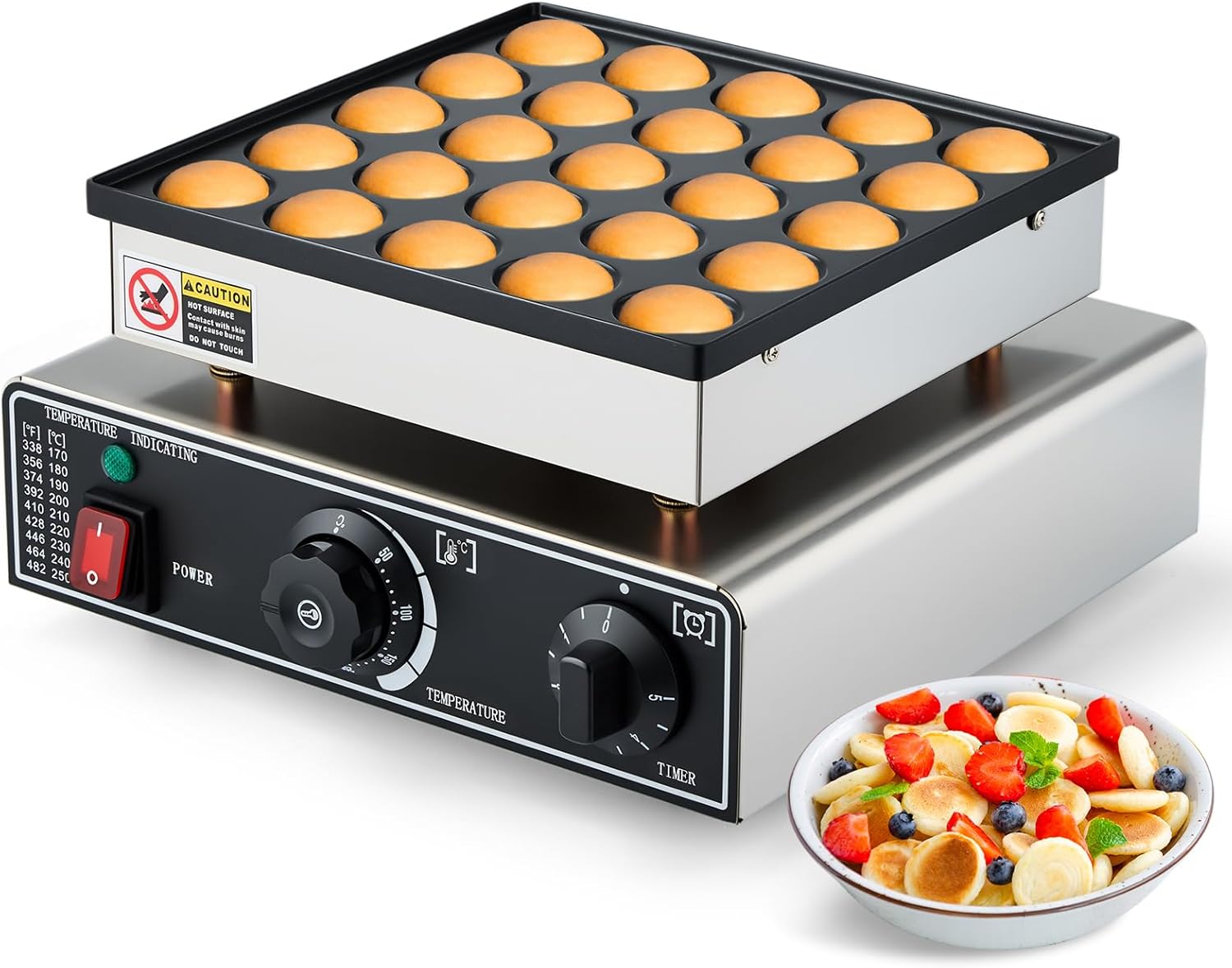
Selecting the right commercial mini waffle maker depends heavily on your customer volume and service speed goals. High-capacity machines can bake up to 50 small pancakes or 10 rectangular waffles at once, significantly reducing wait times. These large-format units suit high-traffic snack bars, canteens, and dessert shops that need to fulfill multiple orders simultaneously during morning rushes.
Conversely, smaller single-portion or lower-count configurations fit establishments with steady but lower customer flow. Balancing physical batch size with hourly output ensures that food remains fresh without overwhelming preparation stations. Reviewing typical customer demand patterns helps identify whether a high-count poffertjes maker or a thick Belgian waffle iron provides the most efficient service model.
Managing Countertop Footprint and Physical Dimensions
Professional kitchens often operate within tight spatial constraints, making equipment dimensions a critical purchasing factor for daily operations. Extended machines measuring over 20 inches in depth require long prep tables and careful placement to maintain safe kitchen walkways. Operators should measure available counter space thoroughly, accounting for clearance needed to open heavy hinged baking plates without physical obstruction.
Compact models take up less surface area, making them suitable for smaller food trucks or cafe counters with limited room. However, reducing the physical footprint often means accepting smaller batch sizes or lower hourly output capabilities. Weighing spatial limitations against production goals ensures the chosen appliance integrates smoothly into existing kitchen layouts.
Temperature Controls and Baking Precision
Achieving a crispy exterior and a fluffy interior relies heavily on precise temperature regulation and reliable timing features. Commercial waffle makers featuring adjustable thermostats ranging from 122 to 572 degrees Fahrenheit allow kitchen operators to customize browning levels. Integrated timers with audible alerts remove the need for constant visual monitoring, letting staff prep other ingredients while treats bake.
Dual-zone temperature controls on larger machines provide the ability to run different baking areas independently during slower operational hours. Simpler models with fixed settings require more manual attention to prevent over-browning. Selecting an appropriate control interface matches the skill level of kitchen personnel and guarantees consistent product quality across every single batch.
Materials, Non-Stick Coatings, and Cleaning Ease
Daily commercial use demands durable construction materials like stainless steel bodies and heavy-duty cast aluminum or iron plates. Non-stick coatings applied to the baking surfaces ensure effortless waffle release, preventing torn products and reducing food waste. Selecting PFAS-free ceramic or standard non-stick options aligns with internal facility preferences for professional food preparation environments.
Cleanup efficiency directly impacts labor costs in busy food service establishments at the end of a shift. Integrated spill channels and protective spill guards catch runaway batter before it reaches countertops, simplifying daily surface wipe downs. Following proper manufacturer maintenance guidelines, such as using soft brushes, preserves the non-stick coating and extends the operational lifespan of the baking equipment.
Menu Versatility and Product Style Selection
The type of baked goods featured on your menu dictates the specific waffle maker configuration required for your business operations. Traditional thick Belgian waffles demand deep-pocket rotary machines, while snack bars focusing on finger foods benefit from multi-piece poffertjes makers. Choosing between rectangular waffle plates and miniature round pancake molds shapes your food service offerings and customer appeal.
Specialized machinery often excels at producing a single product style with exceptional speed and structural uniformity. Multi-purpose flexibility is lower when heating plates are permanently fixed to a specific mold pattern. Assessing your long-term menu strategy ensures that investing in a dedicated mini waffle or pancake maker supports your business model effectively over time.
Frequently asked questions
What electrical requirements should I check before purchasing a commercial mini waffle maker?
Before purchasing any commercial baking unit, verify your kitchen's voltage compatibility and circuit capacity. Models operate on standard 120V setups or require specific phase configurations, with power draws ranging from 950 watts up to 1700 watts for heavy-duty variants. Running high-wattage equipment alongside other kitchen machinery can trigger circuit overloads if the electrical infrastructure is not adequately rated. Consulting with a professional electrician helps ensure your facility can safely support the continuous power demands of commercial-grade breakfast and snack equipment.
How do I clean and maintain the non-stick plates on these commercial waffle makers?
Maintaining non-stick baking plates requires gentle cleaning methods to preserve the coating over extended periods of commercial use. After the machine cools down completely, wipe away residual batter and crumbs using a soft brush, damp cloth, or non-abrasive sponge. Avoid using metal utensils, steel wool, or harsh abrasive scouring pads, as these tools can scratch and permanently damage the non-stick surface. Utilizing integrated spill channels and guards during baking also minimizes heavy buildup on exterior stainless steel housing components.
Can I bake different types of batter in a specialized poffertjes or rectangle waffle maker?
Specialized commercial bakers are engineered with specific mold patterns designed for particular recipes, such as miniature Dutch pancakes, thick Belgian squares, or rectangular portions. While you can experiment with various batter recipes like crepes or muffins within the manufacturer temperature ranges, the final shape will conform strictly to the built-in plate cavities. Attempting to use incorrect batter consistencies or overfilling the molds can lead to messy overflows, though built-in spill guards help manage minor excess.
Why is a rotary feature important for certain mini waffle makers?
A rotary feature allows the baking plates to flip 180 degrees during the cooking cycle, which evenly distributes liquid batter across both upper and lower heating surfaces. This mechanical movement guarantees consistent browning and uniform texture on both sides of thick Belgian waffles. Units lacking a rotary function rely entirely on static heating elements, which work effectively for flat or shallow pancake molds but require rotation for optimal deep-pocket thickness.
What is the difference between single-plate and dual-plate mini pancake makers?
Single-plate mini pancake makers typically accommodate 25 poffertjes in a single session using a moderate power draw, making them ideal for smaller cafes. Dual-plate or high-capacity models expand production to 50 pieces simultaneously across larger cooking areas, supported by higher wattage or dual thermostats for independent zone control. Choosing between these configurations depends entirely on your peak customer volume, available counter space, and how quickly you need to fulfill large orders.