Appliances · Buying Guide
Best Commercial Rice Cooker Options for High-Volume Kitchens
Equipping a professional kitchen, catering business, or managing large gatherings requires reliable equipment built to handle high-volume demands without slowing down service. A dedicated commercial rice cooker streamlines daily food preparation, allowing kitchen staff to focus on other essential cooking tasks while large batches of rice cook to the proper consistency every single time.
Choosing the right model involves carefully balancing batch capacity, heating technology, and physical dimensions to fit your workspace layout. This overview examines several prominent options, detailing their specific capacities, power requirements, cleaning methods, and included accessories to help you select a dependable unit for your specific food service environment without guesswork.
As an Amazon Associate, StacyLaughs earns from qualifying purchases.
Buying guide
Capacity and Batch Requirements
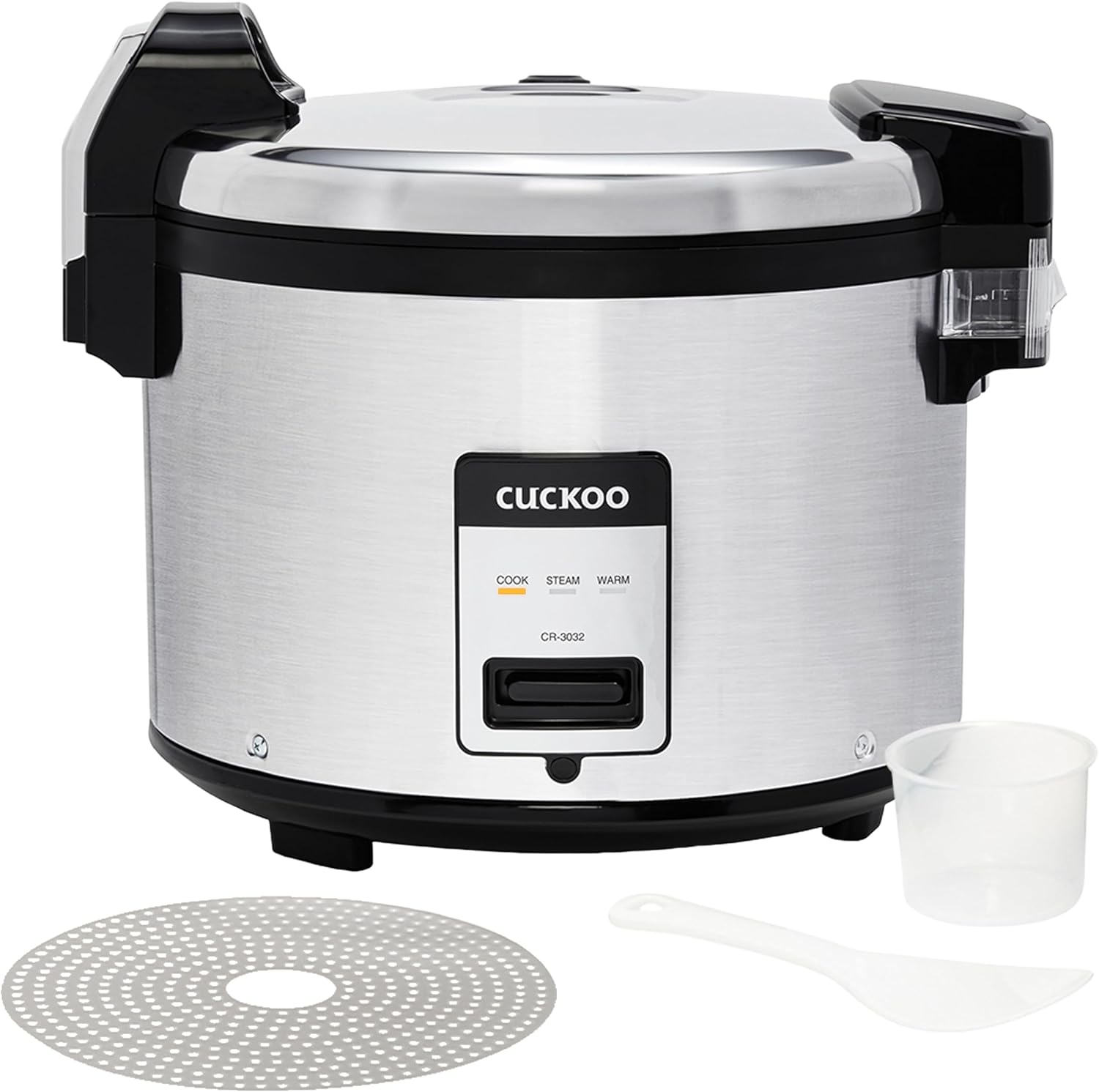
Evaluating batch capacity is essential when selecting a commercial rice cooker for your food service operation. Manufacturers typically measure capacity in both uncooked cups and final cooked output. A standard thirty-cup uncooked model yields approximately sixty cups of cooked grain, supplying dozens of individual side portions or main courses per single cooking cycle.
Matching the unit size to your daily customer volume prevents food waste and avoids kitchen bottlenecks during fast-paced peak hours. High-demand banquet halls or large catering businesses benefit from maximum sixty-cup or larger capacities, whereas smaller bistros can manage service efficiently with standard thirty-cup variations without wasting valuable counter space or drawing excess power.
Power Output and Electrical Needs
Electrical requirements dictate where and how you can safely install a commercial rice cooker within your professional kitchen setup. Wattage ratings range significantly across available models, from moderate heating designs up to powerful units exceeding nineteen hundred watts. Higher wattage levels generally facilitate faster cooking times for massive volumes of grain during busy service hours.
You must verify that your facility electrical circuits can safely support the continuous power draw of a high-capacity appliance during busy operating shifts. Operating multiple heavy-duty cooking tools simultaneously on shared commercial circuits risks tripping circuit breakers, making it critical to review circuit loads and available facility amperage before final kitchen placement.
Heating Technology and Consistency
The internal heating system determines how evenly your rice cooks from the bottom of the pot to the top surface area. Advanced configurations incorporate multi-dimensional heating elements that wrap around the interior chamber. This technology promotes uniform heat distribution, preventing burnt bottom layers while ensuring every single grain achieves a fluffy and consistent texture every time.
Standard heating plates offer reliable performance for straightforward cooking tasks but rely on proper liquid ratios for complete success. Reviewing how a model distributes heat helps guarantee consistent quality across repeated batches, which is vital for maintaining dependable food standards in professional dining establishments, banquet halls, and busy catering operations.
Maintenance and Cleaning Requirements
Strict kitchen hygiene requires equipment that significantly simplifies end-of-shift sanitation routines. Most commercial cookers feature nonstick inner pots that prevent cooked grains from bonding permanently to the metal surface. This nonstick coating allows kitchen staff to wipe away leftover residue quickly using mild cloths, damp sponges, or recommended cleaning agents after active service shifts.
You should check whether specific component parts are approved for automated dishwasher use or require careful hand washing procedures. While some modern models feature dishwasher-safe pots and removable accessories, others demand manual hand cleaning, which directly influences daily labor allocation and overall operational efficiency in busy commercial restaurant kitchens.
Keep-Warm and Temperature Retention
Maintaining cooked rice at an ideal serving temperature for hours is a critical feature for continuous food service operations. Many commercial cookers transition automatically from the primary cooking cycle into a dedicated keep-warm mode. This automated shift completely eliminates the need for repeated reheating and preserves the aroma, moisture, and texture of the cooked grain batches.
Some models specify maximum holding durations, such as six hours, to prevent quality degradation over extended periods of time. Assessing how long a cooker maintains safe and appealing serving temperatures ensures your kitchen team can rely on freshly prepared grains throughout continuous daily service hours without constant manual oversight.
Physical Footprint and Countertop Space
Large commercial rice cookers possess substantial physical dimensions designed to house large capacity inner pots securely. Measuring depth, width, and height specifications helps ensure the unit fits comfortably within your existing kitchen layout. Heavy-duty models often span eighteen inches or more across, requiring dedicated countertop space away from tight kitchen walkways and busy commercial food prep tables.
Additionally, consider vertical clearance if the appliance features a hinged lid that opens upward. Ensuring adequate overhead room prevents interference with overhead cabinets, wall shelving units, or ventilation hoods, allowing safe and unobstructed access during busy cooking and serving shifts without awkward physical positioning or safety hazards for staff.
Frequently asked questions
How many cups of cooked rice does a thirty-cup uncooked model produce?
A standard commercial rice cooker with a thirty-cup uncooked capacity typically yields approximately sixty cups of cooked rice once the grain absorbs water and expands during the heating cycle. This substantial output makes it well-suited for medium to large-scale restaurant service, catering events, and busy family gatherings where large quantities of side dishes or main courses are required on demand. Understanding this two-to-one volume expansion ratio helps kitchen managers accurately estimate ingredient quantities and avoid preparing excess food that could result in unnecessary waste during daily operations.
Do commercial rice cookers switch to a warm mode automatically?
Yes, many commercial rice cookers feature built-in automatic keep-warm functions that activate immediately after the primary cooking cycle finishes. This automated transition ensures that freshly prepared rice remains at an ideal serving temperature for hours without requiring constant manual monitoring or repeated reheating. However, specific models maintain different holding time limits, such as up to six hours, before quality begins to degrade. Reviewing these manufacturer specifications ensures your team can manage food holding safely and efficiently throughout extended operating hours.
What is the difference between hand washing and dishwasher-safe inner pots?
The primary difference involves whether the removable nonstick inner pot and accessories can withstand automated dishwasher cycles or require careful manual cleaning by kitchen staff. Dishwasher-safe components allow employees to place pots directly into industrial dishwashers, saving valuable time during hectic end-of-shift cleanup routines. In contrast, models specifying hand wash care require staff to clean the inner bowl manually using mild cloths or sponges. While both methods effectively remove food residue from nonstick surfaces, dishwasher compatibility can significantly reduce labor bottlenecks at closing time.
Why is electrical wattage important when choosing a commercial rice cooker?
Electrical wattage determines how much power the appliance draws and directly influences heating speed and overall performance during heavy-duty food preparation tasks. High-wattage models, such as those exceeding nineteen hundred watts, often cook large batches of rice significantly faster than lower-wattage units. However, drawing high amounts of electrical power requires careful coordination with your kitchen layout and facility circuit capacities. Operating multiple high-wattage appliances simultaneously on shared electrical circuits risks tripping breakers, making it essential to verify available amperage before installing a powerful commercial cooker.
How do I prevent rice from burning at the bottom of a commercial cooker?
Preventing burned bottom layers relies on using the correct ratio of water to uncooked rice and utilizing models equipped with advanced heating systems or included silicone cooking pads. Many commercial rice cookers feature nonstick inner pot surfaces and specialized three-dimensional heating technologies designed to distribute heat evenly across the entire chamber rather than concentrating intense heat solely on the bottom plate. Following manufacturer water level lines printed inside the inner pot also ensures proper moisture levels, preventing grains from scorching during the final stages of the cooking cycle.