Appliances · Buying Guide
Best Consumer Reports Induction Cooktop Choices for Modern Kitchens
Finding the right induction cooktop involves evaluating your kitchen space, power requirements, and cooking habits. Unlike traditional gas or electric ranges, induction technology uses electromagnetic energy to heat cookware directly, offering faster boiling times and energy efficiency. Home cooks often look at portable single burners, dual-zone models, or large built-in multi-element cooktops to match their specific meal preparation routines and spatial limitations.
When exploring options, reviewing the specific dimensions, wattage limitations, and surface materials helps ensure a smooth transition. Portable units plug into standard home outlets, while larger built-in multi-burner setups often require dedicated 220V or 240V hardwired electrical installations. Understanding these core differences allows you to select a reliable cooking surface that fits your countertop space and electrical setup safely.
As an Amazon Associate, StacyLaughs earns from qualifying purchases.
Buying guide
Power Requirements and Electrical Setup
Understanding the electrical requirements of an induction cooktop is essential before making a final purchase decision. Portable single burners typically plug directly into standard 110 or 120 volt residential electrical outlets, drawing around 15 amps of power. These models offer flexible placement in dorms, RVs, and smaller apartment kitchens without requiring special electrical wiring modifications.
Larger built-in multi-zone cooktops demand significantly higher wattage, frequently operating on 220 or 240 volts with permanent hardwired connections. These high-power appliances require professional electrical installation to ensure safe daily operation and full compliance with local building codes. Assessing your home electrical capacity ahead of time prevents unexpected circuit overloads.
Burner Count and Kitchen Layout
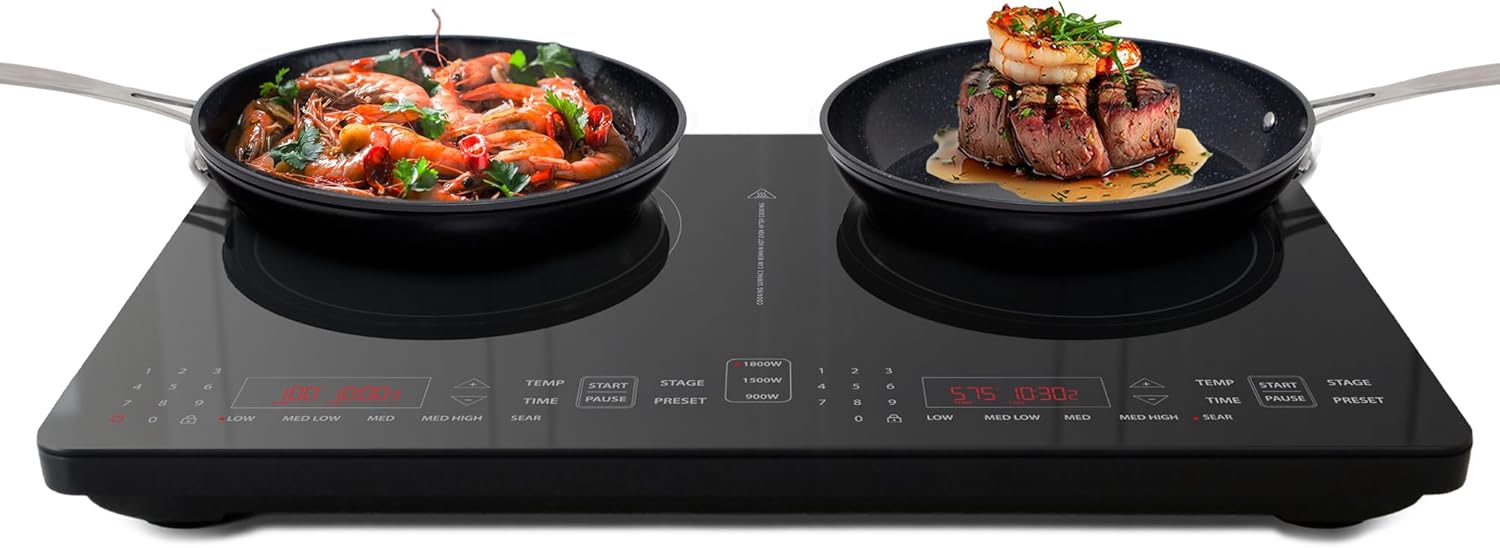
Selecting the appropriate number of burners depends heavily on your daily cooking habits and available kitchen counter space. Single-burner portable units take up minimal room and store away easily inside cabinets when not in use. Dual-zone portable cooktops expand your cooking capacity by letting you prepare two dishes simultaneously without taking over a full kitchen counter.
Built-in multi-element cooktops featuring four or five zones accommodate large family meals and complex recipes with ease. However, these larger appliances demand dedicated countertop cutout space and permanent integration. Measuring your available surface area and evaluating how many pans you use at once ensures the cooktop fits your workflow.
Temperature Control and Precision Settings
Granular temperature control allows you to execute delicate culinary tasks with confidence and consistency. Many induction cooktops offer preset temperature levels or incremental adjustments spanning from low warming heats up to high searing thresholds. Fine-tuning your cooking temperature in small increments helps prevent scorching delicate sauces while achieving proper heat levels for meats.
Digital interfaces and responsive touch panels make adjusting heat levels on-the-fly straightforward and immediate. Look for models with clear LED displays and intuitive controls that let you modify timers or power levels without resetting the entire cooking cycle. Reliable heat regulation ensures your recipes turn out evenly cooked across every batch.
Surface Materials and Maintenance
Surface materials directly influence the durability, appearance, and cleaning routine of your induction cooktop. Shatter-resistant ceramic glass and matte textured glass surfaces withstand high operational temperatures while resisting scratches and everyday wear. Because induction glass surfaces remain relatively cool outside the immediate cookware heating zone, spilled food is less likely to bake onto the glass.
Cleaning requires allowing the appliance to cool down completely before wiping the glass surface with appropriate cleaners. Choosing a cooktop with a seamless edge-to-edge touch panel prevents food debris and liquid from collecting in hard-to-reach gaps. Maintaining the glass surface according to manufacturer guidelines preserves both its appearance and longevity.
Cookware Compatibility and Material Selection
Induction cooking relies entirely on electromagnetic energy transfer, making cookware material compatibility a critical purchasing factor. Pots and pans must feature a magnetic bottom, such as cast iron or magnetic stainless steel, for the cooktop to detect and heat them. Non-magnetic materials like pure aluminum, copper, or glass will not function on an induction burner.
Checking the minimum diameter requirements for your cookware ensures proper pan detection and prevents automatic shut-off triggers. Many induction burners require pots to meet a specific base size threshold to initiate heating cycles effectively. Reviewing your existing cookware collection before buying helps avoid unexpected replacement costs for incompatible kitchen pots.
Safety Features and Controls
Built-in safety mechanisms provide essential protection during daily cooking routines and family meal preparation. Child safety locks prevent children or accidental touches from altering active power and timer settings. Automatic pan detection sensors shut the heating element off shortly after cookware is removed, minimizing energy waste and reducing accidental burn risks.
Additional safety elements like residual heat indicators warn users when a cooking zone remains hot after use. Overflow auto-shutoff functions protect internal components if liquids spill across the touch control panel. Evaluating these protective features helps ensure a safer cooking environment for everyone in the household.
Frequently asked questions
What types of cookware work on an induction cooktop?
Induction cooktops require cookware with a magnetic bottom to function properly. Compatible materials include cast iron, enameled cast iron, and magnetic stainless steel. You can easily test your existing pots and pans by holding a small magnet to the bottom; if it clings firmly, the cookware is suitable for induction use. Non-magnetic materials such as pure aluminum, copper, glass, and standard non-magnetic stainless steel will not generate heat on an induction burner and cannot be used.
Do portable induction burners require special electrical wiring?
Most portable induction burners do not require special electrical wiring and operate using standard household electricity. They typically plug directly into any standard 110 or 120 volt residential electrical outlet drawing around 15 amps, making them convenient for use in dormitories, RVs, and smaller apartments. However, larger multi-zone built-in induction cooktops draw significantly higher wattage and require dedicated 220 or 240 volt hardwired electrical installations performed by a qualified professional electrician to ensure safety.
Why does my induction cooktop make a buzzing or high-pitched sound?
High-pitched sounds or buzzing noises during induction cooking are generally caused by the cookware rather than the appliance itself. When electromagnetic energy passes through pans constructed with multiple layers of sandwiched metals or bonded plates, the rapid vibration of these distinct metal layers can produce audible noise. Using heavier, high-quality multi-clad cookware or matching the pan size closely to the heating zone diameter can help minimize these operational sounds while cooking your meals.
How do I clean and maintain a glass induction cooktop surface?
Cleaning an induction cooktop requires letting the glass surface cool down completely before wiping away debris. Because induction technology heats only the pan rather than the surrounding glass, food spills are less likely to bake onto the surface. You can clean smooth ceramic or textured glass surfaces using a damp cloth and mild cleanser recommended by the manufacturer. Avoid abrasive scouring pads that might scratch the glass, and keep control panels free of excessive moisture.
What is the purpose of an auto-pan detection feature?
An auto-pan detection feature is a built-in safety mechanism designed to monitor cookware presence on the heating element. If the cooktop detects that no cookware is resting on the active zone, or if an incompatible non-magnetic pan is placed on the burner, the system will automatically shut off after a short period, typically sixty seconds. This protective function prevents accidental heating when burners are left on empty, conserves electrical energy, and enhances overall kitchen safety during active meal preparation.