Appliances · Buying Guide
Best Cosori Premium Food Dehydrators for Homemade Snacks
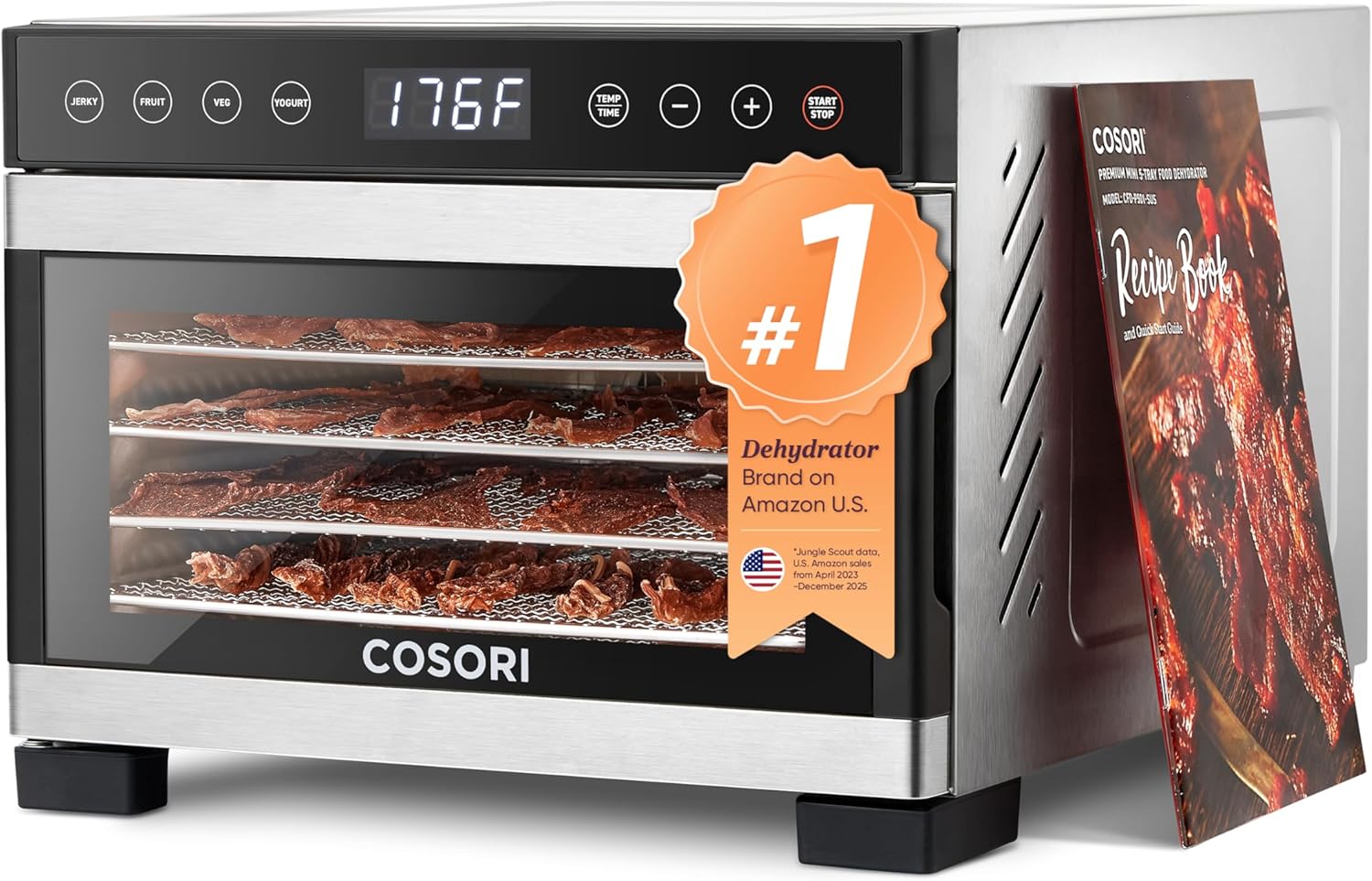
Making healthy snacks at home becomes straightforward when you choose a reliable countertop appliance designed for even heat distribution and precise temperature management. Cosori offers a diverse variety of stainless steel food dehydrators tailored for different batch sizes, ranging from compact setups to high-capacity machines featuring multiple removable trays and horizontal airflow technology.
Selecting the right model depends carefully on your available kitchen counter space, the volume of ingredients you plan to process at once, and specific operational features like digital touch controls or specialized preset modes. Reviewing the core attributes of each option helps match your daily snack-making routine directly to a dehydrator that fits your exact kitchen layout and lifestyle needs.
As an Amazon Associate, StacyLaughs earns from qualifying purchases.
Buying guide
Assessing Drying Capacity and Tray Count
Choosing the right dehydrator begins with evaluating how much food you plan to process in a typical batch. Smaller models with five trays offer compact footprints suitable for occasional snack making, while ten-tray versions provide expansive surface areas for large families or bulk preservation tasks. Matching your tray count to your standard ingredient volume prevents wasted space or the need for multiple successive batches.
Consider the physical dimensions of each tray when planning your recipes. Trays built with stainless steel provide durable surfaces for heavy food loads like sliced meats and dense vegetables. Ensuring your chosen model accommodates your typical weekly output keeps your countertop organized and streamlines your overall snack-making workflow without unnecessary appliance clutter.
Understanding Airflow and Heating Efficiency
Airflow design directly influences how evenly your ingredients dry across different levels of the machine. Models featuring rear-mounted fans and horizontal airflow technology circulate hot air uniformly across every tray. This design effectively eliminates the need to manually rotate trays during long drying cycles, ensuring consistent moisture removal from front to back without requiring constant oversight.
Wattage ratings further determine heating efficiency and processing speed. Higher wattage motors generate heat quickly and maintain stable temperatures throughout extended multi-hour sessions. Pairing proper airflow mechanics with adequate power guarantees reliable texture development whether you are crisping delicate fruit slices, preparing vegetables, or drying thick cuts of seasoned meat.
Managing Countertop Space and Dimensions
Kitchen layout plays a vital role when selecting a food dehydrator for regular home use. Units vary significantly in depth, width, and height, with high-capacity models requiring substantial permanent surface area. Measuring your available counter space and overhead cabinet clearance before purchasing prevents placement conflicts in busy kitchens and ensures smooth daily food preparation workflows.
Compact alternatives fit easily beneath upper cabinets while still offering enough trays for daily snacking needs. Keep in mind that deeper machines may extend past standard counter edges, requiring careful placement to maintain safe kitchen pathways, proper ventilation around heating elements, and convenient access to digital control panels during operation.
Evaluating Temperature Control and Presets
Precise temperature regulation allows you to target exact drying environments for different types of food ingredients. Digital controls featuring one-degree increments give you the flexibility to handle delicate herbs, vegetables, and meats accurately across long cycles. USDA guidelines recommend specific heat levels for safe meat jerky preparation, making adjustable temperature ranges essential for consistent food safety standards.
Built-in presets simplify daily operation by offering pre-programmed time and temperature combinations for common snacks like fruit rolls, vegetables, and yogurt. While manual adjustments remain fully available for custom recipes, presets provide a convenient starting point for beginners learning how to dehydrate various ingredients without unnecessary guesswork or complex calculations.
Material Durability and Cleaning Ease
Choosing stainless steel materials for both the exterior housing and internal trays ensures long-term appliance durability and daily resistance to wear. Stainless steel withstands frequent heat exposure and resists staining from colored foods like berries and tomatoes over years of use. Furthermore, smooth metallic surfaces simplify routine wiping and maintenance after extended dehydration sessions.
Dishwasher-safe removable trays reduce cleanup effort significantly by allowing you to wash parts automatically rather than scrubbing sticky residues by hand. Checking whether accessories like mesh screens and fruit roll sheets are included and easy to clean helps maintain a hygienic snack-making environment with minimal daily hassle and effort.
Operational Noise and Safety Features
Dehydrators often run for many continuous hours or overnight, making operational noise levels an important consideration for open-plan living spaces. Advanced brushless motors keep sound output below 48 decibels, ensuring the appliance operates quietly without disturbing household activities or sleep schedules. Quiet performance allows you to run long drying cycles whenever convenient during the day or night.
Safety additions such as automatic shutoff mechanisms and built-in overheat protection provide extra reassurance during unattended operation. These safety features stop heating elements if internal temperatures exceed safe thresholds or when the digital timer concludes, allowing you to set your dehydrator running before bed or work with complete confidence.
Frequently asked questions
Do I need to rotate trays during the drying process?
Most Cosori dehydrators utilize horizontal airflow technology powered by rear-mounted fans, which distributes hot air evenly across all trays simultaneously. Because of this design, manual tray rotation is generally unnecessary, allowing you to load the machine and let it complete the cycle without rearranging your food items. However, monitoring your specific ingredients near the end of the drying time remains a good practice to ensure your desired texture is achieved across every tray.
What temperature should I use for making beef jerky?
The USDA recommends maintaining a temperature of at least 165 degrees Fahrenheit when preparing homemade meat jerky to ensure food safety. Models featuring maximum temperature capabilities up to 176 degrees or precision controls reaching 165 degrees accommodate these specific heating requirements easily. Always verify that your chosen meat slices reach proper internal temperatures during the dehydration process, and consult the included user manual or recipe guides for specific preparation instructions tailored to your ingredients.
How do I clean the stainless steel trays after use?
The stainless steel trays included with these dehydrators are dishwasher safe, allowing for straightforward cleanup after sticky foods or marinades. For manual washing, soaking the trays in warm soapy water helps loosen dried food residues before wiping them down with a non-abrasive sponge. Avoid using harsh scouring pads that could scratch the metallic finish, and ensure all parts are completely dry before reassembling or storing your dehydrator for its next use.
Can I run the food dehydrator overnight?
Running your dehydrator overnight is practical thanks to advanced brushless motors that maintain quiet operation below 48 decibels, preventing sleep disruption. Additionally, built-in safety features like automatic shutoff and overheat protection monitor the appliance throughout extended drying cycles, powering down the heating elements when the timer expires. This combination of quiet performance and automatic safety mechanisms lets you start multi-hour batches in the evening and wake up to finished snacks.
What accessories come included with these dehydrators?
Standard accessory packages typically include multiple stainless steel trays, a mesh screen for smaller items like herbs, and a fruit roll sheet for creating fruit leathers. Specific models also provide user manuals and detailed recipe cookbooks to help you get started with various snack types right away. If you wish to expand your setup, additional accessories such as extra mesh screens or specialty sheets can be found by searching for compatible manufacturer parts online.