Appliances · Buying Guide
Best Cuisinart Air Fryer Toaster Oven Choices for Countertops
Finding the right countertop appliance involves balancing daily meal preparation needs with available kitchen workspace. Multifunctional cooking devices combine baking, broiling, and air frying into a single footprint, helping home cooks manage diverse recipes without firing up a traditional range. Selecting an appropriate model depends on evaluating internal dimensions, power outputs, and control layouts that match your typical cooking volume.
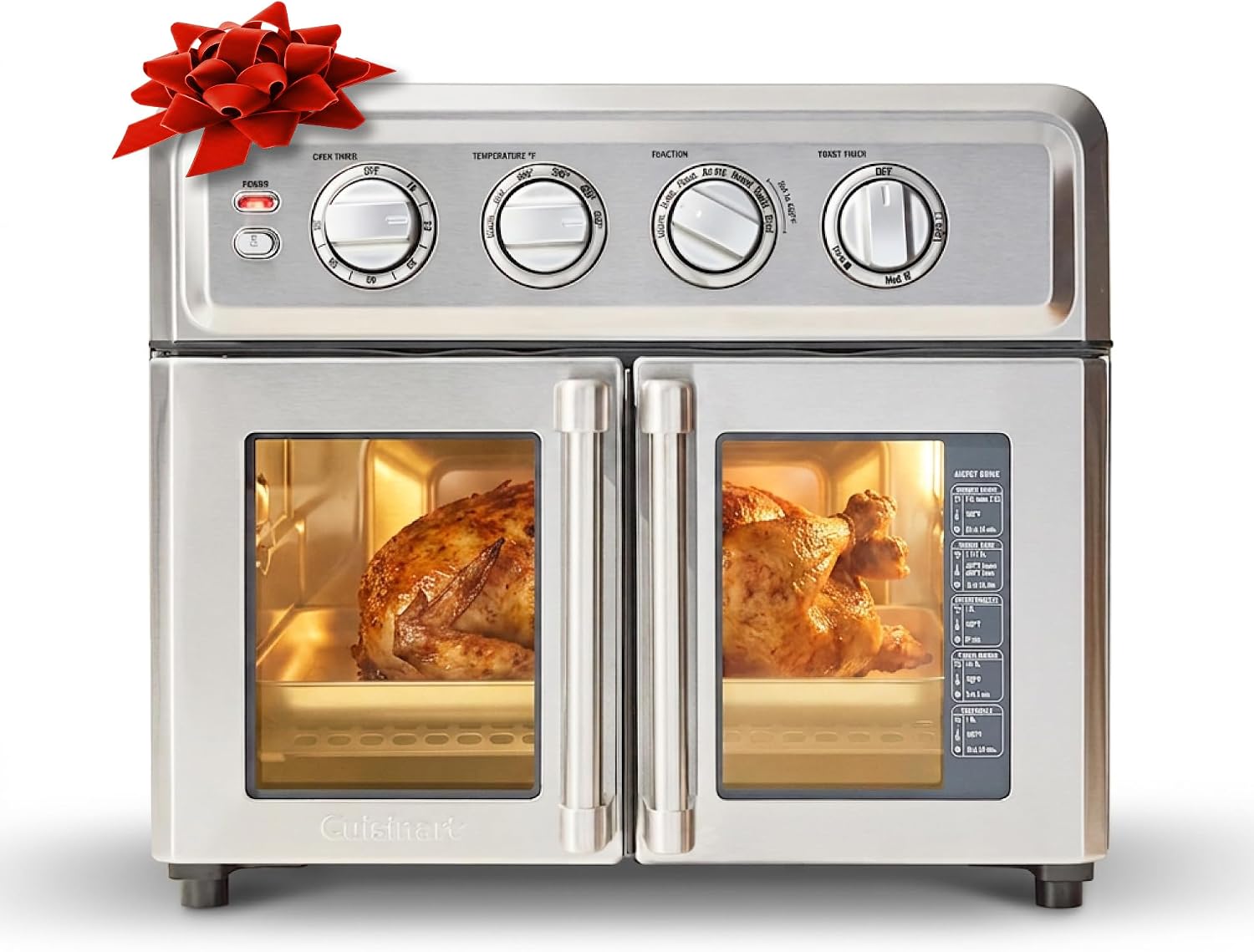
The following overview examines several popular Cuisinart countertop oven options built with robust heating elements and distinct physical designs. Whether you prefer classic dial controls, dual French doors, or integrated grill accessories, understanding these physical attributes helps ensure the appliance suits your kitchen workflow. Reviewing capacity specifications and included attachments provides a practical foundation for your buying decision.
As an Amazon Associate, StacyLaughs earns from qualifying purchases.
Buying guide
Evaluating Countertop Space and Kitchen Footprint
Assessing your available kitchen counter space is a critical first step before purchasing any countertop oven model. Measure both the depth and width of your designated cooking area to ensure the appliance housing fits comfortably without obstructing walkways or adjacent kitchen cabinets. Units featuring double-swing doors also require adequate front clearance space to allow smooth opening without interference from surrounding items.
Consider the vertical clearance between your countertop and upper wall cabinets to prevent excessive heat accumulation under wooden surfaces. Choosing an appropriate physical footprint guarantees that the appliance integrates seamlessly into your daily kitchen routine without creating awkward workspace bottlenecks during busy meal preparation sessions.
Understanding Cooking Capacity and Meal Volumes
Internal capacity dictates the types of cookware and food portions you can prepare simultaneously within the appliance cavity. A zero point six cubic foot interior comfortably accommodates standard family meals such as a twelve-inch frozen pizza, a multi-pound chicken, or six slices of bread at once. Matching the internal volume to your household size prevents the need for multiple cooking batches during dinner.
Reviewing rack positions and internal dimensions helps ensure your favorite baking pans, trays, and casserole dishes fit properly inside the cooking chamber without friction. Selecting adequate capacity ensures you can efficiently prepare diverse multi-course dishes without constantly struggling against spatial restrictions during daily meal preparation sessions.
Comparing Wattage and Heating Performance
Power output directly influences how quickly the appliance reaches high cooking temperatures and maintains steady heat distribution across internal surfaces. Models operating at eighteen hundred watts provide robust energy for demanding tasks like high-heat air frying, rapid preheating, and thorough broiling. This high wattage supports consistent culinary performance across various baking and roasting functions throughout the week.
Advanced airflow technologies, such as top-mounted fans and specialized heating element layouts, further enhance heat circulation around diverse food items. Prioritizing strong wattage and optimized airflow ensures your meals cook evenly and achieve desired crisp textures without prolonged waiting times during busy evening kitchen routines.
Selecting Control Interfaces and Timer Options
Control layouts vary significantly between traditional mechanical dials and electronic interfaces, directly affecting how easily you adjust cooking parameters for different recipes. Mechanical knobs allow quick temperature and time changes through physical rotation, offering reliable operation for everyday recipes. A sixty-minute timer with auto-shutoff adds everyday convenience by halting operation when cooking cycles conclude.
Evaluating whether you prefer tactile mechanical dials or alternative control settings ensures your appliance matches your cooking style and daily kitchen preferences. A straightforward control panel minimizes guesswork and lets you focus entirely on recipe preparation, temperature monitoring, and precise timing adjustments without unnecessary complications during busy cooking hours.
Analyzing Included Accessories and Attachments
The wide variety of included accessories significantly expands the versatility of your countertop oven right out of the box for preparing various meals. Standard packages often feature wire oven racks, baking drip pans, dedicated air fry baskets, and reversible grill plates. These helpful attachments enable you to transition smoothly between baking pastries, air frying wings, and grilling meats during dinner preparation.
Reviewing accessory compatibility and surface coatings helps you clearly understand maintenance requirements and overall cooking flexibility for your everyday cooking tasks. Selecting models equipped with practical attachments ensures you have the right tools for diverse cooking techniques without purchasing separate items later on.
Reviewing Maintenance and Cleaning Requirements
Maintaining a clean countertop oven depends heavily on interior materials, removable crumb trays, and protective accessory coatings across all parts. Stainless steel and aluminum interiors wipe down easily after cooking, while removable crumb trays capture stray food particles before they burn onto heating elements. Establishing a regular cleaning routine preserves the physical appearance and overall longevity of the appliance.
Most included accessories require careful hand washing rather than automated dishwasher cycles to protect specialized non-stick coatings from premature damage. Factoring these specific maintenance steps into your daily kitchen routine helps keep your countertop cooking equipment operating efficiently over time without unexpected functional hassles.
Frequently asked questions
What size of food items can fit inside these countertop ovens?
These countertop ovens feature a 0.6 cubic foot internal capacity designed to accommodate everyday family meal portions. You can easily fit up to six slices of toast, a twelve-inch frozen pizza, three pounds of chicken wings, or a roasting chicken weighing between four and four and a half pounds. This internal space allows you to prepare substantial meals without turning on a traditional full-size range, making it practical for everyday baking and roasting tasks.
How do the cooking functions differ across these appliance models?
The available models offer between seven and eight distinct cooking functions tailored for various culinary needs. Common modes include air frying, baking, convection baking, broiling, convection broiling, warming, and toasting. Certain models also incorporate a dedicated grill or griddle setting with specialized reversible plates, allowing you to sear meats and prepare griddle items directly inside the countertop unit alongside standard convection and air frying daily operations.
What power output do these countertop ovens require?
All featured models operate with an 1800-watt power output system designed to deliver rapid preheating and high-temperature cooking up to 450 degrees Fahrenheit. This robust wattage level powers top-mounted heating elements and circulating fans to ensure even heat distribution. The high electrical output supports efficient air frying, rapid browning, and consistent baking performance across all available cooking modes without requiring specialized electrical outlet modifications in standard modern kitchens.
What accessories are included with these countertop ovens?
Included accessories typically consist of a wire oven rack, a baking pan that doubles as a drip tray, and a dedicated air fry mesh basket. Selected models also include a ceramic non-stick reversible grill and griddle plate to expand cooking versatility. These attachments are designed to support various cooking methods from broiling and baking to air frying and grilling, though they generally require manual hand washing rather than automated dishwasher cleaning after use.
What is the best way to clean and maintain the interior?
Cleaning the interior involves wiping down the stainless steel or aluminum surfaces with a damp cloth after the appliance cools completely. A removable crumb tray collects stray food crumbs and can be pulled out separately for easy manual washing. Because included accessories and racks feature specialized coatings, manufacturer guidelines recommend hand washing all removable components rather than placing them in a dishwasher to preserve their surfaces and ensure long-term kitchen durability.