Appliances · Buying Guide
Best Dehydrator for Jerky: Top Stainless Steel Options Compared
Making homemade beef jerky requires precise temperature control and steady airflow to ensure meat dries safely and evenly. Modern stainless steel food dehydrators make this process straightforward by utilizing rear-mounted fans and programmable digital timers. Whether you want a compact countertop unit for small batches or a large multi-tray machine for bulk preparation, choosing the right model helps you achieve optimal texture and flavor preservation at home.
This review examines five distinct stainless steel dehydrators equipped with features like adjustable thermostats, preset modes, and dishwasher-safe components. By evaluating capacity, power ratings, and heat distribution technologies, you can find a suitable appliance that matches your specific culinary goals and kitchen space. Let us explore these reliable drying machines to see which one fits your routine.
As an Amazon Associate, StacyLaughs earns from qualifying purchases.
Buying guide
Evaluating Tray Capacity and Physical Footprint
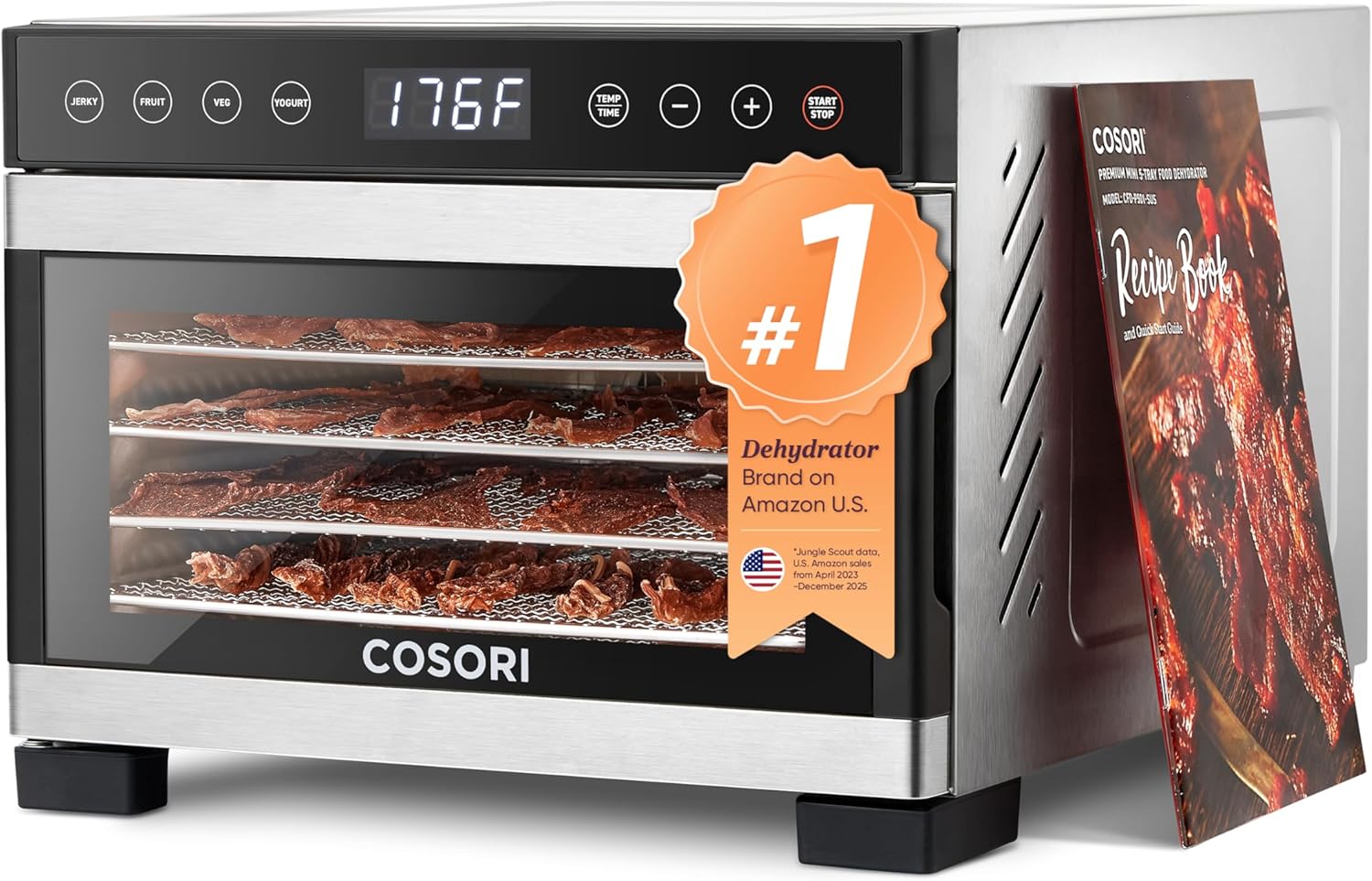
Choosing the right dehydrator starts with assessing how much food you plan to process during a single session. Compact five or six-tray models fit neatly on standard kitchen counters, offering enough room for weekly household snacks without overwhelming your workspace. They suit casual users who prepare moderate portions and appreciate easy storage options when the appliance is not in active use.
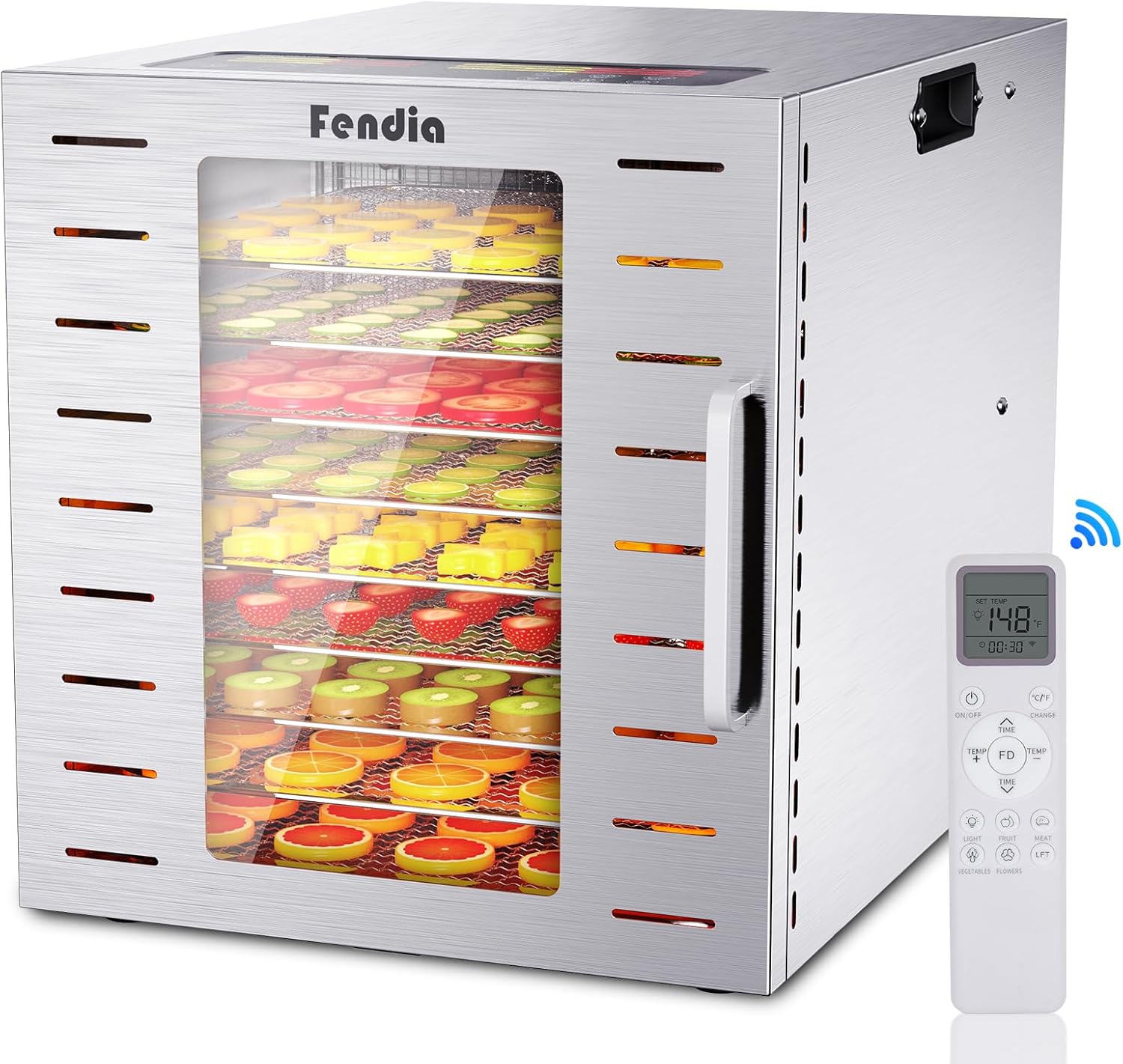
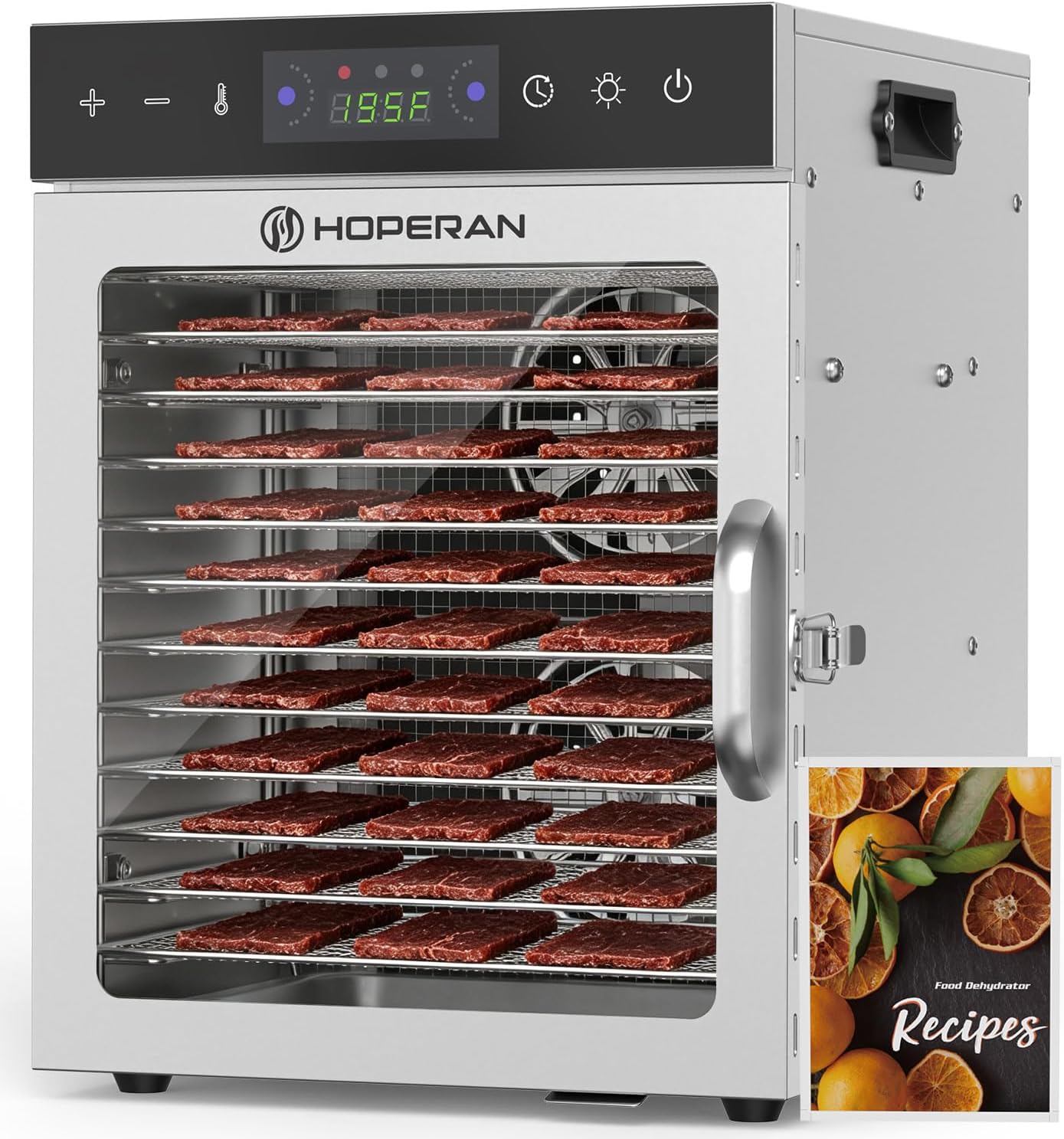
Larger eight, nine, or twelve-tray appliances accommodate bulk harvests, hunting yields, and family-sized snack batches effortlessly. However, these expanded units demand significantly more counter space and vertical clearance. Always measure your kitchen dimensions carefully before purchasing a high-capacity machine to ensure it fits comfortably beneath upper cabinets or inside dedicated storage pantries.
Understanding Wattage and Heating Performance
Motor wattage directly influences how efficiently a food dehydrator generates and maintains heat across its drying chambers. Lower-wattage units around 480 watts handle standard fruits, vegetables, and moderate jerky loads adequately while consuming less electricity. They provide steady warmth suitable for everyday recipes without placing an excessive burden on standard kitchen electrical circuits during long drying cycles.
Higher-wattage machines ranging from 600 to 800 watts heat up faster and maintain stable temperatures even when loaded with dense, thick strips of meat. This extra power ensures that moisture evaporates rapidly from the outer edges of heavy food batches. Selecting an appropriate wattage level prevents uneven drying and ensures your homemade beef jerky reaches desired textures consistently.
Airflow Technology and Tray Rotation
Airflow design dictates whether you will need to interrupt your drying process to manually rotate shelves. Traditional vertical airflow models often require frequent tray swapping because heat diminishes as it travels upward through the layers. Modern horizontal airflow systems utilize rear-mounted fans to blow warm air evenly across every level simultaneously, eliminating manual intervention entirely.
Advanced dual-fan configurations enhance this horizontal circulation further across extra-large cabinets. By distributing 360-degree convection currents uniformly, these setups ensure every piece of meat or fruit dehydrates at the exact same rate. Investing in a machine with rear fan circulation saves considerable time and effort, making the entire snack-making routine much more convenient and reliable.
Temperature Ranges for Safe Jerky
Preparing meat-based snacks requires specific thermal thresholds to ensure food safety standards are met properly. Government food safety guidelines recommend heating meat to high temperatures during the drying process to eliminate potential pathogens effectively. Dehydrators offering maximum temperatures between 165 and 196 degrees Fahrenheit provide the necessary heat required for preparing secure beef strips at home.
Lower temperature ranges starting around 86 or 95 degrees Fahrenheit are equally important for delicate items like fresh herbs, flowers, and fragile fruit slices. Having a wide adjustable thermostat allows you to transition smoothly from gentle herb drying to high-heat meat processing. Always verify that your chosen model reaches the specific temperatures recommended for your preferred recipes.
Material Selection and Cleaning Ease
The construction materials of your dehydrator impact both durability and post-processing cleanup routines significantly. Food-grade stainless steel housings and removable trays resist staining, absorb fewer odors, and withstand heavy-duty use much better than flimsy plastic alternatives. Many stainless steel trays are completely dishwasher-safe, allowing you to load them directly into your automatic dishwasher after a messy jerky-making session.
Additional components like removable drip trays, silicone mesh mats, and smooth interior walls simplify maintenance further by catching crumbs and marinades. Selecting an appliance designed for easy disassembly reduces the time spent scrubbing sticky residue off individual wire grates. Prioritizing robust metal construction ensures your investment endures countless drying cycles while maintaining a sanitary cooking environment.
Noise Levels and Operational Convenience
Running a food dehydrator overnight or throughout the day requires paying close attention to internal motor noise levels. Advanced brushless motors and quiet fan assemblies operate below 48 decibels, ensuring your kitchen remains peaceful without disruptive humming sounds. This quiet performance is especially beneficial for open-plan living spaces where appliance noise can easily travel into adjacent rooms.
Operational conveniences such as digital timers, automatic shut-off functions, viewing windows, and remote controls enhance the overall user experience. Programmable timers let you set exact drying durations without needing to monitor the clock constantly. Meanwhile, automatic shut-off mechanisms provide peace of mind by turning the heating elements off as soon as your timer completes its countdown.
Frequently asked questions
Why is a rear-mounted fan important for making beef jerky?
A rear-mounted fan is essential because it blows horizontal airflow evenly across every tray simultaneously. In traditional vertical designs, heat circulates from the bottom up, requiring users to manually rotate shelves to achieve uniform drying results. With a rear fan and proper air convection, warm air reaches every piece of meat at the exact same time. This prevents moisture from getting trapped on specific trays, ensuring your beef jerky dries uniformly without requiring constant supervision or manual shelf swapping during long dehydration cycles.
What temperature should I use to dehydrate beef jerky safely?
Agricultural and food safety authorities generally recommend heating meat to 165 degrees Fahrenheit during the dehydration process to ensure harmful bacteria are safely eliminated. Many dedicated dehydrators offer adjustable thermostats reaching maximum temperatures between 165 and 196 degrees Fahrenheit. Setting your appliance within this higher thermal range ensures your meat strips reach safe internal temperatures quickly before the moisture completely evaporates. Always check your specific unit's capabilities and follow trusted recipe guidelines to prepare wholesome meat snacks securely at home.
Can I run a food dehydrator overnight while sleeping?
Yes, you can run many modern food dehydrators overnight, provided the unit features built-in safety mechanisms like automatic shut-off and overheating protection. Appliances equipped with advanced brushless motors and quiet fan systems operate at low decibel levels, typically below 48 decibels, ensuring they will not create disturbing household noise while you sleep. Programmable digital timers allow you to set the exact drying duration so the machine powers down automatically when your recipe finishes, offering convenient and worry-free overnight operation.
Are stainless steel dehydrator trays easy to clean?
Food-grade stainless steel trays are widely recognized for being exceptionally durable and easy to clean compared to traditional plastic trays. Because stainless steel resists staining, corrosion, and lingering food odors, it withstands sticky marinades and meat residues much better. Many models feature dishwasher-safe trays that you can simply place directly into your dishwasher after use. Additionally, removable drip pans catch falling crumbs and excess oils, further simplifying your post-dehydration cleanup routine and keeping your appliance sanitary.
How do I choose between a small tray count and a large bulk model?
Choosing the right tray count depends entirely on your household snack consumption and how frequently you process food in bulk. Compact five or six-tray dehydrators suit casual users with limited counter space who only prepare moderate portions at a time. Conversely, larger eight, nine, or twelve-tray machines accommodate hunters, gardeners, and large families needing to dry massive batches simultaneously. Consider your available kitchen storage dimensions and typical batch sizes to select a machine that matches your lifestyle.