Appliances · Buying Guide
Best Double Ice Cream Maker Options for Homemade Frozen Treats
Making frozen desserts at home offers complete control over ingredients, flavors, and serving sizes for family gatherings or quiet nights. Whether you prefer traditional churned gelato, rich soft serve, or crushed ice snow cones, specialized appliances simplify the process. Selecting the right setup depends heavily on batch capacity, counter space, and whether you want to craft multiple flavors simultaneously.
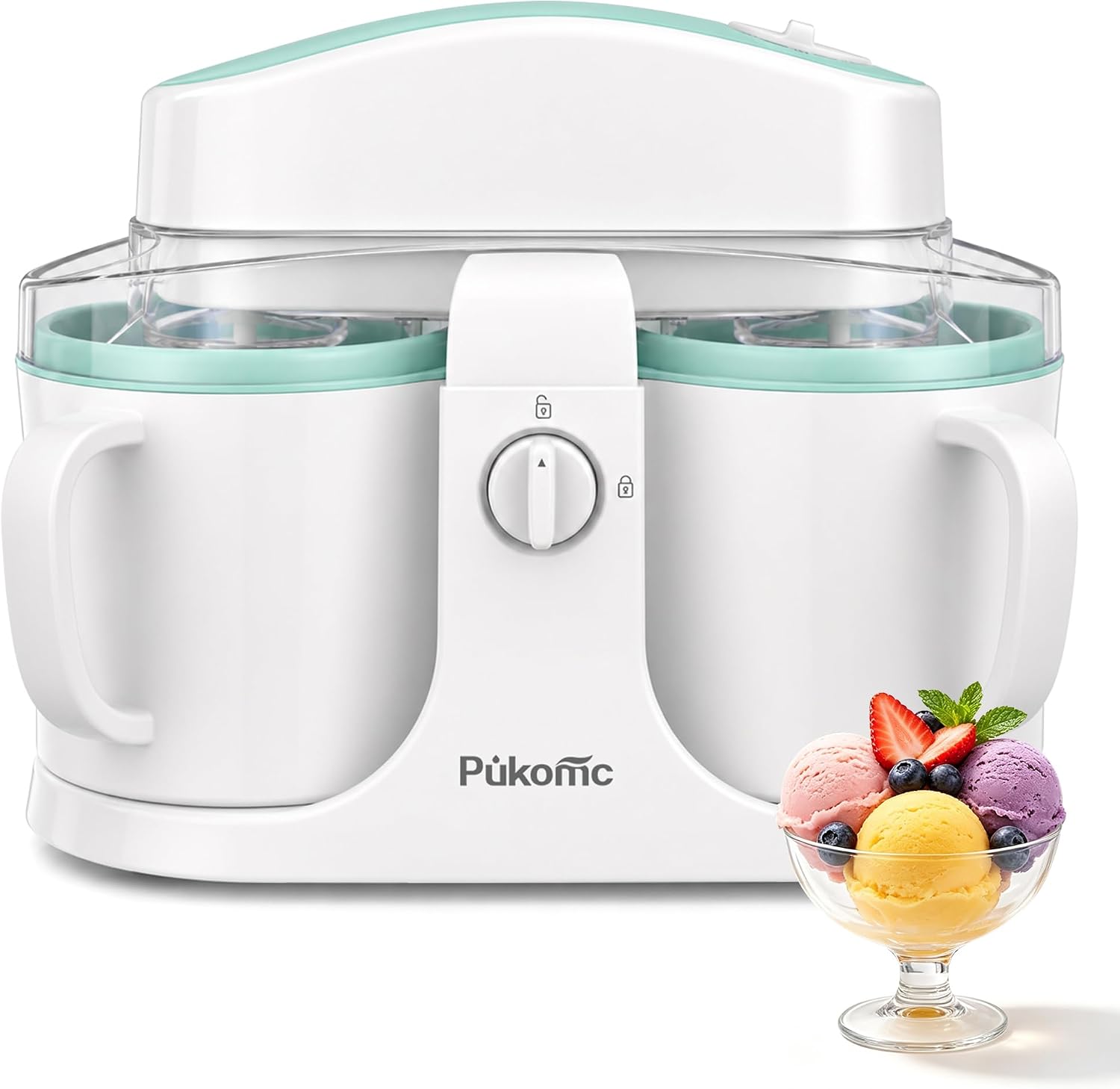
Exploring multi-bowl systems and compact dual-container bundles helps match your kitchen routine with practical equipment. Some designs focus on twin freezer compartments for running distinct recipes side by side, while others leverage powerful multi-function motors and specialized processing cups. Reviewing physical dimensions, bowl volumes, and component layouts ensures your chosen machine fits comfortably on countertops and meets your household dessert demands.
As an Amazon Associate, StacyLaughs earns from qualifying purchases.
Buying guide
Evaluating Capacity and Batch Volume
When selecting a frozen dessert machine, matching the container volume to your household size is a primary consideration. Smaller dual-cup models offer under a quart of total space, which suits quick individual portions or treats for two. Larger family-sized appliances provide extra-large pint tubs or 1.5-quart bowls to accommodate group gatherings without constant reloading.
Assess how many people you typically serve so you avoid choosing a restricted capacity that requires running multiple consecutive batches. Keep in mind that bowl volumes directly impact external dimensions, meaning larger batches require more storage space in both your freezer and your kitchen cabinets when the appliance is not actively in use.
Countertop Footprint and Storage Dimensions
Kitchen appliance dimensions dictate where your machine lives and how easily you can store it between uses. Compact units with narrow widths fit comfortably on crowded countertops or inside standard cabinets without obstructing workspace. Taller or bulkier motor bases demand careful measurement of vertical clearance beneath overhead cabinets.
Reviewing length, width, and height specifications helps prevent placement frustrations in smaller kitchens. Some designs feature smart nesting components that pack neatly inside the bowls to minimize storage clutter, while heavy-duty multi-function processors require dedicated permanent counter zones due to their weight and extended physical profile.
Pre-Freezing Requirements and Preparation Time
Most traditional home ice cream makers rely on freezer bowls that require advance chilling before you can churn any ingredients. Standard models typically mandate freezing bowls for at least twelve hours, while certain compact mug designs require twenty-four to forty-eight hours of continuous sub-zero temperatures.
Factoring this preparation window into your dessert routine ensures you are never caught unprepared when craving a frozen treat. If you prefer spontaneous dessert making, keep specialized freezer bowls stored permanently in the freezer so they remain chilled and ready for immediate operation whenever inspiration strikes your household.
Flavor Variety and Dual-Processing Features
Modern frozen treat makers offer exciting options for customizing flavors and textures during a single processing session. Dual-bowl and twin-cup systems let you churn two distinct recipes side by side, satisfying different flavor preferences among family members simultaneously. Advanced processors can transform solid frozen bases into smooth textures.
Built-in ingredient chutes further enhance customization by allowing you to drop in mix-ins like chocolate chips, nuts, or fruit toward the end of the cycle. Evaluating these functional capabilities helps you choose an appliance that matches your desired level of culinary experimentation and treat personalization at home.
Cleaning Routines and Maintenance Practicality
Appliance cleanup after making sticky frozen desserts is an important factor for long-term satisfaction and regular use. Many traditional electric makers feature removable paddles, lids, and bowls that require careful hand washing with warm soapy water to protect their specialized surfaces and internal moving parts.
Other advanced multi-function processors provide dishwasher-safe parts that simplify cleanup by handling the sanitization process automatically. Reviewing the manufacturer care guidelines before purchasing ensures you select a maintenance routine that fits comfortably into your daily kitchen cleanup preferences.
Operating Modes and Appliance Versatility
Automated operation removes manual effort from the churning process, allowing the machine to handle continuous stirring while you relax. Some specialized countertop devices expand beyond standard ice cream by incorporating ice-crushing mechanisms for snow cones or offering multi-touch programs for Italian ice and gelato.
Choosing between a dedicated single-purpose dessert maker and a multi-functional combination appliance depends on your household menu preferences. Multi-use machines provide broader treat options throughout the year, whereas dedicated churners focus specifically on delivering traditional soft-serve or hard-pack styles with straightforward controls.
Frequently asked questions
How long do ice cream maker bowls need to freeze before use?
Most standard freezer bowls require at least twelve hours of continuous chilling in a standard home freezer before you attempt to churn ingredients. Certain compact mug designs and specialty freezer containers mandate an extended pre-freezing window ranging from twenty-four to forty-eight hours to achieve the necessary sub-zero temperatures. For the best consistency and reliable dessert churning results, many users choose to store their freezer bowls permanently inside the freezer so they remain consistently chilled and ready for immediate recipe preparation whenever a craving strikes.
Can I make two different flavors of ice cream at the same time?
Yes, several specialized countertop dessert makers feature double bowl designs, dual-cup configurations, or side-by-side containers specifically engineered to produce two distinct flavors simultaneously. These dual systems allow you to satisfy different taste preferences within your household during a single processing session without needing to run consecutive batches. However, you should check the individual container capacities, as twin-bowl models typically divide the total volume into smaller individual pint or fractional portions rather than one large batch.
When should I add mix-ins like chocolate chips or nuts?
Mix-ins such as chocolate chips, chopped nuts, sprinkles, or cookie dough pieces should generally be added near the end of the churning or processing cycle. Many countertop dessert makers include a built-in ingredient chute or funnel specifically designed for this purpose, letting you drop additions directly into the mixture while the paddles continue to spin. Adding mix-ins too early in the process can jam the churning mechanism or cause ingredients to break down too finely into the base.
Are ice cream maker parts dishwasher safe?
Maintenance requirements vary significantly depending on the specific appliance model and manufacturer guidelines. While some advanced multi-function processors feature dishwasher-safe parts and removable containers that simplify cleanup, many traditional electric ice cream makers specify hand wash only care instructions for their freezer bowls, paddles, and plastic housings. Always review the product care documentation before placing any removable components into a dishwasher to prevent warping or damaging specialized materials.
What should I do if my homemade ice cream is too soft?
If your freshly churned ice cream has a softer consistency than desired, you can easily firm it up by transferring the finished dessert into a separate container and placing it in your home freezer for an additional fifteen to thirty minutes. Instruction manuals for many automated machines explicitly recommend this brief post-freezing step to achieve a more traditional, scoopable hardness. Additionally, ensuring your ingredients are thoroughly refrigerated before starting the churning cycle helps improve initial thickness.