Appliances · Buying Guide
Best Electric Hard Boiled Egg Cooker Options for Quick Breakfasts
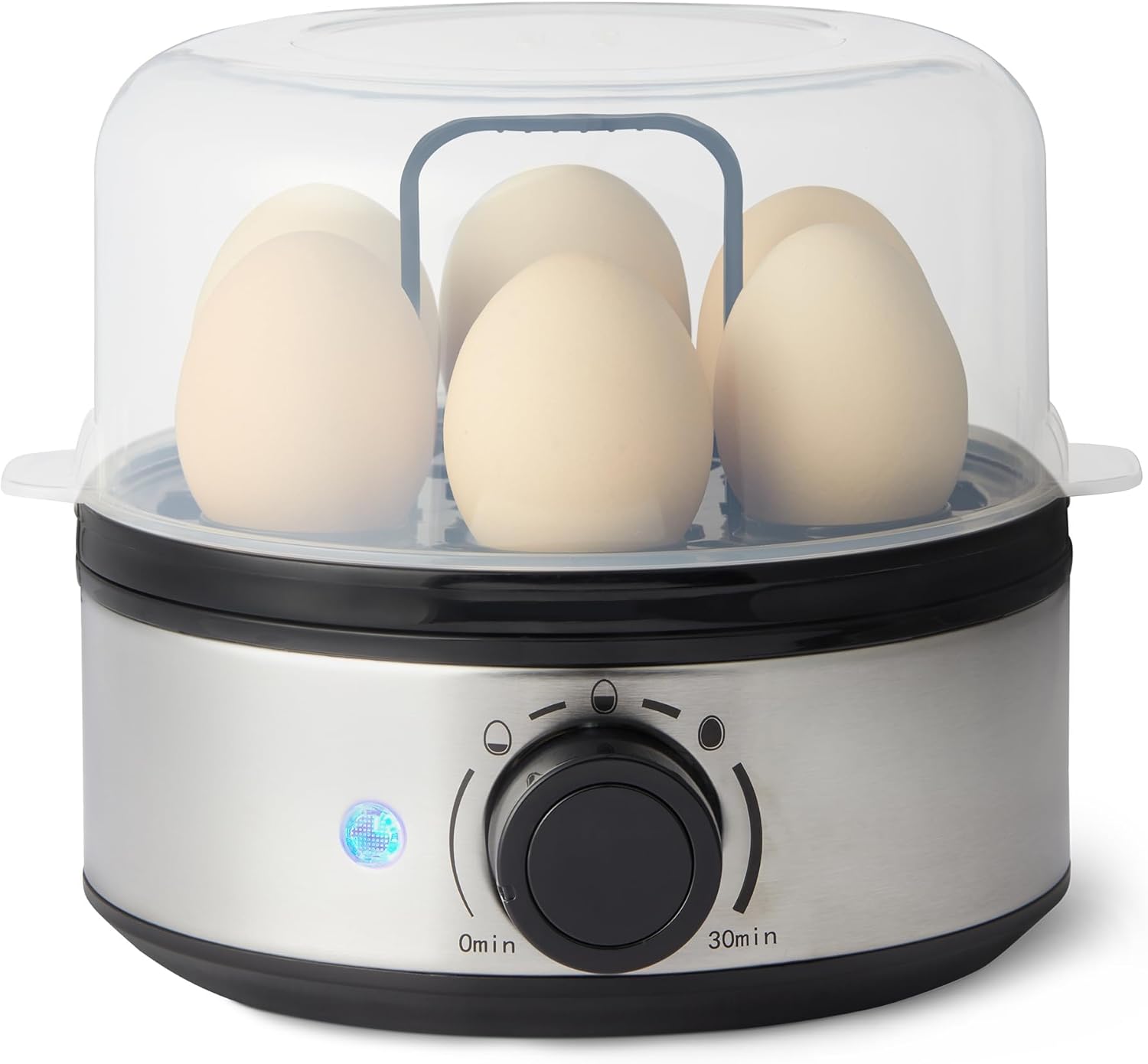
Morning routines often require efficient appliances that streamline meal preparation without occupying excessive counter space. An electric hard boiled egg cooker provides a dedicated heating base and precise water measurement systems to deliver consistent results for everyday breakfasts, quick snacks, or meal prep sessions.
These compact countertop devices use steam heating mechanisms to cook multiple eggs simultaneously, ranging from soft to hard firmness levels. By replacing traditional stovetop boiling pots, these cookers help manage cooking times while offering removable trays for steaming vegetables or preparing small portions of poached eggs and omelets.
As an Amazon Associate, StacyLaughs earns from qualifying purchases.
Buying guide
Capacity and Batch Size
Choosing the right egg capacity depends entirely on household size and daily meal planning habits. Most standard electric cookers accommodate between six and seven eggs in a single heating cycle, which satisfies typical breakfast portions for small families or single individuals prepping snacks ahead of time.
Selecting a model with a matching capacity ensures you do not waste water or electrical energy running multiple batches. Evaluate your typical consumption patterns to determine whether a six-egg or seven-egg layout best fits your routine.
Material Construction and Durability
Electric egg cookers typically utilize either lightweight plastic or stainless steel accents for their outer housing and base components. Stainless steel exteriors offer enhanced visual resistance to wear and complement modern kitchen appliances, whereas plastic housings keep the total unit weight exceptionally low.
Consider how frequently you plan to move the appliance when evaluating material choices. Lighter plastic models are easy to lift into cabinets, while stainless steel options provide a sturdier feel on permanent countertop stations.
Included Cooking Accessories
The versatility of an electric cooker often depends on the accessory trays packed into the box. Standard configurations feature a basic egg holder tray, while more versatile models bundle multi-egg poaching trays, omelet plates, and specialized measuring cups with integrated piercing pins.
Assess whether you intend to stick strictly to hard-boiled eggs or branch out into steamed vegetables, scrambled portions, and poached eggs. Matching your cooking goals to the provided trays ensures you get full utility from the appliance.
Automatic Shut-Off and Safety
Safety features such as automatic thermal shut-off mechanisms and audible indicators are critical for preventing dry boiling and overcooking. These systems monitor the heating plate temperature or water evaporation level, shutting down power once the cooking cycle is complete.
Relying on built-in safety shut-off lets you step away from the kitchen without worrying about burnt appliance bases. Prioritize models featuring clear audible buzzers if you tend to multitask in other rooms while breakfast cooks.
Countertop Footprint and Storage
Kitchen storage constraints dictate whether an appliance can remain permanently on the counter or must be stowed away after use. Compact square or circular models fit easily into narrow cupboard shelves, whereas longer rectangular units require specific linear clearance.
Look for designs that allow accessories to nest directly inside the boiling base during storage. This prevents misplaced parts and keeps your pantry or cabinet organized without creating clutter.
Maintenance and Cleaning Needs
Routine cleaning keeps heating plates free from mineral buildup caused by evaporated tap water. Models featuring detachable lids, removable egg trays, and dishwasher-safe non-electric components significantly reduce the effort required for post-cooking maintenance.
Always review manufacturer guidelines regarding which parts can go into the dishwasher versus those requiring hand washing. Choosing easily detachable surfaces ensures you can wipe down the heating base quickly after every meal.
Frequently asked questions
How do electric egg cookers determine the cooking time?
Electric egg cookers use a measured amount of water poured onto a heating plate rather than a traditional digital timer. You fill the provided measuring cup to specific indicator lines corresponding to soft, medium, or hard-boiled firmness. Once the heating element evaporates all the water from the base plate, the temperature rises, triggering the automatic shut-off mechanism and signaling that the cooking cycle is complete.
Can these appliances cook foods other than eggs?
Many electric egg cookers include specialized trays that expand their functionality beyond basic boiling. Depending on the specific model accessories, you can use the appliance to steam small portions of vegetables, prepare individual omelets, or poach eggs using dedicated trays. Reviewing the included components and manufacturer instructions will clarify which alternative foods can be safely prepared on the heating base.
What maintenance is required for dishwasher-safe parts?
Maintenance involves washing the detachable non-electric components, such as clear lids, egg holder trays, and poaching cups, either by hand or in the dishwasher according to manufacturer guidelines. The heating base itself should never be submerged in water; instead, it requires periodic wiping with a damp cloth and mild cleanser to remove mineral deposits left behind by evaporated water during the steaming process.
How do compact dimensions affect storage in small kitchens?
Compact dimensions allow electric egg cookers to fit easily into tight spaces like dormitory kitchenettes, apartment drawers, or crowded RV counters. Models with small square or circular footprints take up minimal surface area when left out on display. Furthermore, appliances designed with internal accessory storage keep trays and measuring cups nested securely inside the main body, preventing lost pieces in crowded cabinets.
What indicates that the cooking cycle has finished?
Most electric egg cookers signal the end of the cooking cycle through a combination of an automatic thermal shut-off and an audible buzzer or indicator sound. When the measured water completely evaporates from the heating plate, the internal thermostat detects the temperature change, cuts power to prevent overheating, and activates the buzzer to notify you that the eggs have reached their target firmness level.