Appliances · Buying Guide
Best Electric Steamer for Food: Top Multi-Tier Cookers for Every Kitchen
Finding the right appliance to prepare family meals without excess oil can transform your daily cooking routine. Electric food steamers offer a straightforward way to cook vegetables, seafood, poultry, and grains simultaneously using circulating steam. Whether you need a compact two-tier plastic model or a heavy-duty stainless steel setup with digital presets, understanding the core options helps narrow your choices effectively.
Different models feature varying water tank capacities, heating speeds, and material choices like borosilicate glass or food-grade stainless steel. Evaluating these physical attributes ensures you select a cooker that fits your available counter space and daily meal preparation habits and family needs without unnecessary guesswork.
As an Amazon Associate, StacyLaughs earns from qualifying purchases.
Buying guide
Capacity and Tier Configuration
Selecting the right capacity depends on your household size and meal habits. Smaller homes often find a seven-quart model provides enough room for daily vegetables and proteins without overcrowding. Larger families benefit from eighteen-quart systems featuring multi-tier layouts that let you steam multiple ingredients simultaneously, separating foods to prevent flavor transfer.
Evaluating available counter space is essential when choosing between compact and large steamers. Taller multi-tier units require sufficient vertical clearance beneath upper kitchen cabinets to prevent steam damage. Balancing typical portion sizes with your kitchen layout ensures you choose a unit that remains practical for everyday cooking rather than becoming difficult to store.
Material Construction and Food Contact
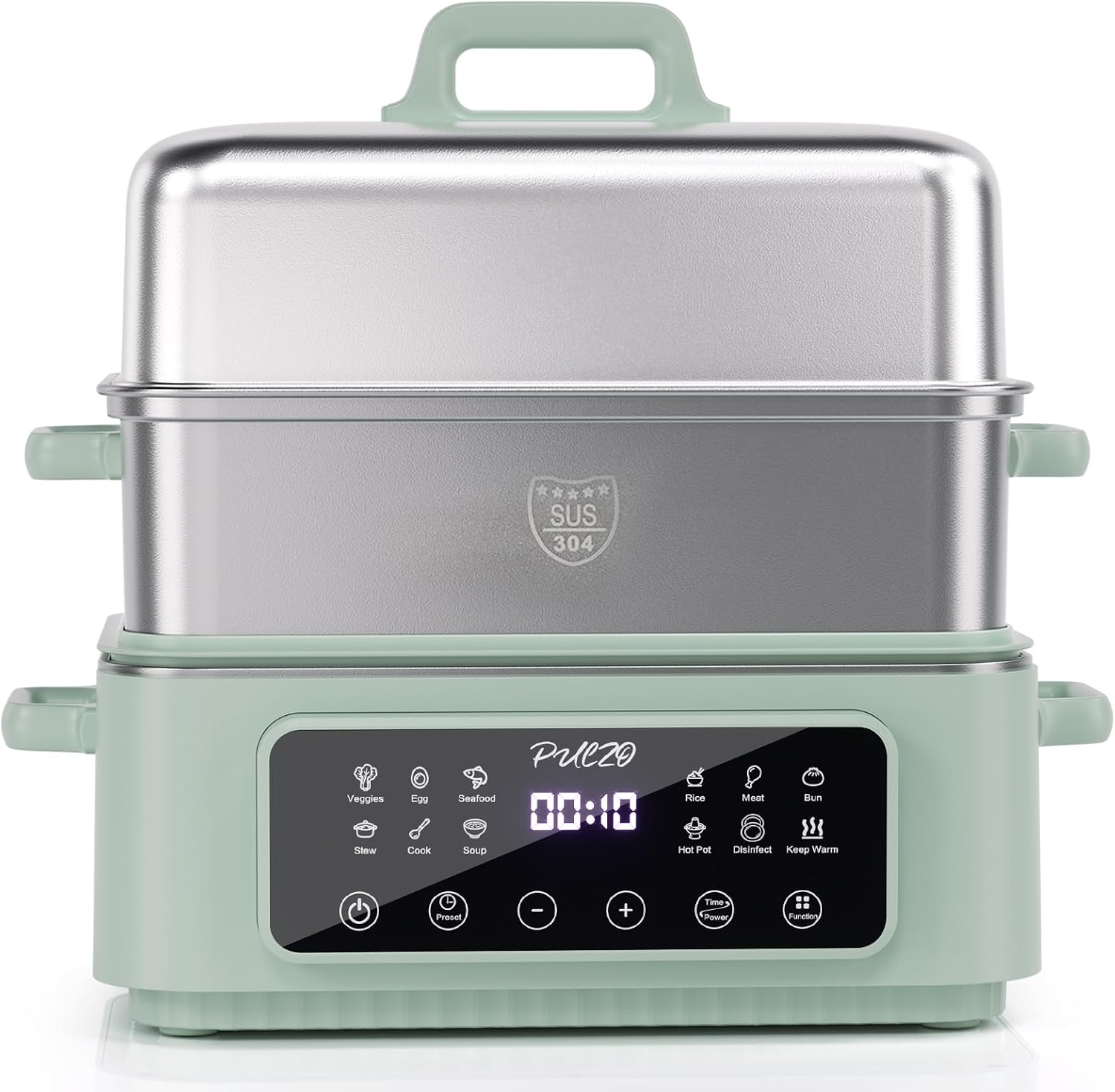
Material choices significantly impact durability, maintenance, and your overall cooking experience. Many standard models utilize lightweight plastic components for their stacking baskets, offering easy handling and dishwasher cleanup. However, some buyers prefer upgraded options built with food-grade 304 stainless steel or borosilicate glass. These alternative materials provide robust, plastic-free food contact surfaces that resist staining and retain heat efficiently.
Glass components also offer the distinct advantage of visual monitoring, letting you check cooking progress without lifting lids and losing heat. While metal and glass add considerable physical weight to the appliance compared to plastic, they often appeal to users prioritizing long-term material longevity. Consider how frequently you will lift or store the steamer when deciding between lightweight plastics and heavier glass or steel builds.
Water Tank Design and Refill Mechanisms
Managing water levels effectively prevents dry boiling and ensures uninterrupted cooking cycles. Many electric steamers feature clear water level indicators mounted on the exterior, letting you monitor liquid volume at a glance. Advanced models incorporate external side water tanks or dual inlets that allow you to add water mid-cooking without lifting lids or disturbing the internal steam temperature.
Removable water reservoirs offer another layer of convenience, allowing you to take the tank directly to the sink for effortless filling before long cooking sessions. Evaluating how a steamer handles water management helps reduce hassle during extended recipes like grains or large poultry dishes. Choosing a model with clear indicators or external refills keeps your cooking sessions smooth and predictable.
Heating Power and Steam Generation Speed
The heating element wattage dictates how quickly your food steamer reaches operating temperature. Units ranging from twelve hundred to eighteen hundred watts generate dense steam rapidly, often producing visible vapor within seconds of starting. High-power heating systems cut down overall meal preparation time, making them ideal for busy weeknights when you need dinner ready without long preheating delays.
Some advanced steamers also feature adjustable power levels or specialized heating rings designed to optimize steam distribution. While high-wattage appliances deliver fast results, they require dedicated electrical capacity on your kitchen circuits. Match the heating capability of the steamer to your daily schedule and kitchen electrical setup to ensure reliable performance during peak cooking hours.
Control Options and Preset Programs
Modern electric steamers range from simple mechanical switches to advanced digital touch control panels. Basic manual models let you turn the appliance on with minimal setup, appealing to users who prefer straightforward operation. In contrast, digital units often include multiple preset programs tailored for specific foods like seafood, poultry, eggs, and grains, taking the guesswork out of timing.
Additional digital features such as programmable timers, delay start options, and automatic keep-warm modes add flexibility to your routine. These controls let you coordinate meal timing with other kitchen tasks. Consider whether you prefer the simplicity of a basic switch or the walk-away convenience of automated digital presets when selecting your ideal food steamer.
Safety Features and Automatic Protections
Safety mechanisms are essential components in countertop steam cookers. Look for models equipped with automatic shutoff and boil-dry protection, which stop heating elements instantly if the water reservoir empties or the unit runs too long. Low-water alerts provide helpful notifications before a shutoff occurs, allowing you to replenish liquid without disrupting your cooking schedule unexpectedly.
Overheat protection further safeguards the appliance against electrical or thermal issues during extended family meal preparation. These built-in safeguards offer peace of mind, especially when managing multiple kitchen tasks simultaneously. Prioritizing models with robust safety protections ensures your electric steamer operates reliably while minimizing risks during busy home cooking sessions.
Frequently asked questions
How do electric food steamers work?
Electric food steamers operate by heating water within a base reservoir to generate hot steam, which then rises into stacked baskets or cooking containers to cook food evenly. This method surrounds ingredients with circulating heat, cooking vegetables, seafood, grains, and meats without requiring added oils or fats. Most units feature built-in heating elements and water reservoirs, while advanced models include digital timers or automated shutoff sensors to manage the cooking cycle safely from start to finish.
Can I cook multiple different foods at the same time?
Yes, multi-tier electric steamers are specifically designed to cook various ingredients simultaneously without mixing their flavors together. You can place vegetables in one tier and fish or poultry in another, allowing a complete meal to finish cooking at the same time. Guess-free steaming guides or multi-tier setups help you organize your ingredients effectively, though you should consider items with different cooking times by adding quicker-cooking foods during the later stages of the steaming cycle.
How do I clean and maintain an electric food steamer?
Cleaning an electric food steamer typically involves washing removable baskets, trays, and lids in warm soapy water or placing dishwasher-safe components directly into your dishwasher. For the water base and heating reservoir, manufacturer guidelines often recommend running a descaling cycle using a mixture of water and citric acid periodically to prevent mineral buildup and hard water scaling. Regularly wiping down the exterior housing and ensuring internal parts are completely dry before storage helps maintain appliance longevity.
Do I need to add oil when cooking with a food steamer?
Cooking with an electric food steamer does not require added oils, fats, or butter because the circulating steam naturally cooks ingredients while preserving their moisture and original flavors. This makes steam cooking a popular choice for preparing low-oil meals, fresh vegetables, tender poultry, and delicate seafood. While you can season food with herbs, spices, or marinades before cooking, the steaming process itself relies entirely on water vapor rather than cooking fats to transfer heat effectively.
What happens if the water tank runs out of water during cooking?
If the water reservoir empties during a cooking session, modern electric steamers are equipped with built-in boil-dry protection and automatic shutoff sensors that instantly pause or turn off the heating element. Many models also feature low-water indicators or audible alerts to notify you before the liquid runs completely dry. Units with external water tanks or dual inlets even allow you to refill the water reservoir mid-cooking without lifting lids or lowering the internal steam temperature.