Appliances · Buying Guide
Best Food Choppers and Dicers for Quick Kitchen Prep Work
Preparing ingredients for daily meals or large holiday gatherings often involves significant time spent at the cutting board with a knife. Manual food choppers and dicers streamline this process by using mechanical pressure or pumping actions to cut vegetables, fruits, herbs, and nuts into uniform pieces quickly, helping home cooks save valuable time during busy kitchen prep.
These practical kitchen tools generally feature built-in storage containers to catch chopped items, minimizing countertop mess and keeping your workspace organized. Selecting the right model depends on blade variety, container capacity, and how easily the unit disassembles for cleaning after you finish cooking your favorite weeknight dinners or batch meals.
As an Amazon Associate, StacyLaughs earns from qualifying purchases.
Buying guide
Blade Variety and Interchangeable Attachments
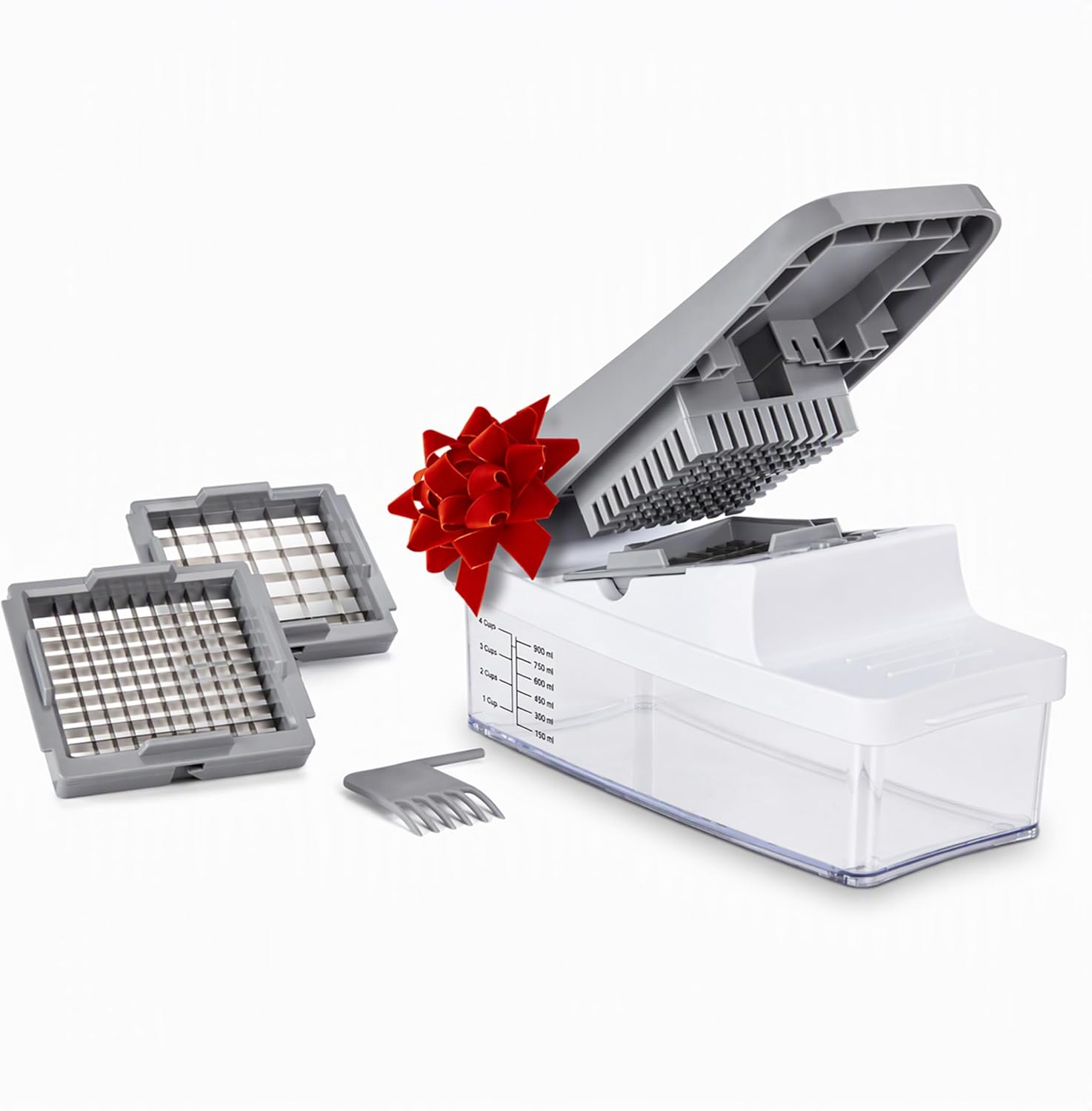
Evaluating blade variety is essential when selecting a food chopper for your kitchen. Models often feature interchangeable stainless steel inserts that switch between dicing, cubing, grating, shredding, and wavy slicing. Choosing diverse blades ensures you handle everything from soft tomatoes to hard root vegetables without needing extra tools.
However, more attachments require managing extra pieces during storage and cleaning. Consider which cutting styles you use most frequently for weeknight dinners. If you only need basic onion dicing, a simpler single-grid model avoids unnecessary clutter. Matching the accessory selection to your actual cooking habits keeps your countertop prep streamlined and efficient every single day.
Container Capacity and Storage Design
The built-in container capacity dictates how many vegetables or fruits you can process before stopping to empty the catcher cup. Larger five-cup containers reduce interruptions during heavy meal preparation or holiday cooking sessions when you are dicing mountains of onions, celery, and peppers. Smaller four-cup boxes or compact catchers save valuable physical space on crowded kitchen countertops.
Assessing your typical batch size helps determine the ideal container dimensions for your household needs. If you regularly cook for a large family or prepare ingredients in bulk, a generous catcher volume prevents constant stops and starts. Conversely, solo cooks or couples might prefer a compact footprint that stores away effortlessly inside standard cabinets or narrow drawers.
Manual Operation Styles and Ergonomics
Manual food choppers generally rely on either a press-down lid mechanism or a pump-action handle to process ingredients. Press-down dicers push produce directly through a metal grid into a storage container, creating uniform geometric cubes with minimal knife work. This style is particularly effective for salsas, soups, and uniform vegetable prep where shape consistency matters.
On the other hand, pump-action choppers use a rotating blade driven by an overhead knob to quickly chop herbs, nuts, and smaller vegetables. While pump models excel at fast general mincing, they do not produce precise grid dicing or french fry cuts. Selecting the right operation style depends entirely on whether your recipes require exact geometric cubes or rapid, smaller-sized pieces.
Material Durability and Construction
Construction materials heavily influence the longevity and daily performance of manual kitchen choppers and dicers. Look for units built with durable ABS plastic bodies and rust-resistant stainless steel blades that withstand frequent pressure without bending or degrading. High-impact plastics ensure the outer frame can handle the repetitive force of pressing dense produce items through sharp cutting grids.
Evaluating blade quality is equally important because dull edges require significantly more manual force and result in crushed rather than cleanly cut food pieces. Stainless steel cutting surfaces maintain their sharpness longer and resist corrosion from acidic foods like tomatoes and citrus. Prioritizing robust, high-grade materials guarantees that your kitchen tool remains dependable through countless cooking sessions.
Cleaning and Maintenance Requirements
Proper post-cooking cleanup affects how often you will realistically choose to use your manual food chopper. Many models feature dishwasher-safe components or include specialized cleaning forks and scrapers designed to push trapped food particles out from tight grid openings. These cleaning aids protect your fingers from sharp stainless steel edges while speeding up routine maintenance.
Certain kitchen choppers require strict hand washing due to their specific material construction or integrated water filter components. While hand washing takes a few extra moments, following manufacturer maintenance guidelines prevents warping and preserves blade alignment over time. Reviewing the care instructions before purchasing ensures you select a maintenance routine that fits comfortably into your post-dinner habits.
Food Preparation Versatility and Limitations
Assessing your everyday cooking habits helps clarify which food prep tasks your new chopper needs to handle. If you frequently make fresh salsas, hearty vegetable soups, and homemade salads, a grid-based dicer provides the uniform vegetable pieces you need. For bakers and snack enthusiasts, models that effectively process nuts, cheeses, and soft fruits offer broader utility across different recipes.
However, it is vital to recognize the inherent limitations of manual kitchen choppers regarding extremely hard or oversized food items. Most manufacturers recommend performing initial knife cuts on dense produce to prevent damaging the blades or straining the plastic housing. Acknowledging these practical boundaries ensures you use the tool safely and effectively, achieving clean cuts every single time.
Frequently asked questions
Do food choppers and dicers require electricity to operate?
No, manual food choppers and dicers do not require electricity, batteries, or cords to function. They rely entirely on manual operation, utilizing physical pressure or pump-action handles to drive blades through food items. This mechanical design makes them portable and convenient to use anywhere in the kitchen without wall outlets. Because they lack motorized components, you control the exact speed and downward force applied during ingredient preparation, giving you complete tactile control over the final texture of your chopped vegetables.
Can I put all food chopper parts in the dishwasher?
Dishwasher compatibility varies depending on the specific manufacturer guidelines and material construction of each model. Several kitchen choppers feature top-rack dishwasher-safe components that simplify post-cooking cleanup, while other units explicitly require hand washing only to protect heat-sensitive plastics or specialized built-in filtration features. Always review the product care instructions provided by the manufacturer before loading any parts into an automatic dishwasher. Following these guidelines prevents accidental warping, protects sharp stainless steel blades, and ensures your kitchen tool maintains optimal performance over extended periods of use.
How do I prevent hard vegetables from damaging the blades?
To prevent hard or dense vegetables like carrots, beets, or potatoes from damaging the stainless steel blades, manufacturers generally recommend performing a preliminary knife cut. Dividing large or exceptionally hard produce into smaller, manageable pieces reduces the initial resistance encountered when pressing the produce through the cutting grid. This simple prep step lowers the physical effort required, protects the plastic housing from excessive strain, and ensures cleaner, more uniform cuts. Taking a moment to pre-cut tough ingredients significantly extends the lifespan of your chopper's cutting surfaces.
What is the best way to clean food residue trapped in the grid?
Cleaning food residue from tight grid openings is easiest when using the specialized cleaning tools, brushes, or forks frequently included with the chopper. These accessories are specifically designed to push stuck vegetable skins and small dice particles completely through the grid without exposing your fingers to sharp stainless steel edges. Rinsing the components immediately after use also prevents food from drying onto the plastic and metal surfaces. If stubborn residue remains, soaking the grid briefly in warm water helps loosen stubborn particles before final washing or placement in the dishwasher.
Are these kitchen tools suitable for making french fries?
Certain food choppers and dicers include large cutting grids specifically engineered to produce thick cuts and french fry shapes from potatoes and other firm vegetables. However, not every model features these specialized grids, as many classic dicers focus exclusively on fine or medium cubing. If making homemade french fries is a priority for your meal prep, look for product configurations that explicitly list large-grid attachments or fry-cut blades in their included accessories. Checking the specifications beforehand ensures the kitchen tool matches your specific cooking aspirations.