Appliances · Buying Guide
Best Food Dehydrators For Jerky: Stainless Steel Models Compared
Making beef strips, chicken slices, and various dried meats at home requires reliable kitchen equipment capable of delivering steady heating and proper airflow. Choosing the right food dehydrator for jerky ensures your food batches dry evenly without requiring manual tray rotation, letting you focus on preparation rather than constant babysitting throughout long processing cycles.
Modern countertop appliances feature durable stainless steel builds, precise digital temperature controls, and rear-mounted fans designed specifically to handle dense proteins and thick slices safely. Evaluating these machines based on total tray capacity, motor wattage, and physical footprint helps you find a reliable kitchen addition for your daily food preserving routine and snack-making projects.
As an Amazon Associate, StacyLaughs earns from qualifying purchases.
Buying guide
Tray Material and Build Quality
When selecting a food dehydrator for jerky, examining the primary construction materials is essential for long-term durability and safe food handling. Stainless steel trays resist staining and corrosion, making them ideal for handling heavily salted and spiced meats. Unlike plastic alternatives, metal components endure frequent washing and high-temperature cycles without warping, cracking, or degrading over time.
Look for food-grade steel classifications like 304 or 316, which offer enhanced protection against salt and acidic marinades commonly used in recipes. Smooth rolled edges on the trays also prevent accidental cuts and simplify the cleaning process after a long drying session. Investing in a robust metal build ensures your equipment withstands regular back-to-back processing demands safely.
Airflow Dynamics and Fan Placement
Airflow design dictates how evenly your meat strips, fruit slices, and vegetable batches dry throughout the entire machine cabinet. Rear-mounted fans represent the modern performance standard, pushing steady horizontal air currents across every shelf simultaneously. This layout prevents moisture from becoming trapped on lower tiers and eliminates the tedious chore of manually rotating trays mid-cycle.
Vertical airflow systems with bottom-mounted heating elements frequently require you to shuffle trays halfway through the process to ensure uniform results across all levels. Choosing a model with optimized rear circulation guarantees consistent heat distribution, protecting your ingredients from localized burning or uneven moisture retention. Pay close attention to fan placement specifications to maximize efficiency.
Temperature Range and Heat Control
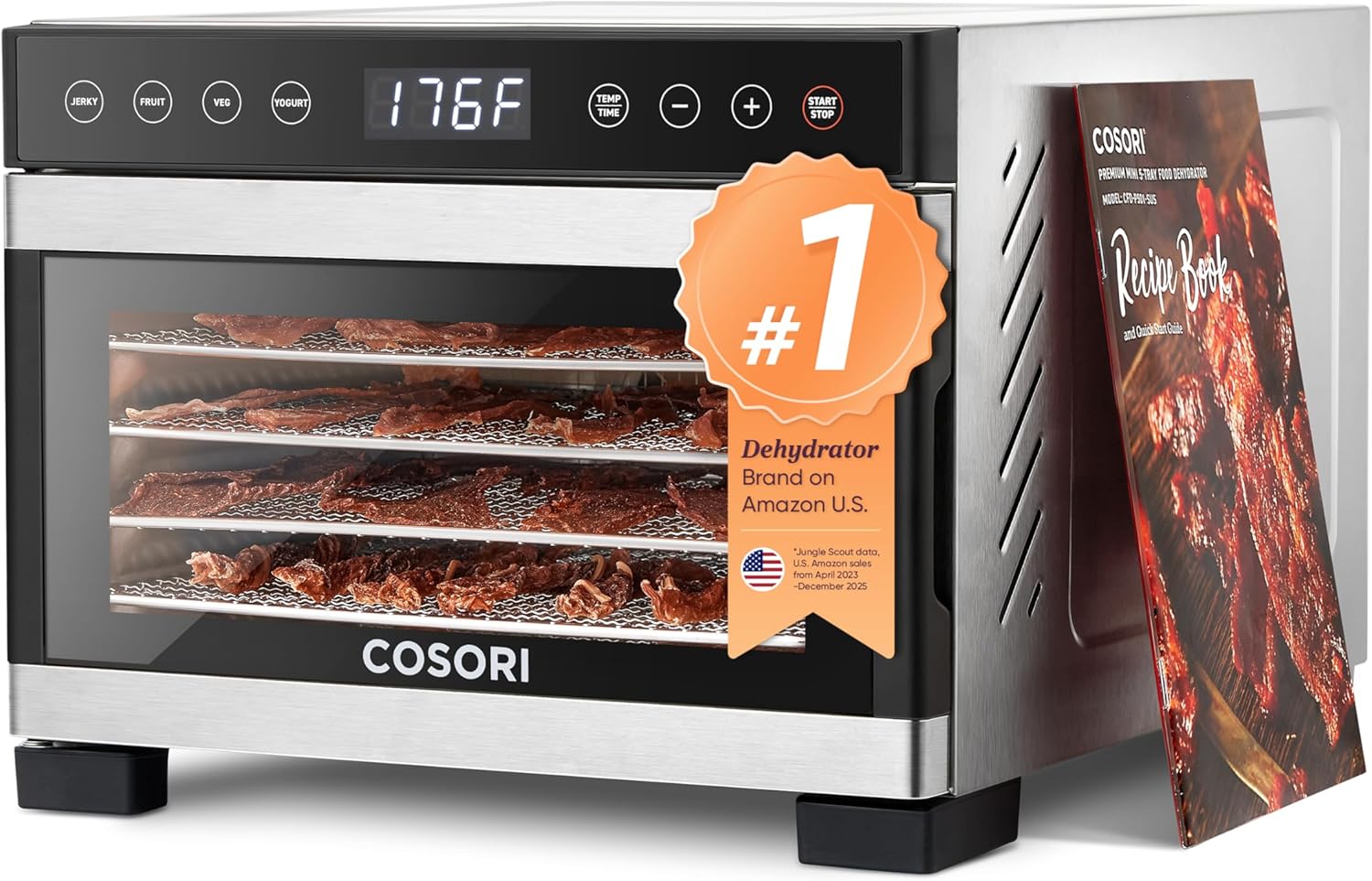
Successful meat dehydration requires specific thermal thresholds to ensure safe consumption and proper texture development in your finished jerky snacks. Many standard dehydrators peak around 165 degrees Fahrenheit, but units designed specifically for jerky often push higher toward 175 or 190 degrees. These elevated temperatures satisfy standard guidelines for preparing raw poultry and beef strips safely at home.
Digital thermostats with single-degree increment adjustments allow you to dial in exact operating conditions for different food types without guesswork. Lower settings accommodate delicate herbs and yogurt, while maximum heat levels handle dense protein fibers efficiently. Prioritize machines offering precise digital temperature controls rather than vague analog dials to achieve repeatable results every time.
Capacity and Countertop Footprint
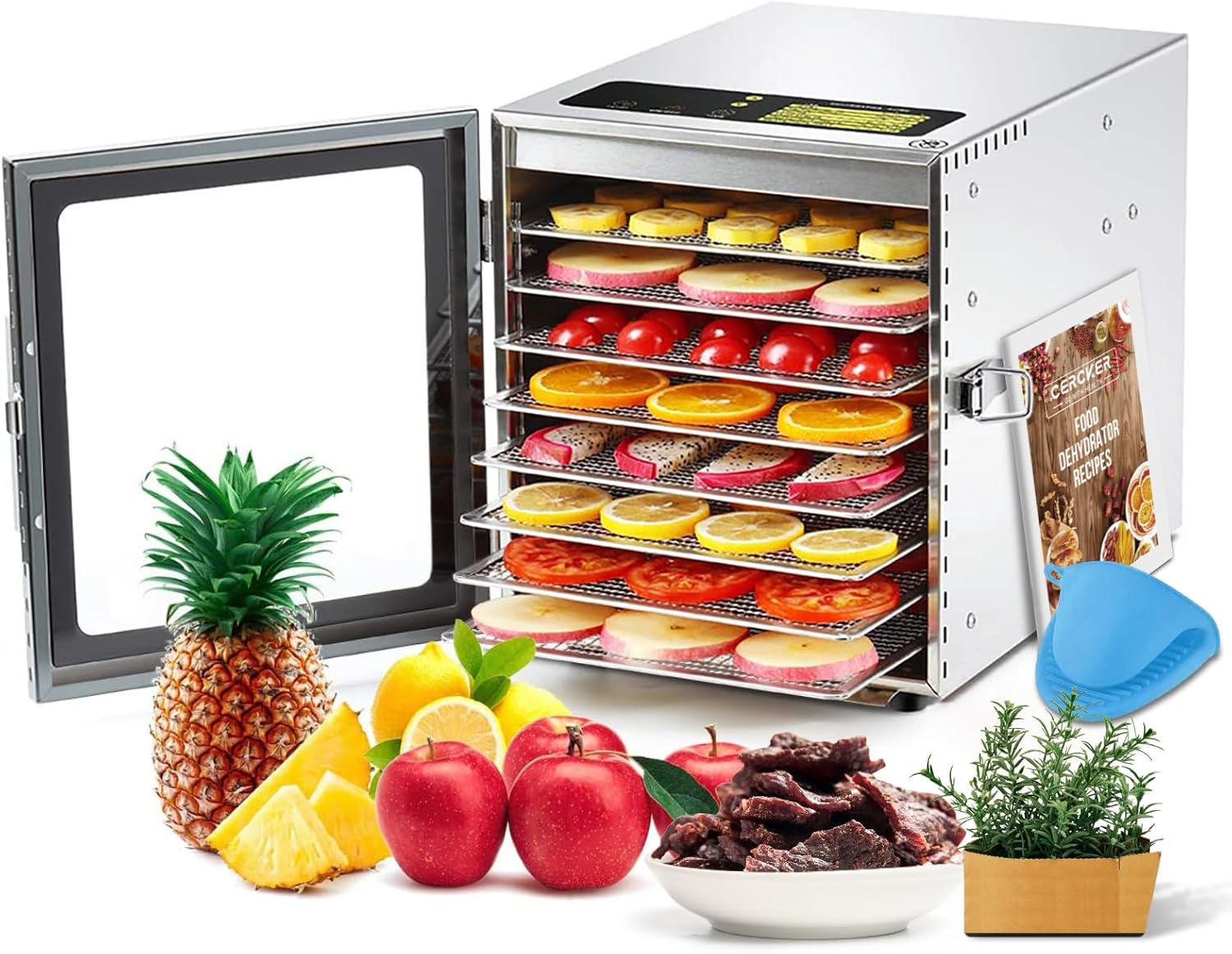
Assessing your typical batch size helps determine whether a compact five-tray unit or a massive twelve-tier machine best suits your kitchen layout. Larger capacities provide expansive surface areas measured in square feet, letting you process whole weekends of garden harvests or bulk meat purchases at once. However, bigger appliances demand dedicated storage and permanent counter space during operation.
Measure your available surface area and vertical cabinet clearance before committing to a wide or tall dehydrator body. Compact models fit easily under standard kitchen wall units while still offering enough tiers for weekly snack preparation. Balance your desire for maximum drying space against the physical reality of your available kitchen environment to avoid crowding.
Motor Power and Operating Noise
The electrical wattage of a food dehydrator dictates how quickly the internal heating element reaches operating temperature and maintains thermal stability. Motors ranging from 500 to 750 watts provide ample power for heavy-duty meat drying tasks without straining internal electrical components. Higher wattage ratings generally support faster preheating cycles and consistent performance under heavy ingredient loads.
Operating noise is another critical factor, especially if you plan to run overnight drying cycles in an open-plan home environment. Advanced brushless motors and optimized internal fan housings keep noise levels below 45 or 48 decibels, ensuring remarkably quiet operation. Reviewing manufacturer decibel ratings helps you select a machine that preserves food effectively without disturbing your household.
Cleaning Ease and Included Accessories
Maintaining your dehydrator is much easier when the internal trays and drip components are fully dishwasher safe. Stainless steel shelves can be removed and washed alongside regular kitchenware, preventing sticky marinade residues from building up over time. Removable bottom drip trays catch falling crumbs and excess grease during operation, protecting the base of the appliance from stubborn stains.
Additional accessories such as fine mesh screens for small herbs, solid sheets for fruit leather, and specialized hanging racks expand your appliance utility significantly. A comprehensive kit ensures you have the right tool for different recipes right out of the box without requiring separate purchases. Check what components are included to maximize the long-term value of your investment.
Frequently asked questions
What temperature is best for making beef jerky in a food dehydrator?
USDA safety guidelines recommend heating beef jerky to 165 degrees Fahrenheit during the dehydration process to eliminate harmful bacteria effectively. Many modern dehydrators feature adjustable thermostats reaching up to 170, 176, or 190 degrees Fahrenheit, giving you the thermal capacity needed to meet these safety standards. When preparing meat, setting your machine toward the higher end of its temperature range ensures proper pasteurization while achieving the firm, chewy texture characteristic of traditional homemade jerky. Always verify your specific model supports these higher heat settings before starting a batch.
Do I need to rotate trays during the dehydration process?
Whether you need to rotate trays depends entirely on the internal airflow design of your dehydrator machine. Units equipped with rear-mounted drying fans and horizontal convection technology circulate hot air evenly across every shelf simultaneously, eliminating the need for manual rotation. Conversely, older models or vertical airflow units with bottom heating elements often trap moisture on lower tiers, requiring you to manually shuffle shelves halfway through the cycle. Choosing a rear-fan appliance saves considerable time and ensures uniform drying results without constant monitoring.
How long does it take to dry meat jerky in these machines?
The drying time for meat jerky typically ranges from four to twelve hours, depending on slice thickness, marinade moisture content, meat cut composition, and operating temperature. Thinner slices placed in a high-wattage machine running at elevated temperatures will finish much faster than thick, heavily saturated strips processed at lower heat levels. Regularly checking your batch during the later stages of the cycle helps you determine when the meat reaches your preferred pliability and dryness without over-processing the batch.
Are stainless steel trays better than plastic trays for jerky?
Stainless steel trays offer superior durability, corrosion resistance, and longevity compared to traditional plastic alternatives, especially when preparing savory meats. Jerky marinades often contain high concentrations of salt, vinegar, and spices that can stain, degrade, or absorb odors into plastic over extended use. Food-grade stainless steel surfaces withstand frequent washing, heavy-handed scrubbing, and dishwasher cycles without warping or retaining unwanted flavors. Furthermore, steel trays provide a sturdy, professional foundation for heavy batches of dense protein strips.
Can I run my food dehydrator overnight while sleeping?
Running a food dehydrator overnight is entirely practical provided the appliance features built-in safety mechanisms like automatic shutoff timers and overheat protection. Many modern units also incorporate advanced brushless motors designed to operate quietly below 45 or 48 decibels, preventing nighttime noise disruptions in your home. Before starting an overnight run, ensure the timer is set accurately to match your recipe requirements and verify that the machine is placed on a stable, heat-resistant surface away from flammable kitchen clutter.