Appliances · Buying Guide
Best Food Dehydrator for Mushrooms: Top Picks for Home Drying
Drying mushrooms at home effectively preserves their rich, earthy flavors and extends pantry life without requiring complex culinary equipment. Whether you regularly forage wild mushrooms or purchase bulk quantities from the local market, selecting the right machine ensures reliable moisture removal across every single batch.
Different setups offer various tray configurations, temperature ranges, and airflow designs specifically suited for drying delicate mushroom caps or thick, dense stems. Reviewing specific physical dimensions, power levels, and material builds helps match a dehydrator to your available kitchen space and regular drying habits. Taking time to evaluate these core attributes prevents guesswork and secures consistent performance.
As an Amazon Associate, StacyLaughs earns from qualifying purchases.
Buying guide
Tray Material and Food Safety
Selecting the right tray material impacts how safely and easily you can process sliced mushrooms. Stainless steel trays offer superior durability and resist corrosion from natural acids found in produce. They provide a sturdy surface that withstands frequent washing without degrading over time. Plastic alternatives often feature BPA-free construction, offering lightweight handling and transparent visibility to monitor your drying progress.
Evaluating your preference for metal versus transparent plastic helps match the appliance to your kitchen routine. Stainless steel supports heavy-duty use and intensive cleaning, while clear plastic lets you check mushroom moisture levels instantly without opening the chamber and releasing warm air. Both options meet safety standards, but your choice depends entirely on desired longevity and visibility preferences during active food preservation sessions.
Airflow Design and Even Drying
Airflow mechanics dictate whether your mushroom slices dry uniformly across every tier. Rear-mounted fans distribute horizontal air streams evenly across all trays, eliminating the need to manually rotate stacks during long drying cycles. This design ensures that mushrooms positioned near the back dry at the same rate as those near the front door.
Base-mounted fan systems push warm air vertically upward through stackable trays. While effective, this vertical setup often requires periodic tray rotation so that upper and lower tiers receive balanced heat exposure. Understanding these internal airflow differences helps you choose a machine that fits your preferred level of supervision during extended mushroom dehydration tasks.
Temperature Range and Precision
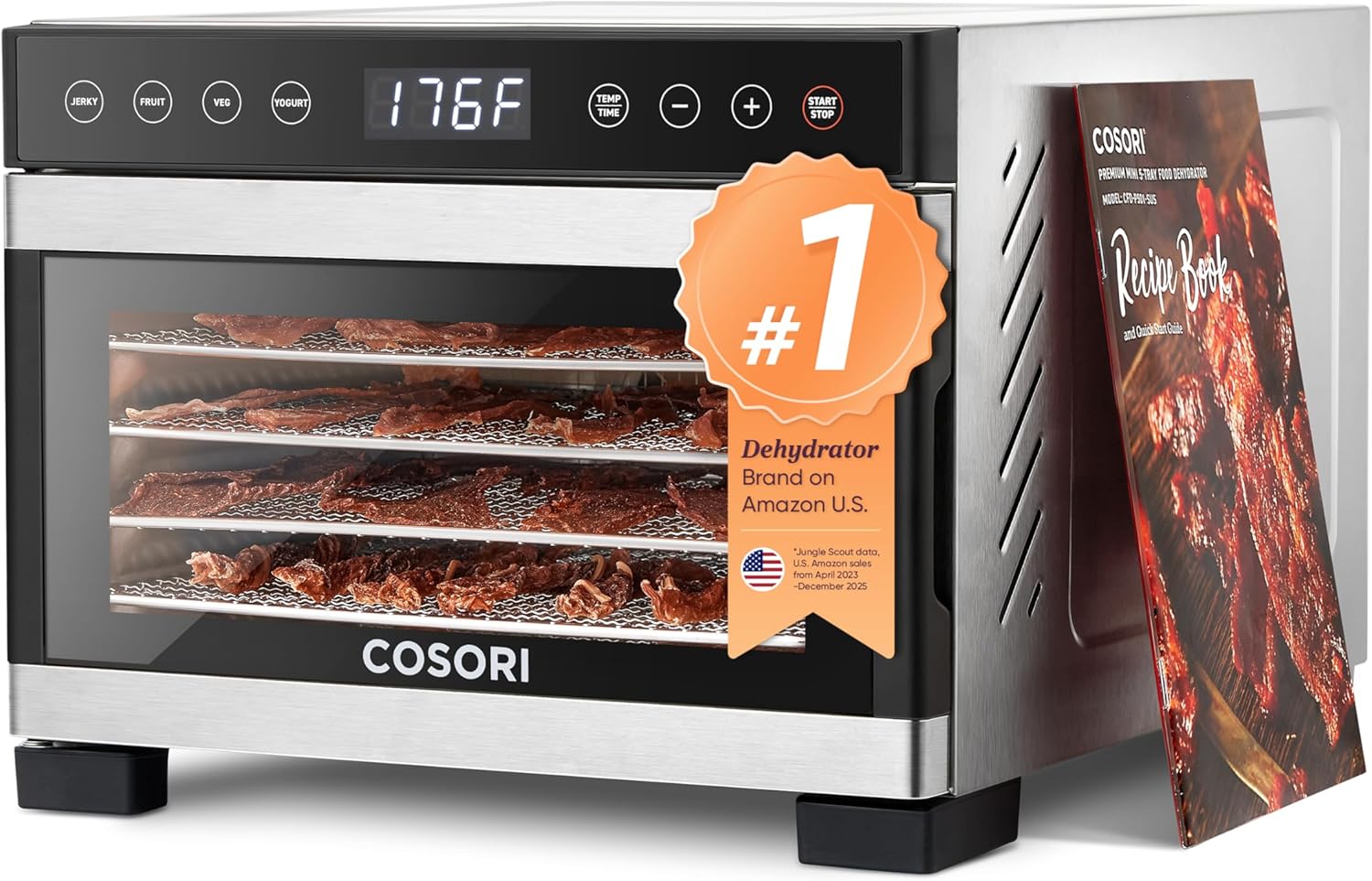
Precise temperature control is essential when drying delicate mushrooms versus curing dense meats. Most dehydrators offer adjustable dials or digital panels starting around 95 degrees Fahrenheit, which preserves natural compounds in sensitive herbs and fungi. Higher top temperatures, ranging from 158 to 190 degrees Fahrenheit, provide necessary heat for jerky and heavy vegetable batches.
Digital controls allow you to adjust warmth in single-degree increments, removing guesswork from your preservation routine. Simple analog dials offer quick adjustments but lack exact numerical feedback. Assessing your need for granular heat settings ensures you select a dehydrator capable of handling specific drying profiles without risking scorched mushroom caps or under-dried stems.
Capacity and Footprint Considerations
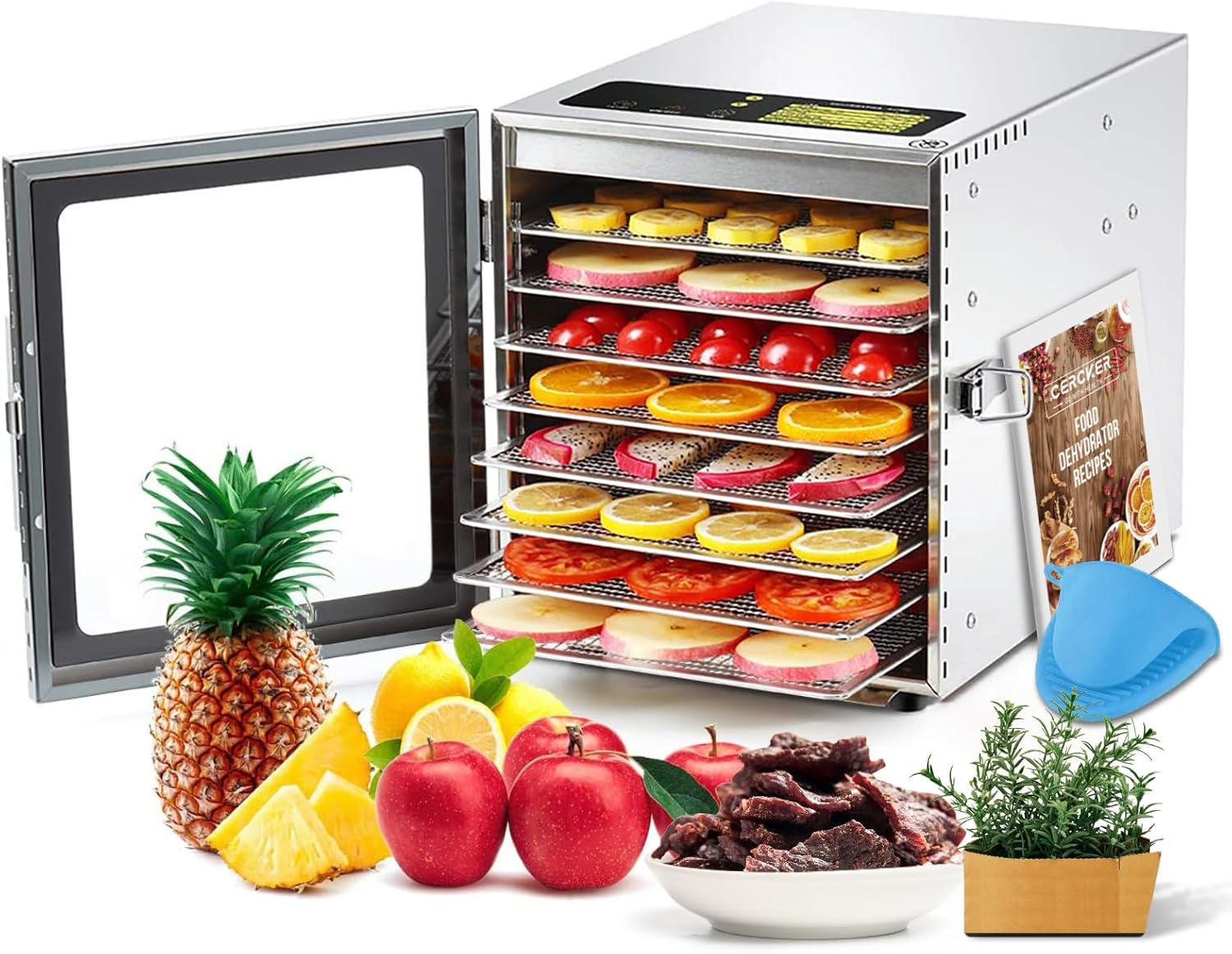
Matching appliance dimensions to your kitchen counter space prevents storage frustration. Compact units featuring five small trays fit easily inside apartments, RVs, and crowded kitchens. They handle moderate batches of sliced mushrooms without taking over your entire workspace. Larger multi-tier models expand your drying area significantly, accommodating massive harvests in a single run.
Heavy, high-capacity machines demand permanent countertop placement because moving them frequently between rooms proves cumbersome. Smaller stackable units disassemble quickly for convenient storage in standard kitchen cupboards. Balancing your typical harvest size against available kitchen real estate guides you toward an appliance footprint that remains practical for everyday food preservation projects without causing clutter.
Noise Level and Motor Efficiency
Dehydrator motors run continuously for many hours, making operational noise an important factor in open-plan homes. Advanced brushless motors operate quietly below 48 decibels, allowing you to run overnight drying cycles without disrupting household sleep. Standard fan motors can produce a steady hum that might be noticeable in smaller living spaces.
Motor wattage also dictates energy usage and drying speed. Higher wattage levels around 500 to 600 watts power larger fans that circulate air swiftly across multiple trays. Lower wattage systems consume less electricity but require more time to process dense mushroom stems. Evaluating these factors helps balance your desire for quiet operation against fast drying performance.
Maintenance and Cleaning Ease
Cleaning a dehydrator after processing sticky or earthy mushrooms should be straightforward rather than tedious. Dishwasher-safe trays and removable interior components save considerable time during post-drying cleanup sessions. Stainless steel surfaces wipe down easily and resist staining from natural mushroom pigments, maintaining a clean polished appearance over years of regular home use.
Plastic trays require careful temperature monitoring during dishwasher cycles to prevent warping or structural damage over time. Water-resistant control panels protect buttons from accidental moisture spills during active loading and unloading. Reviewing manufacturer cleaning guidelines ensures your appliance remains sanitary and fully functional, extending the overall lifespan of your food preservation investment through proper routine care.
Frequently asked questions
What temperature should I use for dehydrating mushrooms?
You should set your food dehydrator between 95 degrees Fahrenheit and 125 degrees Fahrenheit when drying most mushroom varieties. This moderate heat range removes excess moisture efficiently while preserving the natural earthy flavors, textures, and nutrients of the fungi. If you are processing thick or dense wild mushroom stems, you can slightly increase the temperature up to 135 or 140 degrees Fahrenheit. Avoid excessively high heat settings, as extreme temperatures can cook the mushrooms rather than dry them evenly, altering their final quality and rehydration potential.
Do I need to rotate trays during the mushroom drying process?
Whether you need to rotate trays depends entirely on the internal airflow design of your chosen dehydrator model. Machines equipped with rear-mounted drying fans circulate horizontal air evenly across every shelf, eliminating the need for manual tray rotation during operation. Conversely, dehydrators featuring base-mounted vertical fans often require you to periodically rotate stackable trays from top to bottom. This ensures balanced heat distribution so that upper tiers dry just as thoroughly as lower ones without requiring constant supervision.
How long does it take to dry mushrooms in a food dehydrator?
The total drying time for mushrooms typically ranges between four and twelve hours, depending on several key factors. Slice thickness, moisture content, ambient humidity, and the wattage of your heating system all influence how quickly the process completes. Thinly sliced button mushrooms dry rapidly within a few hours, whereas thick wild mushroom caps require extended sessions. You will know the mushrooms are finished when they feel completely dry, crisp, and brittle to the touch without any remaining moisture inside the thickest stems.
Can I dry wild mushrooms and store-bought mushrooms together?
Yes, you can dry different mushroom varieties together as long as you slice them to uniform thicknesses. Consistency in slice size ensures that all pieces finish drying at the same time, preventing some mushrooms from remaining under-dried while others over-dry. However, keep in mind that strong-scented wild mushrooms might impart their robust aromas to milder store-bought varieties during the drying cycle. If you prefer to keep distinct flavor profiles separate, processing different types in distinct batches is generally recommended.
How should I store dehydrated mushrooms for maximum shelf life?
To maximize shelf life, store your thoroughly cooled, dried mushrooms in airtight glass jars or food-grade vacuum-sealed containers. Keep the containers in a cool, dark, and dry pantry away from direct sunlight and moisture sources, which can degrade quality over time. Adding food-safe moisture-absorbing packets can also help control residual humidity inside the storage vessel. Properly dried and sealed mushrooms stored under optimal environmental conditions can retain their rich flavors and usability for many months or even years.