Appliances · Buying Guide
Best Food Dehydrators for Preserving Snacks at Home
Preserving garden harvests, making homemade beef jerky, and crafting dried fruit snacks are simpler when you use reliable food dehydrators for sale. These countertop appliances remove moisture from ingredients using steady airflow and controlled heat. Whether you want a compact setup for occasional weekend snacks or a high-capacity machine for bulk processing, choosing the right model depends on your kitchen space and drying goals.
Different dehydrators use varying tray materials, motor wattages, and fan placements to circulate warmth across ingredients. Some units feature stackable plastic tiers, while others rely on heavy-duty stainless steel racks housed inside structured cabinets. Reviewing the physical dimensions, temperature ranges, and tray counts helps you match a specific machine to your routine, ensuring efficient drying without taking up excessive counter space.
As an Amazon Associate, StacyLaughs earns from qualifying purchases.
Buying guide
Tray Materials and Construction
Choosing the right material for your food dehydrator impacts both durability and cleanup. Plastic stackable trays offer lightweight convenience and flexible height adjustments, making them simple to move and store. However, stainless steel trays provide superior rigidity and resistance to staining during heavy food processing tasks. Metal shelves withstand frequent washing much better than plastic alternatives over years of regular use.
When evaluating options, consider how often you plan to dry sticky ingredients like marinated jerky or fruit leather. Stainless steel surfaces typically clean faster in dishwashers and avoid absorbing food odors. Plastic models remain popular for budget-conscious buyers who prioritize a lightweight frame over heavy-duty commercial construction. Matching your tray material to your typical recipes ensures long-term satisfaction with your countertop appliance.
Airflow Systems and Fan Placement
Airflow mechanics dictate how efficiently your dehydrator removes moisture from different food slices. Base-mounted fans push warm air upward through stacked tiers, which works well for small batches but often requires manual tray rotation. In contrast, rear-mounted fans circulate air horizontally across multiple shelves. This horizontal design promotes uniform drying performance across every single tray without requiring you to rearrange them.
Advanced models may feature dual rear fans to enhance air distribution even further across large cabinets. If you frequently dry thick batches of meat or dense vegetables, horizontal airflow prevents moisture pockets from forming. Shoppers prioritizing speed and even results should look closely at fan placement specifications before purchasing. Understanding airflow mechanics helps you avoid unevenly dried snacks and wasted preparation time.
Temperature Ranges and Controls
Precise temperature control allows you to tailor drying environments to specific ingredients. Delicate herbs and flowers require lower heat settings to preserve natural compounds, while meats and jerky demand higher temperatures for safe dehydration. Simple manual dials offer quick adjustments but rely on external thermometer checks for accuracy. Digital control panels provide exact numeric temperature settings down to individual degrees for reliable consistency.
Reviewing the available temperature spectrum ensures the machine can handle your specific culinary projects. Some units cap out at moderate heat levels, while others reach higher thresholds suitable for intensive meat drying. Selecting a model with programmable timers adds convenience by automatically shutting off the heating elements when drying cycles finish. This prevents over-drying your homemade fruit chips and jerky snacks overnight.
Capacity and Countertop Footprint
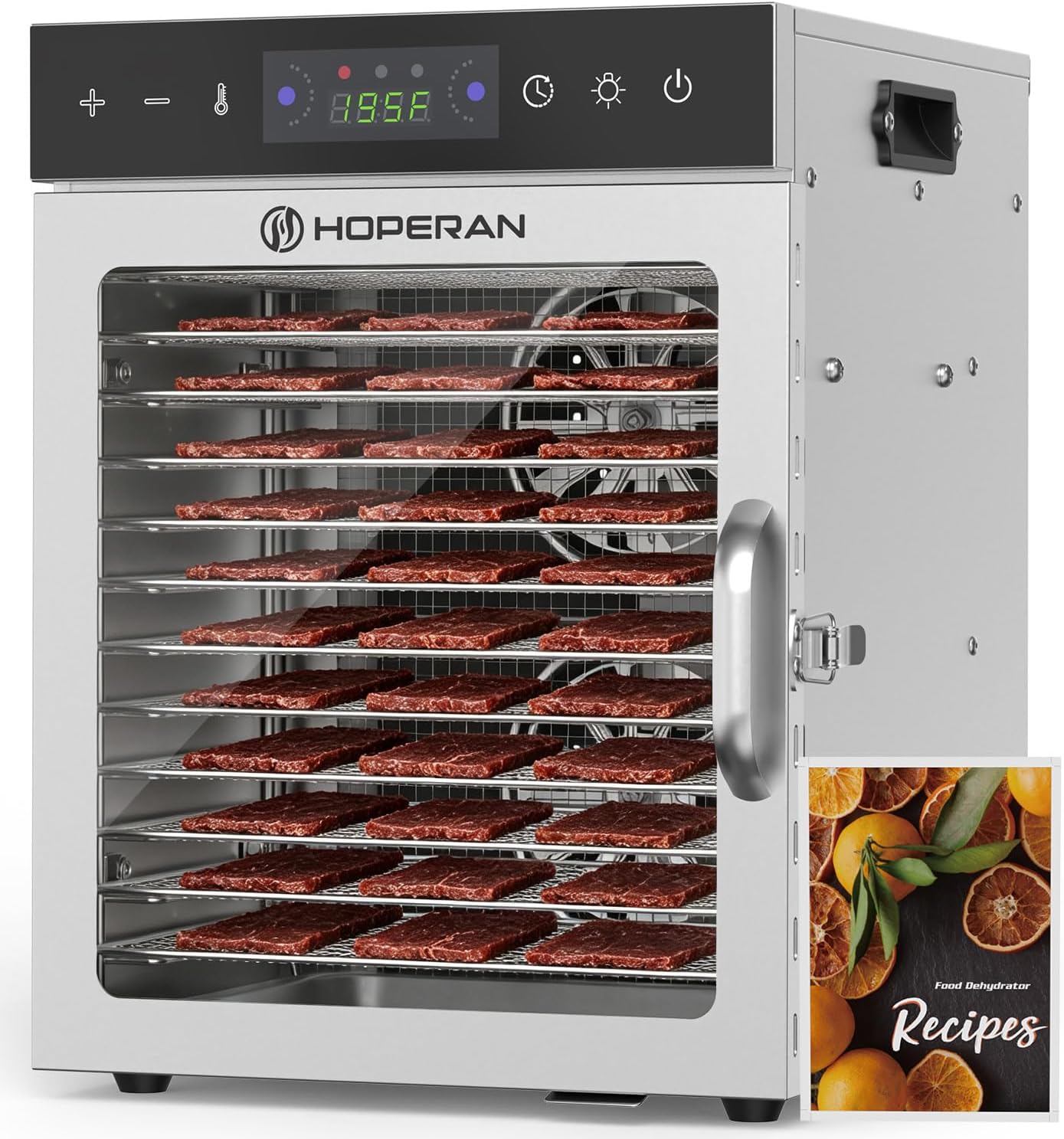
Assessing your available kitchen space prevents appliance clutter after purchase. Compact five-tray stackable units take up minimal counter area and store easily inside standard kitchen cabinets. Larger multi-tier cabinet dehydrators provide expansive drying surface areas but require permanent countertop placement due to their weight and height. Measure your available vertical clearance and depth before selecting a high-capacity machine.
Consider the typical batch sizes you intend to process during a single drying session. Solo snack makers and couples often find smaller tier counts sufficient for weekend fruit chips. Families, gardeners, and hunters benefit immensely from twelve-tier or eight-tier configurations that process bulk harvests in one run. Balancing your storage constraints against your preservation volume ensures the appliance fits comfortably into your daily kitchen routine.
Noise Levels During Operation
Dehydrators run continuously for many hours, making operational noise an important consideration for open-concept homes. Basic fan motors can produce a steady hum that might become noticeable if placed near living areas. Advanced brushless motors operate quietly below specific decibel thresholds, allowing uninterrupted overnight drying sessions in kitchens adjacent to bedrooms. Checking motor specifications helps maintain a peaceful household environment.
If you plan to run drying cycles while sleeping, prioritizing a low-noise appliance prevents nighttime disruptions. Units equipped with modern fan engineering maintain steady airflow while keeping sound output to a minimum. Reviewing user feedback regarding motor noise provides practical insight into real-world operation. Selecting a quiet dehydrator ensures you can process midnight batches of jerky without disturbing household members.
Cleaning and Maintenance Ease
Routine cleanup dictates how pleasant your dehydrating experience remains over time. Removable dishwasher-safe trays and drip pans simplify post-processing maintenance significantly. Stainless steel components resist stubborn food residues and wash easily after sticky fruit leather sessions. Stackable plastic tiers require careful handling during manual or machine washing to avoid accidental warping in high-heat dishwashers.
Examine how the interior housing is constructed to catch stray crumbs or dripping liquids during operation. Models featuring smooth interior walls and dedicated bottom drip trays minimize scrubbing effort. Choosing a machine with easily detachable parts ensures you spend less time cleaning and more time enjoying homemade snacks. Prioritizing maintenance-friendly design keeps your dehydrator ready for frequent batch processing.
Frequently asked questions
How do I choose between stackable trays and cabinet-style dehydrators?
Choosing between stackable trays and cabinet-style dehydrators depends on your storage space and batch size requirements. Stackable models use vertical tiers that let you adjust height and store compactly in cupboards when empty. However, they often require manual rotation of tiers for even drying. Cabinet-style machines house fixed shelves within a structured enclosure, using rear-mounted fans to circulate air evenly across all levels without manual intervention. Cabinets generally occupy more permanent countertop space due to their heavier weight and larger frame.
Do food dehydrators require a lot of electricity to run overnight?
Most home food dehydrators operate on wattages ranging from 350 to 800 watts, depending on their size and heating element strength. Because they cycle on and off to maintain selected temperatures, energy consumption remains moderate during overnight runs. Smaller stackable units use less power, while large commercial-style multi-tier machines draw higher wattage to heat expansive drying chambers. Running a dehydrator overnight consumes comparable energy to standard kitchen appliances, making them practical for long drying cycles.
Can I dehydrate different foods at the same time?
You can dehydrate multiple food types simultaneously, provided they share similar drying times and moisture levels. For example, grouping various fruits together works well because they generally require comparable temperature settings. Avoid mixing strongly flavored items like onions with delicate herbs, as odor transfer can alter tastes. Utilizing machines with multiple trays allows you to separate different ingredients across distinct levels while maintaining organized batch processing during your drying sessions.
How should I clean stainless steel versus plastic dehydrator trays?
Cleaning stainless steel and plastic dehydrator trays involves following manufacturer guidance for each specific material. Stainless steel trays tolerate frequent dishwasher cycles and aggressive scrubbing well, resisting stains and food odors effectively. Plastic trays often require top-rack dishwasher placement or gentle hand washing to prevent warping from high heat. Soaking sticky trays in warm soapy water before washing helps loosen dried fruit remnants or marinade residues without damaging the tray surfaces.
Why is rear-mounted fan placement important in a dehydrator?
Rear-mounted fan placement is important because it directs horizontal airflow evenly across every shelf simultaneously. In traditional stackable models with base-mounted fans, warm air travels vertically, requiring users to manually rotate trays so items dry uniformly. Horizontal airflow from a rear fan ensures consistent heat distribution across all shelves without manual intervention. This design feature speeds up dehydration times and prevents moisture from getting trapped on lower levels during large batch processing.