Appliances · Buying Guide
Best 36 Inch Induction Cooktop Options for Modern Kitchens
Upgrading a kitchen often involves choosing reliable appliances that streamline meal preparation while fitting neatly into existing counter spaces. A quality 36-inch induction cooktop offers an expansive surface area equipped with multiple heating zones, making it much easier to cook several dishes simultaneously for busy family meals, large dinner parties, and everyday home cooking tasks.
These built-in electric cooktops rely on advanced magnetic technology to heat compatible cookware directly, offering efficient energy use and highly responsive temperature adjustments across multiple power levels. Carefully reviewing the available options helps buyers match specific wattage requirements, precise cutout dimensions, and control styles to their unique kitchen layouts and home electrical setups.
As an Amazon Associate, StacyLaughs earns from qualifying purchases.
Buying guide
Electrical Requirements and Hardwiring
Selecting a large 36-inch induction cooktop requires careful evaluation of your home electrical infrastructure before making a final purchase decision. Most units operate on 220 to 240 volts and demand permanent hardwired connections rather than standard wall plug-in cords. Checking your home circuit breaker rating and existing wire gauge beforehand prevents unexpected compatibility issues during kitchen remodeling or appliance replacement projects.
Professional installation by a licensed electrician is strongly recommended to guarantee electrical safety and full compliance with local building codes. Failing to verify adequate electrical capacity can lead to frequent tripped circuit breakers or restricted heating performance when running multiple high-wattage cooking zones simultaneously for large family meals.
Cooktop Dimensions and Cutout Sizing
Accurate measurement of your kitchen countertop cutout is essential for achieving a clean, seamless drop-in fit. A standard 36-inch cooktop spans a wide surface area, but the actual under-counter box dimensions and depth requirements vary slightly between different brands and manufacturing designs. Reviewing the exact manufacturer specifications ensures the appliance drops smoothly into place without requiring disruptive modifications to surrounding stone or laminate cabinetry.
Leaving sufficient vertical clearance underneath the cooktop chassis is also vital for proper internal ventilation and effective heat dissipation. Ignoring these spatial parameters can result in an improper surface flush, unstable counter placement, or potential mechanical interference with kitchen cabinet drawers located directly beneath the main appliance installation zone.
Burner Configuration and Bridge Zones
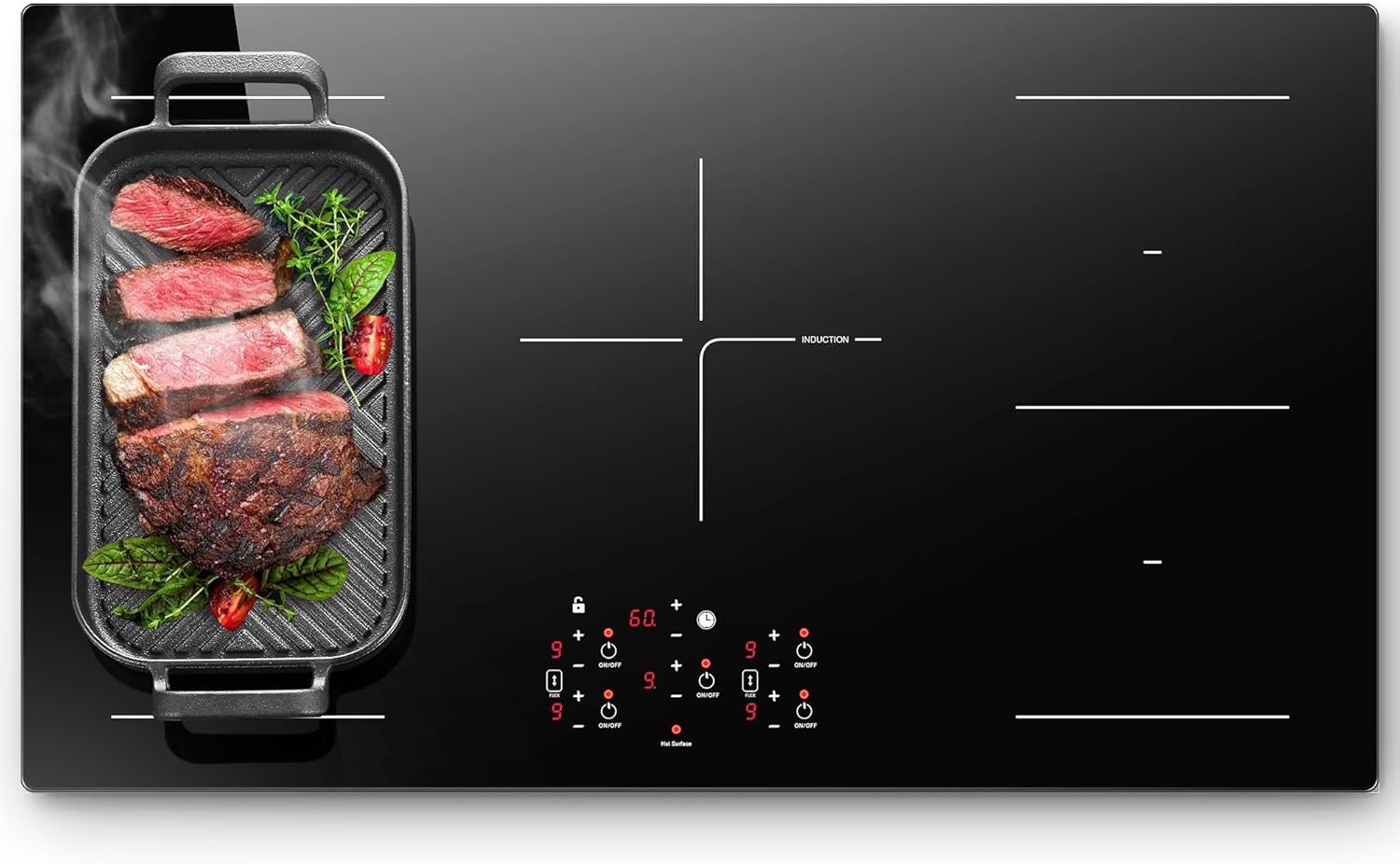
Evaluating burner layouts helps determine how effectively a cooktop accommodates your daily cookware collection and meal preparation habits. Five-burner configurations provide ample room for preparing multiple dishes at once, while integrated bridge zones connect adjacent elements to form a continuous heating surface. This design flexibility easily supports oversized griddles, long fish poachers, and large rectangular roasting pans during big gatherings.
Dual sensors incorporated within these bridge areas help spread heat evenly across unconventional cookware shapes without cold spots. Selecting a model with a thoughtful multi-zone layout ensures you can switch effortlessly between small saucepans and massive family-sized cookware without ever running out of usable counter-level heating space.
Power Levels and Precision Controls
Precise heat control represents a primary advantage of modern induction cooking technology over traditional electric or gas stoves. Available models offer varying degrees of control, ranging from nine standard power levels up to seventeen distinct settings for exceptional culinary precision. Intuitive slider touch controls and digital touch panels let users swipe or tap to adjust cooking temperatures instantly.
Higher power levels and dedicated booster functions deliver rapid bursts of heat for boiling water or searing meats quickly on busy evenings. Matching the preferred control style and power tier to your daily cooking habits ensures responsive adjustments from delicate chocolate melting tasks to high-intensity frying operations.
Cookware Compatibility and Pan Sensors
Induction cooktops rely entirely on magnetic interaction to generate heat directly within compatible pots and pans. Buyers must ensure their existing cookware collection includes magnetic stainless steel, heavy cast iron, or specialized induction-ready pieces before completing their appliance installation. Built-in smart pan sensors enhance daily safety by detecting whether a suitable pan rests on the active glass element.
When incompatible cookware is placed on the surface or when a pan is removed, the smart sensor automatically adjusts or shuts off the heat output. This mechanism minimizes wasted energy and prevents accidental surface overheating, ensuring a much safer and more efficient home cooking environment overall for busy families.
Safety Features and Surface Maintenance
Comprehensive safety mechanisms are crucial additions to high-power kitchen appliances, particularly in busy households with children or multitasking home cooks. Essential built-in features include child safety locks to prevent accidental touch activation, residual heat indicators that clearly warn of hot glass surfaces, and automatic shut-off systems that engage if internal temperatures exceed safe operating limits.
Maintaining the smooth ceramic glass or matte textured surface requires regular wiping with a damp cloth and gentle cleaning products to prevent stubborn food buildup. Adhering closely to manufacturer cleaning guidelines helps preserve the visual appearance and functional integrity of the cooktop over many years of regular kitchen use every day.
Frequently asked questions
What type of cookware works with a 36-inch induction cooktop?
Induction cooktops require cookware made from magnetic materials, such as cast iron or magnetic stainless steel. Because induction technology relies on magnetic fields to generate heat directly inside the pan, non-magnetic materials like pure aluminum, copper, or glass will not heat up on these burners. A simple test using a refrigerator magnet on the bottom of your pots and pans can quickly confirm if they are compatible before you start cooking. If the magnet sticks firmly, the cookware is ready to use on your new appliance.
Do 36-inch induction cooktops require professional electrical installation?
Yes, professional installation by a qualified, licensed electrician is strongly recommended for these appliances. Most 36-inch induction cooktops operate on a 220 to 240-volt electrical supply and require a hardwired connection rather than plugging into a standard wall outlet. Before purchasing, you should inspect your home circuit breaker box and wire gauge to ensure your electrical setup can handle the high wattage demands. Proper installation prevents safety hazards, protects your warranty, and ensures the cooktop operates reliably without tripping circuit breakers during heavy multi-zone cooking.
What is the purpose of a bridge zone on a 5-burner induction cooktop?
A bridge zone allows you to combine two separate cooking elements into one large, continuous heating surface. This feature is especially useful when you want to use oversized cookware, such as rectangular griddles for making pancakes, long fish poachers, or large cast-iron roasting pans. Dual sensors within the bridged area help distribute heat evenly across the entire base of the oversized pan, preventing hot spots and ensuring thorough cooking results for family meals and large social gatherings.
How do booster functions work on induction cooktops?
Booster functions temporarily increase the power output of a specific cooking zone beyond its normal maximum rating, delivering a rapid burst of thermal energy. This feature is designed to shorten wait times significantly when you need to boil a large pot of water or sear meats quickly on a busy night. Most booster functions operate for a limited duration, such as five minutes, before automatically stepping down to protect the internal circuitry and prevent overheating while maintaining efficient cooking control.
How should you clean and maintain a ceramic glass induction surface?
Maintaining a ceramic glass or matte textured induction surface involves regular wiping with a soft damp cloth after the cooktop has cooled down completely. For everyday spills, mild soapy water and a gentle cloth are usually sufficient to keep the area clean and free of smudges. Avoid using abrasive scouring pads, harsh chemical cleaners, or metal scrapers that can scratch or damage the glass finish. Always follow specific manufacturer cleaning instructions to preserve the appearance and longevity of your appliance.