Appliances · Buying Guide
Best Hamilton Beach Electric Knife Options for Slicing Meat and Bread
Finding the right electric knife involves looking closely at motor power, blade length, and handle design to handle everything from holiday turkeys to homemade artisan bread. Models featuring stainless steel blades and reciprocating motion help simplify carving tasks at the dinner table or preparing materials for various craft projects efficiently.
Electric carving knives offer steady cutting power without requiring manual sawing motions, making them practical for everyday kitchen food preparation. Evaluating cord length, storage options, and cleanup requirements helps match a specific carving tool to your kitchen setup, ensuring reliable slicing performance for meats and baked goods.
As an Amazon Associate, StacyLaughs earns from qualifying purchases.
Buying guide
Motor Power and Wattage
Choosing the right electric knife starts with examining the motor wattage, which directly influences how smoothly the appliance cuts through dense items. Models featuring powerful 120-watt motors deliver robust cutting speed for tough meats, holiday roasts, and thick artisan bread loaves without bogging down during heavy use.
Lower wattage options around 100 watts still handle everyday kitchen slicing tasks adequately but might require a bit more patience with heavy-duty materials like dense crafting foam. Matching the motor strength to your intended cooking and crafting projects ensures consistent performance over years of regular family meal preparation.
Blade Length and Materials
Stainless steel blades are the industry standard for electric carving knives because they resist corrosion and maintain a sharp cutting edge over time. Blade lengths typically range from seven to ten inches, affecting how deeply you can slice into large food items or foam blocks during DIY tasks.
Serrated edges help the reciprocating blades saw rapidly through bread crusts and meat fibers without tearing the delicate interior crumb. Selecting the appropriate blade length ensures you can comfortably manage everything from small cheese blocks to massive holiday turkeys with professional-looking results.
Handle Ergonomics and Comfort
An ergonomic, hand-contoured handle significantly reduces hand fatigue during extended cutting sessions at the dinner table or workshop workbench. Look for lightweight grips designed to accommodate both left and right-handed users comfortably, ensuring steady control while the reciprocating blades move back and forth rapidly.
Comfortable grip engineering keeps your hand securely positioned away from the cutting action, promoting safety and precision whether you are carving a holiday ham or trimming dense crafting foam for a home improvement project.
Cord Length and Kitchen Reach
Corded electric knives require access to a standard wall outlet, making power cord length an essential consideration for your kitchen layout. A five-foot cord provides plenty of reach to carve large roasts comfortably at the dining table without needing awkward extension cords or rearranging your furniture.
Evaluating your kitchen counter space and dining room setup helps determine if a standard corded model offers enough mobility for your specific carving and crafting habits. Proper cord reach prevents pulling and keeps your workspace safe and organized.
Storage Cases and Included Accessories
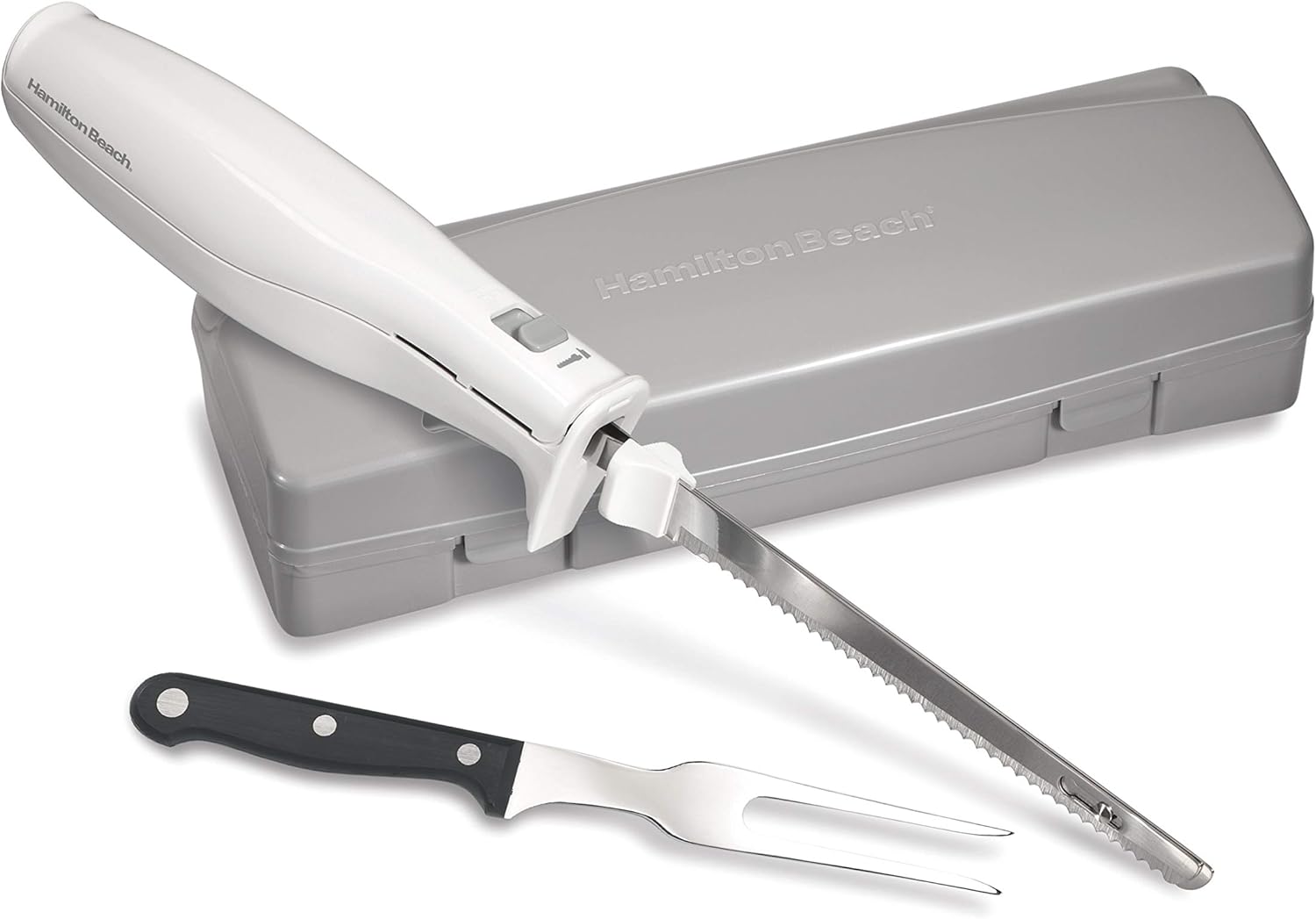
Many electric knife sets come with a compact storage case designed to keep the motor handle, stainless steel blades, and carving fork neatly organized in one spot. This prevents misplaced parts and protects the sharp serrated edges inside kitchen cabinets between uses.
Bonus carving forks included in certain packages offer a practical way to hold meats securely in place while achieving uniform slices. Evaluating these included accessories helps you select a complete package that offers immediate utility straight out of the box.
Cleaning and Maintenance Requirements
Keeping your electric knife clean involves following manufacturer care instructions, which often specify whether components are hand wash only or dishwasher safe. Removable stainless steel blades with release buttons make taking apart the cutting assembly fast and straightforward after preparing messy meals.
Reviewing maintenance guidelines ensures you choose a model that fits your preferred cleanup routine, whether you favor tossing removable parts into the dishwasher or washing durable metal blades by hand after every holiday dinner.
Frequently asked questions
Can electric knives cut through frozen meat or bones?
Electric knives feature serrated stainless steel blades designed to saw rapidly through cooked meats, raw roasts, artisan bread, and crafting foam. However, they are generally not recommended for cutting through frozen solid meats or dense hard bones. Doing so can dull or damage the reciprocating blades and strain the motor. For best results, fully thaw meats before carving, and use specialized tools if you need to portion frozen foods or hard bone-in cuts during meal prep.
Are the blades dishwasher safe?
Cleaning requirements vary depending on the specific model and manufacturer instructions. Some electric knives feature removable blades that are completely dishwasher-safe for fast and effortless cleanup, while others require careful hand washing only to preserve the blade materials. Always check the product specifications before placing any components into a dishwasher. When removable blades include a quick-release button, taking them off the motor housing for washing becomes a simple, straightforward kitchen task.
Can I use an electric knife for crafts like foam cutting?
Yes, many people successfully use electric knives for DIY and crafting projects involving foam and other soft materials. The reciprocating serrated stainless steel blades move back and forth rapidly, allowing crafters to cut clean lines through foam blocks much faster than traditional manual utility knives. Models with powerful motors and extra-long cords offer the reach and cutting speed needed for comfortable workshop use. Always follow basic safety precautions and keep fingers clear of the active blade.
Do the blades ever need to be sharpened?
Many stainless steel electric knife blades are engineered to cut rapidly and evenly through various materials without ever needing to be sharpened. The reciprocating sawing motion does the heavy work rather than relying on a traditional razor-edge push cut. Over long periods of heavy use, blade performance can vary, but standard maintenance guidelines typically emphasize keeping the blades clean and dry rather than attempting home sharpening, ensuring dependable slicing for meats and breads.
How do I safely store my electric knife?
Safe storage is simple when your electric knife comes with a dedicated compact storage case. These fitted cases keep the motorized handle, reciprocating blades, and any included carving forks neatly organized together in one convenient place inside your kitchen cabinets. Using the storage case prevents accidental blade nicks, keeps dust away, and ensures you never misplace essential attachments between holiday dinners or weekend crafting sessions. Always unplug the knife before disassembly and storage.