Appliances · Buying Guide
Best Home Depot Food Dehydrator Options for Drying Snacks
Preserving homegrown harvests, making beef jerky, or preparing dried fruit snacks at home involves choosing a reliable appliance suited to your kitchen habits. Finding a dependable home depot food dehydrator depends on matching your typical batch sizes, available countertop space, and desired temperature ranges to the right internal heating system and fan configuration.
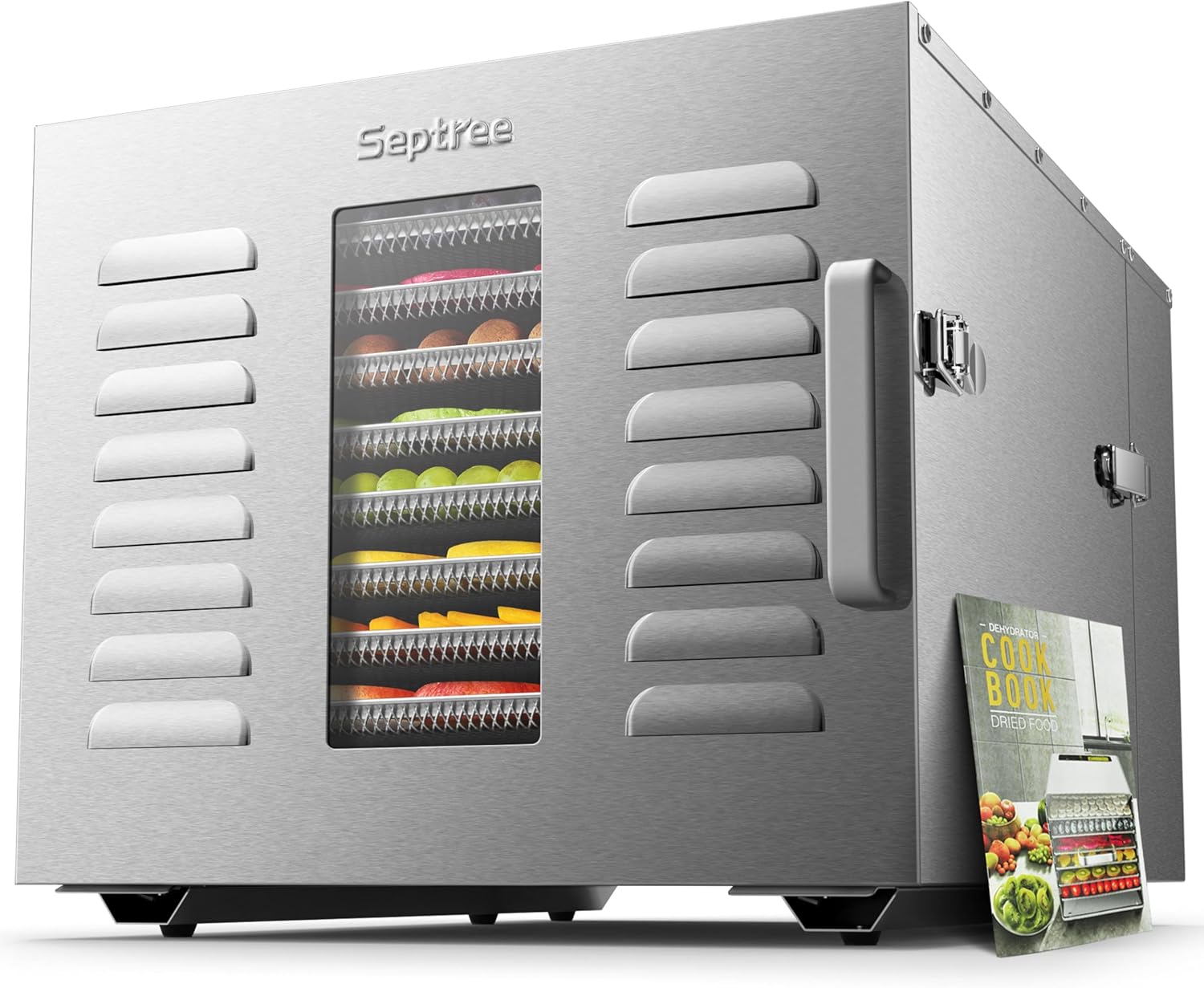
Modern electric dehydrators feature durable stainless steel or BPA-free construction, digital control panels, and specialized horizontal airflow technology. Whether you need a compact stackable unit for occasional herb drying or a large multi-tray machine with a glass viewing window, understanding tray capacities helps streamline your daily snack-making routine.
As an Amazon Associate, StacyLaughs earns from qualifying purchases.
Buying guide
Evaluating Available Drying Capacity and Tray Count
Choosing the correct tray count depends heavily on how much food you plan to process in a single batch. Smaller units with five trays suit casual users making light weekend snacks, while larger configurations featuring ten or twelve trays accommodate bulk harvests from a garden.
Material composition also influences durability and maintenance routines. Food-grade stainless steel trays resist staining and withstand frequent dishwasher cycles, whereas flexible BPA-free plastic alternatives offer lightweight handling. Assessing your typical batch size prevents purchasing an appliance that leaves too little room or occupies excess counter space.
Understanding Heating Power and Wattage Requirements
Motor wattage dictates how quickly an appliance can heat incoming air and drive internal moisture out of dense ingredients like thick-cut beef jerky or moist vegetables. Lower wattage models ranging around 400 watts handle herbs, delicate greens, and thin fruit slices efficiently while consuming modest amounts of household electricity during standard operating cycles.
High-performance machines featuring 800 to 1000 watts generate the rapid thermal energy necessary for massive multi-tier setups and heavy meat loads. Matching the electrical output to your intended recipes ensures consistent dehydration without extending run times unnecessarily. Always verify your kitchen outlet capacity when operating high-wattage commercial-style drying equipment to prevent circuit overloads during extended multi-hour operating runs in residential kitchens.
Analyzing Airflow Systems and Fan Placement
Airflow design determines whether you need to manually rotate trays during an active drying cycle. Rear-mounted fans paired with horizontal distribution channels push warm air uniformly across every tray level, ensuring even moisture removal, optimal texture, and vibrant color without requiring constant user intervention throughout the process.
Vertical airflow systems typically rely on a central or bottom heating element where warm air rises through stacked trays, occasionally requiring manual position swaps for uniform results. Selecting a model equipped with advanced horizontal parallex or dual-fan technology significantly simplifies the entire food preservation process, letting you program the digital timer and walk away with total confidence in the final outcome.
Temperature Range and Precise Digital Controls
Different food preservation tasks require specific thermal thresholds, ranging from low temperatures for proofing bread dough or drying delicate herbs to higher heat levels necessary for safe meat jerky preparation. Look for modern digital control panels that offer precise temperature adjustments down to single-degree increments to accommodate diverse culinary requirements across various ingredients.
Extended timer capabilities reaching up to 48 or 80 hours provide exceptional flexibility for lengthy dehydration projects involving thick items. Reliable automatic shutoff mechanisms ensure the appliance stops heating the exact moment your programmed schedule concludes, protecting your precious ingredients from over-drying while you sleep or handle other daily household responsibilities without constant personal monitoring.
Monitoring Visibility and Operating Noise Levels
Monitoring food progress without letting accumulated heat escape is a major convenience feature found in modern electric dehydrators. Transparent glass doors or viewing windows combined with internal LED lighting allow you to inspect drying states instantly without opening the main cabinet door and disrupting the internal thermal environment during active drying runs.
Operating noise is another crucial factor to evaluate, especially if you plan to run long dehydration cycles overnight. Advanced models incorporating brushless motors and insulated housings maintain exceptionally quiet operation levels between 45 and 48 decibels, ensuring your household remains peaceful while your favorite snacks dry quietly in the background throughout the peaceful night hours.
Maintenance Routines and Dishwasher Compatibility
Keeping a food dehydrator clean after processing sticky fruits or heavily marinated meats depends heavily on tray material construction and removable internal parts. Stainless steel trays and bottom drip pans that are fully dishwasher-safe streamline cleanup significantly compared to tedious hand-washing of complex wire grates or delicate plastic components.
Some commercial-style units feature detachable electrical boxes or easily accessible interior cavities that simplify deep cleaning routines after heavy operating sessions. Following manufacturer maintenance guidelines ensures your appliance remains hygienic, preventing stubborn residue buildup and extending the functional lifespan of your home snack-making equipment for years of reliable culinary use without experiencing unnecessary operational hassle.
Frequently asked questions
Do I need to rotate trays during the dehydration process?
Tray rotation requirements depend entirely on the internal airflow system of your specific dehydrator model. Units equipped with horizontal airflow technology, rear-mounted fans, or advanced pulse systems push warm air evenly across every shelf without requiring manual intervention. Conversely, traditional vertical airflow machines where heating elements sit at the bottom or top may occasionally require you to swap tray positions midway through a drying cycle to ensure uniform moisture removal across all stacked ingredients.
Can I run a food dehydrator overnight while sleeping?
Yes, many modern food dehydrators are specifically designed for safe, quiet overnight operation. Models featuring advanced brushless motors typically operate at noise levels below 48 decibels, ensuring they will not disturb your household rest. Furthermore, digital control panels with integrated timers and automatic shutoff mechanisms guarantee that the heating elements turn off the exact moment your drying cycle concludes, providing peace of mind and preventing any over-drying while you sleep soundly through the night.
What materials are best for dehydrator trays?
Stainless steel is widely regarded as an excellent material for dehydrator trays because it resists corrosion, handles frequent washing without damage, and provides a durable food-contact surface for meats and produce. Many premium machines utilize 304 food-grade stainless steel that is fully dishwasher-safe for easy cleanup. Alternatively, BPA-free polycarbonate or plastic trays offer lightweight handling and adjustable stacking heights, though users should always verify that all food-contact components meet safety standards and fit their specific maintenance preferences.
How do I choose the right temperature for different foods?
Selecting the correct temperature depends directly on the type of food you are processing. Lower temperature settings between 85 and 95 degrees Fahrenheit are typically ideal for delicate herbs, greens, or proofing dough. Mid-range temperatures around 125 to 135 degrees suit most fruits and vegetables while preserving natural vitamins. Higher temperature ranges spanning 155 to 194 degrees are required for safely dehydrating meats like beef jerky, ensuring pathogenic bacteria are eliminated during the cooking and drying cycle.
How should I clean and maintain my dehydrator after use?
Cleaning routines vary by model design, but most stainless steel trays and bottom drip pans can be removed and placed directly into a dishwasher for hassle-free maintenance. For the main housing unit, wiping interior surfaces with a damp cloth prevents residue buildup from sticky fruits or marinades. Certain commercial-style dehydrators feature detachable electrical boxes that allow you to clean the front cabinet safely. Always follow the manufacturer maintenance guidance to protect internal parts and extend appliance lifespan.