Appliances · Buying Guide
Best Icee Ice Cream Maker Options for Homemade Frozen Treats
Making frozen desserts at home brings classic treat flavors right to your kitchen counter without complicated commercial steps. Whether you want a nostalgic slushie or creamy soft serve, specialized appliances let you control every single ingredient and enjoy customized flavors whenever you desire a refreshing snack for family members of all ages.
Exploring different machine types helps match your kitchen space and craving style precisely. From compact single-serve mugs to advanced compressor-driven systems, understanding design features ensures you choose the right model for family dessert nights, fun holiday gatherings, and effortless everyday treat preparation throughout the entire year without ever leaving your house.
As an Amazon Associate, StacyLaughs earns from qualifying purchases.
Buying guide
Understanding Freezing Mechanisms
Choosing the right frozen dessert machine starts with examining how the unit freezes your ingredients. Traditional models rely on removable inner bowls that must sit in your household freezer for many hours or overnight before you can start churning any recipes. This requires advance planning for every single dessert night, meaning spontaneous cravings cannot always be satisfied immediately.
In contrast, advanced compressor models feature self-contained cooling systems that freeze mixtures actively while churning. This eliminates pre-freezing waits entirely, allowing you to prepare multiple consecutive batches of ice cream, gelato, or sorbet on the same afternoon without planning ahead or occupying freezer space with bulky bowls.
Evaluating Capacity and Batch Sizes
Evaluating capacity helps ensure your machine satisfies your household size without creating unnecessary leftovers or leaving guests wanting more. Compact single-serve mugs produce small half-pint portions tailored for individuals or couples enjoying a quiet evening. Standard countertop units yield one to one point two quarts, which comfortably serves small families during weekend treats.
Larger compressor systems scale up past two quarts, making them ideal for entertaining larger groups or hosting parties. Consider how many people you typically serve when selecting your device, as smaller bowls require repeated cycles if you need large volumes of frozen dessert in one sitting.
Cleaning and Maintenance Requirements
Maintenance and cleaning procedures vary significantly between different dessert maker designs and brand specifications. Many modern electric units feature dishwasher-safe components like paddles, bowls, and lids, which simplify post-dessert cleanup considerably. However, other appliances require careful hand washing of specialized canisters and delicate plastic parts to maintain their structural integrity over time.
Reviewing manufacturer care instructions before purchasing prevents unexpected cleaning hassles. Removable stainless steel bowls and separable churn blades often make wiping down internal housings much faster, ensuring your machine remains sanitary and ready for your next culinary experiment without excessive scrubbing.
Countertop Space and Storage Footprint
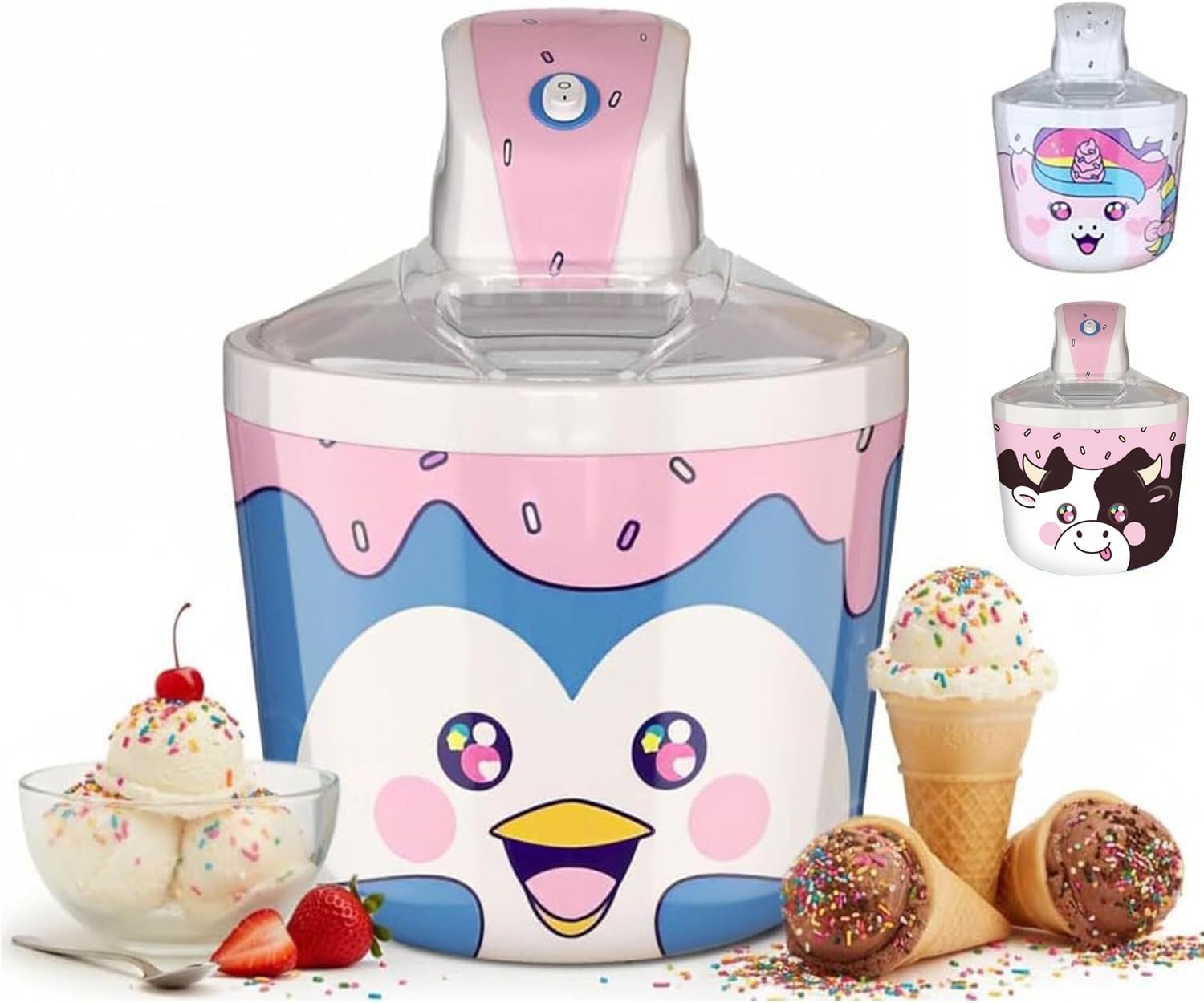
Kitchen space availability plays a crucial role in determining which frozen dessert maker fits your lifestyle best. Upright compressor machines and multi-function soft serve stations feature taller, heavier profiles that demand permanent countertop placement or dedicated cabinet room. Smaller single-serve mugs and compact animal-themed churners tuck away easily into standard pantries.
Assessing your available kitchen counters prevents appliance clutter and ensures comfortable daily operation. If cabinet storage is limited, look for smart designs where components nest neatly together, saving valuable space while keeping all necessary accessories organized in one single location.
Flavor Customization and Mix-In Features
Modern dessert makers offer diverse ways to customize flavors, textures, and ingredients to match specific dietary preferences or personal cravings. Some advanced machines include dedicated programs for fruit whips, frozen yogurt, and low-calorie treats, while others feature built-in ingredient chutes that let you add chocolate chips, nuts, or sprinkles near the end of the churning cycle.
Selecting a machine with versatile programming or manual mix-in options enhances your creative freedom. Whether you follow dairy-free diets or simply love experimenting with unique candy combinations, having specialized settings makes crafting personalized desserts engaging and interactive for the whole family.
Operation Mode and Ease of Use
Operation modes dictate how much manual effort is required to produce your favorite frozen treats at home. Fully automatic electric machines handle the churning process with simple one-touch controls, letting you walk away while the device does the work. Manual or semi-manual units might require pre-chilling steps, resting intervals, or direct oversight.
User-friendly controls, such as digital displays, audible timers, and automatic shut-off features, enhance safety and convenience during operation. Choosing an appliance with straightforward mechanics ensures that family members of all ages can participate safely in dessert night activities under proper supervision.
Frequently asked questions
Do all ice cream makers require freezing bowls overnight?
Not all ice cream makers require overnight bowl freezing, although traditional countertop models do rely on double-insulated bowls that need pre-chilling in a household freezer for twelve to twenty-four hours before churning. In contrast, advanced compressor-style ice cream makers feature built-in self-contained cooling systems that actively freeze the ingredients while they spin. This compressor design allows you to make consecutive batches immediately without waiting for bowls to refreeze, making it a convenient choice for frequent dessert makers who entertain guests often.
Can I make dairy-free or low-sugar treats with these machines?
You can easily create dairy-free, low-sugar, vegan, or high-protein frozen treats using most of these dessert makers, especially models equipped with specialized customization programs. Because you control every ingredient added to the mixing bowl or pint, you can substitute traditional dairy milk with almond milk, oat milk, or coconut milk, and use alternative sweeteners. Advanced soft serve systems even feature dedicated wellness programs designed to process alternative ingredients smoothly, ensuring you achieve a rich texture regardless of dietary restrictions.
How long does it usually take to churn a batch of dessert?
The time required to churn a batch of frozen dessert typically ranges from twenty to forty-five minutes, depending entirely on the specific machine design and preparation method. Standard electric countertop makers usually complete a churning cycle in about twenty minutes once the inner bowl is properly pre-chilled. However, specialty slushie spinners or compressor units may involve specific resting intervals, pre-chilling phases, or longer operational run times to achieve the desired consistency for your favorite frozen beverages and treats.
Are the removable parts dishwasher safe for easy cleanup?
Cleaning requirements vary significantly across different dessert maker models based on manufacturer specifications and materials used. While many modern electric units feature BPA-free plastic pints, lids, paddles, and swirl presses that are completely dishwasher safe, other machines require careful hand washing for their removable bowls, outer housings, or delicate internal components. Always review the product care guidelines provided by the manufacturer before washing your appliance to maintain its mechanical integrity and ensure safe everyday kitchen operation over time.
What is the difference between soft serve and standard ice cream makers?
Soft serve makers and standard ice cream makers differ primarily in how they process and dispense the finished dessert texture. Soft serve machines often incorporate specialized dispensing lids, faster motor speeds, and adjustable handles to swirl rich mixtures directly into cones with a smooth consistency. Traditional ice cream makers generally churn ingredients inside a stationary or rotating bowl, producing firmer scoops that you spoon out into bowls or dishes. Choosing between them depends on whether you prefer classic cones or traditional scoops.