Appliances · Buying Guide
Best In Counter Induction Cooktop Options For Modern Kitchen Spaces
Selecting an in counter induction cooktop involves balancing installation requirements, available wattage, and cooking zone configurations to match your daily routine. Induction technology heats magnetic cookware directly through electromagnetic energy rather than warming the surrounding air, delivering efficient heat transfer for boiling, simmering, and searing tasks in compact spaces like RVs, dorms, and small apartments.
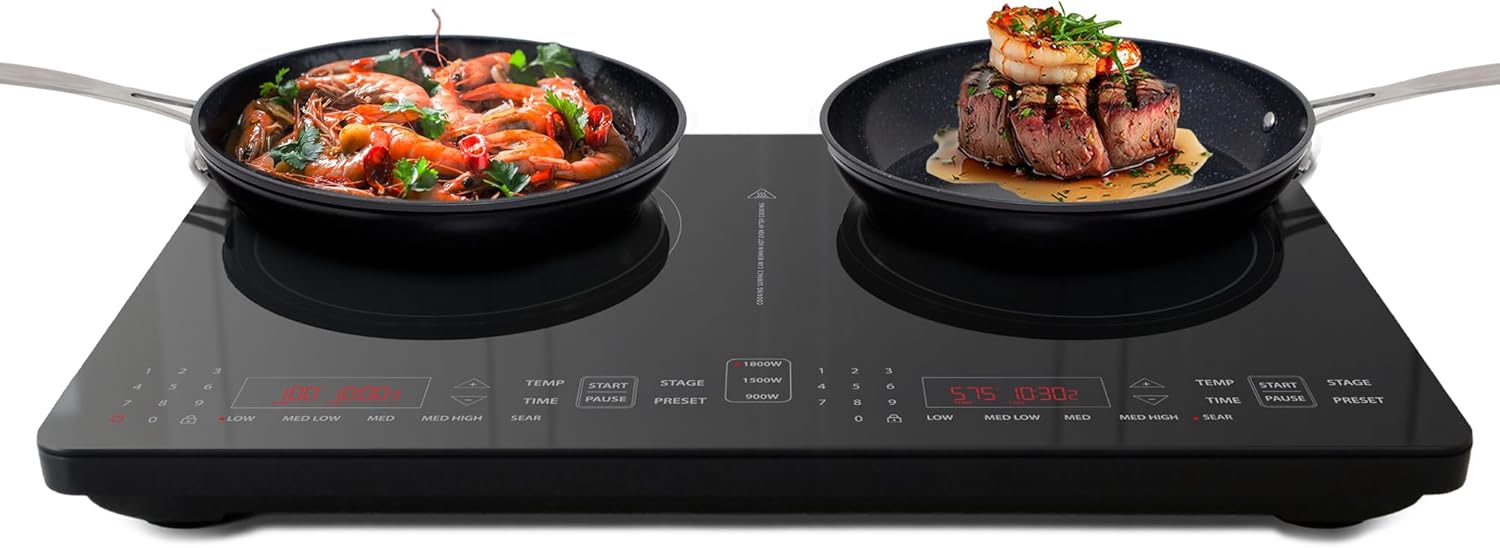
The following models offer various features ranging from dual-zone bridge capabilities and precise temperature adjustments to touch-control panels and shatter-resistant glass surfaces. Reviewing these specifications helps you determine which unit aligns with your spatial layout and cooking habits without relying on unverified claims or exaggerated performance promises.
As an Amazon Associate, StacyLaughs earns from qualifying purchases.
Buying guide
Installation Versatility
When selecting an in counter induction cooktop, determining whether you need a permanent built-in design or a portable unit is the first step. Built-in models drop directly into counter cutouts, offering a seamless flush surface that integrates smoothly with existing kitchen cabinetry and counters.
Portable countertop models provide the flexibility to move the appliance between different rooms, outdoor patios, or recreational vehicles. Consider your available counter space and whether you require a permanent kitchen fixture or a movable cooking appliance.
Power Management and Wattage
Induction cooktops operating on standard 110V or 120V electrical supplies typically share an 1800-watt maximum capacity across their heating elements. Understanding how power sharing works prevents unexpected power throttling when running multiple zones at the same time.
Units with intelligent dynamic watt technology distribute energy dynamically between burners, allowing rapid boiling on one side while maintaining a steady simmer on the other without exceeding circuit limits or tripping breakers.
Temperature Control and Precision Ranges
The exact temperature range and increment options dictate how well a cooktop handles delicate tasks like melting chocolate or high-heat searing. Advanced models offer broad temperature spans from low settings up to 575 degrees Fahrenheit.
Fine-tuning increments of five degrees provide granular control for recipes requiring steady, exact heat. Look for units featuring quick preset modes for melting, keeping warm, and simmering to simplify everyday kitchen tasks.
Surface Materials and Maintenance
Ceramic glass surfaces are standard across quality induction cooktops, providing durable heating areas that withstand high operational temperatures without cracking. Because induction technology heats only the cookware, spills do not bake onto the surface.
A smooth, edge-to-edge glass panel prevents food debris from collecting in crevices and wipes clean easily with a damp cloth. Check the material durability and weight capacity if you regularly use heavy cast-iron skillets.
Safety Features and Child Locks
Safety mechanisms are essential considerations when installing electric cooktops in busy homes or compact recreational vehicles. Built-in child locks prevent accidental touch activations by younger family members during or after food preparation.
Automatic shut-off functions triggered by cookware removal or completion of a timer cycle add confidence during daily use. Residual heat warning lights also alert users to warm zones until the glass surface cools down completely.
Zone Configuration and Bridge Functions
Dual-zone configurations allow you to cook multiple dishes simultaneously at different temperature settings. For users who cook with oblong pans, griddles, or oversized pots, bridge functions link two separate inductors into one large heating zone.
Evaluating your typical cookware shapes and meal sizes helps determine whether standard independent burners or a bridge-capable surface provides the most efficient cooking workspace for your culinary routines.
Frequently asked questions
What type of cookware works with an in counter induction cooktop?
Induction cooktops require magnetic cookware to function properly because they rely on electromagnetic energy to transfer heat directly into the pan. Common compatible materials include cast iron and magnetic stainless steel. If a magnet sticks firmly to the bottom of your pot or skillet, it will work on an induction surface. Non-magnetic materials like pure aluminum, copper, or glass will not heat up unless they feature a bonded magnetic base designed specifically for induction use.
How does power sharing affect dual-zone induction cooktops?
Most standard 120V dual-zone induction cooktops share a total capacity of 1800 watts. When you operate only one burner, it can access the full wattage for rapid boiling or high-heat searing. When both burners are active simultaneously, the internal power management system distributes the 1800 watts between them. This means turning one burner up to maximum power may slightly reduce the available output on the second zone to prevent overloading the electrical circuit.
Can these induction cooktops be installed as freestanding units?
Many induction cooktops offer dual installation capabilities, allowing them to be mounted flush as a built-in drop-in unit or placed directly on top of a counter as a freestanding portable appliance. Portable models come with feet or a slim chassis designed for stable countertop placement without requiring permanent cabinetry cutouts. Always review the specific manufacturer installation guidelines to confirm whether a particular model supports freestanding placement before setting it up on your counter.
What is the benefit of a bridge function on a cooktop?
A bridge function allows two separate heating inductors to link together and operate as a single large unified cooking zone. This feature is particularly useful when cooking with oversized cookware, rectangular griddles, or long fish poachers that exceed the footprint of a standard circular burner. By distributing power evenly across the bridged area, the cooktop ensures uniform heating without cold spots at the center of your large cookware.
How should a ceramic glass cooktop surface be cleaned?
Because induction cooktops heat only the cookware rather than the surrounding glass surface, food spills generally do not bake onto the glass, making cleanup straightforward. After the residual heat warning light turns off and the surface cools completely, you can wipe the smooth ceramic glass clean using a damp cloth and mild cleanser. Avoid abrasive scrubbers or harsh chemical pads that could scratch the shatter-resistant glass surface over time.