Appliances · Buying Guide
Best Large Pressure Cooker For Canning: Choosing High-Capacity Pots
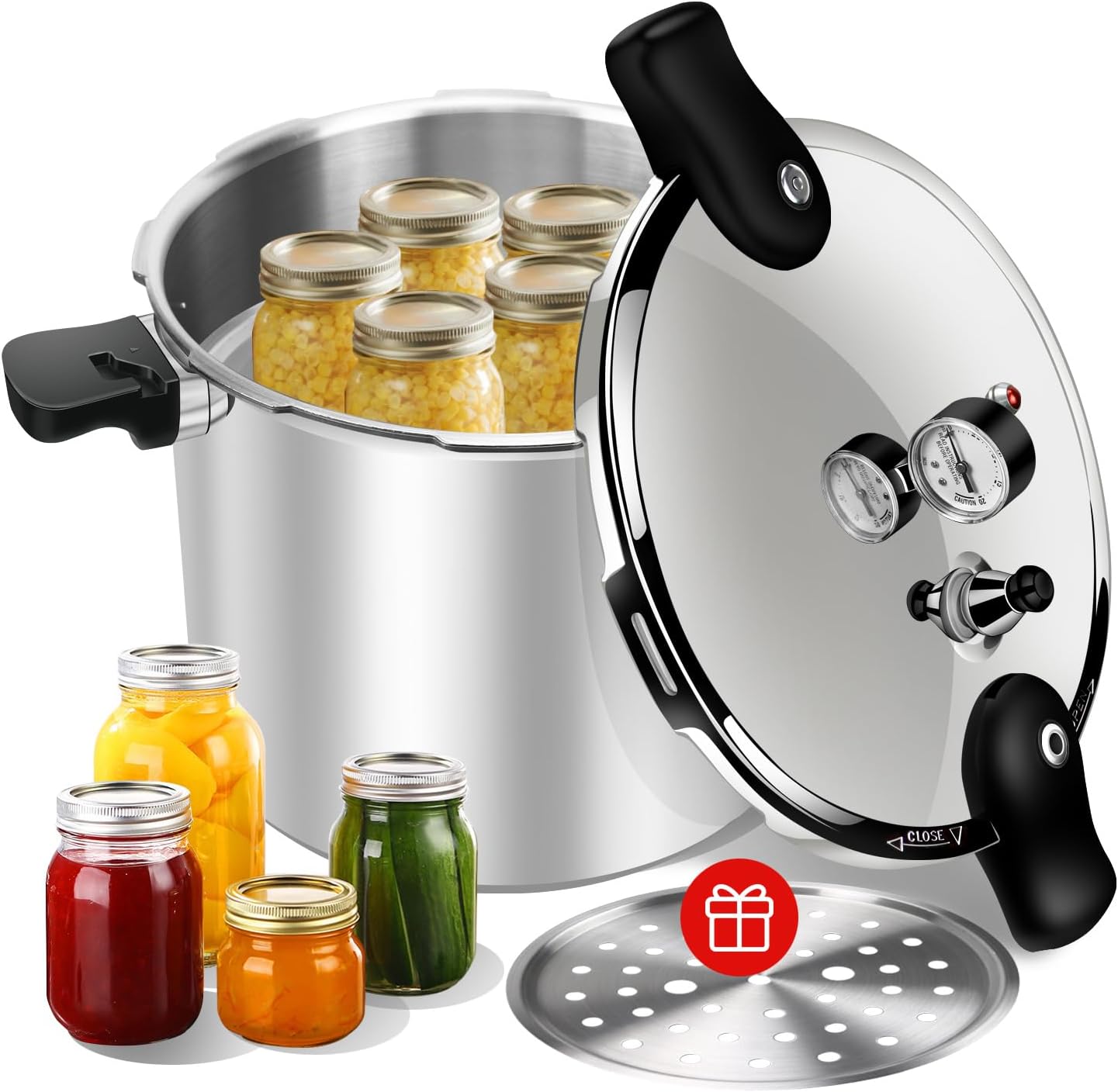
Preserving seasonal harvests and bulk cooking require substantial equipment designed to handle large quantities of jars safely. A large pressure cooker for canning offers the heavy-duty capacity necessary to process dozens of pint or quart jars in a single cycle, turning hours of traditional kitchen labor into streamlined batch preservation tasks for homes and farms.
Selecting the right model involves balancing stovetop compatibility, jar configuration, and safety mechanisms to match your kitchen setup. Whether handling fresh garden produce or preparing large meals for family gatherings, these high-capacity aluminum cookers streamline food preservation while maintaining precise internal processing pressure for low-acid foods.
As an Amazon Associate, StacyLaughs earns from qualifying purchases.
Buying guide
Evaluating Capacity And Jar Count Requirements
Choosing the correct capacity depends heavily on your typical batch sizes and the types of food you preserve throughout the year. High-capacity models ranging from twenty-two to twenty-four quarts accommodate multiple quart or pint jars simultaneously. This spatial efficiency reduces total processing time for large garden harvests.
Smaller households or casual cooks may find these large vessels excessive for routine meals. Evaluating your seasonal output helps determine whether you need dual-layer stacking capabilities or standard single-layer jar spacing. Matching pot volume to your actual preservation goals prevents unnecessary kitchen clutter.
Assessing Stovetop Material And Heat Distribution
Aluminum is the predominant material for large canning pots due to its lightweight nature relative to steel and its superior thermal conductivity. Heavy-gauge aluminum resists warping under prolonged high-heat cycles, ensuring structural integrity over years of seasonal use.
Composite or encapsulated pot bottoms further enhance heat transfer across various burner types. Inspecting the thickness of the metal helps verify that the base will distribute heat evenly, preventing hot spots that could compromise food preservation consistency across large batches of jars.
Understanding Pressure Gauge And PSI Options
Accurate pressure monitoring is critical for safe food preservation, particularly for low-acid vegetables, meats, and seafood. Most large canners operate around fourteen-point-five PSI or offer adjustable settings between ten and fifteen PSI to accommodate different altitude requirements.
Visual dial gauges provide clear, real-time measurements so you can monitor internal conditions easily. Understanding whether a model runs on a default pressure setting or requires supplementary regulators ensures you select a unit matching your specific recipe guidelines.
Prioritizing Built-In Safety Protection Mechanisms
High-volume pressure canning involves handling significant steam and internal forces, making robust safety mechanisms essential for peace of mind. Look for models equipped with secure locking lids that prevent premature opening while pressurized.
Additional safeguards such as dual overpressure relief valves, anti-clogging vents, and float safety pins provide layered protection against accidental pressure failures. These integrated features support safe operation for both experienced preservers and beginners alike.
Managing Physical Weight And Storage Dimensions
Extra-large pressure cookers have wide footprints and tall profiles, often spanning twelve to fifteen inches in diameter with substantial empty weight. Before purchasing, measure your kitchen cabinet clearance and pantry shelf height to ensure proper vertical storage fit.
Consider the physical effort required to lift a heavy aluminum pot filled with water and glass jars. Ergonomic, heat-resistant dual handles make transporting the loaded vessel safer and more comfortable across your kitchen workspace.
Selecting Compatible Cooktop Surface Types
Stove compatibility determines whether a specific pressure canner will function on your existing kitchen range. While many aluminum canners work seamlessly on gas and electric coil burners, modern glass smooth-tops and induction cooktops require specific base constructions.
Encapsulated or composite induction bases ensure rapid heat transfer on magnetic cooktops where standard flat aluminum might fail. Always verify your stove type and burner dimensions before purchasing a wide-diameter canning pot.
Frequently asked questions
Can I use a large pressure cooker for everyday cooking tasks?
Yes, these large vessels double as bulk stockpots and pressure cookers for preparing large family meals, stews, soups, and bone broths. However, their twenty-two to twenty-four quart capacities make them unwieldy for single-portion meals or small side dishes. If you regularly cook large quantities for gatherings or meal prepping, using the pot for everyday bulk recipes is entirely practical, provided you have sufficient storage space and burner capacity in your kitchen.
How do I know if a pressure canner fits my induction stove?
To use a pressure canner on an induction cooktop, the pot must feature a compatible composite or encapsulated magnetic base. Standard plain aluminum bottoms will not conduct heat on induction ranges. Additionally, you should measure your induction cooking zone before purchasing. A burner zone that is significantly smaller than the canner base may heat unevenly, reducing cooking performance and failing to reach required processing temperatures efficiently.
What is the difference between water bath and pressure canning?
Water bath canning submerges jars in boiling water and is suitable for high-acid foods such as fruits, jams, pickles, and tomatoes. Pressure canning uses high-temperature steam under pressure to reach elevated temperatures required to safely preserve low-acid foods like vegetables, meats, poultry, and seafood. Many large aluminum canners support both methods, though you must follow specific USDA guidelines and recipe instructions depending on the acidity level of your ingredients.
How heavy is an empty extra-large canning pot?
Extra-large aluminum pressure canners typically weigh between ten and fifteen pounds when completely empty, depending on wall thickness and base construction. When filled with water, canning racks, and seven to twelve glass jars, the total weight increases substantially. Buyers should consider their physical lifting capability and ensure they can safely transport the loaded vessel from the sink to the stovetop without strain or slipping.
Why do some canners require separate pressure regulators?
Some models operate at a fixed default pressure, such as fourteen-point-five PSI, which suits standard processing needs. However, if your recipes or regional altitude require different pressure levels, manufacturers may offer a dedicated multi-level adjustable pressure regulator as a separate accessory. Checking these operational specifications before purchasing helps ensure you have all necessary components to achieve the correct processing pressure for your specific canning recipes.