Appliances · Buying Guide
Best Magic Chef And Countertop Food Dehydrators For Crisp Snacks
Making homemade dried snacks allows you to control ingredients and enjoy wholesome treats like beef jerky, fruit chips, and dried herbs right from your kitchen. Selecting the right appliance depends on your available counter space, the volume of food you plan to process, and your preferred temperature control options for different recipes.
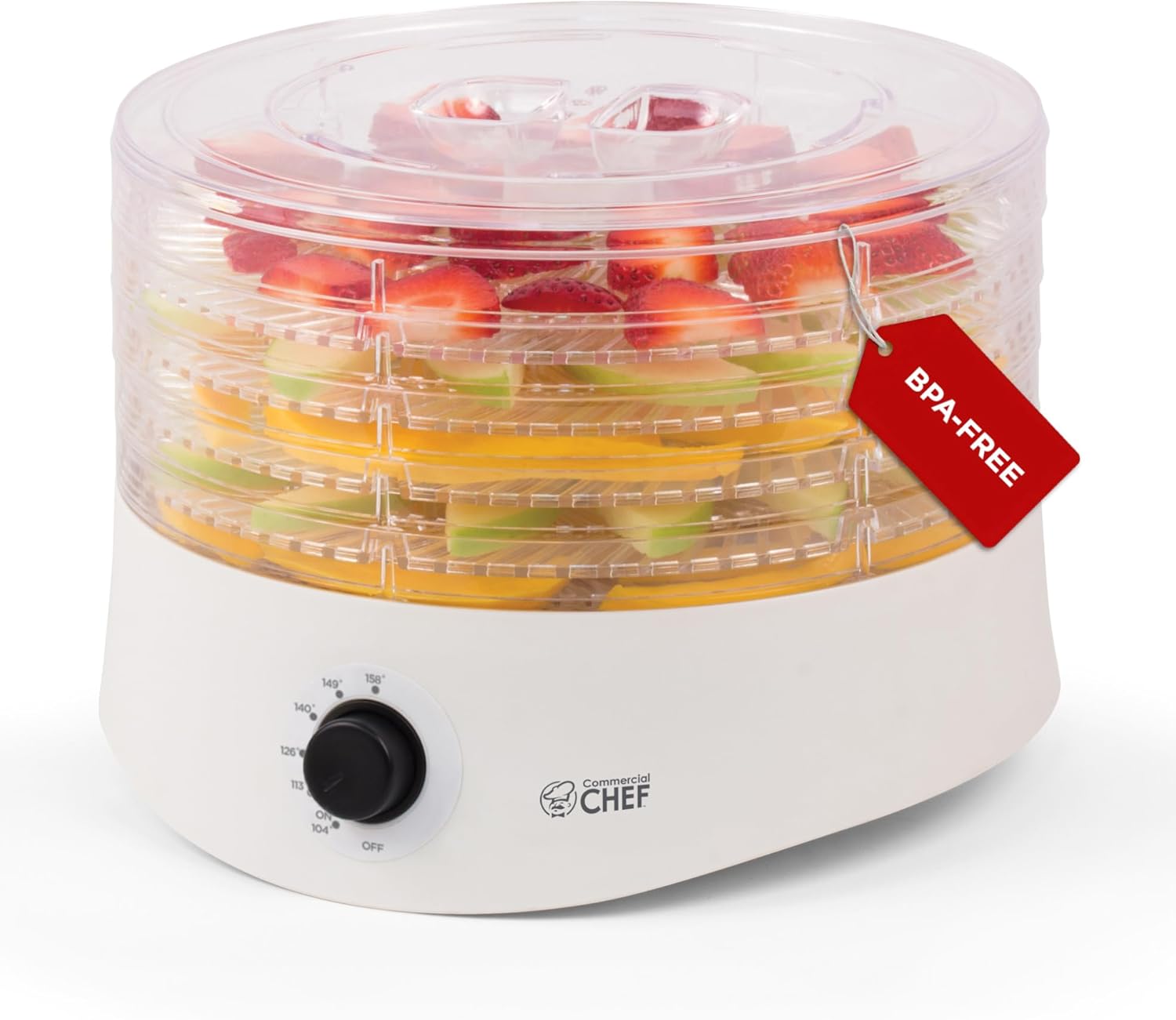
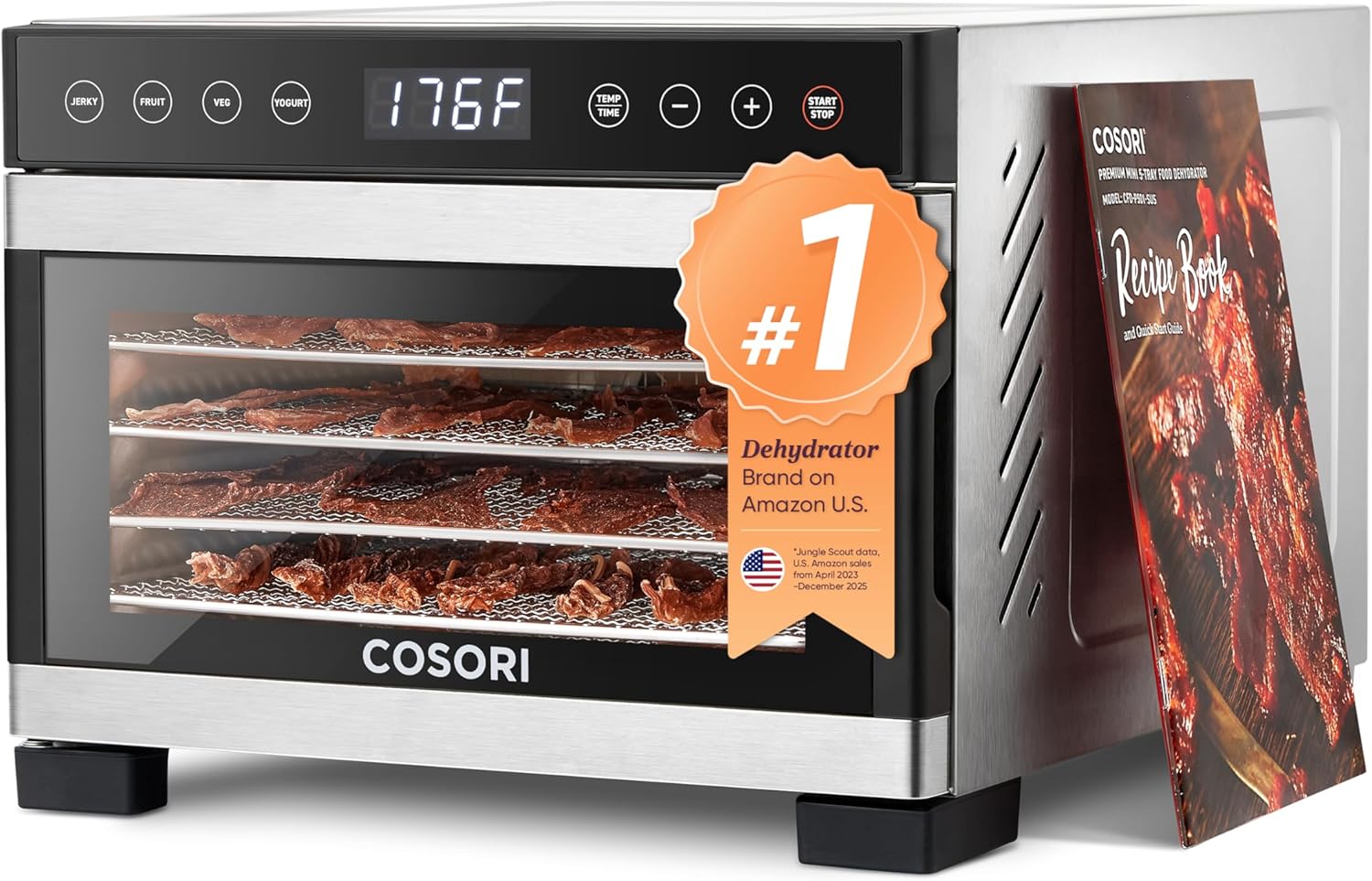
Whether you need a compact, lightweight unit for occasional snacking or a larger machine designed for bulk batches, understanding the core specifications helps narrow down your choices. We look at several popular models, including compact Commercial Chef units and higher-capacity Cosori dehydrators, focusing on their physical design, power ratings, and tray materials.
As an Amazon Associate, StacyLaughs earns from qualifying purchases.
Buying guide
Evaluating Counter Space and Physical Dimensions
Before purchasing a food dehydrator, measure your available kitchen counter and storage space carefully. Compact models like the lightweight Commercial Chef units take up minimal room and easily fit inside standard pantries when not in use. Larger appliances, such as high-capacity Cosori machines, offer expansive drying areas but demand dedicated surface space due to their heavier builds and wider footprints.
Consider how often you plan to use the machine and whether you intend to leave it on the counter permanently. If storage space is tight, a lighter unit under five pounds allows for effortless lifting and relocation. Matching the physical dimensions of the appliance to your kitchen layout ensures comfortable daily use without cluttering your workspace.
Understanding Motor Wattage and Drying Efficiency
Motor wattage plays a direct role in how quickly and efficiently a food dehydrator generates and maintains heat. Lower-wattage models around 240 to 280 watts handle basic fruit, vegetable, and herb drying tasks reliably while consuming less household electricity. Higher-wattage appliances ranging from 480 to 600 watts provide stronger airflow and faster drying times for dense foods.
When processing thick cuts of meat for jerky or running multi-tier batches, higher wattage combined with a rear-mounted fan ensures even heat distribution. Evaluate your typical recipes to determine whether a standard low-wattage heating element suffices or if a more powerful motor is necessary for your cooking habits.
Comparing Tray Materials and Cleaning Requirements
Dehydrator trays come in various materials, primarily BPA-free plastics and stainless steel. Plastic trays found on many entry-level models are lightweight and easy to handle during hand-washing routines. Stainless steel trays offer enhanced durability, resist staining, and are often dishwasher safe, simplifying cleanup after sticky fruit roll-ups or marinades.
The physical configuration of the trays also matters for food placement. Circular trays require careful arranging to maximize the available surface area, while rectangular stainless steel racks provide uniform edges that make loading sliced produce straightforward. Choose a tray material and layout that aligns with your cleaning preferences and food preparation style.
Temperature Ranges and Precision Controls
Temperature flexibility is essential when drying different food types, as delicate herbs require low heat while meat jerky benefits from higher temperatures. Many standard dehydrators feature mechanical dials spanning from 95 or 104 degrees up to 158 degrees Fahrenheit. Advanced models offer digital control panels with single-degree increments reaching up to 176 degrees Fahrenheit.
Having precise temperature adjustments allows you to follow specific recipes accurately, whether you are making yogurt, crisp apple chips, or safely drying poultry jerky. Assess whether you prefer simple manual switches or detailed digital programming when selecting your countertop appliance.
Batch Capacity and Total Drying Surface Area
Drying surface area determines how much food you can process in a single batch. Smaller units provide around three square feet of space across five trays, which works well for single snack portions or couple households. Larger machines expand up to 6.5 square feet across six or more trays, accommodating bumper garden harvests and bulk meal prep.
If you frequently dry large quantities of produce at once, investing in a high-capacity unit saves time by reducing the need for multiple successive batches. Conversely, casual snack makers will find moderate tray counts more than sufficient for everyday weekend projects.
Noise Levels and Operating Convenience
Appliance noise can be a significant factor if you plan to run your dehydrator overnight or keep it in an open-plan living space. Many standard dehydrators produce a steady hum from their internal fans. Advanced models incorporate brushless motors designed to keep operating noise below 48 decibels for quiet background performance.
Additional conveniences like built-in presets, automatic timers reaching up to 48 hours, and included accessories such as mesh screens and fruit roll sheets enhance overall usability. Reviewing these features helps ensure the dehydrator fits seamlessly into your daily routine.
Frequently asked questions
What foods can I prepare using a home food dehydrator?
You can prepare a wide variety of snacks using a food dehydrator, including fruit chips like apple and banana slices, dried vegetables, herbs, and homemade beef or poultry jerky. Some advanced models also support making fruit roll-ups and yogurt by utilizing specialized sheets or precise low-temperature settings. The process removes moisture while helping foods retain their original flavors and nutrients for convenient, shelf-stable storage.
How do I clean the trays after making sticky foods like fruit leather?
Cleaning methods depend on the specific tray material of your dehydrator. Plastic trays on lightweight models typically require simple hand-washing with warm soapy water to remove sticky residue. Stainless steel trays found on higher-end units are frequently dishwasher safe, allowing for effortless cleanup. Always consult the manufacturer guidelines for your specific model to maintain the longevity of the removable drying racks.
Are higher temperature settings necessary for making beef jerky?
Higher temperature settings are particularly beneficial when making meat jerky to ensure proper food safety. Models that reach maximum temperatures between 165 and 176 degrees Fahrenheit allow you to adjust heat levels accurately for meat preparation. USDA recommendations often point to higher temperatures for safe jerky processing, making adjustable thermostats a valuable feature for meat lovers.
Can I run a food dehydrator overnight without disturbing my household?
Many modern dehydrators are designed for extended operation, with some models featuring advanced brushless motors that maintain noise levels below 48 decibels for quiet performance. Digital timers allow you to set exact drying durations up to 48 hours so the machine shuts off automatically. Placing the appliance on a stable, level surface away from sleeping areas helps ensure undisturbed operation.
What is the difference between circular plastic trays and rectangular stainless steel trays?
Circular plastic trays are typically lightweight and common in compact, budget-friendly dehydrators, making them easy to move and hand wash. Rectangular stainless steel trays generally offer more usable edge-to-edge surface area, enhanced durability, and dishwasher-safe convenience. Your choice between them depends on your preference for appliance weight, cleaning convenience, and batch volume requirements.