Appliances · Buying Guide
Best Magic Mill Food Dehydrator Machine Styles and Countertop Dryers
Finding the right food dehydrator machine helps home cooks preserve garden harvests, prepare dried fruit slices, and make homemade meat jerky with consistent results. Selecting a model involves balancing physical dimensions, tray counts, and airflow designs against your available kitchen counter space.
This overview examines several countertop dehydrators featuring stainless steel trays, adjustable timers, and varied power outputs. Reviewing these specifications helps you match a machine's capacity and heating range to your specific batch-drying habits.
As an Amazon Associate, StacyLaughs earns from qualifying purchases.
Buying guide
Evaluating Countertop Space and Machine Dimensions
Measuring your available kitchen counter space is an essential first step before selecting any food dehydrator machine. Units vary significantly in depth, width, and height depending on their internal tray count and motor placement.
Taller models with ten or twelve trays require substantial vertical clearance, especially if placed underneath overhead kitchen cabinets. Checking these physical dimensions beforehand prevents placement issues in compact cooking areas.
Understanding Tray Capacity and Surface Area
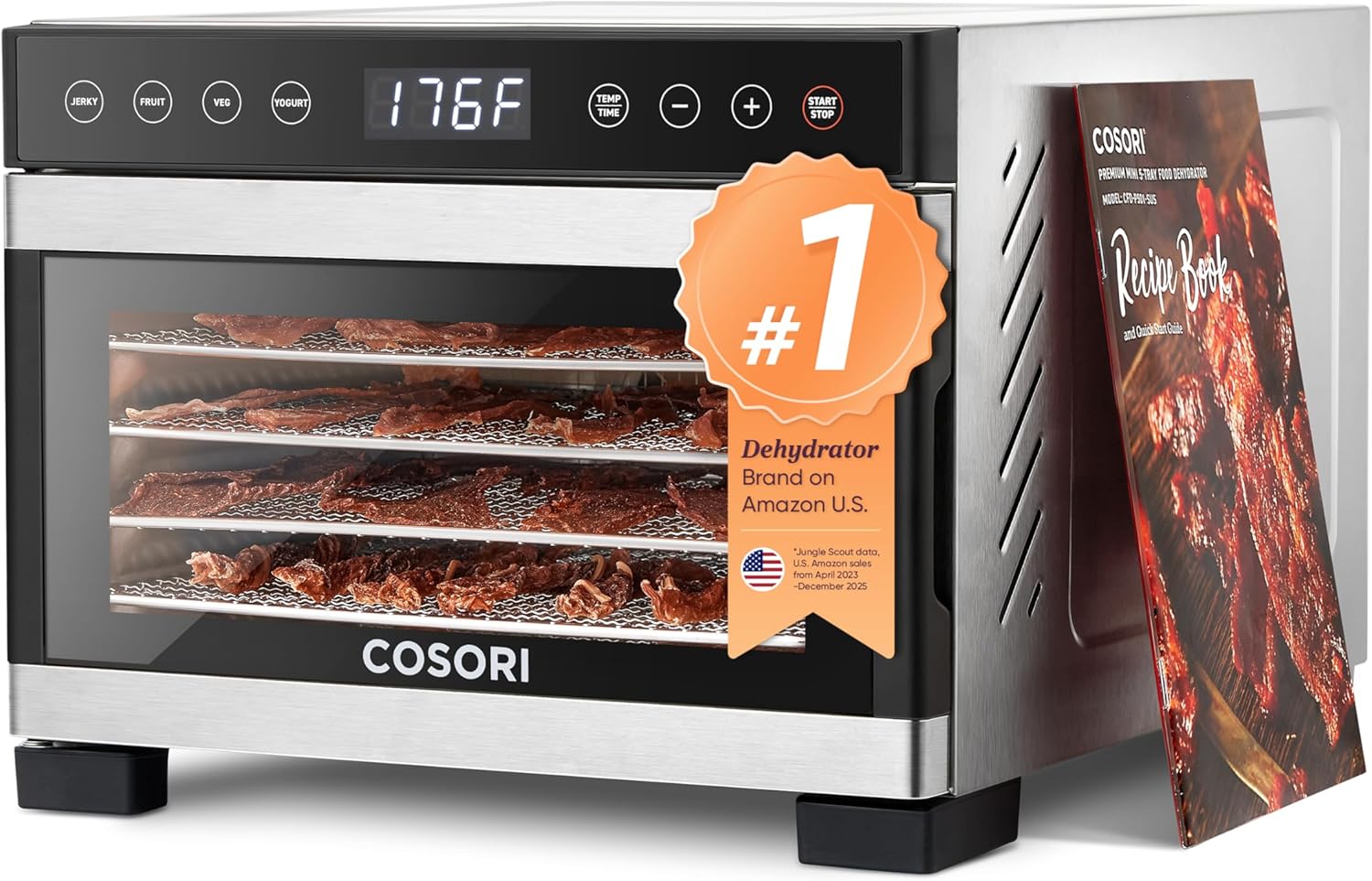
Tray counts directly dictate how much food you can process in a single drying session. Smaller five-tray configurations suit occasional snack makers, while eight to twelve-tray models handle larger garden harvests easily.
Reviewing the total square footage of drying space helps you match machine capacity to your typical batch size. Keep in mind that larger tray arrays add to the overall weight and bulk of the appliance.
Power Outputs and Heating Element Control
Wattage ratings influence how quickly a dehydrator heats up and maintains target temperatures throughout a cycle. Higher wattage motors often pair with larger tray capacities to ensure even heat distribution.
Adjustable thermostats with precise degree increments allow you to dial in exact temperatures required for different foods. Look for ranges that support lower fruit drying as well as higher meat jerky requirements.
Airflow Design and Tray Rotation Needs
Air circulation mechanics determine whether you need to manually rotate trays during a drying cycle. Rear-mounted fans with horizontal airflow systems push heated air evenly across all levels simultaneously.
This design feature saves time by eliminating the need to stop the machine and swap shelf positions halfway through. Evaluating airflow configuration helps ensure uniform texture across every tray.
Operating Noise Levels and Motor Types
Dehydrators operate continuously for hours, making sound output an important practical consideration for home placement. Advanced brushless motors often achieve lower decibel ratings, operating quietly in the background.
Reviewing noise specifications helps identify models suitable for overnight drying in kitchens close to living spaces. Selecting a quieter fan mechanism ensures uninterrupted household comfort during long cycles.
Cleaning Maintenance and Dishwasher Compatibility
Post-drying cleanup depends heavily on the materials used for the internal trays and removable accessories. Stainless steel trays are durable and frequently dishwasher-safe, simplifying routine post-processing maintenance.
Removable drip trays and smooth interior surfaces also help catch crumbs and sticky residues easily. Following manufacturer cleaning instructions protects internal components and extends appliance service life.
Frequently asked questions
Do I need to rotate the trays while drying food in these machines?
Most modern dehydrators equipped with rear-mounted fans and horizontal airflow systems circulate hot air evenly across all shelves. This design eliminates the traditional requirement to manually rotate or swap tray positions during a processing cycle. You can load your ingredients, set the timer, and let the machine complete the drying process without interruption, saving both time and effort throughout the run.
What temperature range is recommended for making safe beef jerky?
Preparing safe beef jerky typically requires maintaining higher drying temperatures to eliminate potential bacteria effectively. Many food dehydrators offer adjustable heat settings reaching up to 165°F or 176°F in precise one-degree increments. Consulting official food safety guidelines and using a high enough temperature setting helps ensure your homemade meat strips achieve the proper texture and safety standard during extended dehydration runs.
How noisy are these electric food dehydrators during operation?
Operating noise levels vary by model, but many advanced dehydrators incorporate brushless motors designed to keep sound output below 48 decibels. This relatively quiet performance allows you to run long multi-hour or overnight drying cycles without disrupting your household environment. Checking the specific decibel ratings or motor descriptions helps you select a machine that operates quietly on your kitchen counter.
Can I put stainless steel dehydrator trays directly into the dishwasher?
Many food dehydrators feature dishwasher-safe stainless steel trays designed to simplify cleanup after processing sticky fruits or marinated meats. Removable parts and smooth internal drip trays further reduce the effort required to wipe down the machine interior. Always review the manufacturer care manual before washing components to ensure proper maintenance and longevity for your specific appliance parts.
How do I choose between a small five-tray dehydrator and a large twelve-tray unit?
Choosing the right tray count depends directly on your typical food preparation volume and available counter space. A compact five-tray unit suits small batches of snacks and limited kitchen footprints, whereas a twelve-tray machine handles massive garden harvests in fewer sessions. Consider how much food you plan to dehydrate at one time and measure your available countertop and vertical clearance before making a final purchase.