Appliances · Buying Guide
Best Meat Dehydrator For Jerky: Top Stainless Steel Picks
Making homemade beef jerky allows you to control your ingredients, experiment with bold marinades, and enjoy delicious protein-packed snacks without mystery additives or excessive sodium. Selecting a reliable meat dehydrator for jerky transforms raw meat cuts into perfectly dried, flavorful strips right on your kitchen counter with minimal ongoing effort and absolute convenience.
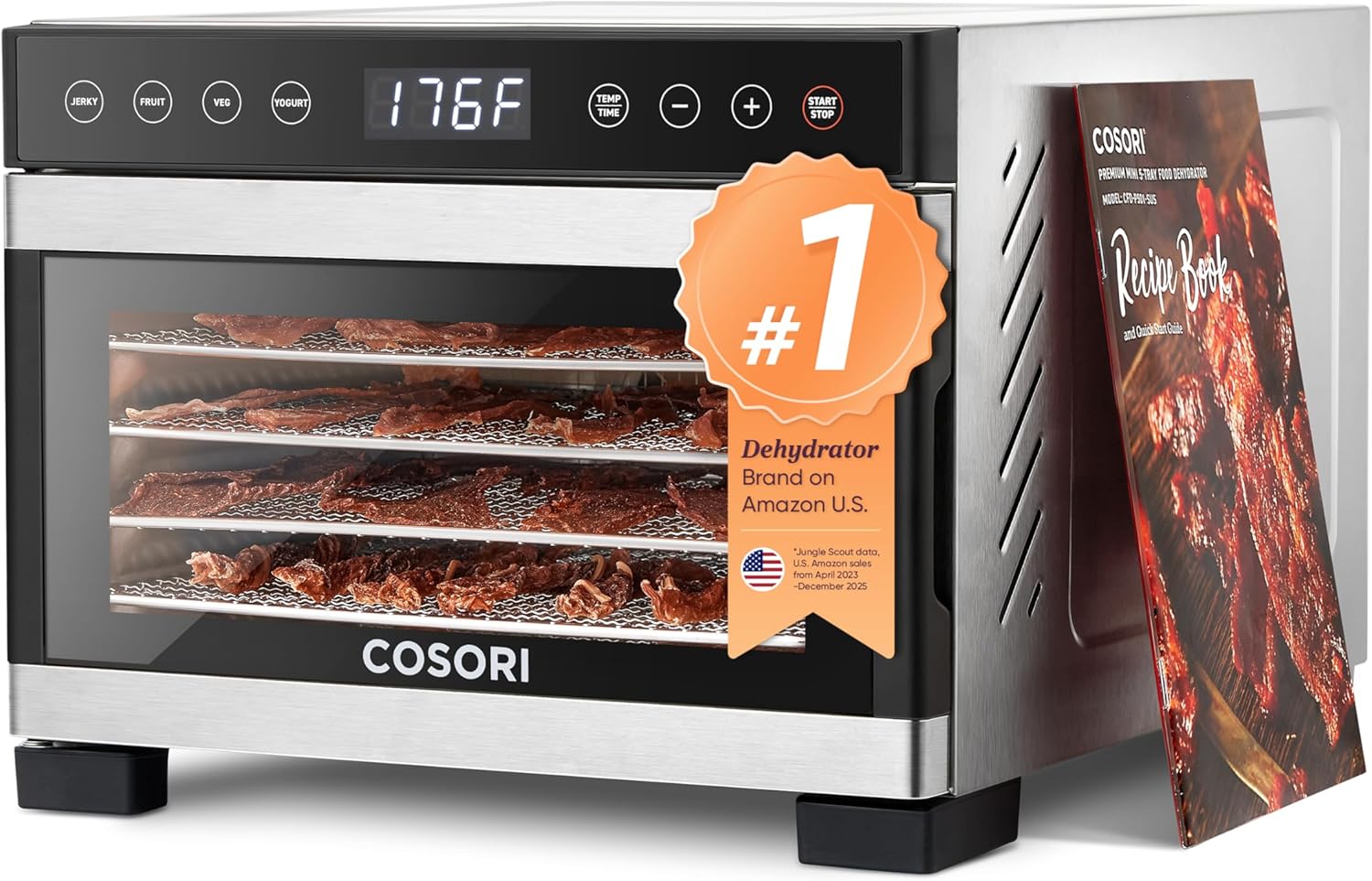
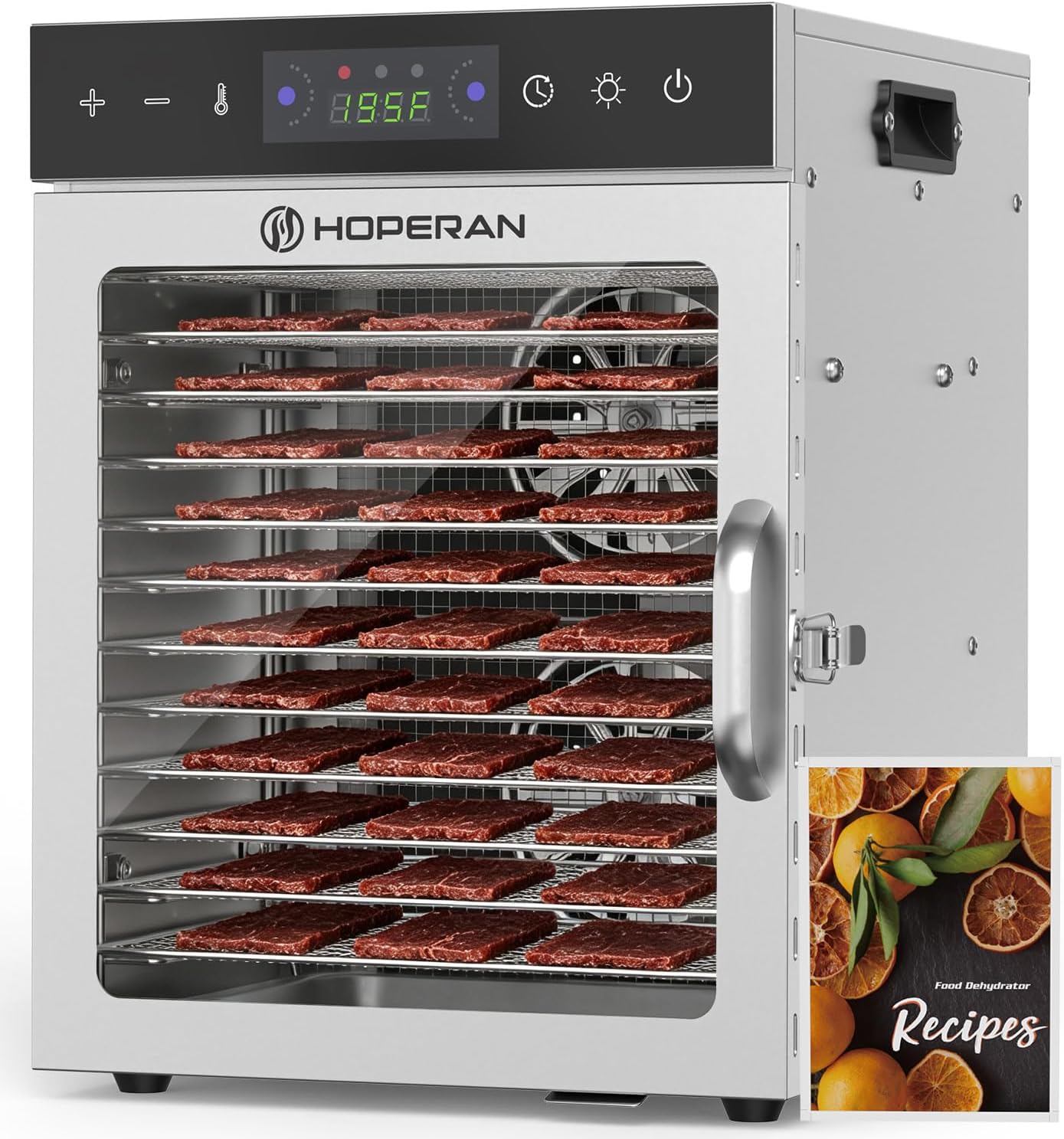
Modern countertop appliances feature precise digital temperature controls and efficient airflow systems designed specifically for safe, even meat preparation. Whether you need a compact five-tray setup for casual weekend snacks or a heavy-duty twelve-tray machine for bulk harvesting, comparing heating wattages, dimensions, and stainless steel tray materials helps you select the ideal model for your kitchen space.
As an Amazon Associate, StacyLaughs earns from qualifying purchases.
Buying guide
Temperature Range and Control
When selecting a meat dehydrator for jerky, temperature range is the single most critical factor for ensuring proper food safety and texture. USDA guidelines recommend heating meat to at least 165 degrees Fahrenheit during preparation to eliminate harmful bacteria before the dehydration process begins. Look for modern countertop models that offer precise digital thermostat controls capable of reaching at least 170 to 190 degrees Fahrenheit.
Precise incremental adjustments allow you to dial in exact heat levels for varying meat thicknesses, cuts, and wet marinades. Avoid units that lack adequate high-heat capabilities, as lower temperature ceilings can compromise food safety protocols when preparing thick beef strips, venison, or poultry jerky at home.
Tray Material and Construction
The material of your dehydrator trays directly impacts long-term durability, cleaning ease, and food safety during frequent household use. Stainless steel trays provide superior rust resistance and longevity compared to traditional plastic alternatives. Premium grades like 304 or 316 stainless steel withstand heavy grease, sticky marinades, and high heat without degrading, warping, or absorbing stubborn food odors over time.
Dishwasher-safe trays significantly simplify cleanup after sticky jerky preparation sessions involving sugary soy or teriyaki glazes. Always inspect tray mesh density to ensure small meat strips or delicate herbs do not slip through the gaps while maintaining optimal horizontal airflow across every single layer during operation.
Airflow Systems and Fan Placement
Airflow design dictates whether your food dries evenly without requiring tedious manual intervention during long processing cycles. Rear-mounted drying fans create horizontal convection currents that sweep heated air uniformly across all trays from back to front. This advanced engineering setup prevents moisture trapping and completely eliminates the chore of manually rotating shelves midway through your jerky-making routine.
Dual-fan systems offer even greater air velocity for larger multi-tier appliances handling heavy meat loads simultaneously. Evaluating how air circulates inside the sealed chamber ensures consistent results, preventing under-dried centers or over-dried outer edges on your homemade beef strips, venison slices, and dried fruit snacks over hours of operation.
Capacity and Countertop Footprint
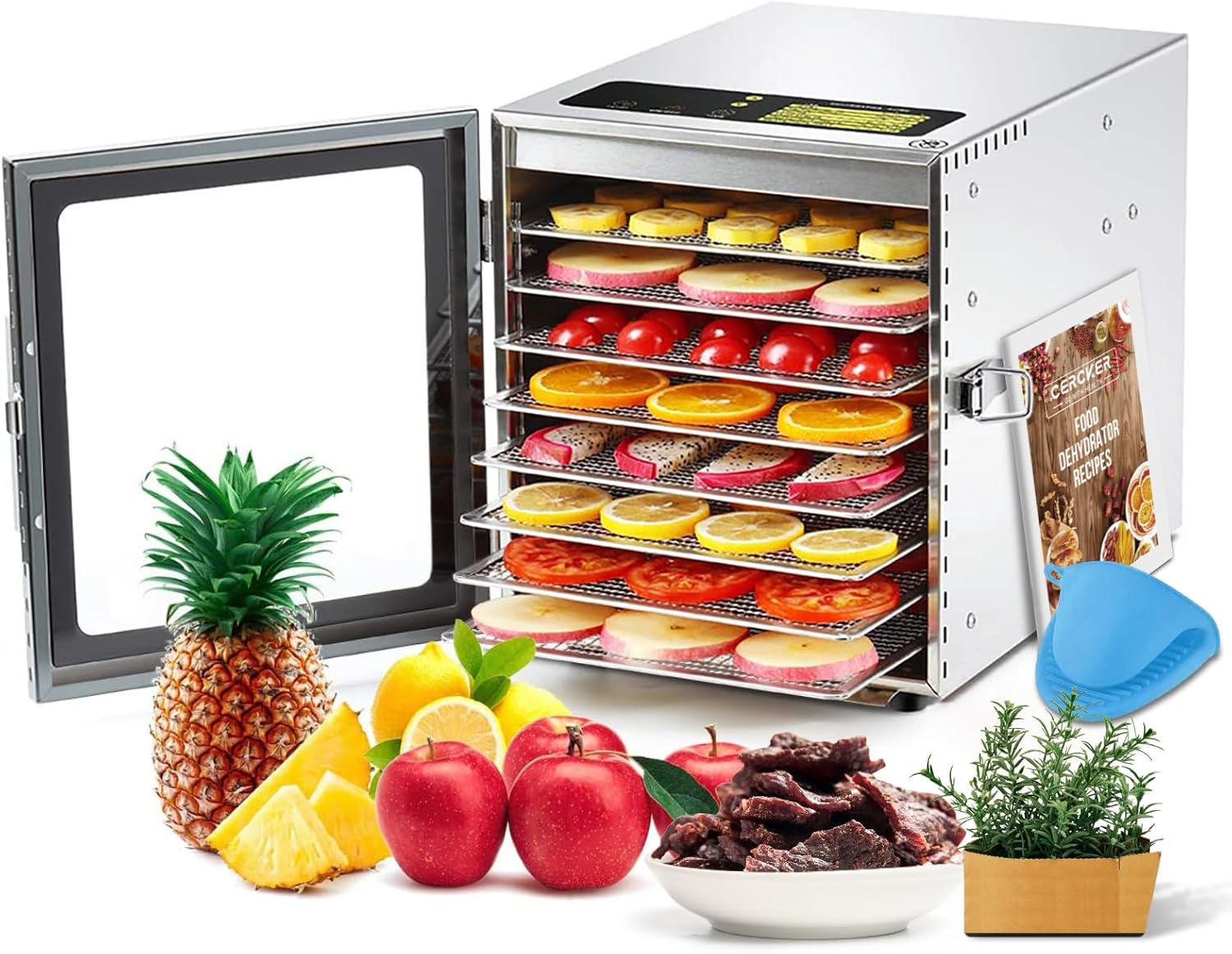
Matching your dehydrator capacity to your household needs prevents kitchen overcrowding while ensuring you can process enough food in a single run. Compact five-tray units suit casual snackers and small kitchens, whereas eight to twelve-tray machines accommodate hunters, gardeners, and large families preparing bulk batches. Measure your available countertop space and vertical cabinet clearance carefully before purchasing larger multi-tier models.
Larger capacity appliances demand significantly deeper and taller footprints, which can quickly consume valuable prep space in compact kitchens. Balance your craving for bulk jerky production against your actual kitchen storage limitations to find a practical machine size that remains convenient to use on a regular basis.
Noise Levels and Operational Convenience
Running a dehydrator overnight requires paying close attention to motor noise ratings and operational convenience features. Many modern stainless steel units utilize advanced brushless motors that operate quietly below 48 decibels, ensuring complete household peace while drying snacks overnight. Digital timers with automatic shut-off add convenience, letting you set multi-hour cycles without constantly monitoring the clock.
Transparent viewing doors and bright interior lights allow you to check drying progress without opening the chamber door and releasing accumulated heat. Spill-resistant control panels protect internal electronics from accidental moisture splashes, making everyday cleaning and appliance operation much smoother for busy home cooks managing messy meat marinades.
Wattage and Energy Efficiency
Motor wattage determines how quickly your food dehydrator heats up and maintains stable internal temperatures during extended multi-hour drying cycles. Units ranging from 480 to 800 watts provide ample heating power for efficient moisture removal across multiple metal trays. Higher wattage also supports rapid temperature recovery after loading cold meat strips straight from the refrigerator into the heated chamber.
While powerful motors handle heavy commercial-style workloads effortlessly, they also consume more electricity during prolonged twenty-four-hour drying runs. Consider your typical batch size and frequency of use when evaluating power consumption to balance rapid drying speed with your household energy efficiency goals over extended periods of time.
Frequently asked questions
What temperature is best for making beef jerky in a dehydrator?
USDA guidelines recommend heating beef to 165 degrees Fahrenheit during preparation to ensure harmful bacteria are eliminated before the drying process begins. Most dedicated meat dehydrators feature adjustable temperature ranges extending up to 165, 176, or even 196 degrees Fahrenheit. Setting your appliance within this safe temperature window guarantees your homemade jerky is both thoroughly cooked and properly dehydrated for safe long-term storage at room temperature. Always verify your specific model's maximum temperature setting before starting a batch of raw meat.
Do I need to rotate trays during the jerky drying process?
Many modern countertop dehydrators feature rear-mounted drying fans and advanced horizontal airflow systems that circulate heated air evenly across every tray. Because of this engineered airflow convection, manual tray rotation is generally unnecessary on these models. Hot air passes uniformly from back to front, ensuring your meat strips dry at a consistent rate without requiring you to open the door and interrupt the internal temperature. Always check your specific manufacturer instructions regarding airflow design before skipping shelf rotation.
How long does it take to dehydrate meat for jerky?
The drying time for homemade jerky typically ranges between four and twelve hours, depending heavily on meat thickness, moisture content, marinade type, and your dehydrator's wattage and temperature settings. Thinner meat slices sliced uniformly dry much faster than thick, dense cuts. Running your appliance at higher temperatures around 165 to 175 degrees Fahrenheit can also shorten overall processing time. Regular visual checks during the later stages of your drying cycle help ensure your jerky achieves the ideal leather-like texture without becoming overly brittle.
Are stainless steel trays better than plastic trays for making jerky?
Stainless steel trays are widely considered superior for making jerky due to their exceptional durability, rust resistance, and ease of cleaning. Meat marinades often contain acids, salt, and sticky sugars that can stain or degrade traditional plastic trays over time. Food-grade stainless steel surfaces withstand heavy grease, resist corrosion, and can be easily washed in a dishwasher without warping. Furthermore, stainless steel trays maintain a hygienic cooking environment for handling raw meats during back-to-back food preservation projects.
Can I run my food dehydrator overnight while sleeping?
Yes, many home cooks run their dehydrators overnight, provided the appliance features quiet operating mechanisms and built-in safety protections like automatic shut-off and thermal overload protection. Models utilizing advanced brushless motors operate quietly below 48 decibels, ensuring they will not disturb your household sleep. When running overnight drying cycles, always ensure the machine is placed on a stable, heat-resistant countertop away from flammable materials with adequate clearance for proper ventilation and airflow around the housing vents.