Appliances · Buying Guide
Best Meat Dehydrator Options for Making Flavorful Homemade Beef Jerky
Making delicious homemade beef jerky at home requires selecting the right kitchen equipment to handle meat preparation efficiently. Whether you prefer lean cuts of beef, venison, or poultry, having a reliable dehydrator ensures consistent airflow and precise temperature control for safely dried snacks every single time you cook your favorite recipes for family gatherings.
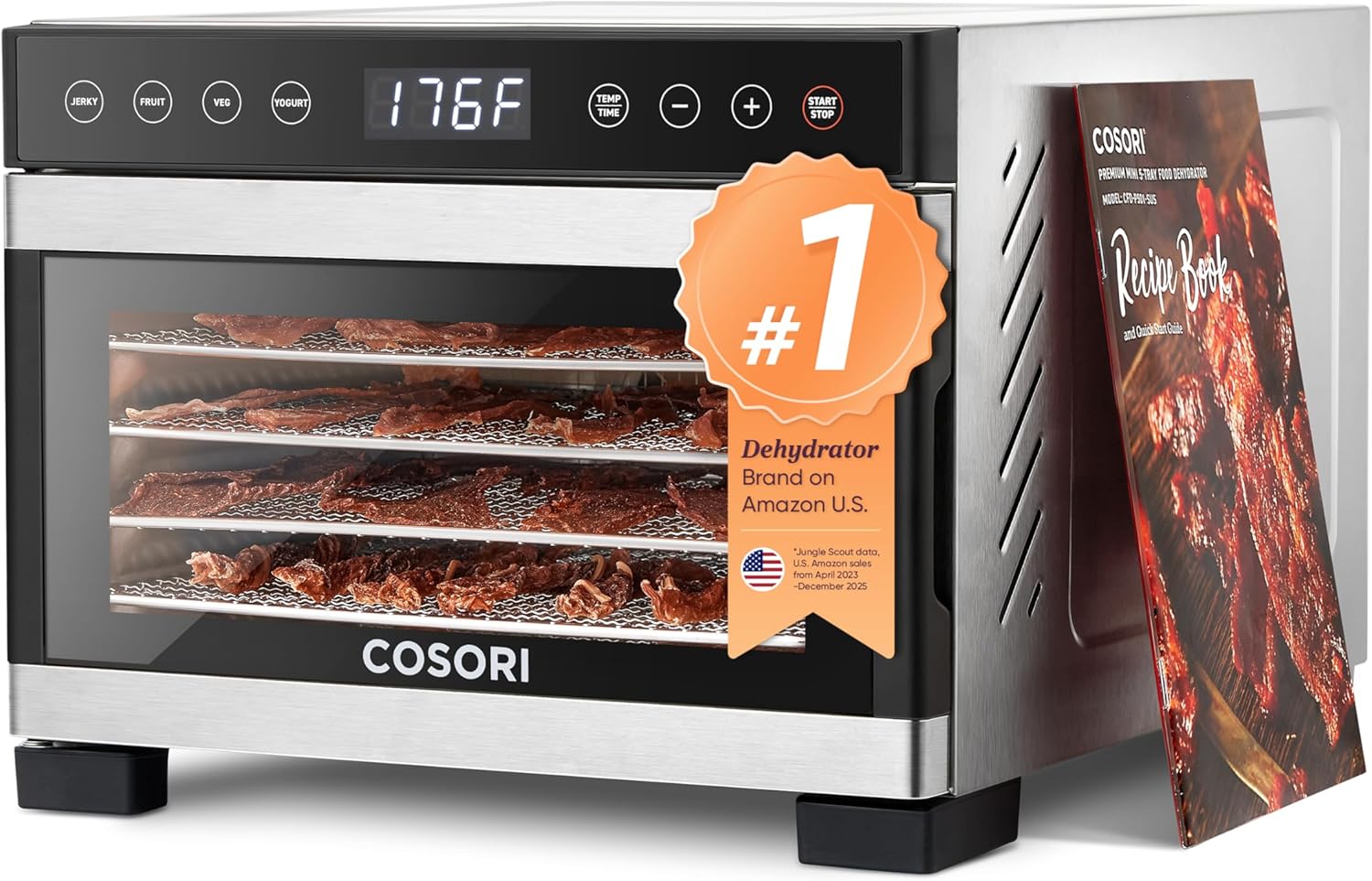
Finding the right machine involves carefully evaluating tray capacity, motor wattage, and maximum temperature limits to suit various dietary preferences and snack styles. Several stainless steel and stackable dehydrators are specifically designed to process different types of meat effectively right on kitchen countertops without unnecessary complexity or excessive storage strain.
As an Amazon Associate, StacyLaughs earns from qualifying purchases.
Buying guide
Temperature Control for Meat Safety
Managing heat levels correctly is essential when preparing homemade beef jerky to ensure food safety. Different dehydrators offer varying maximum temperature limits, ranging from one hundred fifty-eight degrees up to one hundred ninety degrees Fahrenheit. Selecting a unit with adequate thermal output allows you to reach the temperatures recommended by food safety authorities for processing raw meat into stable snacks.
Precise digital thermostats make it easier to dial in exact degrees rather than guessing with basic dials. Units featuring single-degree adjustments help you maintain steady heat throughout long drying cycles. Always match your machine capability to your preferred meat recipes to achieve properly dried jerky without compromising texture or safety.
Tray Material and Construction Quality
The material of your dehydrator trays directly impacts durability, cleaning ease, and food contact safety. Stainless steel trays are popular for meat processing because they resist corrosion, handle heavy loads of marinated strips, and withstand frequent dishwasher cleaning. Plastic or polycarbonate options offer lighter weight and lower cost but may show wear over time.
Evaluating the edge design and mesh density of your trays helps prevent meat from sticking during the drying process. Rolled edges provide safer handling, while fine mesh spacing ensures small pieces do not fall through. Investing in robust tray construction ensures your appliance survives years of regular jerky preparation.
Airflow Systems and Rotation Needs
Consistent airflow is vital for removing moisture evenly from thick strips of meat placed across multiple levels. Dehydrators use either vertical airflow from a base motor or horizontal airflow driven by rear-mounted fans. Rear fan systems typically circulate hot air uniformly across every tray, eliminating the tedious task of manually rotating trays halfway through a drying cycle.
Vertical stackable models may occasionally require you to shuffle trays around if airflow is unevenly distributed from the bottom heating element. Understanding how your chosen dehydrator circulates air helps you load meat strips properly and achieve uniform dryness without spoiled patches or trapped moisture.
Capacity and Countertop Footprint
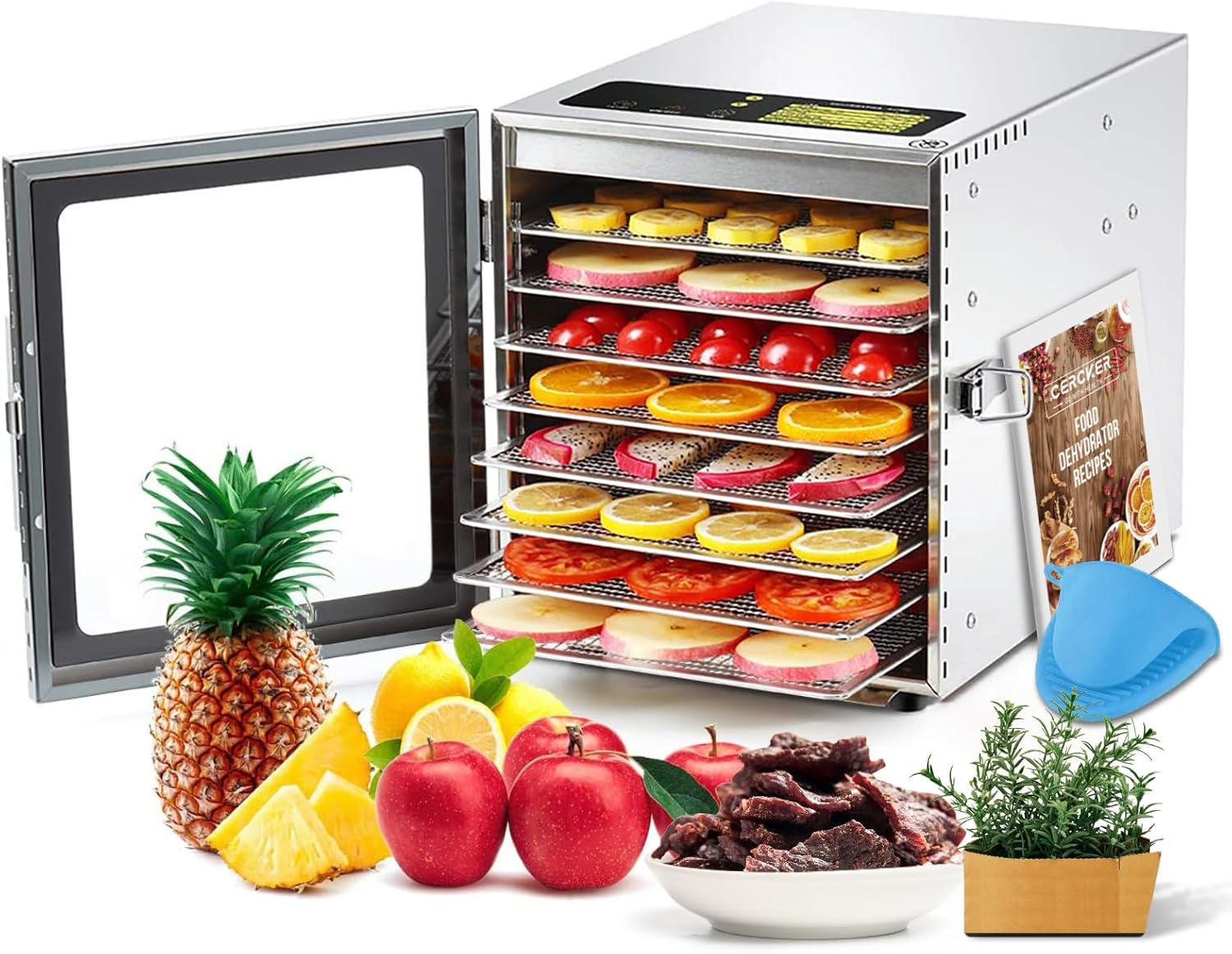
Assessing your batch size requirements prevents you from purchasing a machine that is either too small or overwhelmingly large. Compact five-tray units fit easily on crowded kitchen counters and suit occasional snack makers. Larger models featuring eight to twelve trays handle massive quantities of meat at once, making them ideal for large families or commercial users.
Keep in mind that larger drying capacities require significantly more storage space and heavier lifting when cleaning up after a large batch. Measure your available kitchen counter space and cabinet clearance before selecting a dehydrator to ensure it fits comfortably in your home cooking environment.
Motor Power and Energy Efficiency
Motor wattage dictates how quickly a food dehydrator heats up and maintains its target temperature during extended processing runs. Higher wattage units, ranging from five hundred to one thousand watts, heat rapidly and power large fans effectively. Lower wattage models consume less electricity but may require longer drying times when processing dense meat cuts.
Balancing power consumption with drying speed ensures efficient snack production without driving up your monthly utility bills. Look for motors designed for continuous operation equipped with reliable thermal protection to prevent overheating during multi-hour jerky sessions. Proper motor sizing extends the overall lifespan of your appliance.
Cleaning Ease and Maintenance Features
Maintaining a clean dehydrator is crucial after processing raw marinated meat, sticky glazes, and savory spice rubs. Removable stainless steel trays that are dishwasher safe save considerable time and effort during routine cleanup. Drip trays placed at the bottom of the drying chamber catch falling debris and prevent sticky marinades from bonding to internal heating components.
Smooth interior walls, removable drip trays, and spill-resistant digital control panels further simplify routine maintenance after each intensive drying session. Following manufacturer guidelines for cleaning and part removal ensures your appliance remains hygienic and fully operational for years of reliable homemade jerky making, protecting your long-term investment in culinary equipment.
Frequently asked questions
What temperature should I use when making beef jerky in a dehydrator?
When making beef jerky, food safety authorities recommend heating the meat to one hundred sixty-five degrees Fahrenheit to eliminate potential bacteria. Many modern dehydrators feature adjustable thermostats that easily reach between one hundred sixty-five and one hundred ninety degrees Fahrenheit. Setting your machine within this upper thermal range ensures your meat dries safely while achieving the classic leathery texture required for shelf-stable jerky. Always verify your specific model maximum temperature setting before starting a batch of raw meat.
Do I need to rotate trays during the jerky drying process?
Whether you need to rotate your trays depends entirely on the internal airflow design of your dehydrator. Models equipped with rear-mounted fans and horizontal airflow circulate hot air evenly across every tray simultaneously, eliminating the need to manually rotate them. Conversely, vertical airflow dehydrators with heating elements located at the base often require you to shuffle trays periodically to ensure even drying. Check your appliance specifications and design features to determine if manual rotation is necessary for your specific machine.
How much meat can I put in a standard food dehydrator?
The amount of meat you can dehydrate at one time varies greatly depending on the tray count and total surface area of your machine. Compact five-tray countertop models typically accommodate smaller batches suitable for casual snacking. In contrast, large commercial or heavy-duty units featuring twelve stainless steel trays can process fifteen to twenty-five pounds of beef in a single session. Always space your meat strips in a single layer without overlapping to ensure proper airflow and consistent drying results.
Are stainless steel trays better than plastic trays for making jerky?
Stainless steel trays are widely favored for making jerky due to their superior durability, corrosion resistance, and ease of cleaning. They handle heavy loads of marinated meat without bending and can safely go into the dishwasher for hassle-free sanitization. While plastic or polycarbonate stackable trays offer a lightweight and cost-effective alternative, stainless steel provides better longevity and a more robust surface for handling savory meat glazes and high-heat drying cycles over years of frequent use.
How long does it take to dehydrate meat for jerky?
The drying time for homemade jerky generally ranges from four to twelve hours, depending on factors such as meat thickness, moisture content, slice width, and dehydrator wattage. Thinner slices dry much faster, while thicker cuts require extended processing times. Operating your machine at higher temperatures can also accelerate the drying cycle. It is important to check your jerky periodically during the final hours of processing to achieve your preferred texture without over-drying the meat.