Appliances · Buying Guide
Best Meat Grinder Black Friday Picks for Home Processing
Preparing fresh cuts, sausages, and ground meats at home requires reliable motor power and sturdy mechanical attachments. Finding the right electric meat grinder during seasonal shopping events involves looking closely at motor wattages, grinding plate sizes, and included accessories tailored directly to your everyday kitchen tasks.
This product overview examines five distinct electric grinders ranging from compact everyday models to multi-functional digital units featuring preset controls and large storage compartments. By carefully reviewing their stated specifications, physical dimensions, processing capacities, and design traits, home cooks can select a suitable appliance for processing beef, pork, venison, and creating homemade sausages and custom burger patties efficiently.
As an Amazon Associate, StacyLaughs earns from qualifying purchases.
Buying guide
Evaluating Motor Power and Wattage Ratings
Selecting an electric meat grinder starts with understanding motor specifications and electrical requirements. Manufacturers often list both a standard running wattage and a peak locked-rotor wattage. Standard wattage reflects normal continuous operational draw, while peak wattage indicates the maximum temporary power delivered during heavy resistance loads or unexpected stalls.
Higher wattage ratings help process tougher cuts of meat, wild game venison, or soft bones without stalling the internal mechanism. Home cooks who regularly process bulk quantities should look for robust copper motors that deliver consistent torque under pressure. Balancing power requirements with your typical batch size ensures efficient performance during busy meal preparation windows and seasonal cooking projects.
Understanding Grinding Plates and Texture Control
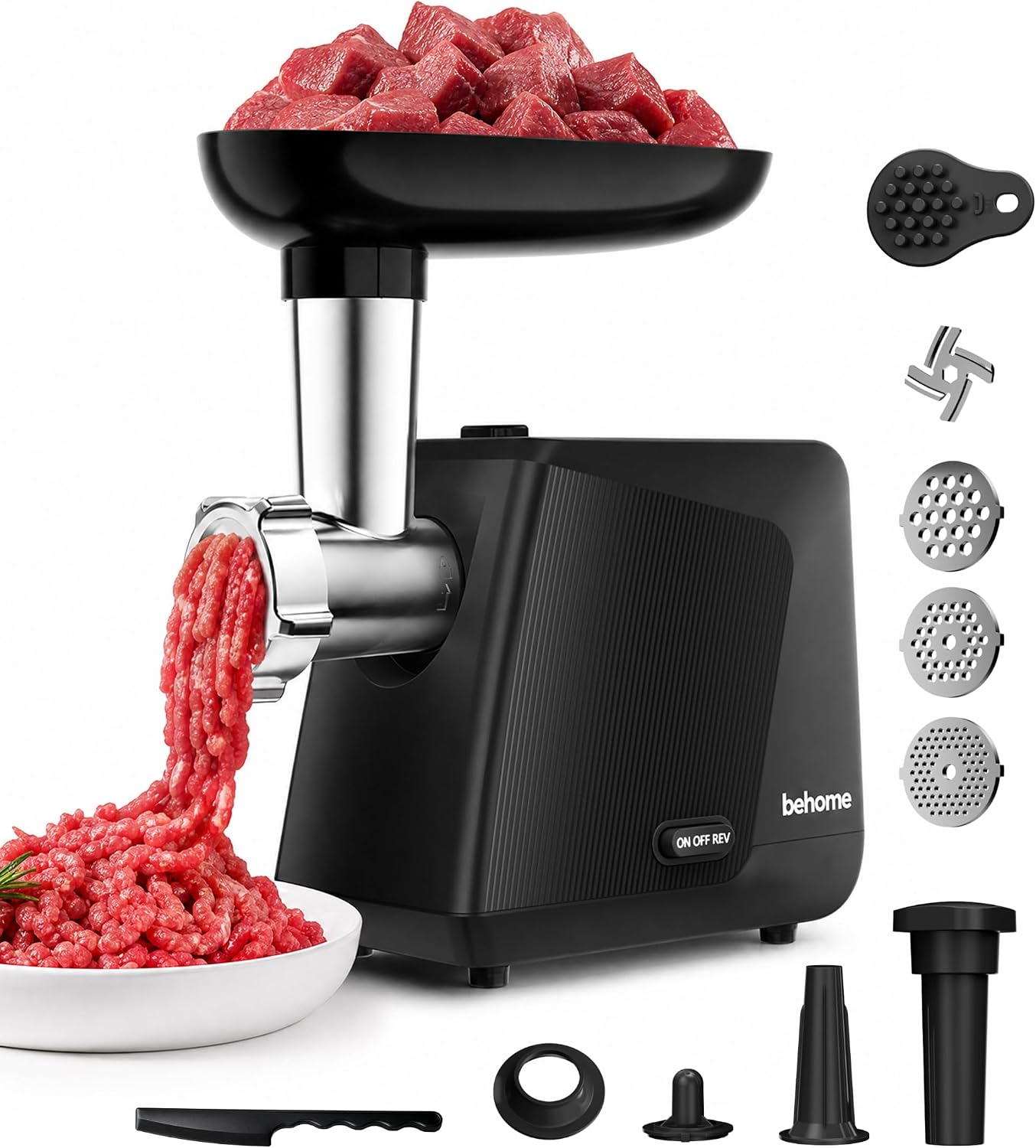
Grinding plates dictate the final texture of your minced meat, homemade sausage fillings, or custom burger patties. Most units include multiple stainless steel plates featuring varying hole diameters, typically ranging from fine two-millimeter options up to coarse seven-millimeter versions. Fine plates work well for smooth meat spreads, while medium options handle standard meatballs and taco fillings.
Medium and coarse plates suit chili blends, chunky sausages, and thick burger patties. Reviewing the available plate sizes included with a grinder helps determine whether the machine can comfortably accommodate your specific family recipes. Having multiple texture choices provides greater versatility for everyday cooking, holiday meal planning, and specialized home meat processing projects.
Assessing Versatility and Attachment Options
Modern electric meat grinders often function as multi-purpose kitchen assistants far beyond basic mincing. Many models supply specialized plastic or metal tubes for stuffing homemade sausage casings and attachments for shaping traditional middle eastern kubbe dishes. Some advanced package configurations even incorporate rotary cheese graters, vegetable slicers, and dedicated burger presses.
Evaluating these extra components ensures you select a machine matching your intended recipe repertoire and cooking habits. If you frequently make breakfast links, bratwurst, or stuffed appetizers, dedicated sausage tubes are essential inclusions. Choosing a model with comprehensive attachments reduces the need for standalone single-use kitchen gadgets cluttering up your valuable storage cabinets and countertops.
Cleaning Requirements and Material Care
Maintenance requirements play a significant and practical role in long-term appliance satisfaction. Many meat grinder components feature stainless steel, aluminum, or alloy constructions that react very differently to specific cleaning methods. While certain stainless steel cutting blades and plates frequently tolerate dishwasher cycles, aluminum and coated alloy parts typically require gentle manual hand washing.
Exposing aluminum components to harsh dishwasher detergents or high water temperatures can cause surface discoloration, oxidation, or material corrosion over time. Promptly drying all washed parts with a soft towel helps preserve their protective finish and prevent rusting. Reviewing manufacturer cleaning guidelines before purchase prevents accidental damage and extends the operating lifespan of your electric grinder.
Safety Features and Anti-Jam Controls
Operating powerful kitchen machinery requires dependable safety mechanisms and protective controls. Look for units equipped with electrical overload protection and motor thermal sensors that automatically shut down the appliance if overheating occurs during heavy processing tasks. A sturdy plastic food pusher is also essential for guiding ingredients safely into the feeding chute without direct finger contact.
Additionally, reverse button controls offer an easy way to clear accidental meat jams without dismantling the entire grinding head assembly. These operational safeguards protect the internal motor from permanent damage while supporting a much smoother grinding experience during busy food preparation and busy holiday cooking sessions in your home kitchen environment.
Storage Design and Countertop Footprint
Kitchen appliance storage requires careful consideration of physical dimensions and accessory organization. Some electric grinders feature built-in accessory storage compartments directly integrated into the housing unit. These convenient compartments keep various grinding plates, cutting blades, and stuffing tubes neatly organized, preventing misplaced accessories in crowded kitchen drawers or storage cabinets.
Conversely, units lacking built-in storage compartments require separate plastic containers to keep loose metal parts together safely. Measuring your available countertop space, depth, and upper cabinet clearance before buying ensures the selected appliance fits comfortably in your kitchen workspace during active food preparation, sausage making, and meat processing days without causing unnecessary kitchen crowding.
Frequently asked questions
What is the main purpose of the reverse button on an electric meat grinder?
The reverse button serves as an essential anti-jam control designed to help clear out food blockages during active processing. When grinding fibrous meats, tough connective tissues, or larger chunks, ingredients can occasionally wrap around the internal auger and cause the motor to slow down or stall. Briefly pressing the reverse switch makes the auger spin backward, dislodging the trapped material and pushing it back toward the feeding chute. This quick action resolves jams safely without requiring you to disassemble the entire grinding head assembly.
Can I put my electric meat grinder attachments in the dishwasher?
Dishwasher safety depends entirely on the specific materials used in the grinder's components and the manufacturer instructions provided. While certain stainless steel cutting blades and grinding plates tolerate standard dishwasher cycles, aluminum and coated alloy parts usually require careful hand washing. Exposing aluminum components to harsh dishwasher detergents and high water temperatures can cause surface discoloration, oxidation, or material corrosion over time. Always review the manufacturer care guidelines before cleaning to protect the finish and extend the appliance's lifespan.
How do I prevent my meat grinder from overheating during heavy use?
Preventing motor overheating involves managing continuous run times and avoiding overly tough ingredients. Most manufacturers recommend limiting continuous operation to under ten minutes per session, especially when processing bulk quantities of meat during hunting season. Giving the motor short rest intervals allows internal heat to dissipate properly through the ventilation holes. Furthermore, you should avoid feeding extremely hard bones, thick skin, or dense tendons into the machine, as these items create excessive resistance that strains the motor.
What is the difference between fine, medium, and coarse grinding plates?
Grinding plates feature different hole diameters that dictate the final texture of your processed food ingredients. Fine plates, typically around two millimeters, produce smooth textures suitable for pâtés, spreads, or finely textured meat fillings. Medium plates work well for standard hamburger patties, meatballs, and taco mixtures. Coarse plates feature larger holes that suit chili blends, chunky sausages, and rustic meat preparations. Using the appropriate plate allows you to customize food texture for specific recipes and personal culinary preferences.
Do I need to assemble the cutting blade when making homemade sausages?
Manufacturer instructions for many electric meat grinders explicitly state that you should not install the cutting blade when using sausage stuffing attachments or forming shaped meat slices. Instead, you typically grind your seasoned meat first using the appropriate grinding plate and blade. Once the meat is fully ground, you remove the cutting blade and reassemble the machine with the sausage tube and casing. Feeding the pre-ground meat back through the machine allows the auger to push it smoothly into casings without over-processing.