Appliances · Buying Guide
Best Electric Meat Grinder Models for Processing Bones at Home
Finding a reliable appliance capable of handling tough processing tasks like bone grinding requires looking closely at motor power, physical dimensions, and material build. Home cooks, hunters, and dedicated pet owners often need specialized machines that transition smoothly from standard meat mincing to tackling tough poultry bones and large batch food preparation with confidence.
The marketplace offers several heavy-duty options designed specifically for these demanding workloads. Evaluating physical specifications such as wattage, hourly throughput capacity, machine footprints, and included attachments helps determine which unit matches your specific culinary or pet-feeding routines without unnecessary guesswork or unexpected compatibility surprises during daily kitchen operations.
As an Amazon Associate, StacyLaughs earns from qualifying purchases.
Buying guide
Motor Power and Wattage Ratings
When selecting an appliance designed to process bones, evaluating the motor wattage and horsepower is a critical first step. Motors ranging from 950 watts up to high-horsepower commercial units provide the torque necessary to break down tough animal tissues and small poultry bones without stalling. Higher wattage ratings typically indicate a stronger capability to handle dense materials continuously.
Buyers should differentiate between peak wattage and continuous rated power when reviewing machine specifications. A motor built with pure copper wiring generally offers better thermal stability during prolonged grinding sessions. Ensuring the motor includes cooling systems or built-in circuit protection helps safeguard the appliance during demanding bone-processing tasks.
Material Composition and Cleaning Requirements
Kitchen grinders feature various metal combinations that directly influence durability and maintenance routines. Stainless steel bodies, trays, and cutting blades resist corrosion well and often support dishwasher sanitation. However, internal components like augers or outlets frequently consist of aluminum alloy which requires careful hand washing with neutral detergents.
Following manufacturer guidelines for cleaning prevents metal discoloration and extends the operational lifespan of the appliance. Protective anti-rust coatings applied to metal parts prior to first use must be washed off thoroughly. Understanding these material distinctions ensures you choose a machine whose maintenance demands align with your daily kitchen habits.
Throughput Capacity and Batch Volume
The volume of meat and bone you intend to process in a single session dictates the required machine capacity. Heavy-duty commercial units can process significant pounds of product per minute, making them ideal for hunters or small businesses. Compact models process smaller batch sizes suited for single family meals or pet food preparation.
Matching the feed tray size and internal auger capacity to your typical batch size prevents unnecessary reloading delays. Larger throughput machines reduce total preparation time when handling bulk game or multiple pounds of poultry frames. Assess your typical portion sizes to select a grinder with appropriate hourly processing capabilities.
Included Plates and Attachment Versatility
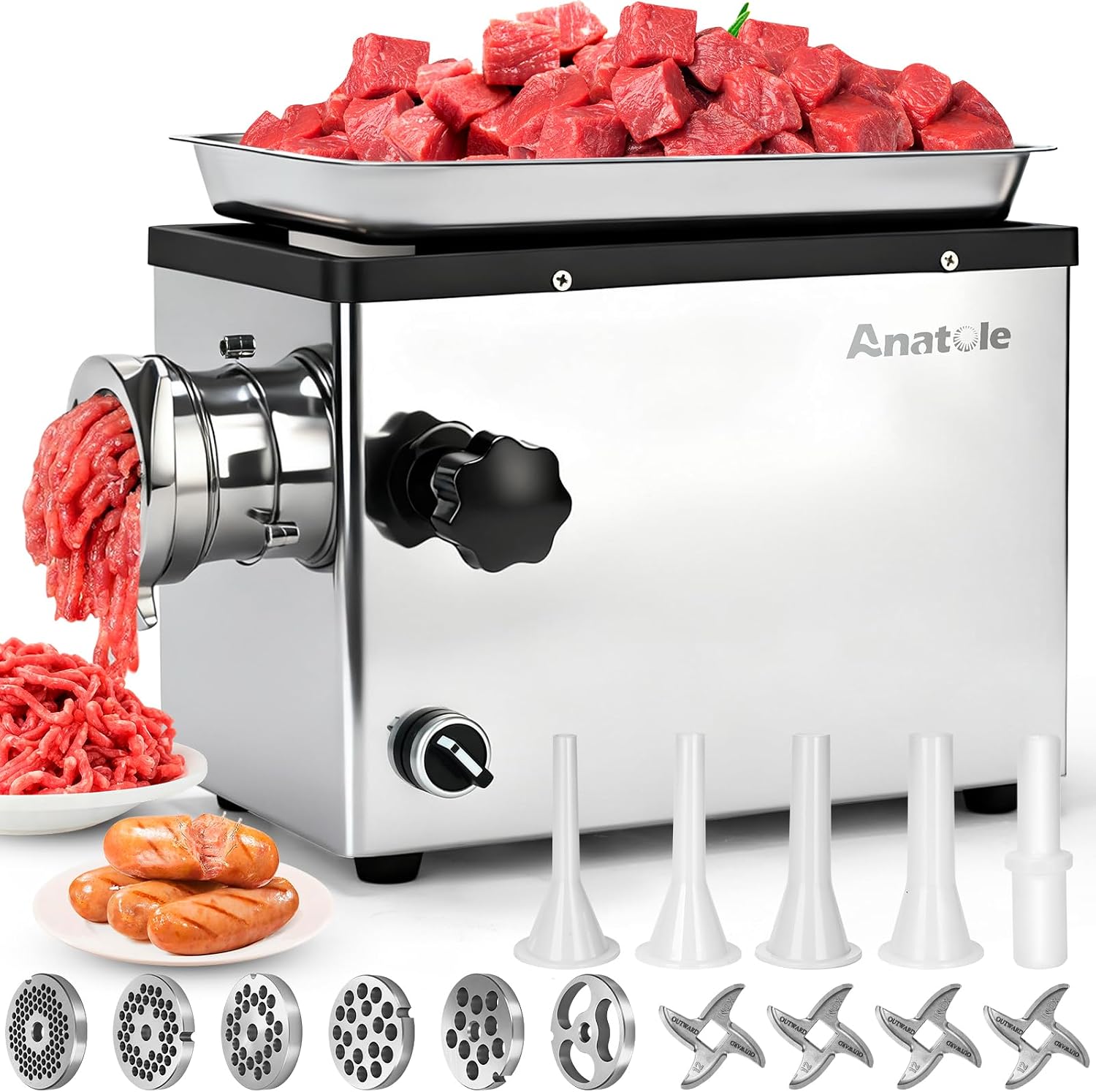
Grinding versatility depends heavily on the variety of plates, blades, and specialized tubes included with the machine. Multiple grinding plate sizes ranging from fine to coarse allow users to adjust the texture of minced meat, pet food, or sausage fillings. Extra attachments like sausage stuffers and meatball formers expand the utility of the appliance.
Reviewing the number of cross blades and plates supplied in the base package helps determine if additional accessories need to be purchased separately. Interchangeable plates dictate how finely chicken or fish bones can be processed. Selecting a model with diverse attachments ensures flexibility across different culinary and pet-feeding recipes.
Physical Footprint and Countertop Space
Grinder dimensions vary significantly between compact home models and heavy industrial units. Measuring your available countertop space and cabinet storage dimensions is essential before making a selection. Units with compact designs minimize their physical footprint while maintaining efficient internal feed mechanisms.
Heavier commercial machines often weigh upwards of twenty to sixty pounds, making them stationary additions to a kitchen or workspace. If you plan to store the appliance away between uses, a lighter, more compact profile provides easier lifting and handling. Balance your spatial limitations against the mechanical power you require.
Operational Noise and Vibration Control
Processing tough materials like bones naturally generates mechanical noise and vibration during operation. Models featuring built-in vibration-dampening designs, stable non-slip feet, and noise-control technology help minimize sound levels and prevent the machine from shifting across the countertop.
Evaluating the chassis stability ensures safer operation when the motor tackles dense animal bones or large meat chunks. Rubber feet and balanced internal components contribute to a steadier user experience. Reviewing these structural stability attributes helps maintain a controlled kitchen environment during heavy processing sessions.
Frequently asked questions
Can every electric meat grinder process animal bones?
No, only heavy-duty models equipped with powerful motors, typically rated at high wattages or horsepower, are designed to handle bones such as chicken or fish bones. Standard light-duty kitchen grinders lack the necessary torque and structural durability. Attempting to grind hard bones in an underpowered machine can cause motor stalls, gear damage, or internal jams. Always check the manufacturer specifications to confirm whether bone grinding is a supported application for that specific appliance model.
What is the difference between stainless steel and aluminum alloy parts?
Stainless steel parts offer high corrosion resistance, durability, and typically dishwasher-safe cleaning convenience for heavy kitchen use. Aluminum alloy components, often used for internal parts like augers, food outlets, and fixing nuts, generally require manual hand washing with neutral detergents to prevent discoloration or surface wear. Reviewing the material breakdown for each removable component helps you understand the specific cleaning and maintenance routine required after every processing session.
How do I prevent the grinder from clogging when processing meat and bones?
Preventing clogs involves cutting meat and soft bones into appropriately sized pieces that fit easily down the feed chute without forcing. Many grinders feature a handy reverse function that instantly clears jammed material by running the auger backward. Using the included food pusher rather than fingers ensures safe feeding pressure. If a blockage still occurs, turning off the machine and removing the outlet housing allows you to clear the obstruction safely.
Are sausage stuffing tubes and extra plates usually included?
Most heavy-duty and multi-functional electric grinders include a selection of stainless steel grinding plates in varying hole sizes along with multiple sausage stuffing tubes and cross blades. These accessories allow users to customize textures for burgers, meat sauces, sausages, or pet food. Checking the exact package contents ensures you receive the specific plate sizes and stuffing diameters needed for your preferred homemade recipes without needing immediate replacements.
Why do metal parts arrive with an anti-rust coating?
New metal components on food processing appliances are routinely coated with a protective anti-rust oil during manufacturing to prevent oxidation while in transit or storage. Manufacturers explicitly advise washing all metal parts thoroughly in warm detergent water before initial use to remove this coating. Removing any protective plastic films from the outer body housing is also necessary before operating the appliance for the first time in your kitchen.