Appliances · Buying Guide
Best Meat Grinders for Home Kitchens and Bulk Food Prep
Finding the right meat grinder for home food preparation involves carefully evaluating motor power, plate sizes, and included attachments to match your specific cooking style. Whether you are processing bulk game meat during hunting season or preparing fresh burger patties for weekend family gatherings, having a dependable kitchen appliance significantly simplifies the task and saves valuable time.
Modern electric meat grinders offer various physical configurations, ranging from compact multi-functional units featuring digital touchscreens to heavy-duty stainless steel machines built for continuous household use. By reviewing the physical dimensions, wattage, and accessory kits of leading options, you can select a grinder that fits your specific counter space and processing requirements efficiently.
As an Amazon Associate, StacyLaughs earns from qualifying purchases.
Buying guide
Motor Power and Wattage Ratings
Motor wattage is a primary factor when selecting an electric meat grinder for your home kitchen. Rated power indicates continuous operational capacity, while peak or locked motor wattage shows the maximum burst strength available for handling tough cuts of meat or sudden jams. Units with higher wattage ratings process larger volumes quickly, making them ideal for hunters or households preparing bulk batches of venison, beef, or pork during busy seasons.
However, higher wattage motors often come with operational time limits to prevent overheating during extended grinding sessions. Buyers should match the motor strength to their typical batch sizes. Occasional users prepping small quantities of burger patties require less continuous power, whereas frequent cooks processing game meat benefit significantly from robust copper motors equipped with thermal protection features.
Grinding Plates and Aperture Sizes
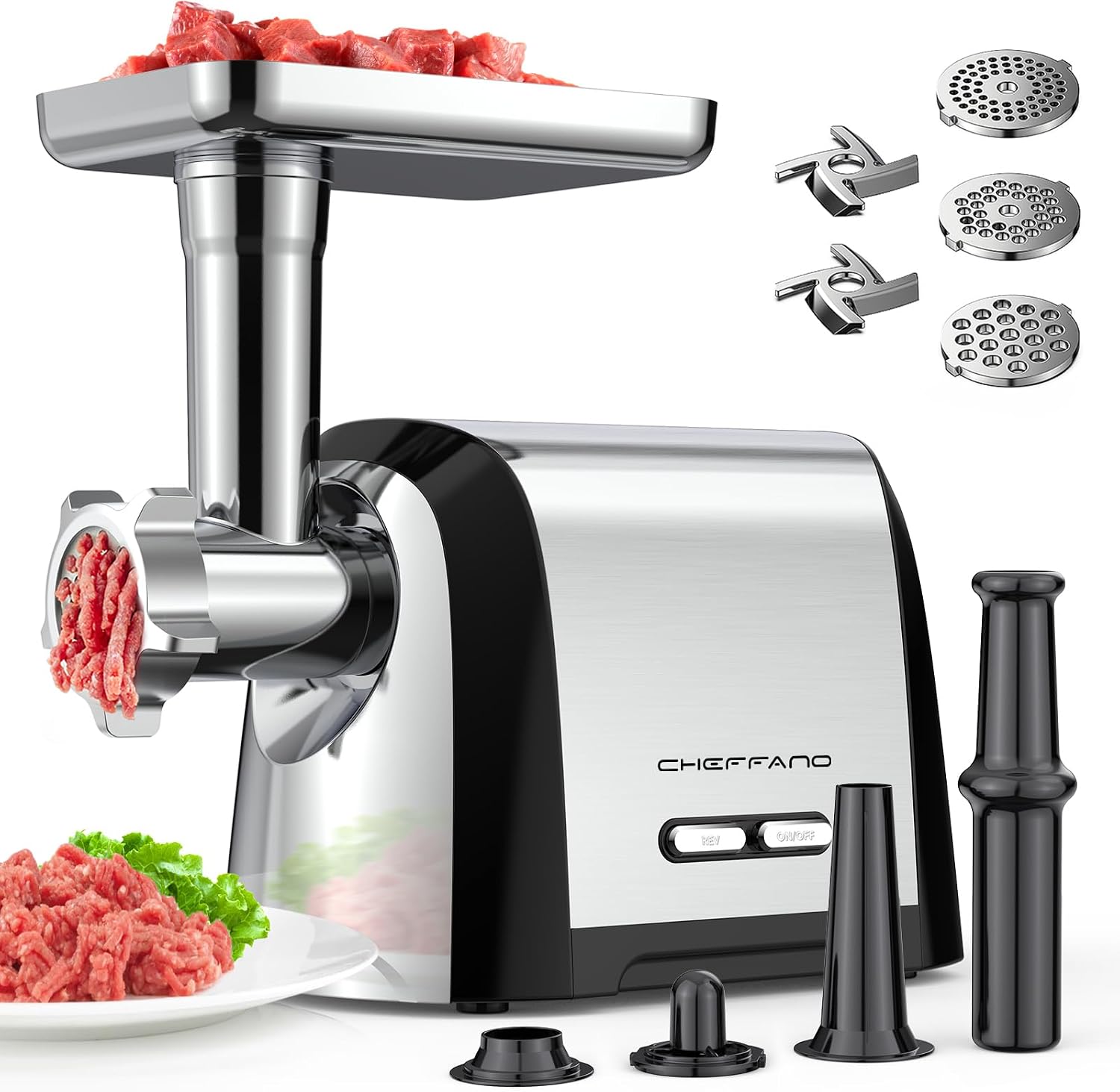
Grinding plates determine the texture and fineness of your processed meat, influencing recipes ranging from fine sausage fillings to coarse chili grinds. Most electric models include multiple stainless steel plates with varying hole diameters, such as two millimeter, five millimeter, and seven millimeter options. Smaller apertures produce smooth textured results suitable for spreads and fine sausages, while larger holes create coarser grinds ideal for traditional burgers.
Reviewing the included plate selection helps ensure the appliance accommodates your specific culinary preferences. Interchangeable plates allow home cooks to experiment with different recipes without purchasing separate specialty tools. Maintaining these steel components properly through recommended washing methods keeps the cutting edges sharp and ensures consistent texture results across every household food preparation session.
Attachment Versatility and Multi-Use Kits
Modern meat grinders frequently double as multi-functional kitchen assistants by including specialized attachment kits for various food preparation tasks. Common accessories include sausage stuffer tubes in multiple sizes, kubbe makers for traditional middle eastern dishes, and burger press sets. Some advanced appliances even integrate rotary cheese graters and vegetable slicing attachments, turning a single countertop machine into a versatile food processing station.
Evaluating these included components ensures you select a model matching your daily cooking ambitions. If you regularly make homemade sausages or process vegetables alongside meat, choosing a machine with an extensive accessory kit provides greater convenience. Storage considerations also matter, as units with built-in storage compartments help keep numerous tubes, blades, and plates neatly organized within your kitchen cabinets.
Physical Dimensions and Countertop Footprint
Kitchen counter space and storage availability heavily influence which meat grinder model suits your household. Heavy-duty commercial-style grinders often feature extended lengths and substantial weight to maintain stability during high-speed processing, requiring dedicated storage space in larger pantries or deep cabinets. In contrast, compact models with streamlined vertical designs fit easily on standard countertops without overwhelming your cooking workspace.
Examining the listed dimensions—length, width, and height—prevents unexpected placement issues upon delivery. Buyers with limited kitchen space should look for streamlined units that still offer sufficient motor capacity. Additionally, checking whether the appliance includes built-in accessory storage can significantly reduce counter clutter by keeping all detachable tubes and cutting plates contained inside the main housing structure.
Ease of Cleaning and Maintenance Requirements
Proper cleaning and maintenance are essential for extending the lifespan and hygiene of any electric meat grinder. Most models feature fully detachable cutting heads, feed screws, blades, and plates that simplify the post-cooking cleanup process. However, manufacturer guidelines regarding dishwasher safety vary significantly. While stainless steel blades and plates on certain units tolerate automatic dishwashers, aluminum or alloy components typically require gentle hand washing.
Adhering to specific maintenance instructions prevents metal oxidation, discoloration, and premature wear on moving parts. Drying detachable components promptly with a soft cloth after rinsing protects the structural integrity of alloy parts. Understanding these upkeep requirements before purchasing helps you choose a machine whose cleaning routine aligns comfortably with your household schedule and kitchen habits.
Safety Features and Jam Prevention Mechanisms
Safety mechanisms are critical components when operating powerful kitchen appliances equipped with sharp cutting blades and high-torque motors. Quality meat grinders often incorporate secure locking knobs to keep the grinding head firmly attached during operation, along with thermal overload protection that automatically shuts the unit down if overheating occurs. Food pushers are also included to keep fingers safely away from the feed screw intake during use.
Jam prevention features, such as dedicated reverse buttons or intelligent auto-reverse systems, further enhance usability by clearing trapped sinew or meat chunks without requiring complete disassembly. These operational safeguards provide peace of mind during intensive food prep sessions. Prioritizing models with robust safety and unclogging mechanisms ensures a smoother, more secure grinding experience for home cooks of all skill levels.
Frequently asked questions
What is the difference between rated power and locked motor wattage in meat grinders?
Rated power indicates the continuous electrical wattage a meat grinder consumes during normal operation, reflecting its sustained performance level for everyday kitchen tasks. Locked motor wattage represents the maximum burst strength the motor can achieve under heavy loads or sudden resistance, such as encountering a tough piece of meat or gristle. High locked power helps the appliance push through difficult batches without stalling. Understanding both metrics helps users gauge whether a specific grinder is built for light household meal prep or heavy-duty bulk processing.
Can electric meat grinders process animal bones?
Most standard electric meat grinders designed for home kitchen use are not built to process hard animal bones, tendons, or tough skin. Attempting to grind bones can severely damage the cutting blades, strip internal gears, or overload the motor, potentially voiding the appliance performance. If you want to prepare raw pet food containing bone fragments, specialized commercial equipment or specific heavy-duty attachments designed explicitly for bone grinding are required. Always check manufacturer instructions before processing challenging ingredients.
How do grinding plate sizes affect the texture of minced meat?
Grinding plate hole sizes directly dictate the fineness or coarseness of your finished meat product. Smaller aperture plates, such as two or three millimeter sizes, produce fine grinds ideal for smooth textures, spreads, and delicate breakfast sausages. Medium plates around five millimeters offer a versatile texture suitable for standard burger patties and meatballs. Larger plates measuring seven millimeters yield coarse grinds that mimic traditional butcher cuts, perfect for chunky chili or robust bratwurst fillings. Using interchangeable plates customizes texture.
Are the parts of an electric meat grinder dishwasher safe?
Dishwasher safety varies depending on the specific model and the materials used in its construction. While stainless steel blades and cutting plates on many electric grinders tolerate dishwasher cycles, aluminum or alloy housing components and grinding heads generally require manual hand washing. Putting alloy parts in a dishwasher can cause oxidation, discoloration, or surface darkening. Always review manufacturer cleaning guidelines carefully and dry metal components promptly with a soft cloth to maintain their appearance and longevity.
What should I do if the meat grinder jams during use?
When a meat grinder jams due to sinew or tough meat wrapping around the internal blade, you should immediately stop the appliance using the power switch. Many modern electric grinders feature a dedicated reverse button or an intelligent auto-reverse system designed to spin the feed screw backward, releasing the trapped material without requiring complete disassembly. If the reverse function does not clear the obstruction, turn off the unit, unplug it, remove the grinding head, and clean the components manually.