Appliances · Buying Guide
Best minute rice in rice cooker picks for quick meals
Finding the right appliance to handle quick grains and everyday side dishes can completely transform your kitchen routine. When you want to prepare quick-cooking items like minute rice in a rice cooker, choosing a model with reliable heating technology and straightforward controls makes all the difference. Modern compact cookers offer automated cycles that take the guesswork out of meal preparation, allowing you to focus on other kitchen tasks while your grains reach the ideal texture.
Whether you need a tiny footprint for a dorm room or a programmable digital unit for versatile family meals, the market features dedicated options tailored to various lifestyles. Evaluating capacity, inner pot materials, and preset functions helps match your cooking habits with the right hardware. Below, we examine five popular countertop cookers using factual attributes to highlight how they perform when you prepare simple grains and everyday recipes.
As an Amazon Associate, StacyLaughs earns from qualifying purchases.
Buying guide
Evaluating Capacity and Physical Footprint
When selecting a countertop cooker for quick grains, matching the device capacity to your household size is essential. Compact units often measure under two quarts, yielding smaller portions ideal for individual users or tight kitchen layouts. Larger variants accommodate family meals while requiring more counter space.
Reviewing physical dimensions helps ensure the appliance fits comfortably beneath overhead cabinets or inside storage spaces. Manufacturers specify cooked versus uncooked metrics, so understanding these volume distinctions prevents overflow and ensures consistent results during everyday meal preparation.
Understanding Inner Pot Materials and Coatings
The interior bowl material directly affects heat distribution and food release during cooking cycles. Aluminum pots treated with nonstick or ceramic coatings prevent grains from scorching against the heating element. Stainless steel alternatives offer robust durability but often require careful temperature management.
Cleaning requirements also tie directly to bowl composition. Some removable pots support dishwasher cycles, while others specify hand washing to preserve protective coatings. Checking these maintenance guidelines ensures your cookware remains in top condition over years of regular use.
Navigating Digital Presets Versus Simple Switches
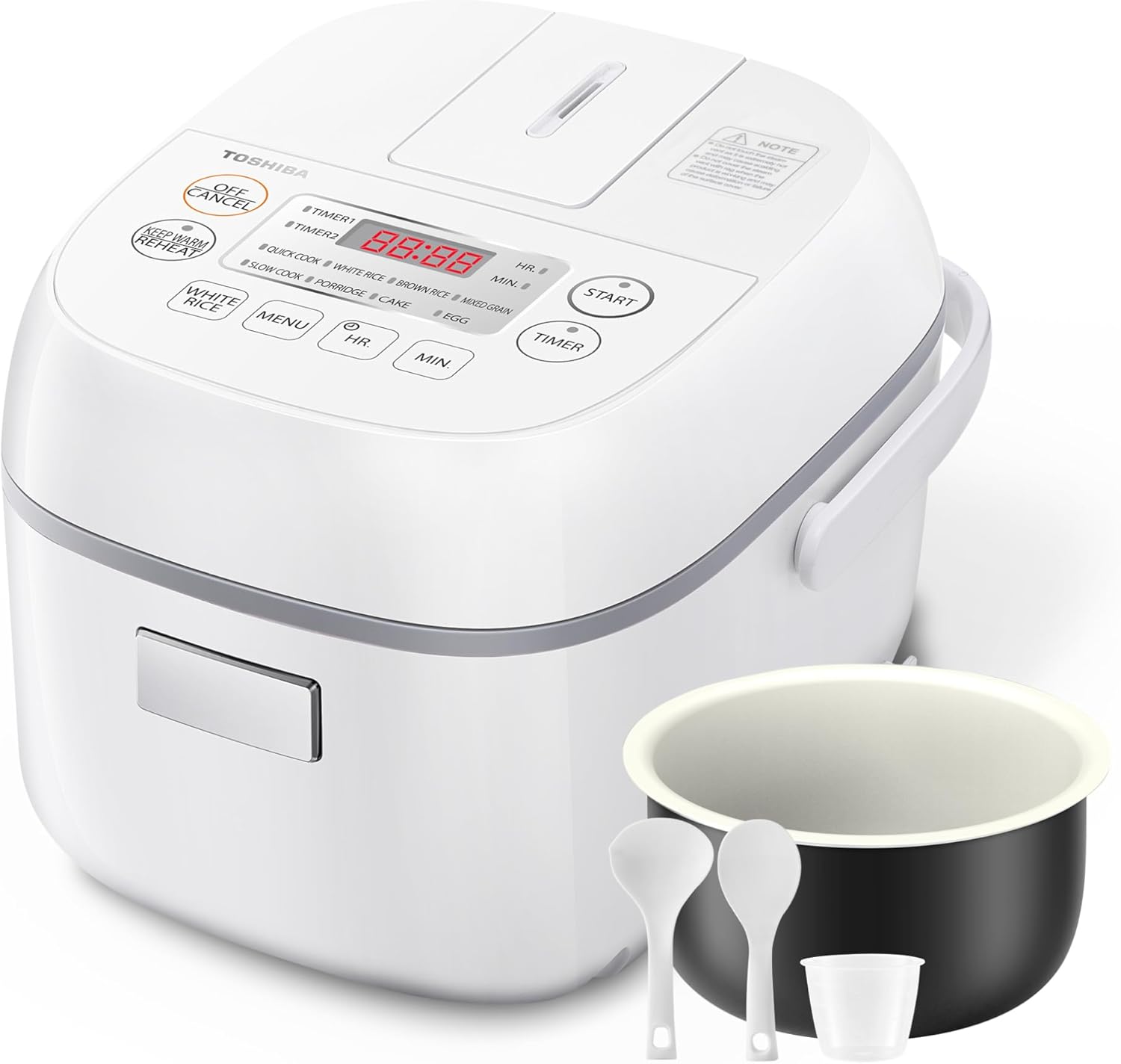
Control interfaces range from basic single-switch mechanisms to advanced digital LED panels with multiple presets. Simple switches offer immediate operation for standard grains without requiring menu selection. Programmable digital controls introduce specialized cycles for brown rice, oatmeal, or quick steaming.
Consider whether you benefit from advanced options like delay timers or automated temperature logic. While multi-preset panels provide culinary flexibility for diverse recipes, straightforward mechanical switches appeal to users prioritizing fast, uncomplicated operation every single day.
Utilizing Built-In Steaming Accessories
Many modern countertop cookers include dedicated steam trays or baskets designed to sit above the main cooking chamber. This configuration allows users to steam vegetables, fish, or poultry simultaneously while grains simmer below. Maximizing vertical space streamlines cooking workflows without requiring extra pans.
Checking accessory compatibility ensures you use the correct measuring tools provided with the hardware. Standard kitchen cups differ from manufacturer-specific scoops, making proper ratio adherence critical for achieving the desired texture in your finished dishes.
Managing Maintenance and Cleaning Routines
Keeping your appliance hygienic requires regular attention to both the inner pot and detachable components like steam vents or inner lids. Models featuring removable inner lids simplify the cleanup of starchy residue accumulation over time. Always review manufacturer instructions regarding dishwasher safety.
Adhering to recommended care practices prevents premature wear on nonstick surfaces and heating plates. Soaking pots briefly or using non-abrasive utensils protects the interior coating from scratches, maintaining reliable food release across hundreds of cooking cycles.
Assessing Power Specifications and Energy Use
Countertop grain cookers typically operate on standard household voltage while drawing varying wattage levels depending on their heating mechanisms. Lower-wattage models consume less electricity and fit well in dorm rooms or RVs, though heating times may vary compared to higher-powered units.
Advanced models utilizing multi-stage heating elements or fuzzy logic technology draw moderate power to coordinate temperature sensors across the bottom, sides, and lid. Balancing your electrical requirements with desired cooking speed helps optimize your kitchen setup.
Frequently asked questions
Can I cook quick-cooking grains like minute rice in a standard electric cooker?
Yes, standard electric cookers can handle quick-cooking grains, though you should adjust liquid ratios according to the grain packaging and manufacturer manual. Because quick varieties absorb moisture faster than raw brown or white rice, monitoring the initial water level prevents overly soft textures. Many appliances feature automatic Keep Warm modes that activate once the liquid is absorbed, ensuring your food stays at a serving temperature until you are ready to eat.
How do I determine the correct water-to-rice ratio when using a dedicated appliance?
Manufacturers usually provide specific ratio guidelines within their user manuals based on the exact measuring cup included with the device. It is important to use the provided scoop rather than standard kitchen measuring cups because sizing standards vary across brands. Adjusting water slightly up or down allows you to customize the firmness of your cooked grains according to personal preference without disrupting the heating cycle.
What is the difference between uncooked and cooked capacity measurements?
Uncooked capacity refers to the amount of dry grain you place into the pot before adding water, while cooked capacity indicates the total volume of finished food the appliance produces after expansion. For instance, a unit rated for one cup of dry grain typically yields about two cups of cooked food. Checking these ratings helps buyers select a model that fits their portion requirements without risking overflow during the simmering process.
Are removable inner pots safe to place in a household dishwasher?
Dishwasher compatibility depends entirely on the specific product guidelines provided by the manufacturer. Some aluminum pots feature dishwasher-safe nonstick coatings, while others explicitly require hand washing to protect exterior finishes and electrical contacts. Always review the product care instructions before placing any component into a dishwasher to prevent accidental damage to the nonstick surface or outer housing.
How does an automatic keep-warm function operate after the cooking cycle finishes?
Once the internal temperature sensors detect that liquid has been fully absorbed or the designated cooking time expires, the appliance automatically transitions into a low-heat keep-warm state. This prevents the food from overcooking or burning at the bottom of the pot while maintaining a safe serving temperature. The feature remains active until the unit is unplugged or manually reset, keeping your side dishes ready throughout mealtime.