Appliances · Buying Guide
Best Morphy Richards Soup Maker Alternatives for Fast Home Meals

Finding reliable countertop appliances to simplify daily meal preparation can completely transform your kitchen routine. When exploring options similar to a traditional morphy richards soup maker, shoppers often look for automated cooking cycles, intuitive digital controls, and easy cleanup routines that save valuable time during busy weekdays. Whether you want to whip up smooth vegetable purées, chunky stews, or nutritious morning beverages without constant stove monitoring, these multifunctional countertop cookers provide dedicated programs designed to handle multiple culinary tasks effortlessly.
Our curated selection examines top-rated alternatives featuring robust stainless steel construction, precise heating elements, and built-in safety sensors. By evaluating core capacities, preset cooking programs, and practical design attributes, you can easily select a machine that matches your household size and cooking habits. Reviewing these detailed product specifications ensures you invest in a reliable appliance tailored to your exact kitchen requirements.
As an Amazon Associate, StacyLaughs earns from qualifying purchases.
Buying guide
Evaluating Appliance Capacity and Serving Sizes
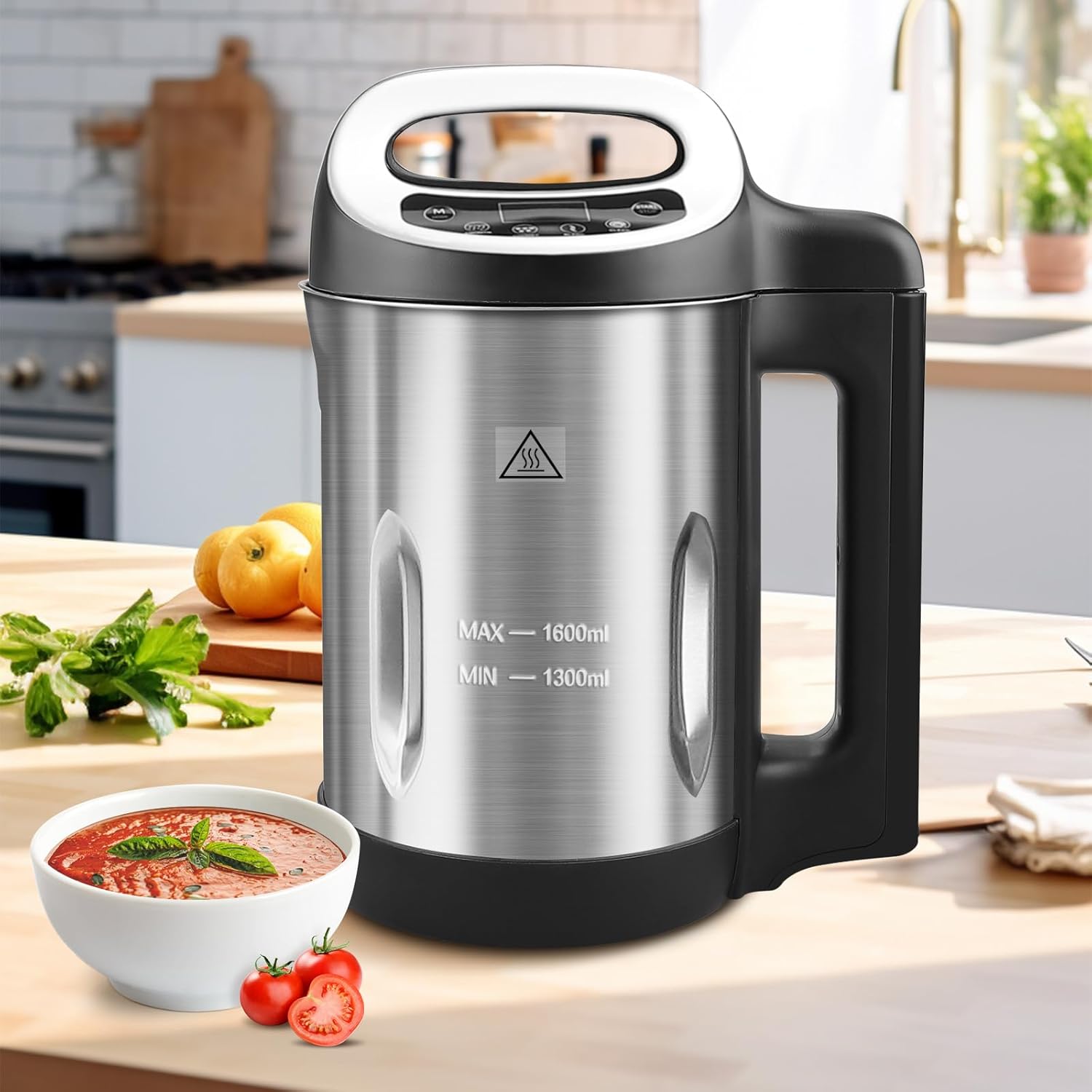
Selecting the correct bowl capacity depends entirely on your household size and typical meal habits. Smaller 1.3 to 1.6-liter models suit single users or couples preparing light appetizers or modest portions.
Larger two-liter configurations accommodate families of four to six, reducing the need for multiple cooking batches. Always review maximum and minimum fill lines to ensure safe operation.
Understanding Preset Programs and Cooking Modes
Modern countertop cookers feature diverse preset programs that automate heating, blending, and simmering cycles. Look for smooth and chunky settings to match your preferred soup texture without manual intervention.
Additional modes like compote, reheat, and blend expand appliance utility, allowing you to prepare morning smoothies, baby food, or fruit preserves using a single compact machine.
Material Construction and Durability Standards
Stainless steel construction provides long-lasting durability, corrosion resistance, and a sleek appearance that complements contemporary kitchens. BPA-free internal components ensure food safety during heated blending cycles.
Robust metal builds withstand daily thermal expansion while resisting staining from pigmented vegetables like tomatoes or squash, ensuring your appliance maintains its visual appeal over years of regular use.
Safety Sensors and Operational Protections
Built-in safety features prevent accidental kitchen mishaps during high-temperature cooking and blending routines. Overfill detection sensors alert you when liquid levels exceed maximum boundaries to avoid messy spills.
Anti-dry burn mechanisms protect internal heating elements if liquid drops below required minimum thresholds, giving you peace of mind while leaving the machine unattended during standard cooking cycles.
Maintenance Routines and Cleaning Convenience
Keeping your countertop cooker spotless is essential for hygiene and long-term performance. Many models include dedicated self-cleaning modes that loosen stuck food particles in minutes with water and detergent.
Always follow manufacturer guidelines regarding hand washing versus immersion to protect electrical bases. Units with accessible stainless steel interiors simplify wiping down residual oils after completing a batch.
Countertop Footprint and Storage Considerations
Kitchen layout dimensions dictate the ideal appliance footprint for your workspace. Measure available counter depth and vertical clearance beneath upper cabinets before purchasing taller vertical machines.
Compact designs fit easily into tight corners, whereas wider multi-liter cookers require dedicated surface space, making proper storage planning an essential step for maintaining an organized kitchen environment.
Frequently asked questions
Can these appliances handle raw meats alongside vegetables?
Yes, many countertop soup makers feature powerful stainless steel blades and heating elements designed to cook raw vegetables and small cuts of meat thoroughly during a standard twenty to thirty-minute cooking cycle. However, you should always cut meat into small, uniform pieces to ensure even heat distribution and proper blending consistency throughout the batch.
How does the self-cleaning function operate?
The self-cleaning function typically requires adding a small amount of water and dish soap into the pitcher, then selecting the clean mode on the digital control panel. The internal blades agitate the soapy water for a few minutes to loosen food residue, making it much easier to rinse the interior clean with minimal manual scrubbing afterwards.
What is the difference between smooth and chunky settings?
The smooth setting automatically heats and periodically blends your ingredients throughout the cooking cycle to produce a velvety, uniform purée. In contrast, the chunky setting heats the ingredients and simmers them gently without activating the blender blades, preserving large vegetable and meat pieces for a hearty, rustic soup texture.
Are these machines difficult to store on standard countertops?
Storage depends heavily on your specific kitchen dimensions and the height or width of the chosen appliance model. While compact 1.3-liter units fit easily under most low cabinets, larger two-liter machines or tall vertical beverage makers require careful measurement of vertical clearance and counter space before permanent placement.
Do I need to monitor the appliance while it cooks?
Countertop soup makers operate autonomously once you select your preferred program and press start, utilizing built-in timers and safety sensors to manage the cooking process. While overfill and anti-dry sensors provide operational security, it remains wise to stay nearby during initial test runs to understand your specific machine's behavior.