Appliances · Buying Guide
Best No Freeze Ice Cream Maker Options for Homemade Desserts
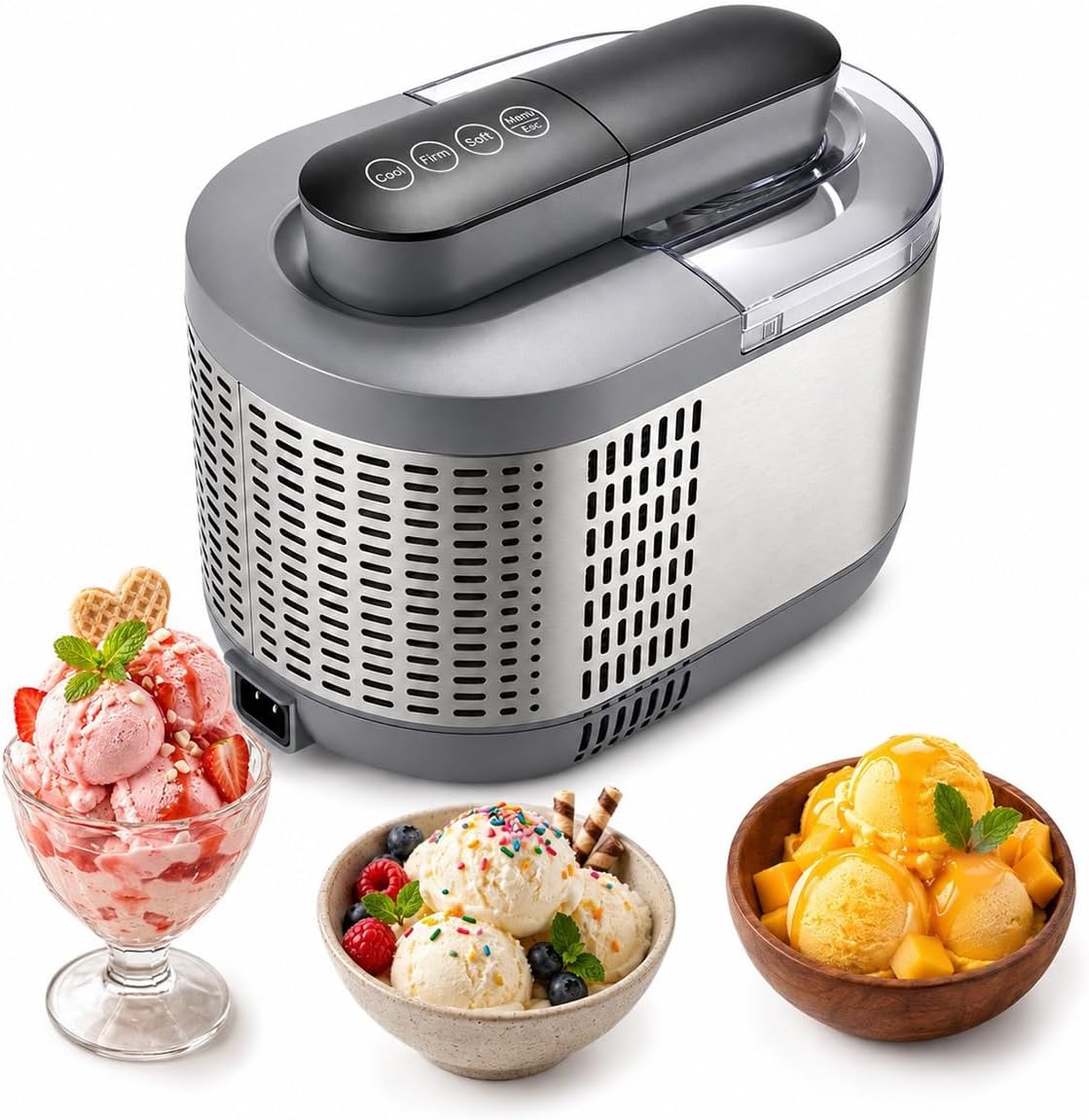
Enjoying homemade frozen treats no longer requires planning ahead or keeping freezer bowls chilled overnight. A no freeze ice cream maker features a built-in compressor or active self-cooling system to freeze ingredients while churning. This technology lets you whip up batches of traditional ice cream, frozen yogurt, or sorbet whenever a craving strikes without waiting on passive freezing methods.
Countertop models vary in capacity and footprint, accommodating different household sizes and kitchen layouts. Whether you prefer making single servings or larger quantities to share, understanding the physical specifications and control features helps you select the right appliance for your dessert routines.
As an Amazon Associate, StacyLaughs earns from qualifying purchases.
Buying guide
Understanding Compressor Capacity
Selecting the right capacity depends heavily on your household size and how often you entertain guests. Smaller personal models hold around one pint to 1.28 quarts, offering ideal portions for single users or couples. Larger appliances exceed two quarts, letting you prepare enough dessert for entire families or dinner parties in a single operation.
Keep in mind that physical device dimensions often scale with capacity. Larger bowls require more powerful compressors and wider housings, which take up substantial room in your kitchen. Matching your typical serving needs to the correct volume prevents both wasted ingredients and the inconvenience of running multiple consecutive batches.
Evaluating Countertop Footprint
Countertop space is a vital consideration when choosing a self-cooling dessert appliance. Upright models save horizontal room by standing taller, while wider machines demand more sprawling counter space. Measuring your available surface area and overhead cabinet clearance ensures the machine fits comfortably without obstructing daily kitchen tasks.
Weight and portability also factor into daily convenience if you plan to store the unit inside cabinets between uses. Heavier compressor-based appliances remain better suited for permanent counter placement. Reviewing the specific length, width, and height dimensions helps you avoid storage surprises upon delivery.
Comparing Control Presets
Modern automatic dessert makers offer various control interfaces, ranging from basic mechanical dials to advanced digital touchpads. Presets for ice cream, sorbet, and frozen yogurt take the guesswork out of timing your batches. Digital LED displays and audible timers further simplify operation by letting you monitor progress at a glance.
Some advanced models include automatic motor protection sensors that stop the paddle when proper consistency is achieved. Others feature keep-cool modes to hold temperatures after churning finishes. Evaluating these operational conveniences helps you select a machine that matches your preferred level of automation.
Managing Cleanup Requirements
Appliance maintenance involves regular cleaning of removable bowls, churn blades, and exterior housings. Many stainless steel and aluminum bowls lift out entirely to simplify washing at the sink. Reviewing product care instructions clarifies whether parts require gentle hand washing or tolerate dishwasher cycles.
Removable paddles that disassemble make it easier to clean sticky dessert residues from tight crevices. Choosing a machine with straightforward component disassembly reduces post-dessert cleanup effort. Always follow manufacturer guidelines to preserve the finish of food-grade bowls and internal mixing blades.
Utilizing Mix-In Features
Customizing frozen desserts with chocolate chips, nuts, or fruit adds texture and flavor variety. Certain countertop appliances feature integrated ingredient funnels built into the lid, allowing you to drop mix-ins directly into the spinning batch without pausing the motor.
Other machines require you to stop the churning process or add mix-ins during the final stages of freezing. If you enjoy experimenting with loaded ice cream recipes, a dedicated funnel or multi-container system provides extra flexibility for incorporating your favorite ingredients seamlessly.
Assessing Churning Durability
Construction materials influence both the longevity and appearance of your countertop dessert maker. Stainless steel and robust ABS plastic housings offer durable exterior protection for active kitchen environments. Internal components like aluminum bowls and BPA-free blades ensure safe food contact during the continuous freezing cycle.
Assessing the build quality of lids, drive gears, and control panels ensures the appliance withstands regular dessert preparation sessions over time. Reviewing warranty terms and approved safety certifications provides additional reassurance regarding the structural integrity of your chosen compressor ice cream machine, helping you invest wisely in durable home equipment.
Frequently asked questions
Do no freeze ice cream makers require any advance bowl preparation?
No, appliances equipped with built-in compressors or active self-cooling systems eliminate the need for overnight freezer bowl preparation. Unlike traditional machines that require you to freeze a liquid-filled double-walled bowl for twenty-four hours before churning, active cooling units chill the ingredients automatically during operation. This allows you to prepare fresh ice cream, gelato, or sorbet spontaneously whenever cravings arise. However, for faster results, some manufacturers suggest chilling your liquid ingredients in the refrigerator beforehand, but zero advance freezing of the machine hardware itself is required.
Can I make back-to-back batches of different flavors?
Yes, compressor-based ice cream makers generally support back-to-back batches because the built-in refrigeration system maintains its freezing capability across multiple cycles. Once your first dessert batch finishes churning and you transfer it to storage, you can pour a new mixture into the clean bowl and start the next run immediately. Machines that include multiple removable inserts or bowls make this process even faster. However, you should check the appliance specifications and motor protection guidelines to ensure the machine remains properly cooled during extended continuous operation sessions.
How long does it typically take to freeze a batch of ice cream?
Processing times vary based on the specific machine model, ambient room temperature, and the initial temperature of your ingredients. Most self-cooling countertop compressors produce finished ice cream, sorbet, or frozen yogurt in approximately thirty to sixty minutes. Some specialized texture modes or personal mini units may extend processing cycles up to ninety or one-hundred-twenty minutes to achieve firmer results. Pre-chilling your liquid mixture in the refrigerator prior to pouring it into the machine can also help reduce overall churning times and improve the final smoothness of your dessert.
What is the difference between soft serve and hard texture settings?
Texture settings control how long the machine churns and actively cools your dessert before stopping the mixing paddle. Soft texture modes typically complete faster cycles, leaving the frozen treat in a smooth, spoonable state right out of the bowl. Hard texture settings run longer processing cycles to incorporate less air and firm up the mixture for traditional scoopable ice cream. If your machine finishes on a soft consistency, transferring the container to a standard kitchen freezer for a brief period can also help achieve a firmer, more traditional scoopable texture.
How should I clean and maintain my compressor ice cream maker?
Maintenance guidelines vary by manufacturer, but most units require manual hand washing for removable bowls, churn blades, and lids. You should unplug the machine and allow internal metal components to reach room temperature before wiping them down with a damp cloth or washing them in warm soapy water. Never submerge the main motorized compressor base in water. Removable paddles often come apart into separate pieces to facilitate thorough cleaning of sticky residue. Always follow the specific product care instructions provided in your user manual to protect surface finishes.