Appliances · Buying Guide
Best Panini Press Options for Crispy Sandwiches and Indoor Grilling
Finding the right countertop appliance for quick daily meals involves carefully weighing plate versatility, physical footprint, and heating power. A reliable panini press handles everything from toasted deli sandwiches to open-face melted cheeses without requiring complicated cooking setups, letting you prepare diverse foods quickly and easily in small kitchen spaces, dorms, or busy homes.
Different models offer features ranging from simple preset temperatures to multi-functional reversible plates and integrated smart meat thermometers. Reviewing these distinct specifications helps match a kitchen appliance directly to your daily cooking habits, household size, and available counter space, ensuring you select a versatile tool tailored to your specific meal preparation routines.
As an Amazon Associate, StacyLaughs earns from qualifying purchases.
Buying guide
Plate Versatility and Reversible Surfaces
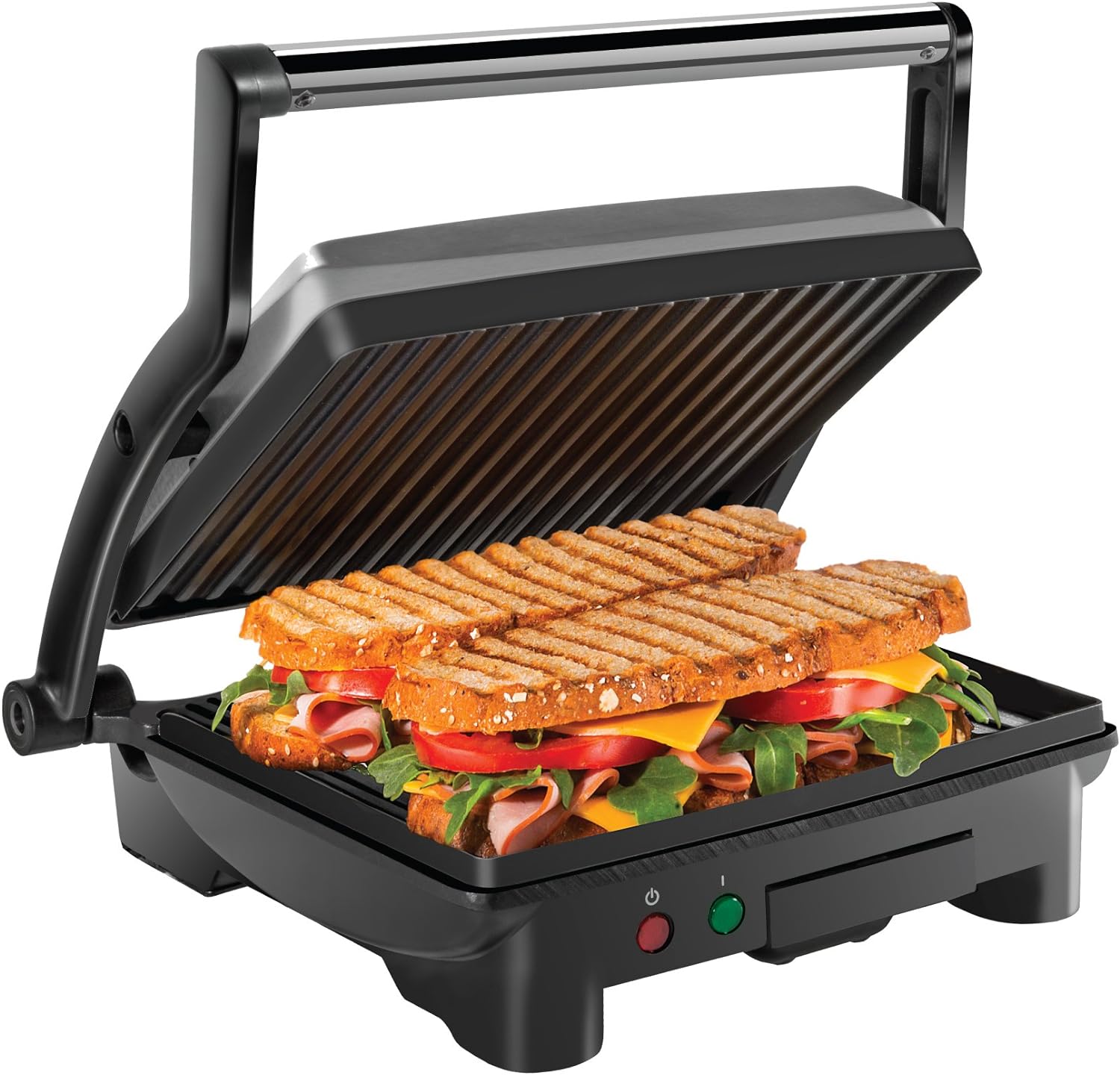
Choosing a countertop panini press starts with carefully examining how its cooking plates are configured. Some models feature fixed grill plates designed exclusively for traditional pressed sandwiches, while others incorporate reversible ceramic nonstick surfaces. Reversible options let you switch between ribbed grill marks and flat griddle zones, expanding your meal possibilities from crispy deli paninis to morning pancakes effortlessly.
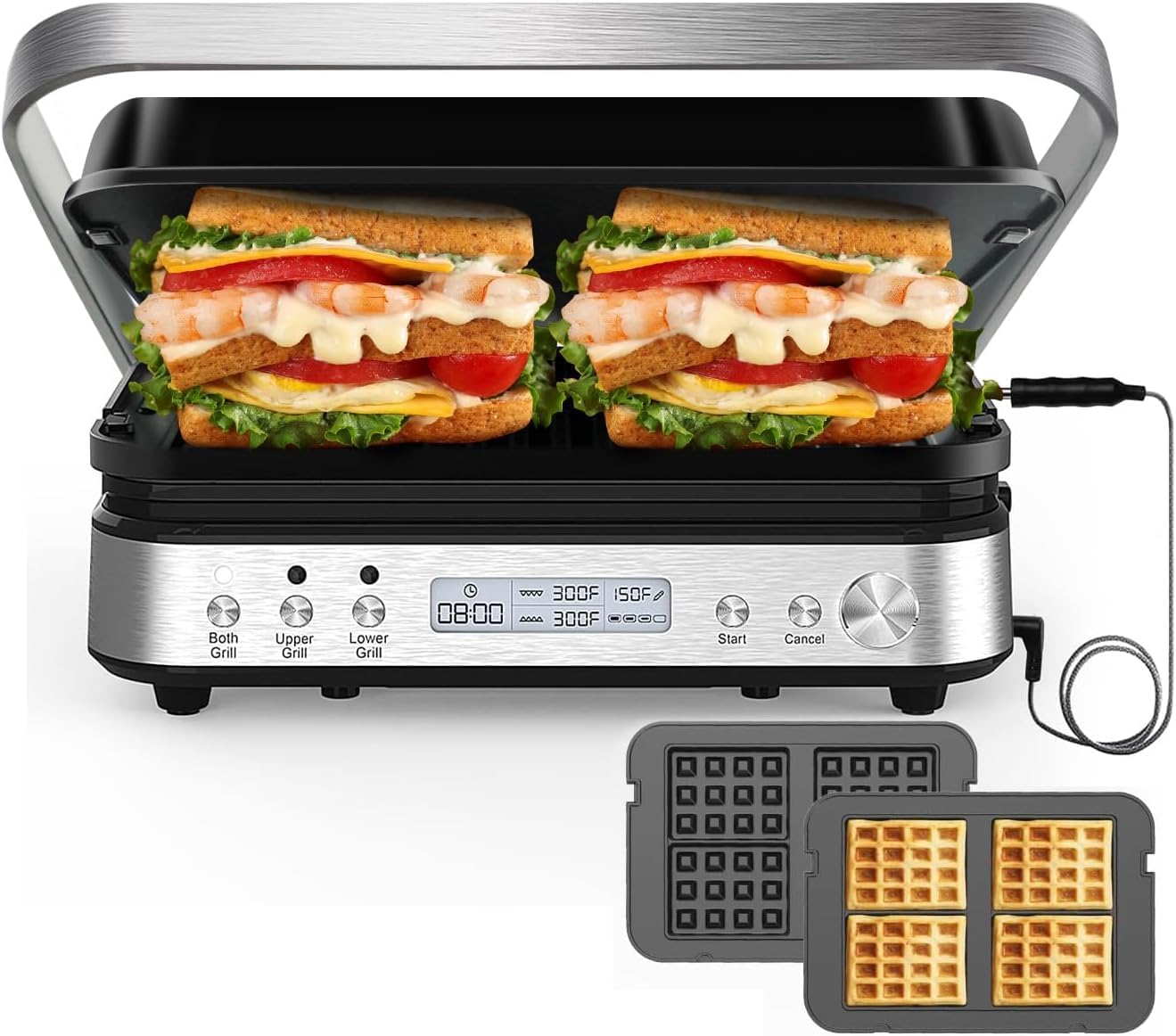
Advanced multi-plate systems often include dedicated waffle inserts or split configurations for simultaneous short-order cooking. Reviewing these structural surface designs ensures the appliance aligns directly with your preferred daily meal routines and cleanup preferences, avoiding unnecessary clutter on your kitchen counter space over time.
Hinge Mechanisms and Food Thickness
The internal hinge design dictates how well a countertop panini press accommodates various food sizes and ingredient styles. Standard floating hinges automatically rise to match the height of thick sandwiches, ensuring even pressure distribution across piled-up Reubens, subs, and stuffed quesadillas without crushing delicate ingredients or forcing fillings out the sides during the pressing process.
More advanced units feature specialized damping hinges that rotate up to 180 degrees and hold intermediate angles securely, or open completely flat to double your active cooking surface area. Evaluating how the lid moves prevents frustrating uneven cooking results when preparing bulky meals, open-face melted cheeses, or hosting weekend family events.
Power Output and Heating Performance
Electrical wattage plays a direct role in how quickly your chosen countertop appliance heats up and recovers its internal temperature during active cooking sessions. Units generally range from 1000 watts up to 1600 watts, directly influencing preheat durations, thermal recovery speeds, and maximum searing capabilities for various meats and vegetables.
Matching the unit wattage to your regular cooking expectations helps ensure consistent, dependable results, whether you want a simple toasted snack or high-heat grilled steaks. Always consider your kitchen electrical circuit capacity when operating high-powered countertop appliances alongside other heavy kitchen machines during busy meal preparation routines in smaller home spaces.
Cleanup and Maintenance Requirements
Everyday cleaning convenience depends heavily on whether the selected appliance features removable plates and dedicated grease management systems. Models equipped with dishwasher-safe ceramic nonstick plates allow you to lift components out easily after they cool down completely. Integrated drip trays collect excess oils during active cooking, preventing messy overflows on your kitchen countertops.
Reviewing manufacturer maintenance guidelines ensures your panini press stays in reliable operating condition over years of frequent use. Choosing units with skid-resistant tilt feet or foldable brackets helps channel cooking grease efficiently toward collection trays, minimizing smoke and simplifying post-meal cleanup routines significantly for busy households and dorm living.
Physical Footprint and Storage Options
Counter space availability remains a major practical factor when selecting any countertop kitchen appliance. Compact models take up minimal room on shelves or counters, making them ideal for dorm rooms, office breakrooms, and smaller home kitchens. Some units include convenient storage latches to lock shut for vertical upright storage inside standard kitchen cabinets.
Larger multi-functional grills offer expansive cooking surfaces but require substantial permanent counter clearance during use. Measuring your available storage areas before purchasing helps prevent kitchen overcrowding and ensures your chosen appliance fits seamlessly into your daily meal preparation space without causing awkward placement issues on crowded household counters.
Temperature Controls and Smart Features
Modern control interfaces range from simple single-preset temperatures designed for effortless everyday operation to dual temperature dials and clear digital LCD screens. Preset models completely eliminate guesswork for quick lunches, while adjustable dials offer granular heat tuning from warm through high-heat searing for diverse recipes, meats, and hot breakfast favorites daily.
Advanced appliances may also integrate smart meat probes featuring multiple setting modes to monitor internal cooking temperatures accurately without requiring constant manual checks or opening the lid during active cooking cycles. Weighing these technological additions against your cooking style helps identify whether you need a basic press or a feature-rich smart multi-cooker system.
Frequently asked questions
How do I clean non-stick plates safely after cooking?
Cleaning non-stick plates requires letting the appliance cool down completely before attempting any maintenance. Many modern panini presses feature removable plates that can be washed safely in a dishwasher or wiped down with a soft damp cloth. If your model has fixed plates, let the unit cool and gently wipe the non-stick surfaces using a manufacturer-approved scraper or sponge. Always avoid abrasive scouring pads that might damage the protective coating. Proper cleaning prevents grease buildup and ensures long-lasting performance for your countertop sandwich maker and indoor grill.
Can I cook foods other than sandwiches on a panini press?
Yes, many modern panini press models are designed with floating hinges that open flat to 180 degrees, transforming the compact appliance into a versatile open indoor grill or griddle. This flexibility lets you cook burgers, steaks, vegetables, bacon, eggs, and pancakes alongside traditional pressed sandwiches, quesadillas, and personal pizzas. Units featuring reversible ceramic nonstick plates or interchangeable waffle inserts offer even more cooking modes from a single countertop footprint, making them suitable for preparing breakfast, lunch, dinner, and snacks without switching equipment.
What is the purpose of a floating hinge on a sandwich press?
A floating hinge is designed to automatically rise and adjust to the exact thickness of whatever food you place on the cooking surface. Whether you are pressing a thin flatbread or a towering Reuben sandwich stacked high with meat and cheese, the floating cover maintains even pressure across the entire top surface. This prevents uneven cooking, keeps ingredients securely inside the sandwich rather than squeezing them out, and ensures consistent heat transfer from both top and bottom grill plates.
Do I need to use cooking spray when making paninis?
Most modern panini presses feature advanced ceramic or non-stick coated grill plates that allow you to crisp bread and grill sandwiches without requiring any cooking spray or added oils. The specialized non-stick surfaces prevent ingredients from sticking directly to the metal plates during the pressing process. However, if you prefer extra flavor or crispness, you can follow specific recipe guidelines or manufacturer instructions regarding oil application. Always check your specific product manual to ensure proper care for the non-stick coating.
How do I store a countertop panini press in a small kitchen?
Storing a countertop panini press in a small kitchen, dorm room, or office breakroom is straightforward when you choose models equipped with compact physical footprints and dedicated storage features. Several sandwich makers include a built-in storage latch that securely locks the cover in place, allowing you to store the unit upright vertically inside a standard kitchen cabinet, drawer, or on a crowded shelf. Measuring your available cabinet space before selecting a model ensures the appliance fits your storage needs perfectly.