Appliances · Buying Guide
Best Rated Food Dehydrator Options for Home Jerky and Snacks
Finding a reliable food dehydrator allows home cooks to prepare dried fruits, savory meats, and garden herbs efficiently. Modern countertop machines feature digital controls, adjustable thermostats, and multi-tier designs that circulate warm air evenly across every shelf without requiring manual rotation during long processing cycles, making home preservation remarkably straightforward and consistent across various recipes.
Whether you need a compact footprint for occasional snack making or an extra-large capacity for bulk batches of jerky, selecting the right appliance depends heavily on your available counter space and ingredient volume. Evaluating motor wattage, tray materials, and airflow technology helps match a machine to your specific preservation goals and everyday kitchen routines perfectly.
As an Amazon Associate, StacyLaughs earns from qualifying purchases.
Buying guide
Tray Material and Construction Standards
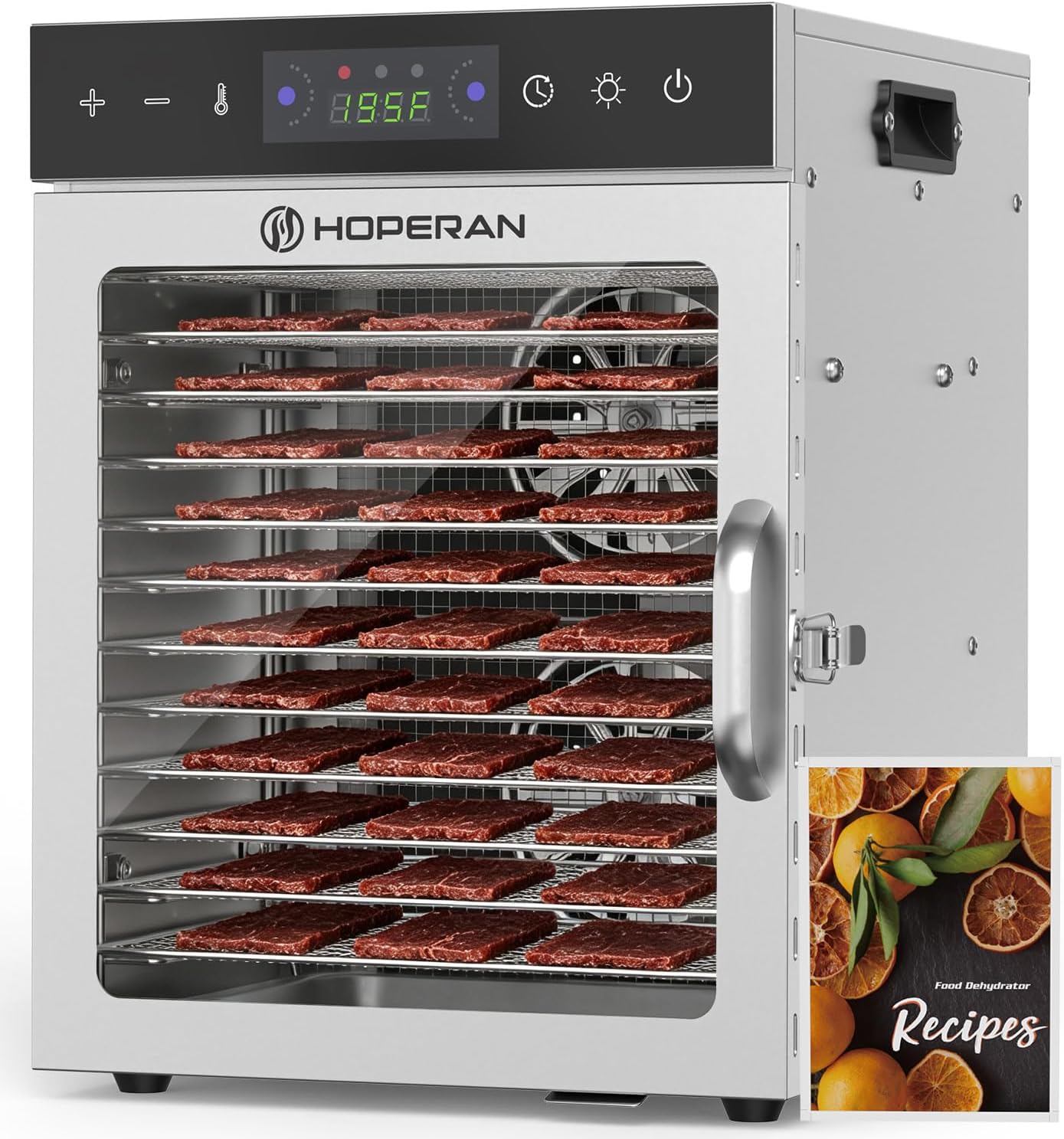
Evaluating tray construction is essential when selecting a food dehydrator for home use. Many modern appliances employ food-grade stainless steel or chrome trays that resist rust and withstand heavy ingredient loads during long drying cycles. Stainless steel components offer long-term durability and frequently withstand dishwasher cleaning cycles, significantly simplifying post-processing maintenance for busy households handling frequent batches of meats or fruits.
Alternative models incorporate BPA-free plastic materials or specialized non-stick sheets suited for fruit leather and delicate herbs. Checking the physical build helps ensure your machine aligns with your cleaning preferences and handling requirements over years of regular snack preparation and seasonal produce preservation without encountering unexpected material wear.
Airflow Technology and Fan Placement
Airflow design directly dictates how evenly ingredients dry across multiple levels. Units featuring rear-mounted fans circulate warm air horizontally across all shelves, which eliminates the need to manually rotate trays during extended processing sessions. This rear circulation method ensures consistent temperature distribution from front to back, benefiting uniform beef jerky and fruit chip production.
Conversely, top-mounted fan configurations position the heating element above the food chamber. This placement prevents natural juices and marinades from dripping into electrical components below. Understanding how air moves through your chosen appliance helps you anticipate maintenance needs and manage drying consistency across diverse ingredients.
Capacity and Countertop Footprint
Matching physical appliance dimensions to your kitchen workspace prevents storage friction. Dehydrators range from compact four-tray units to expansive twelve-tray commercial-style machines offering over thirteen square feet of drying space. Assessing your available counter depth and vertical clearance ensures the appliance fits comfortably without crowding adjacent prep areas or blocking upper cabinetry during operation.
If you frequently process bulk garden harvests or large batches of pet treats, larger multi-tier footprints provide necessary volume. Smaller households focusing on occasional weekend snacks benefit from compact designs that store easily in standard kitchen pantries when not actively dehydrating.
Temperature Range and Precision Controls
Temperature control flexibility allows you to process a wide variety of foods safely and effectively. Lower temperature thresholds around 85 degrees Fahrenheit gently dry delicate herbs and flowers without destroying volatile compounds. Higher thermal settings reaching up to 196 degrees Fahrenheit provide necessary heat for safely dehydrating meats and creating traditional beef jerky at home.
Digital control panels with precise degree-by-degree adjustments simplify temperature management compared to basic analog dials. Selecting a model with an accurate thermostat ensures your specific ingredients receive the exact thermal environment required for optimal moisture removal and texture.
Timer Duration and Auto Shutoff Features
Processing times vary drastically depending on water content, slice thickness, and target dryness. Dehydrators equipped with programmable digital timers ranging from 24 to 80 hours accommodate extended drying cycles without requiring manual watchfulness. An integrated auto shutoff feature automatically powers down the heating element once the programmed timer expires, preventing over-drying and offering convenience during overnight sessions.
This automated oversight removes guesswork from multi-day preservation projects. Buyers prioritizing set-and-forget convenience should verify maximum timer limits before purchasing, ensuring the machine supports longer recipes like thick jerky or dense root vegetables.
Noise Levels and Operating Decibels
Kitchen appliance noise can become intrusive during lengthy multi-hour dehydration cycles. Advanced models incorporating brushless motors and optimized fan engineering operate at lower volume levels, often staying below 48 decibels. This quiet performance allows you to run the appliance overnight or throughout the day without disrupting normal household conversations or creating unwanted background noise.
Evaluating manufacturer decibel specifications helps identify machines designed for peaceful kitchen environments. While high-power motors naturally generate some sound, choosing a quiet-rated unit ensures comfortable operation even when running overnight cycles in open-concept living spaces.
Frequently asked questions
Do I need to rotate trays during the dehydration process?
Whether you need to rotate trays depends entirely on the internal airflow design of the specific dehydrator model you select. Units equipped with rear-mounted drying fans and horizontal airflow technology circulate warm air evenly across every shelf, eliminating the need for manual tray rotation during operation. Conversely, traditional vertical airflow systems lacking advanced horizontal circulation may require you to manually swap tray positions periodically to ensure uniform drying results across all levels. Reviewing the airflow description helps determine the level of monitoring required.
What is the advantage of stainless steel trays over plastic trays?
Stainless steel trays offer exceptional durability, rust resistance, and a sturdy surface for handling heavy ingredient loads like thick meat strips or dense fruit slices. Additionally, food-grade stainless steel components are frequently dishwasher safe, making post-processing cleanup fast and straightforward after messy preservation sessions. While BPA-free plastic trays provide lightweight utility and lower initial costs in certain compact models, stainless steel construction delivers superior longevity and withstands rigorous scrubbing over years of regular home snack preparation.
Can I run a food dehydrator overnight while sleeping?
Running a food dehydrator overnight is common and practical, provided the appliance features reliable safety mechanisms like automatic shutoff and thermal overheat protection. Many modern dehydrators operate at quiet decibel levels below 48 decibels using advanced brushless motors and efficient fans, ensuring they will not disturb household rest. Furthermore, digital timers allow you to program the exact operating duration so the machine powers down automatically before morning, making overnight processing convenient for long drying cycles.
How do I choose the right temperature setting for different foods?
Choosing the correct temperature depends on the specific ingredients you plan to dehydrate. Lower temperature settings ranging from 85 degrees to 95 degrees Fahrenheit are ideal for gently drying delicate herbs, leafy greens, and flowers without losing essential qualities. Medium temperature ranges effectively dry fruits and vegetables by removing moisture while preserving natural textures. Higher temperature settings approaching 196 degrees Fahrenheit provide the necessary thermal environment for safely drying meats, poultry, and homemade beef jerky.
What maintenance is required to keep a dehydrator clean?
Keeping a food dehydrator clean involves removing the trays and drip trays after each use to wash away food residue, marinades, and natural sugars. Stainless steel and chrome trays can be wiped down or placed in the dishwasher depending on manufacturer specifications. The interior housing should be wiped with a damp cloth to remove any accumulated moisture or dust. Regular cleaning prevents residue buildup, maintains hygienic conditions for future food preparation, and ensures unobstructed airflow across internal vents.