Appliances · Buying Guide
Best Rice Cookers for Sushi Rice and Everyday Grains
Preparing sushi rice requires precise temperature control and even moisture distribution to achieve the ideal sticky yet distinct texture. Standard pots often lead to uneven cooking, scorching, or mushy grains, frustrating home cooks aiming for restaurant-quality rolls and bowls. Modern appliances equipped with advanced heating technologies and specialized programming take the guesswork out of grain preparation.
Selecting the right appliance involves matching your household size and counter space with appropriate capacity ratings and program options. Units featuring computerized temperature adjustments monitor moisture levels continuously, ensuring consistent results across white, brown, and seasoned sushi grains. Exploring available features helps identify a reliable companion for daily meals and weekend gathering preparations.
As an Amazon Associate, StacyLaughs earns from qualifying purchases.
Buying guide
Understanding Capacity Ratings for Household Needs
Choosing the correct capacity ensures you prepare enough food without cluttering your kitchen workspace with an oversized appliance. Manufacturers typically measure capacity in uncooked cups, meaning a compact three-cup model yields enough portions for small households or single occupants without wasting energy on empty chamber space.
Larger families or individuals who frequently host dinner guests should look toward units offering five-and-a-half to ten-cup capacities to handle heavy grain demands. Matching your typical batch size to the correct chamber volume prevents messy overflowing incidents and guarantees proper heat circulation throughout every stage of the cooking cycle.
Evaluating Fuzzy Logic Technology and Temperature Control
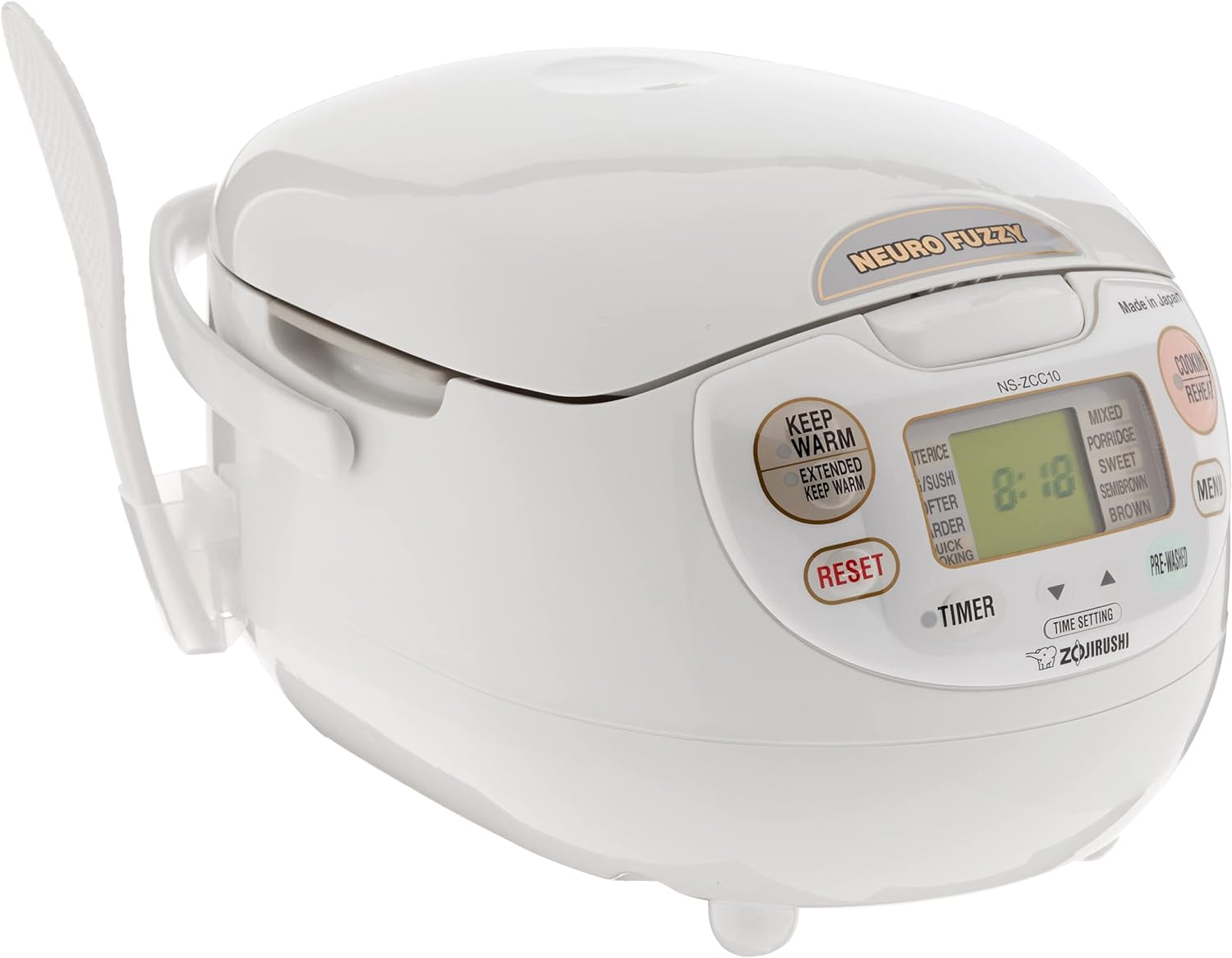
Advanced fuzzy logic technology transforms standard cooking routines by introducing microchip processors that monitor internal conditions continuously. Instead of relying on rigid timers, these smart systems dynamically adjust temperature and heating duration based on moisture feedback from the ingredients inside the pot, preventing scorching or undercooked centers.
This level of precision proves especially beneficial when preparing delicate grains like sushi rice, which demands exact moisture balance to achieve optimal stickiness. Investing in a computerized model removes guesswork, allowing even beginner cooks to replicate consistent, restaurant-quality textures across various white and brown rice selections.
Comparing Inner Pot Materials and Heat Retention
The composition and thickness of the inner cooking pot directly influence how evenly heat transfers to your grains. Heavy-gauge aluminum, stainless steel cores, and specialized carbon infusions help concentrate thermal energy, ensuring that every layer of rice cooks uniformly from the bottom up. Nonstick coatings further prevent starches from bonding to the metal surface.
Ceramic coatings and multi-millimeter walls provide alternative durability profiles and heat retention characteristics depending on your cooking preferences. Reviewing pot construction details helps you select a vessel that withstands frequent use while maintaining smooth release properties for sticky preparations like seasoned sushi rice.
Assessing Program Menu Options and Specialized Grain Settings
Modern cookers offer diverse menu settings that extend far beyond basic boiling functions, catering to specific culinary requirements. Specialized modes for white rice, brown rice, mixed grains, porridge, and dedicated sushi settings adapt heating curves to suit individual grain structures. Quick cook options also reduce wait times when preparing meals on tight schedules.
Evaluating available menu selections ensures your appliance accommodates your household's varied dietary habits without requiring separate specialized kitchen tools. Programmable delay timers and automatic keep-warm cycles add further convenience, letting you schedule meals to finish precisely when needed throughout busy weekdays.
Maintenance Requirements and Cleaning Convenience Factors
Keeping your appliance clean preserves performance and prevents residual starches from affecting the flavor of subsequent batches. Removable inner lids, detachable steam vents, and nonstick pots simplify daily wipe-down routines after preparing sticky grains. Always follow manufacturer guidelines regarding hand washing versus dishwasher safety for each specific component.
Units featuring self-clean cycles or smooth exterior surfaces reduce the effort required to maintain a spotless kitchen counter appearance. Assessing cleanup demands before purchasing ensures your chosen appliance fits comfortably into your post-meal routine without creating unnecessary scrubbing chores or maintenance friction.
Physical Dimensions and Countertop Space Considerations
Countertop footprint and vertical cabinet clearance dictate where your rice cooker will live during daily storage and active operation. Compact models fit easily beneath low upper cabinets and inside narrow pantry shelves, while high-capacity units demand dedicated surface area due to wider bodies and deeper dimensions. Measure your available space carefully.
Features like retractable power cords and portable handles also influence how easily you can move the appliance between storage and prep areas. Factoring physical dimensions into your purchasing decision prevents counter crowding and ensures seamless integration into your existing kitchen layout.
Frequently asked questions
How does a rice cooker handle sushi rice differently than standard white rice?
Sushi rice requires specific moisture levels and texture profiles to achieve the proper stickiness needed for rolling without becoming mushy. Cookers featuring dedicated sushi settings or advanced fuzzy logic technology automatically adjust heating cycles and internal temperatures to accommodate these exact grain requirements. Standard boiling methods often fail to control the starch release properly, whereas computerized sensors monitor evaporation rates closely throughout the process, ensuring the seasoned grains maintain their characteristic firm yet cohesive consistency for optimal preparation results.
What capacity rice cooker do I need for a family of four?
For a standard family of four, a five-and-a-half-cup uncooked rice cooker typically provides the ideal balance of volume and flexibility. Manufacturers measure capacity using dedicated cups, and a five-and-a-half-cup chamber yields enough cooked rice to serve multiple people comfortably with leftovers for subsequent meals. Households that frequently host large gatherings or prepare bulk batches for weekly meal prep might consider moving up to a ten-cup model, while smaller households or couples can easily manage daily meals with a compact three-cup unit.
Are dishwasher-safe parts necessary for cleaning a rice cooker?
Whether dishwasher-safe parts are necessary depends entirely on your personal cleaning preferences and daily routine tolerance. Units offering dishwasher-safe ceramic pots or removable accessories simplify post-meal cleanup by eliminating manual scrubbing of sticky starches left behind by grains like sushi rice. However, many traditional models require hand washing to preserve specialized nonstick coatings and exterior finishes according to manufacturer care instructions. Evaluating your willingness to hand wash components helps determine whether dishwasher compatibility should influence your final purchasing decision.
Can I cook other grains besides rice in these computerized cookers?
Most computerized rice cookers include versatile multi-menu programming that extends far beyond basic white rice preparation. Models equipped with specialized settings can successfully handle brown rice, quinoa, oatmeal, mixed grains, and even slow-cooked soups or steamed vegetables. The internal microprocessors adjust temperature curves to match the specific moisture absorption rates of different food types. Reviewing the listed menu functions for each appliance helps confirm whether it supports your preferred alternative grains and side dish recipes alongside standard daily rice cooking tasks.
Why do fuzzy logic rice cookers take longer than basic boiling pots?
Fuzzy logic rice cookers prioritize texture quality and even moisture distribution over sheer speed. Instead of applying continuous high heat that can scorch bottom layers or leave centers hard, these smart appliances cycle through a multi-step process involving preheating, controlled absorption, and steaming. The internal computer constantly evaluates sensor data and modifies cooking parameters in real-time. While this deliberate approach requires more time, it guarantees fluffy, consistently cooked grains without requiring manual stirring or constant user supervision during operation.