Appliances · Buying Guide
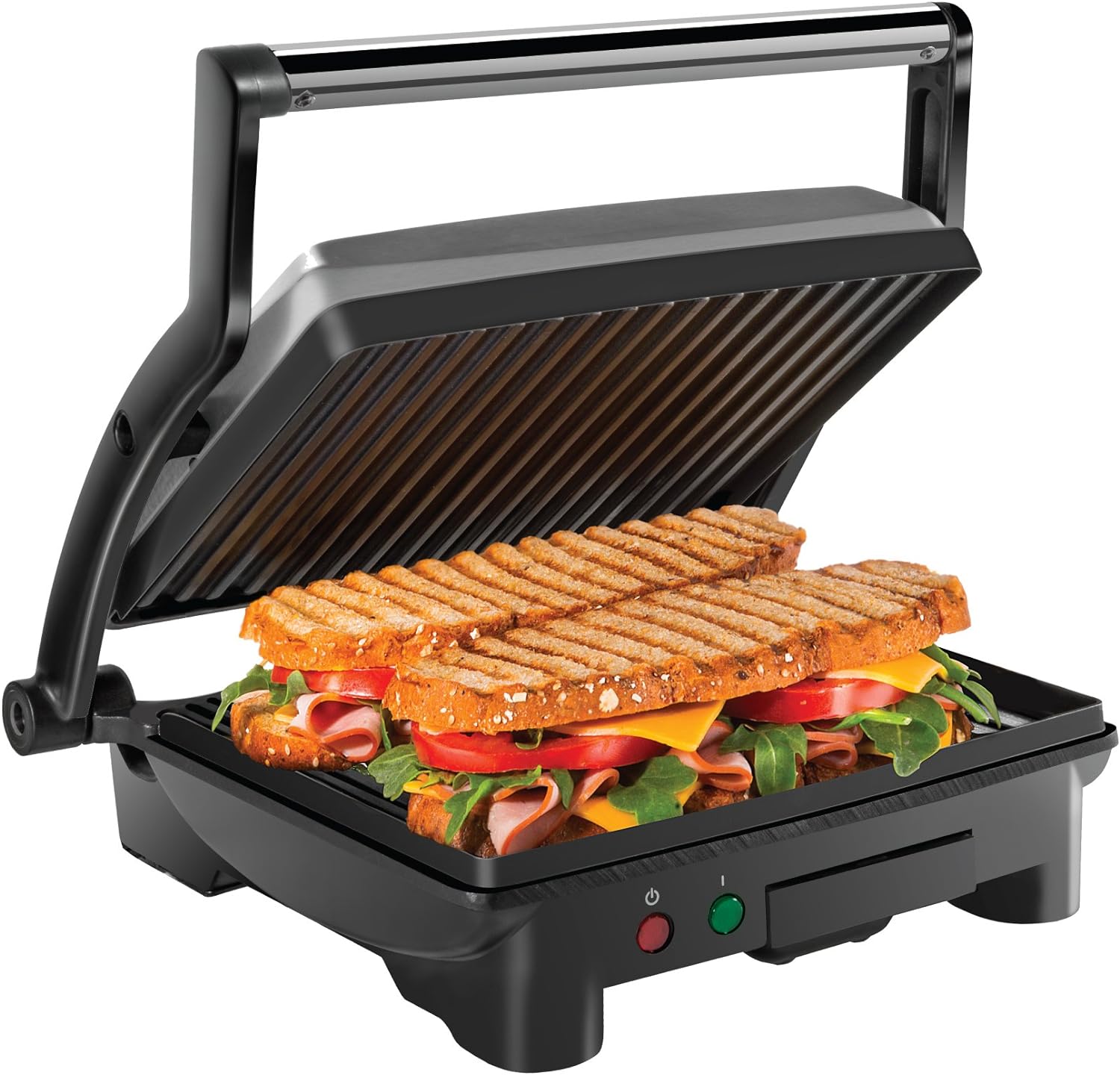
Best Sandwich Toaster and Panini Press Options for Crispy Meals
Choosing a reliable countertop appliance for quick lunches and toasted snacks transforms how you handle daily meal preparation during busy weekly schedules. Modern countertop presses offer a straightforward way to heat ingredients, melt cheese, and create warm paninis without firing up a traditional oven or crowding your workspace.
Different models feature unique footprint dimensions, wattage levels, and plate designs suited for various cooking styles and household sizes. Whether you need a compact single-portion maker or a versatile multi-surface grill, carefully evaluating these physical attributes ensures you select the right tool for your specific countertop space, storage limits, and daily cooking routine.
As an Amazon Associate, StacyLaughs earns from qualifying purchases.
Buying guide
Surface Material and Nonstick Coatings
Selecting the right surface material ensures your sandwiches release easily without tearing the bread. Many modern presses employ ceramic or specialized nonstick coatings that prevent cheese from sticking during high-heat pressing. These materials make cleanup straightforward since melted ingredients wipe away smoothly after the appliance cools down.
Reviewing the plate construction helps you determine long-term durability and maintenance requirements. Removable plates offer the added benefit of dishwasher cleaning, whereas fixed plates require careful manual wiping. Prioritizing durable metals like stainless steel provides robust exterior housing that withstands daily countertop use while maintaining its appearance.
Footprint Dimensions and Storage Space
Countertop space dictates which appliance size fits your kitchen layout comfortably. Compact models with smaller square footprints tuck neatly into dorm rooms or tiny apartments without crowding your main workspace. Larger multi-slice units demand dedicated counter area but provide expansive surfaces for feeding multiple people simultaneously.
Consider whether the unit features an upright storage latch or slim profile that allows vertical cabinet placement. Measuring your available storage space before purchasing prevents cabinet clutter. Choosing a design that stores efficiently keeps your counters clear when the appliance is not actively in use.
Power Output and Heating Performance
Wattage ratings directly influence how quickly your sandwich press heats up and achieves a crisp exterior finish. Lower-wattage units operate efficiently on standard circuits but may require extra preheating time. Higher-wattage appliances deliver rapid thermal recovery, making them ideal for busy mornings when you need fast meal preparation.
Matching the electrical draw to your kitchen setup ensures safe, reliable operation during daily meal routines. Reviewing these power specifications helps you balance fast cooking speeds with energy management alongside other countertop appliances. Selecting appropriate wattage prevents circuit overloads while delivering consistent thermal performance.
Hinge Mechanisms and Food Thickness
The hinge design determines how effectively the appliance accommodates various food thicknesses without crushing your ingredients. Floating hinges automatically adjust to rise evenly over stacked paninis, thick subs, or heavy artisan breads. This movement ensures uniform pressure across the entire sandwich surface during cooking.
Some units also open completely flat at 180 degrees, effectively doubling your available cooking area for open-face melts or grilling. Evaluating how the cover moves gives you greater flexibility in preparing diverse recipes beyond standard pressed sandwiches, including burgers, vegetables, and quesadillas.
Grease Management and Cleanup Ease
Managing rendered grease and melted cheese is essential for maintaining a clean cooking environment. Integrated drip trays collect excess oils draining from the plates, preventing messes on your countertop. Tilt-up feet on certain models actively channel liquids toward the back drain hole for efficient runoff.
Removable plates and dishwasher-safe components simplify post-cooking maintenance significantly. If a model features fixed plates, you must rely on manual wiping with damp cloths after cooling. Prioritizing effective grease collection features reduces scrubbing time and keeps your appliance sanitary between uses.
Temperature Controls and Versatility
Temperature customization ranges from single preset options to dual dials that manage separate cooking zones. Preset models offer effortless operation without any learning curve for basic sandwich toasting. Adjustable dials provide precise thermal control for specialized recipes requiring specific heat levels.
Multi-functional units combine contact grilling, panini pressing, and flat griddling into one versatile machine. Evaluating your cooking habits helps determine whether you need simple single-temperature pressing or advanced multi-zone controls to handle diverse breakfast and lunch menus effectively.
Frequently asked questions
How do I clean non-stick sandwich press plates properly?
Cleaning non-stick sandwich press plates requires letting the appliance cool completely before performing any maintenance. If your model features removable plates, you can detach them and place them directly in the dishwasher or wash them gently with mild soap and warm water. For units with fixed plates, wipe the non-stick surfaces using a clean, damp cloth to remove residual grease and melted cheese. Avoid using abrasive scouring pads or metal utensils that could scratch the protective coating. Proper cooling and gentle wiping preserve the non-stick properties and extend the lifespan of your countertop appliance.
What is the advantage of a floating hinge on a panini press?
A floating hinge automatically adjusts the top plate to rise and rest evenly across the height of your food. This mechanical design is particularly useful when preparing thick paninis, stuffed quesadillas, or multi-layered artisan sandwiches because it applies uniform downward pressure without crushing the ingredients. Instead of the top plate resting at a slanted angle that squashes one side, the floating mechanism keeps the surface parallel to the counter. This even distribution ensures that fillings heat consistently and bread achieves a balanced, crispy golden finish from edge to edge.
Can I cook foods other than sandwiches on a panini press?
Many panini presses and indoor grills offer exceptional versatility beyond standard toasted sandwiches. Models that open flat at 180 degrees double your cooking area, allowing you to grill burgers, steaks, vegetables, or chicken breasts directly on the plates. Units featuring flat griddle surfaces or reversible plates can handle breakfast items like pancakes, eggs, and bacon. Even standard presses with ribbed plates work well for heating quesadillas, warming pizza slices, or making open-face bruschetta by locking the top cover slightly above the food to melt cheese.
How do I prevent cheese from sticking to the grill plates?
Preventing cheese from sticking begins with choosing an appliance equipped with ceramic or specialized non-stick plate coatings designed for effortless food release. While many modern presses state that cooking sprays are unnecessary, allowing the unit to preheat fully before adding your sandwich ensures the surface is hot enough to sear the bread instantly rather than absorbing melting cheese. If cheese does escape during pressing, let the appliance cool down completely before wiping the non-stick plates with a damp cloth or removing them for washing.
How much counter space do I need for a sandwich toaster?
The counter space required depends entirely on the physical footprint dimensions and storage capabilities of the specific model you choose. Compact single-portion sandwich makers occupy minimal space, often measuring around nine by nine inches, making them ideal for dorm rooms and small apartments. Larger four-slice presses or multi-functional griddlers feature wider bodies that require dedicated countertop space during use. Fortunately, many models include upright storage latches or slim profiles that allow you to store the appliance vertically inside a kitchen cabinet when not cooking.