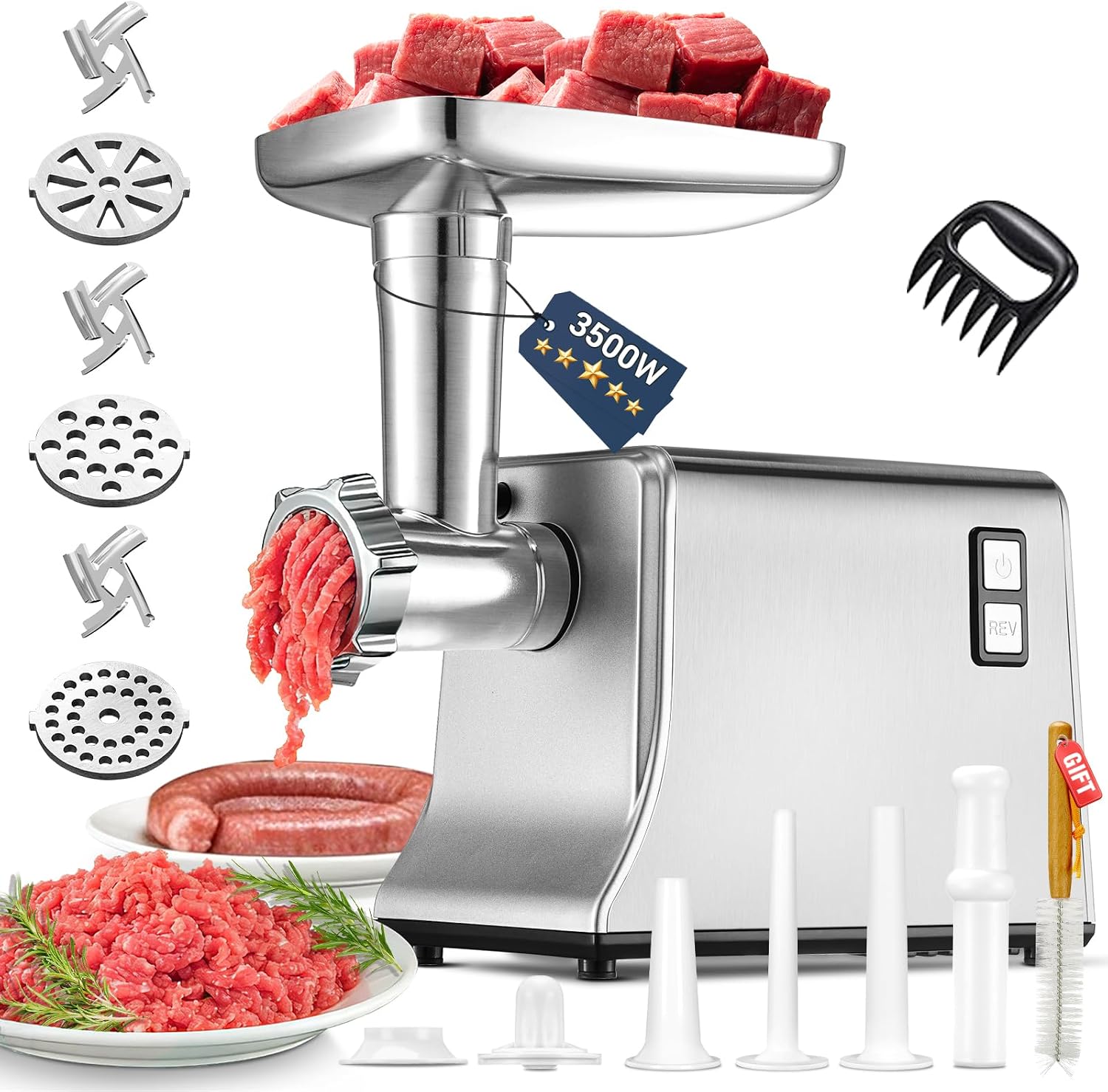
Appliances · Buying Guide
Best Stainless Steel Electric Meat Grinder Options for Home Kitchens
Selecting a stainless steel electric meat grinder transforms how you handle bulk meat preparation at home. Whether you are processing venison after hunting season, grinding fresh beef for burger patties, or stuffing homemade sausages, having a dedicated appliance streamlines the process. Modern countertop models offer various motor capacities and specialized attachments to manage everything from coarse mincing to fine textured grinds.
Finding the right machine depends on your specific kitchen space, batch sizes, and desired attachments like kibbe makers or vegetable graters. Understanding the differences in motor power, speed settings, and cleaning requirements helps you choose a dependable tool that fits your routine without unnecessary complications.
As an Amazon Associate, StacyLaughs earns from qualifying purchases.
Buying guide
Motor Power and Wattage Capacities
Understanding motor power is essential when choosing an electric meat grinder for your home kitchen. Units range from standard running wattages to high-locked power specifications designed to handle tough cuts of meat without stalling. A robust copper motor ensures that fibrous tissues and dense portions process smoothly, reducing the strain on internal gears during large holiday or hunting batch preparations.
When evaluating wattage claims, pay attention to running power versus maximum locked power ratings. Higher wattages help maintain consistent operating speeds when processing venison, beef, or pork. However, matching the motor strength to your typical batch size prevents unnecessary overheating and extends the overall functional lifespan of the countertop appliance.
Grinding Plates and Blade Materials
The materials used for blades and grinding plates directly influence cutting efficiency and long-term durability in home kitchens. Stainless steel components provide excellent rust resistance and sharp edges that cleanly shear meat fibers rather than mashing them. Look for thick plates that maintain their structural integrity under heavy pressure during frequent residential grinding sessions.
Different plate hole sizes determine the coarseness of your final ground meat, ranging from fine textures for spreads to coarse openings for sausage fillings. Having multiple plate options allows you to customize textures for burgers, chilis, or traditional recipes. Quality cutting blades pair with these plates to ensure consistent, uniform output across every processing task.
Assembly Cleaning and Maintenance
Proper cleaning and maintenance keep your electric meat grinder sanitary and functional over years of regular use. Many modern stainless steel plates and cutting blades are dishwasher safe, simplifying daily cleanup routines. However, aluminum housing components or specific internal parts often require manual hand washing and immediate drying to prevent unwanted oxidation and dark surface discoloration.
Disassembling the grinding head should be straightforward, allowing you to access all food contact surfaces easily. Features like a cam-action headlock simplify taking apart the unit safely after processing sticky meat mixtures. Always follow the specific manufacturer guidelines regarding dishwasher compatibility to protect specialized metal alloys and maintain optimal mechanical performance.
Sausage Stuffing and Extra Attachments
Many electric meat grinders double as versatile kitchen stations by including specialized sausage stuffing tubes and traditional kibbe makers. These helpful accessories transform freshly ground meat into breakfast links, bratwurst, or specialty casings with minimal extra equipment. Having multiple tube sizes lets you easily accommodate different casing diameters for various homemade sausage recipes.
Beyond basic grinding and stuffing, some advanced countertop models feature versatile vegetable graters, burger presses, or smart digital control screens. While these extra attachments expand your food preparation capabilities, consider whether you will actually use them regularly. Storing multiple accessories requires adequate kitchen cabinet space or convenient built-in storage compartments built directly within the main unit itself.
Safety Features and Jam Prevention
Operating a high-powered meat grinder requires dependable safety mechanisms to protect both the user and the internal motor components. Overload and overheat protection switches automatically shut down the appliance if the motor strains too heavily during large processing batches. This vital feature prevents permanent electrical damage when working with tough or dense cuts of meat.
A dedicated reverse button is another crucial feature that helps clear clogs safely without requiring complete disassembly of the feed chute. When fibrous meat wraps around the internal auger, switching to reverse quickly backs out the obstruction. Combined with a secure locking knob, these physical safeguards ensure stable operation during demanding food preparation sessions.
Countertop Footprint and Storage Considerations
Kitchen countertop space is often at a premium, making the physical dimensions and weight of an electric meat grinder important buying factors. Heavy-duty units equipped with robust metal gears and large motors take up more permanent space and require dedicated storage areas. Measure your available counter and cabinet clearance before selecting a high-capacity countertop appliance.
Models featuring built-in accessory storage boxes help keep grinding plates, cutting blades, and sausage stuffing tubes neatly organized in one compact footprint. If you plan to store the grinder inside a pantry or cabinet between uses, consider a lighter model with a streamlined design that is easy to lift and maneuver safely across kitchen surfaces.
Frequently asked questions
Can I grind bones in an electric meat grinder?
Most residential electric meat grinders are not designed to process hard bones, tough animal skins, or dense connective tendons. Doing so can severely jam the helical feeding system, damage the sharp cutting blades, or trigger the motor overload protection switch. Manufacturers explicitly recommend sticking strictly to boneless cuts of beef, pork, chicken, turkey, and venison to ensure smooth operation and prevent permanent damage to internal metal gears or copper motor components.
How do I prevent my meat grinder from clogging?
Preventing clogs starts with cutting your meat into appropriately sized strips that fit easily into the feed chute without forcing. Using the included food pusher helps guide ingredients evenly toward the auger. If fibrous tissues or sinew do cause a blockage, most models feature a dedicated reverse button or unclogging function that backs out the trapped material immediately, allowing you to resume grinding without taking apart the entire feeding head assembly.
Are all parts of a stainless steel meat grinder dishwasher safe?
Not all components are necessarily dishwasher safe, even on stainless steel models. While stainless steel grinding plates and cutting blades can often go into the dishwasher, many manufacturers explicitly advise hand-washing aluminum housing parts, alloy components, and food pushers. Hand washing these specific items prevents unwanted oxidation, dark surface discoloration, and corrosion, ensuring your meat grinder attachments maintain their proper appearance and structural integrity over years of regular home kitchen use.
What is the difference between running wattage and locked power?
Running wattage refers to the continuous electrical power the motor draws during normal operation under standard loads. Locked power represents the maximum peak wattage the motor can generate momentarily when encountering tough resistance or temporary jams before the overload protection system triggers a shutdown. Understanding this distinction helps you evaluate how well a machine will handle dense batches of meat without expecting the peak locked wattage to run continuously.
Can I make homemade sausage with these electric grinders?
Yes, nearly all featured electric meat grinders include dedicated sausage stuffing tubes and accessories designed to help you make homemade links, bratwurst, or breakfast sausage. You typically grind your seasoned meat mixture first using a coarse or medium grinding plate, and then switch to a stuffing tube with a casing attached. Some models even offer specific slow speed settings tailored specifically for controlled sausage stuffing tasks at home.